
Starting a Puppy for Protection Work
Building a Confident Working Dog from the Ground Up
Jeff Davis | https://workingdogcentral.com
 0
0 0
0 0
0 0
0 0
0
There’s a certain moment every dog man remembers.
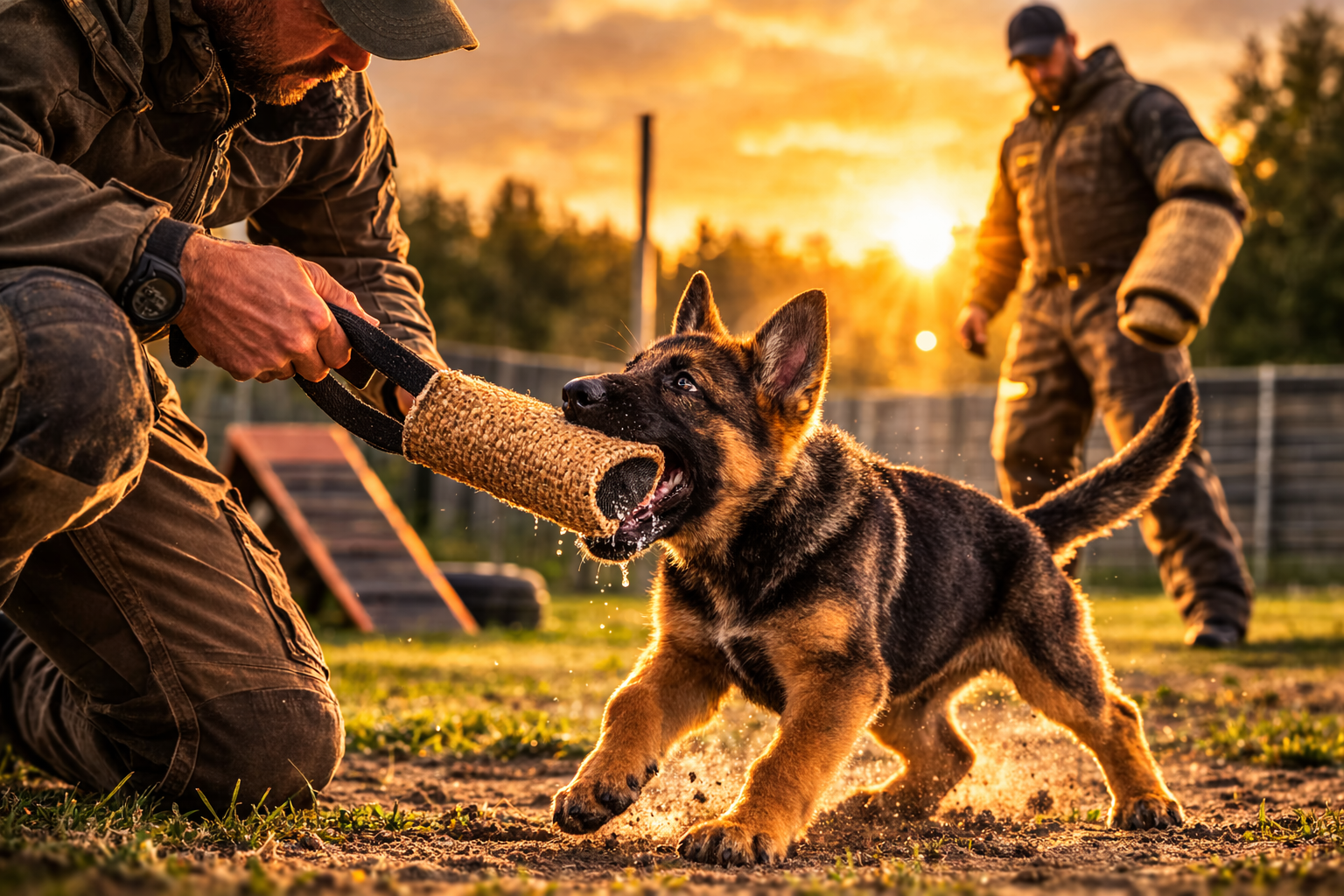
It usually comes when a young pup—barely big enough to clear the grass—locks onto a rag or tug toy with surprising intensity. The tail stiffens. The grip tightens. Instead of letting go, the pup plants its feet and pulls back with all the stubborn determination it can muster.
That moment tells you something important.
You might be looking at the beginnings of a protection dog.
But here’s where many people get it wrong. Starting a puppy for protection work doesn’t begin with bite training, aggression drills, or intimidating scenarios. In fact, the best protection dogs rarely start that way at all. The foundation of a reliable protection dog is built long before the dog ever sees a bite sleeve.
It begins with confidence.
A protection dog must first believe the world is something it can handle.
From the time a puppy first comes home, the goal is simple: expose the young dog to as many environments, sounds, people, and surfaces as possible. Gravel roads, slick floors, stairs, tall grass, busy streets, farm equipment, children running through the yard—these are all pieces of the puzzle.
A puppy that learns early that strange situations are normal will grow into a dog that doesn’t panic when pressure arrives.
Experienced handlers pay close attention to nerve during this stage. A pup that startles but quickly recovers is usually showing good working temperament. A pup that shuts down or refuses to re-engage with its environment may struggle later in demanding protection work.
But confidence alone doesn’t make a protection dog.
Drive matters just as much.
In the early months, most trainers build prey drive through simple games. A rag tied to a string, a burlap tug, or a soft puppy sleeve becomes the center of the dog’s world for a few minutes at a time. The key is keeping these sessions short, exciting, and always ending with the pup wanting more.
You don’t overpower a puppy during this stage. You let the dog win.
That small victory builds a powerful association: engaging with the handler leads to success and reward.
Over time, that playful tug game begins to shape the dog’s grip and intensity. Puppies that bite full and hold firm usually develop better bite mechanics later in training. Those that chew nervously or re-bite constantly may require more careful development.
But patience is critical here.
A protection prospect isn’t rushed.
Young dogs, especially large working breeds like German Shepherds, Belgian Malinois, Dutch Shepherds, and similar protection lines, are still growing physically and mentally. The worst mistake a handler can make is trying to turn a puppy into a finished protection dog too quickly.
Strong dogs are built slowly.
Alongside these play sessions, obedience quietly becomes part of everyday life. Not formal obedience at first, but basic structure—coming when called, walking calmly on a lead, learning to focus on the handler.
Protection dogs must eventually operate under intense control. Without that control, a dog with bite training can become dangerous rather than dependable.
This is why experienced trainers spend far more time building relationship and communication than they do teaching the bite itself.
Trust between handler and dog is the real foundation of protection work.
As the puppy matures into adolescence, trainers begin shaping the dog’s natural drives into more purposeful exercises. The tug games may evolve into controlled grip work with a helper. The dog learns that engaging the target—usually a sleeve or bite pillow—is part of a structured interaction rather than uncontrolled chaos.
Good helpers are worth their weight in gold during this stage.
A skilled decoy knows how to read a young dog’s confidence and adjust pressure accordingly. Too much pressure too early can damage a dog’s nerve. Too little pressure fails to develop the courage and forward aggression needed for serious protection work.
The balance between encouragement and challenge is delicate.
Protection dogs must eventually learn to move forward under pressure rather than retreat from it.
You’ll often see this development during controlled defensive exercises, where the dog begins to bark and posture against the decoy before engaging the bite. The goal isn’t rage—it’s clarity. The dog learns that confronting a threat leads to a controlled engagement and reward.
A clear-headed protection dog is far more valuable than an unpredictable one.
Another piece many beginners overlook is environmental training.
Real-world protection dogs rarely work on manicured training fields. They may operate in parking lots, alleyways, warehouses, rural properties, or crowded urban environments. Young dogs must gradually learn to work on unstable surfaces, in dark spaces, around loud noises, and in unfamiliar surroundings.
Confidence in these situations separates solid working dogs from those that fall apart when conditions change.
I’ve seen young prospects that looked unstoppable on the training field suddenly hesitate when asked to engage on slick concrete or under flashing lights. The best trainers prepare their dogs for these challenges early.
It’s simply part of the process.
Just as important is learning when not to engage.
Protection dogs must develop restraint alongside drive. A dog that bites without command or clear threat assessment isn’t a protection dog—it’s a liability.
That’s why impulse control becomes a major part of advanced training. The dog must learn to remain calm and neutral around strangers, crowds, and distractions until given a specific command.
True protection dogs are quiet professionals.
They don’t posture constantly. They don’t look for trouble. They remain calm until the moment they’re needed.
This temperament is what separates well-trained working dogs from animals that merely appear intimidating.
It’s also why breeding plays such a critical role in protection work. Not every dog has the nerve, stability, and drive required for serious protection training. Even within proven working lines, only a portion of dogs possess the full combination of traits necessary.
Good trainers recognize this early.
Sometimes a promising puppy grows into an excellent sport dog, search dog, or companion rather than a full protection prospect. There’s no shame in that outcome. Responsible trainers match dogs to the work they’re best suited for.
For those dogs that do possess the right combination of nerve, drive, and trainability, the process becomes something special.
You start to see the pieces come together.
The confident posture. The focused eyes. The calm patience beside the handler until the moment engagement is required.
That transformation doesn’t happen overnight.
It takes months of careful development, years of structured training, and a handler who understands that protection work is as much about discipline as it is power.
In the end, starting a puppy for protection work is less about teaching a dog to bite and more about shaping a dog that can think clearly under pressure.
A good protection dog isn’t angry.
It’s confident.
And that confidence begins the day the puppy first learns to grab a rag and pull back with everything it has.
It usually comes when a young pup—barely big enough to clear the grass—locks onto a rag or tug toy with surprising intensity. The tail stiffens. The grip tightens. Instead of letting go, the pup plants its feet and pulls back with all the stubborn determination it can muster.
That moment tells you something important.
You might be looking at the beginnings of a protection dog.
But here’s where many people get it wrong. Starting a puppy for protection work doesn’t begin with bite training, aggression drills, or intimidating scenarios. In fact, the best protection dogs rarely start that way at all. The foundation of a reliable protection dog is built long before the dog ever sees a bite sleeve.
It begins with confidence.
A protection dog must first believe the world is something it can handle.
From the time a puppy first comes home, the goal is simple: expose the young dog to as many environments, sounds, people, and surfaces as possible. Gravel roads, slick floors, stairs, tall grass, busy streets, farm equipment, children running through the yard—these are all pieces of the puzzle.
A puppy that learns early that strange situations are normal will grow into a dog that doesn’t panic when pressure arrives.
Experienced handlers pay close attention to nerve during this stage. A pup that startles but quickly recovers is usually showing good working temperament. A pup that shuts down or refuses to re-engage with its environment may struggle later in demanding protection work.
But confidence alone doesn’t make a protection dog.
Drive matters just as much.
In the early months, most trainers build prey drive through simple games. A rag tied to a string, a burlap tug, or a soft puppy sleeve becomes the center of the dog’s world for a few minutes at a time. The key is keeping these sessions short, exciting, and always ending with the pup wanting more.
You don’t overpower a puppy during this stage. You let the dog win.
That small victory builds a powerful association: engaging with the handler leads to success and reward.
Over time, that playful tug game begins to shape the dog’s grip and intensity. Puppies that bite full and hold firm usually develop better bite mechanics later in training. Those that chew nervously or re-bite constantly may require more careful development.
But patience is critical here.
A protection prospect isn’t rushed.
Young dogs, especially large working breeds like German Shepherds, Belgian Malinois, Dutch Shepherds, and similar protection lines, are still growing physically and mentally. The worst mistake a handler can make is trying to turn a puppy into a finished protection dog too quickly.
Strong dogs are built slowly.
Alongside these play sessions, obedience quietly becomes part of everyday life. Not formal obedience at first, but basic structure—coming when called, walking calmly on a lead, learning to focus on the handler.
Protection dogs must eventually operate under intense control. Without that control, a dog with bite training can become dangerous rather than dependable.
This is why experienced trainers spend far more time building relationship and communication than they do teaching the bite itself.
Trust between handler and dog is the real foundation of protection work.
As the puppy matures into adolescence, trainers begin shaping the dog’s natural drives into more purposeful exercises. The tug games may evolve into controlled grip work with a helper. The dog learns that engaging the target—usually a sleeve or bite pillow—is part of a structured interaction rather than uncontrolled chaos.
Good helpers are worth their weight in gold during this stage.
A skilled decoy knows how to read a young dog’s confidence and adjust pressure accordingly. Too much pressure too early can damage a dog’s nerve. Too little pressure fails to develop the courage and forward aggression needed for serious protection work.
The balance between encouragement and challenge is delicate.
Protection dogs must eventually learn to move forward under pressure rather than retreat from it.
You’ll often see this development during controlled defensive exercises, where the dog begins to bark and posture against the decoy before engaging the bite. The goal isn’t rage—it’s clarity. The dog learns that confronting a threat leads to a controlled engagement and reward.
A clear-headed protection dog is far more valuable than an unpredictable one.
Another piece many beginners overlook is environmental training.
Real-world protection dogs rarely work on manicured training fields. They may operate in parking lots, alleyways, warehouses, rural properties, or crowded urban environments. Young dogs must gradually learn to work on unstable surfaces, in dark spaces, around loud noises, and in unfamiliar surroundings.
Confidence in these situations separates solid working dogs from those that fall apart when conditions change.
I’ve seen young prospects that looked unstoppable on the training field suddenly hesitate when asked to engage on slick concrete or under flashing lights. The best trainers prepare their dogs for these challenges early.
It’s simply part of the process.
Just as important is learning when not to engage.
Protection dogs must develop restraint alongside drive. A dog that bites without command or clear threat assessment isn’t a protection dog—it’s a liability.
That’s why impulse control becomes a major part of advanced training. The dog must learn to remain calm and neutral around strangers, crowds, and distractions until given a specific command.
True protection dogs are quiet professionals.
They don’t posture constantly. They don’t look for trouble. They remain calm until the moment they’re needed.
This temperament is what separates well-trained working dogs from animals that merely appear intimidating.
It’s also why breeding plays such a critical role in protection work. Not every dog has the nerve, stability, and drive required for serious protection training. Even within proven working lines, only a portion of dogs possess the full combination of traits necessary.
Good trainers recognize this early.
Sometimes a promising puppy grows into an excellent sport dog, search dog, or companion rather than a full protection prospect. There’s no shame in that outcome. Responsible trainers match dogs to the work they’re best suited for.
For those dogs that do possess the right combination of nerve, drive, and trainability, the process becomes something special.
You start to see the pieces come together.
The confident posture. The focused eyes. The calm patience beside the handler until the moment engagement is required.
That transformation doesn’t happen overnight.
It takes months of careful development, years of structured training, and a handler who understands that protection work is as much about discipline as it is power.
In the end, starting a puppy for protection work is less about teaching a dog to bite and more about shaping a dog that can think clearly under pressure.
A good protection dog isn’t angry.
It’s confident.
And that confidence begins the day the puppy first learns to grab a rag and pull back with everything it has.


View all 0 comments