A Day in the Life of an Airport Detection Dog
Jeff Davis | https://workingdogcentral.com
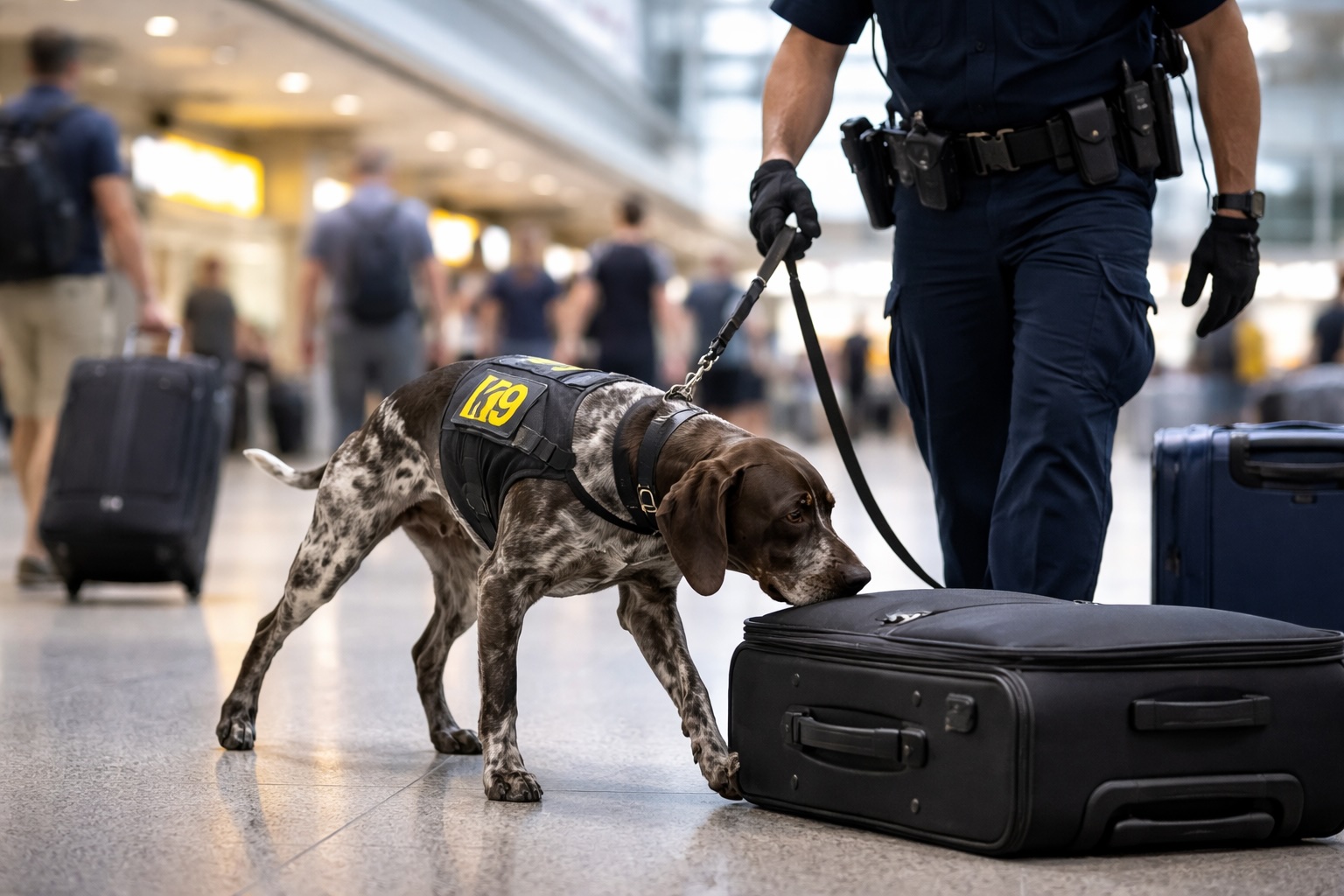
Folks who have never watched a real working dog on the job often think an airport detection dog spends the day trotting around with a vest on, soaking up attention from travelers and getting the occasional pat on the head. That is not how it works. A good detection dog is a professional from the time its paws hit the floor in the morning until the last sweep of the day is done. The setting may be polished concrete and rolling luggage instead of cut corn or cattail sloughs, but the heart of the work is familiar to anyone who knows dogs. It is about nose, nerve, discipline, and trust between dog and handler.
At an airport, everything moves fast. People hurry, announcements echo overhead, food scents drift from every direction, and thousands of human emotions pass through the terminal in a steady stream. That kind of environment can rattle an average dog. A trained airport detection dog learns to sort through the clutter and stay fixed on one job: locate target odors with consistency and precision. It is not glamorous work in the way some imagine, but it is meaningful, demanding, and impressive to witness up close.
The Morning Starts Before the Crowd Arrives
Most airport detection dogs begin their day well before the terminal reaches full roar. There is a routine to it, and that routine matters. Working dogs thrive on structure. The handler checks the dog first thing, looking at attitude, appetite, hydration, stool quality, and general sharpness. You can learn a lot from how a dog carries itself before sunrise. A dog that feels off, even slightly, may not be fit for high-level scent work that day. In this line of work, close enough is not good enough.
Before the shift begins, there is usually some exercise and a chance to loosen up. These dogs are athletes, not decorations. A short walk, a bathroom break, and a little play or engagement with the handler can set the tone. Some dogs fire up with a toy. Others settle in with calm obedience and eye contact. The point is not to wear them out. It is to get the mind switched on and the partnership dialed in.
Then comes preparation. Gear is checked. Rewards are packed. The day's assignments are reviewed. In many cases, the handler already has a good idea whether the dog will be working baggage areas, passenger screening zones, cargo sections, vehicle checkpoints, or other sensitive spots around the airport. No two days run exactly alike, and that variety is part of what keeps a seasoned dog mentally engaged.
Readiness Is More Than Excitement
A lot of dogs love to work, but enthusiasm alone does not make a dependable airport detection dog. The best ones are steady. They can go from a kennel run to a crowded concourse without getting spun up by every moving piece of the world. They know how to shift gears. That kind of composure is built through careful selection and repetition. It is one thing for a dog to find odor in a quiet training lane. It is another thing entirely to do it with suitcase wheels rattling by, children darting around, and the smell of breakfast sandwiches hanging heavy in the air.
Hitting the Terminal Floor
Once the team enters the airport environment, the dog is working from the first pass. Depending on the assignment, that may mean screening people in motion, checking unattended areas, sweeping lines of baggage, or inspecting zones where cargo and supplies move in and out. The dog's body language becomes the handler's map. A quick head snap, a change in tail carriage, a deeper breath, a tighter pattern around a bag or person, these are the signs that matter. Good handlers read those signs the way an old bird hunter reads wind over a hedgerow.
The average traveler sees only the clean finish of the work. They may notice a dog briefly sniff near a line of passengers and move on without fanfare. What they do not see is the concentration underneath it. The dog is filtering out perfume, fuel, coffee, food wrappers, stress sweat, cleaning chemicals, and the general storm of a public transit hub. In that swirl, it is looking for a trained target odor and nothing else. That level of discrimination is why airport detection dogs are so valued.
Some dogs work in a more visible role around passengers, while others spend much of the day in restricted areas where the public never sees them. Either way, the pace rises and falls. There are stretches of active searching and stretches of waiting, and both require control. A detection dog must know how to hunt when asked and how to settle when told. That off switch is every bit as important as drive.
How the Handler and Dog Work as One
No detection dog works alone. The handler is not just there to hold the leash. The handler manages search patterns, monitors the environment, protects the dog from interference, and interprets the behavior that leads to a find. The relationship between those two is built over time, and it runs on consistency. A handler learns the difference between honest odor interest and casual curiosity. A dog learns that the handler will guide, support, and reward clear, correct work.
That bond reminds me of the best hunting partnerships, where very little needs to be said because both parties understand the job. In an airport, however, the stakes are different and the standards tighter. Precision matters. Timing matters. Procedure matters. The dog may be the nose, but the team is what gets the work done properly.
Training Never Stops
One thing people tend to overlook is that an airport detection dog does not simply graduate training and coast on skill for the rest of its career. Maintenance training is a constant. Hidden training aids, controlled scenarios, proofing against distractions, and regular evaluations are woven into the workweek. That is how reliability stays sharp.
A well-run program builds training into ordinary days so the dog never falls into a dull routine. Sometimes the reward comes after a clean find during an operational search. Other times the team runs a short controlled exercise between assignments. The dog learns that the game can appear anywhere, and that keeps motivation high. For many dogs, the reward might be a favored toy and a quick, lively play session with the handler. That moment of celebration is not fluff. It is the engine that keeps the search meaningful.
These dogs are not guessing. They are not freelancing. Their work is grounded in repetition and reinforcement. Over time, they become efficient, experienced, and deeply confident in their task. You can see it in a veteran dog. There is a businesslike quality to the way it moves through a search area, checking, sorting, and committing only when odor tells the truth.
Breaks, Kennel Time, and Mental Recovery
No serious working dog should be expected to grind nonstop through a full day. Airport detection work is mentally taxing. Even a strong, balanced dog needs breaks to rest, hydrate, and reset. Depending on the shift and conditions, the dog may rotate through active search periods and quiet recovery time in a vehicle, kennel, or designated rest area.
That downtime is not wasted time. It is part of performance. A tired nose is one thing, but more often it is the mind that needs relief. Constant stimulation can drain a dog if the schedule is poorly managed. Good handlers understand that preserving the dog's clarity is part of the job. The best work often comes from a dog that is fresh, focused, and eager rather than one pushed past the point of sharpness.
Health and welfare stay front and center. Water intake is watched. Paw condition matters, especially on slick or abrasive flooring. Temperature exposure during transit matters. So does stress load. These are not minor details. A detection dog is a valuable working partner, and successful teams treat canine care as seriously as operational readiness.
The Public Side of the Job
Airport detection dogs often draw attention, and that comes with its own challenge. Travelers are naturally curious. Some want to smile, wave, or call the dog over. Others may be nervous around dogs altogether. The team has to navigate all of that while staying on task. Most working dogs are trained to ignore the public unless directed otherwise, and that neutrality is important. Friendly is fine, but focused is better.
For dog owners, this is one of the clearest lessons these teams offer. Temperament counts just as much as talent. A dog can have a world-class nose, but if it cannot remain stable in noise, crowds, and unpredictable situations, it will not hold up in airport work. The ideal detection dog combines hunt drive with social steadiness. It can work near strangers without seeking them out and recover quickly from surprises that might throw an inexperienced dog off balance.
What the End of the Day Looks Like
By the time the shift winds down, the dog has likely covered a lot of ground, both physically and mentally. The final part of the day is usually quieter but no less important. Gear comes off. The dog is checked again for any sign of soreness, stress, or fatigue. There may be one last bathroom walk, a cool-down, feeding, grooming, or kennel time depending on the program setup.
Handlers often review the day as well. Good teams pay attention to patterns. Was the dog crisp in the morning and flatter in the late afternoon? Did a certain environment create more distraction than usual? Was reward timing clean? The small details are where strong teams keep getting better. Working dogs do not stay excellent by accident.
Then the dog rests, and rest is earned. Tomorrow will bring another string of searches, another tide of travelers, and another chance to put that nose to use in service of public safety. It is a hard life by pet standards, but for the right dog it is a satisfying one. Purpose suits them. Structure suits them. So does honest work.
Why Airport Detection Dogs Matter to Dog Owners
For folks interested in working dogs, the airport detection dog is a fine example of what careful breeding, training, and handling can produce. These dogs are not superheroes, and they are not machines. They are living partners with instincts shaped into skill through patient, disciplined work. Watching one do its job reminds you just how extraordinary a dog's nose can be when paired with sound training and a steady human hand.
If you own a driven sporting or working breed, there is something familiar in these dogs even if their job is far from the field. They want a task. They want clarity. They want the satisfaction of solving a problem and being rewarded for it. That truth runs through just about every good working dog, whether it is quartering for birds, trailing game, moving stock, or hunting odor in an airport terminal.
At the end of the day, an airport detection dog lives a life of discipline, trust, and responsibility. It may not look like the kind of work most dog owners know firsthand, but the fundamentals are timeless. A good dog, a fair handler, and a clear purpose can still accomplish remarkable things in this world. An airport just happens to be one of the busiest proving grounds you could ask for.
At an airport, everything moves fast. People hurry, announcements echo overhead, food scents drift from every direction, and thousands of human emotions pass through the terminal in a steady stream. That kind of environment can rattle an average dog. A trained airport detection dog learns to sort through the clutter and stay fixed on one job: locate target odors with consistency and precision. It is not glamorous work in the way some imagine, but it is meaningful, demanding, and impressive to witness up close.
The Morning Starts Before the Crowd Arrives
Most airport detection dogs begin their day well before the terminal reaches full roar. There is a routine to it, and that routine matters. Working dogs thrive on structure. The handler checks the dog first thing, looking at attitude, appetite, hydration, stool quality, and general sharpness. You can learn a lot from how a dog carries itself before sunrise. A dog that feels off, even slightly, may not be fit for high-level scent work that day. In this line of work, close enough is not good enough.
Before the shift begins, there is usually some exercise and a chance to loosen up. These dogs are athletes, not decorations. A short walk, a bathroom break, and a little play or engagement with the handler can set the tone. Some dogs fire up with a toy. Others settle in with calm obedience and eye contact. The point is not to wear them out. It is to get the mind switched on and the partnership dialed in.
Then comes preparation. Gear is checked. Rewards are packed. The day's assignments are reviewed. In many cases, the handler already has a good idea whether the dog will be working baggage areas, passenger screening zones, cargo sections, vehicle checkpoints, or other sensitive spots around the airport. No two days run exactly alike, and that variety is part of what keeps a seasoned dog mentally engaged.
Readiness Is More Than Excitement
A lot of dogs love to work, but enthusiasm alone does not make a dependable airport detection dog. The best ones are steady. They can go from a kennel run to a crowded concourse without getting spun up by every moving piece of the world. They know how to shift gears. That kind of composure is built through careful selection and repetition. It is one thing for a dog to find odor in a quiet training lane. It is another thing entirely to do it with suitcase wheels rattling by, children darting around, and the smell of breakfast sandwiches hanging heavy in the air.
Hitting the Terminal Floor
Once the team enters the airport environment, the dog is working from the first pass. Depending on the assignment, that may mean screening people in motion, checking unattended areas, sweeping lines of baggage, or inspecting zones where cargo and supplies move in and out. The dog's body language becomes the handler's map. A quick head snap, a change in tail carriage, a deeper breath, a tighter pattern around a bag or person, these are the signs that matter. Good handlers read those signs the way an old bird hunter reads wind over a hedgerow.
The average traveler sees only the clean finish of the work. They may notice a dog briefly sniff near a line of passengers and move on without fanfare. What they do not see is the concentration underneath it. The dog is filtering out perfume, fuel, coffee, food wrappers, stress sweat, cleaning chemicals, and the general storm of a public transit hub. In that swirl, it is looking for a trained target odor and nothing else. That level of discrimination is why airport detection dogs are so valued.
Some dogs work in a more visible role around passengers, while others spend much of the day in restricted areas where the public never sees them. Either way, the pace rises and falls. There are stretches of active searching and stretches of waiting, and both require control. A detection dog must know how to hunt when asked and how to settle when told. That off switch is every bit as important as drive.
How the Handler and Dog Work as One
No detection dog works alone. The handler is not just there to hold the leash. The handler manages search patterns, monitors the environment, protects the dog from interference, and interprets the behavior that leads to a find. The relationship between those two is built over time, and it runs on consistency. A handler learns the difference between honest odor interest and casual curiosity. A dog learns that the handler will guide, support, and reward clear, correct work.
That bond reminds me of the best hunting partnerships, where very little needs to be said because both parties understand the job. In an airport, however, the stakes are different and the standards tighter. Precision matters. Timing matters. Procedure matters. The dog may be the nose, but the team is what gets the work done properly.
Training Never Stops
One thing people tend to overlook is that an airport detection dog does not simply graduate training and coast on skill for the rest of its career. Maintenance training is a constant. Hidden training aids, controlled scenarios, proofing against distractions, and regular evaluations are woven into the workweek. That is how reliability stays sharp.
A well-run program builds training into ordinary days so the dog never falls into a dull routine. Sometimes the reward comes after a clean find during an operational search. Other times the team runs a short controlled exercise between assignments. The dog learns that the game can appear anywhere, and that keeps motivation high. For many dogs, the reward might be a favored toy and a quick, lively play session with the handler. That moment of celebration is not fluff. It is the engine that keeps the search meaningful.
These dogs are not guessing. They are not freelancing. Their work is grounded in repetition and reinforcement. Over time, they become efficient, experienced, and deeply confident in their task. You can see it in a veteran dog. There is a businesslike quality to the way it moves through a search area, checking, sorting, and committing only when odor tells the truth.
Breaks, Kennel Time, and Mental Recovery
No serious working dog should be expected to grind nonstop through a full day. Airport detection work is mentally taxing. Even a strong, balanced dog needs breaks to rest, hydrate, and reset. Depending on the shift and conditions, the dog may rotate through active search periods and quiet recovery time in a vehicle, kennel, or designated rest area.
That downtime is not wasted time. It is part of performance. A tired nose is one thing, but more often it is the mind that needs relief. Constant stimulation can drain a dog if the schedule is poorly managed. Good handlers understand that preserving the dog's clarity is part of the job. The best work often comes from a dog that is fresh, focused, and eager rather than one pushed past the point of sharpness.
Health and welfare stay front and center. Water intake is watched. Paw condition matters, especially on slick or abrasive flooring. Temperature exposure during transit matters. So does stress load. These are not minor details. A detection dog is a valuable working partner, and successful teams treat canine care as seriously as operational readiness.
The Public Side of the Job
Airport detection dogs often draw attention, and that comes with its own challenge. Travelers are naturally curious. Some want to smile, wave, or call the dog over. Others may be nervous around dogs altogether. The team has to navigate all of that while staying on task. Most working dogs are trained to ignore the public unless directed otherwise, and that neutrality is important. Friendly is fine, but focused is better.
For dog owners, this is one of the clearest lessons these teams offer. Temperament counts just as much as talent. A dog can have a world-class nose, but if it cannot remain stable in noise, crowds, and unpredictable situations, it will not hold up in airport work. The ideal detection dog combines hunt drive with social steadiness. It can work near strangers without seeking them out and recover quickly from surprises that might throw an inexperienced dog off balance.
What the End of the Day Looks Like
By the time the shift winds down, the dog has likely covered a lot of ground, both physically and mentally. The final part of the day is usually quieter but no less important. Gear comes off. The dog is checked again for any sign of soreness, stress, or fatigue. There may be one last bathroom walk, a cool-down, feeding, grooming, or kennel time depending on the program setup.
Handlers often review the day as well. Good teams pay attention to patterns. Was the dog crisp in the morning and flatter in the late afternoon? Did a certain environment create more distraction than usual? Was reward timing clean? The small details are where strong teams keep getting better. Working dogs do not stay excellent by accident.
Then the dog rests, and rest is earned. Tomorrow will bring another string of searches, another tide of travelers, and another chance to put that nose to use in service of public safety. It is a hard life by pet standards, but for the right dog it is a satisfying one. Purpose suits them. Structure suits them. So does honest work.
Why Airport Detection Dogs Matter to Dog Owners
For folks interested in working dogs, the airport detection dog is a fine example of what careful breeding, training, and handling can produce. These dogs are not superheroes, and they are not machines. They are living partners with instincts shaped into skill through patient, disciplined work. Watching one do its job reminds you just how extraordinary a dog's nose can be when paired with sound training and a steady human hand.
If you own a driven sporting or working breed, there is something familiar in these dogs even if their job is far from the field. They want a task. They want clarity. They want the satisfaction of solving a problem and being rewarded for it. That truth runs through just about every good working dog, whether it is quartering for birds, trailing game, moving stock, or hunting odor in an airport terminal.
At the end of the day, an airport detection dog lives a life of discipline, trust, and responsibility. It may not look like the kind of work most dog owners know firsthand, but the fundamentals are timeless. A good dog, a fair handler, and a clear purpose can still accomplish remarkable things in this world. An airport just happens to be one of the busiest proving grounds you could ask for.