
Building Drive in a Working Dog
Developing the Desire to Work
Jeff Davis | https://workingdogcentral.com
 0
0 0
0 0
0 0
0 0
0
Spend enough time around working dogs and you start to notice something that separates the good ones from the truly exceptional. It isn’t always speed, and it isn’t always raw intelligence. What you’re really seeing is drive—the deep, relentless desire to work.
Drive is the motor under the hood of every serious working dog. It’s what keeps a detection dog hunting a scent through a crowded airport, what pushes a search-and-rescue dog across miles of rough terrain, and what makes a bird dog hunt hard until the sun dips below the trees.
Some dogs are born with more of it than others. But the truth seasoned trainers learn early is that drive isn’t just something a dog either has or doesn’t have. It can be encouraged, cultivated, and strengthened through the way a dog is raised and trained.
Understanding What “Drive” Really Means
When trainers talk about drive, they’re referring to a dog’s natural motivation to pursue a task. In hunting dogs it often shows up as prey drive—the instinct to chase birds or track game. In protection dogs it might appear as defense drive or hunt drive. Detection dogs rely heavily on hunt drive, the relentless desire to locate a scent.
Drive isn’t the same thing as obedience or discipline. A dog with tremendous drive may initially be chaotic, loud, and impulsive. Anyone who has watched a young Labrador explode out of a kennel the moment it senses a training session about to begin knows exactly what that looks like.
But that energy is the raw material trainers are looking for.
It’s far easier to shape a dog with too much enthusiasm than it is to manufacture motivation in a dog that simply doesn’t care.
Genetics Lay the Foundation
Long before any trainer starts shaping behavior, genetics has already done most of the heavy lifting.
Working dogs bred from generations of hunters, herders, or protectors usually carry those instincts naturally. Bird dogs from strong field lines show interest in scent and movement at an early age. Livestock guardians show protective instincts toward animals they grow up around. Police and military dogs often come from breeding programs specifically designed to produce high-drive working animals.
That doesn’t mean every puppy from a good litter will become a top performer. But it does mean the building blocks are there.
Experienced trainers will tell you that the easiest dogs to build drive in are the ones that already show curiosity, persistence, and enthusiasm as young pups.
A puppy that relentlessly chases a ball, pounces on moving objects, or explores new environments without hesitation is often showing the early sparks of working drive.
Letting Young Dogs Discover the Game
One mistake new handlers make is trying to control everything too early.
Drive develops best when young dogs believe they are discovering the work themselves. The best trainers create situations where the dog wins often and develops confidence through success.
Think about a young retriever chasing a training bumper across a field for the first time. The handler doesn’t lecture or correct. Instead, the dog experiences the thrill of the chase and the satisfaction of returning with the prize.
Those early wins create a powerful association in the dog’s mind: work equals reward.
Bird dog trainers have long understood this principle. When a young pointer first smells quail in the wind and locks up on point, the dog isn’t thinking about obedience drills. It’s responding to instinct, and that instinct grows stronger each time it gets reinforced.
Using Play to Build Motivation
Play is one of the most powerful tools for developing drive in working dogs.
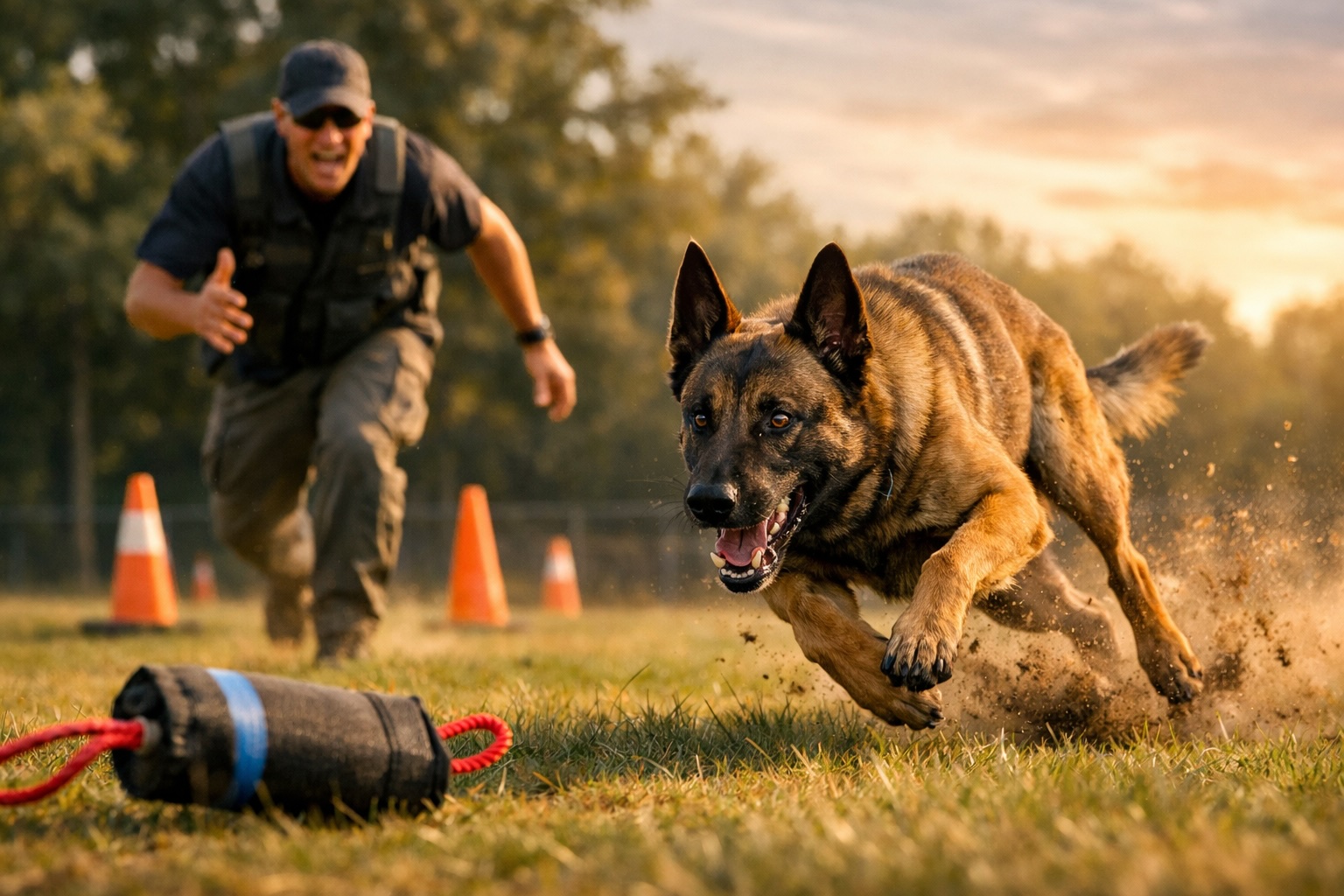
A tug toy, a ball, or even a simple piece of rope can become a reward that turns training into a game. The dog begins to view the work as the path to its favorite activity.
Detection dog trainers rely heavily on this concept. Many explosive and narcotics dogs are trained to associate finding scent with a toy reward. To the dog, the search isn’t work at all—it’s simply the fastest way to get the toy it loves.
The same principle works across nearly every type of working dog.
The key is keeping the dog hungry for the reward. Sessions should end while the dog still wants more. When the dog walks away eager to play again tomorrow, drive grows stronger.
Building Persistence Through Controlled Challenges
Drive doesn’t just come from excitement. It also grows when a dog learns that persistence leads to success.
Good trainers gradually increase difficulty as the dog gains experience. A search might become slightly longer. A scent might be hidden more carefully. A retrieve might require navigating heavier cover.
These challenges teach the dog that quitting isn’t an option.
Over time, the dog begins to develop what trainers call hunt persistence—the willingness to keep working even when the task becomes difficult.
Anyone who has hunted behind a seasoned bird dog has seen this trait firsthand. The dog continues searching long after the easy birds have been flushed, covering ground methodically until another covey is located.
That kind of determination isn’t accidental. It’s the result of repeated experiences where effort led to success.
Avoiding Mistakes That Kill Drive
While drive can be developed, it can also be damaged.
Too much pressure too early is one of the fastest ways to shut a dog down. Young dogs that are constantly corrected or restrained may begin associating work with frustration instead of excitement.
Handlers sometimes fall into the trap of over-controlling a dog that naturally has high energy. The dog’s enthusiasm gets mistaken for disobedience, and the handler tries to suppress it.
In reality, that energy is exactly what working trainers want.
Structure and discipline should come gradually, once the dog’s motivation is firmly established. The goal is never to eliminate drive but to channel it into productive behavior.
The Balance Between Control and Passion
The finished working dog is a balance between two forces: passion and control.
Too much control without drive produces a dog that performs tasks mechanically but lacks intensity. Too much drive without control results in chaos.
The art of training lies in blending the two.
A good bird dog, for example, hunts with energy and independence but still responds to the handler’s direction. A police dog shows fierce determination during a search yet remains under precise command.
That balance takes time to develop.
But the foundation always starts with drive.
Why Drive Matters More Than Talent
In the end, drive often matters more than natural ability.
A dog with average talent but tremendous determination will frequently outperform a naturally gifted dog that lacks motivation. The driven dog simply works harder and longer.
Hunters have known this truth for generations.
The dog that keeps hunting after hours in the field, that refuses to give up on a track, or that continues searching when other dogs lose interest—that dog becomes the one everyone remembers.
Drive is what turns instinct into performance.
The Long View of Building a Working Dog
Developing drive isn’t something that happens overnight.
It grows through hundreds of small training moments, successful experiences, and carefully managed challenges. Each session adds another layer of confidence and motivation.
The best trainers understand that their role isn’t to force a dog to work.
Their role is to create an environment where the dog *wants* to work.
When that happens, training stops feeling like a chore for the dog. It becomes a game, a hunt, a puzzle waiting to be solved.
And that’s when a working dog truly comes alive.
Drive is the motor under the hood of every serious working dog. It’s what keeps a detection dog hunting a scent through a crowded airport, what pushes a search-and-rescue dog across miles of rough terrain, and what makes a bird dog hunt hard until the sun dips below the trees.
Some dogs are born with more of it than others. But the truth seasoned trainers learn early is that drive isn’t just something a dog either has or doesn’t have. It can be encouraged, cultivated, and strengthened through the way a dog is raised and trained.
Understanding What “Drive” Really Means
When trainers talk about drive, they’re referring to a dog’s natural motivation to pursue a task. In hunting dogs it often shows up as prey drive—the instinct to chase birds or track game. In protection dogs it might appear as defense drive or hunt drive. Detection dogs rely heavily on hunt drive, the relentless desire to locate a scent.
Drive isn’t the same thing as obedience or discipline. A dog with tremendous drive may initially be chaotic, loud, and impulsive. Anyone who has watched a young Labrador explode out of a kennel the moment it senses a training session about to begin knows exactly what that looks like.
But that energy is the raw material trainers are looking for.
It’s far easier to shape a dog with too much enthusiasm than it is to manufacture motivation in a dog that simply doesn’t care.
Genetics Lay the Foundation
Long before any trainer starts shaping behavior, genetics has already done most of the heavy lifting.
Working dogs bred from generations of hunters, herders, or protectors usually carry those instincts naturally. Bird dogs from strong field lines show interest in scent and movement at an early age. Livestock guardians show protective instincts toward animals they grow up around. Police and military dogs often come from breeding programs specifically designed to produce high-drive working animals.
That doesn’t mean every puppy from a good litter will become a top performer. But it does mean the building blocks are there.
Experienced trainers will tell you that the easiest dogs to build drive in are the ones that already show curiosity, persistence, and enthusiasm as young pups.
A puppy that relentlessly chases a ball, pounces on moving objects, or explores new environments without hesitation is often showing the early sparks of working drive.
Letting Young Dogs Discover the Game
One mistake new handlers make is trying to control everything too early.
Drive develops best when young dogs believe they are discovering the work themselves. The best trainers create situations where the dog wins often and develops confidence through success.
Think about a young retriever chasing a training bumper across a field for the first time. The handler doesn’t lecture or correct. Instead, the dog experiences the thrill of the chase and the satisfaction of returning with the prize.
Those early wins create a powerful association in the dog’s mind: work equals reward.
Bird dog trainers have long understood this principle. When a young pointer first smells quail in the wind and locks up on point, the dog isn’t thinking about obedience drills. It’s responding to instinct, and that instinct grows stronger each time it gets reinforced.
Using Play to Build Motivation
Play is one of the most powerful tools for developing drive in working dogs.
A tug toy, a ball, or even a simple piece of rope can become a reward that turns training into a game. The dog begins to view the work as the path to its favorite activity.
Detection dog trainers rely heavily on this concept. Many explosive and narcotics dogs are trained to associate finding scent with a toy reward. To the dog, the search isn’t work at all—it’s simply the fastest way to get the toy it loves.
The same principle works across nearly every type of working dog.
The key is keeping the dog hungry for the reward. Sessions should end while the dog still wants more. When the dog walks away eager to play again tomorrow, drive grows stronger.
Building Persistence Through Controlled Challenges
Drive doesn’t just come from excitement. It also grows when a dog learns that persistence leads to success.
Good trainers gradually increase difficulty as the dog gains experience. A search might become slightly longer. A scent might be hidden more carefully. A retrieve might require navigating heavier cover.
These challenges teach the dog that quitting isn’t an option.
Over time, the dog begins to develop what trainers call hunt persistence—the willingness to keep working even when the task becomes difficult.
Anyone who has hunted behind a seasoned bird dog has seen this trait firsthand. The dog continues searching long after the easy birds have been flushed, covering ground methodically until another covey is located.
That kind of determination isn’t accidental. It’s the result of repeated experiences where effort led to success.
Avoiding Mistakes That Kill Drive
While drive can be developed, it can also be damaged.
Too much pressure too early is one of the fastest ways to shut a dog down. Young dogs that are constantly corrected or restrained may begin associating work with frustration instead of excitement.
Handlers sometimes fall into the trap of over-controlling a dog that naturally has high energy. The dog’s enthusiasm gets mistaken for disobedience, and the handler tries to suppress it.
In reality, that energy is exactly what working trainers want.
Structure and discipline should come gradually, once the dog’s motivation is firmly established. The goal is never to eliminate drive but to channel it into productive behavior.
The Balance Between Control and Passion
The finished working dog is a balance between two forces: passion and control.
Too much control without drive produces a dog that performs tasks mechanically but lacks intensity. Too much drive without control results in chaos.
The art of training lies in blending the two.
A good bird dog, for example, hunts with energy and independence but still responds to the handler’s direction. A police dog shows fierce determination during a search yet remains under precise command.
That balance takes time to develop.
But the foundation always starts with drive.
Why Drive Matters More Than Talent
In the end, drive often matters more than natural ability.
A dog with average talent but tremendous determination will frequently outperform a naturally gifted dog that lacks motivation. The driven dog simply works harder and longer.
Hunters have known this truth for generations.
The dog that keeps hunting after hours in the field, that refuses to give up on a track, or that continues searching when other dogs lose interest—that dog becomes the one everyone remembers.
Drive is what turns instinct into performance.
The Long View of Building a Working Dog
Developing drive isn’t something that happens overnight.
It grows through hundreds of small training moments, successful experiences, and carefully managed challenges. Each session adds another layer of confidence and motivation.
The best trainers understand that their role isn’t to force a dog to work.
Their role is to create an environment where the dog *wants* to work.
When that happens, training stops feeling like a chore for the dog. It becomes a game, a hunt, a puzzle waiting to be solved.
And that’s when a working dog truly comes alive.


View all 0 comments