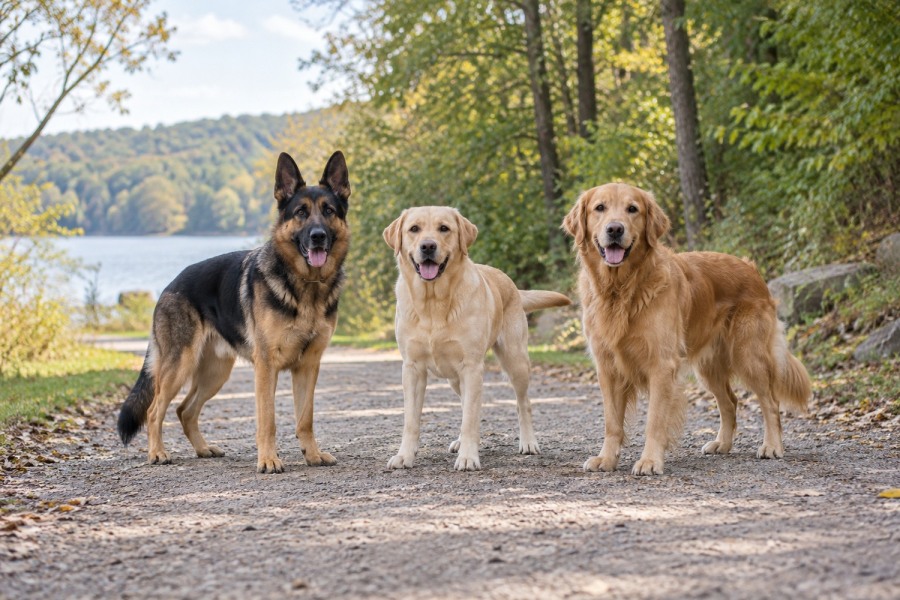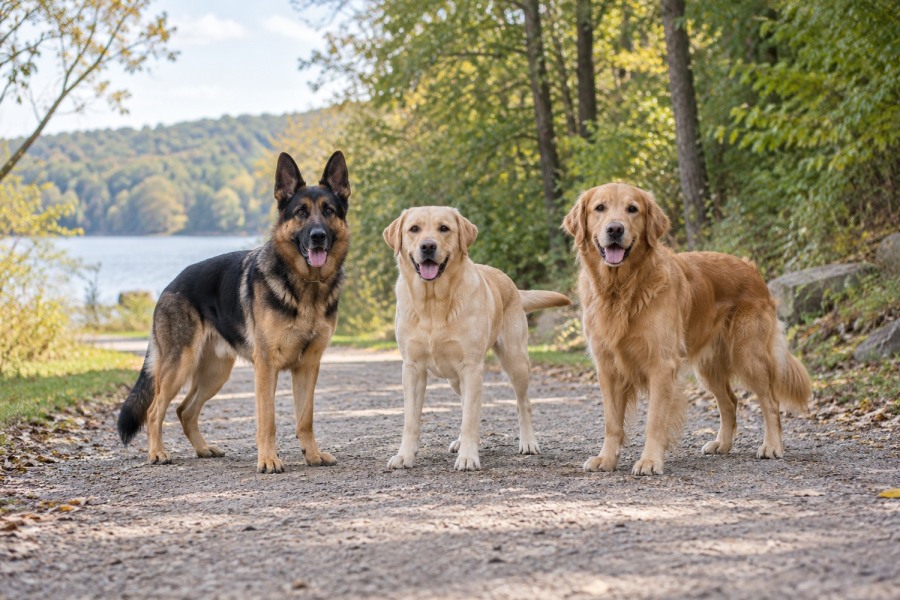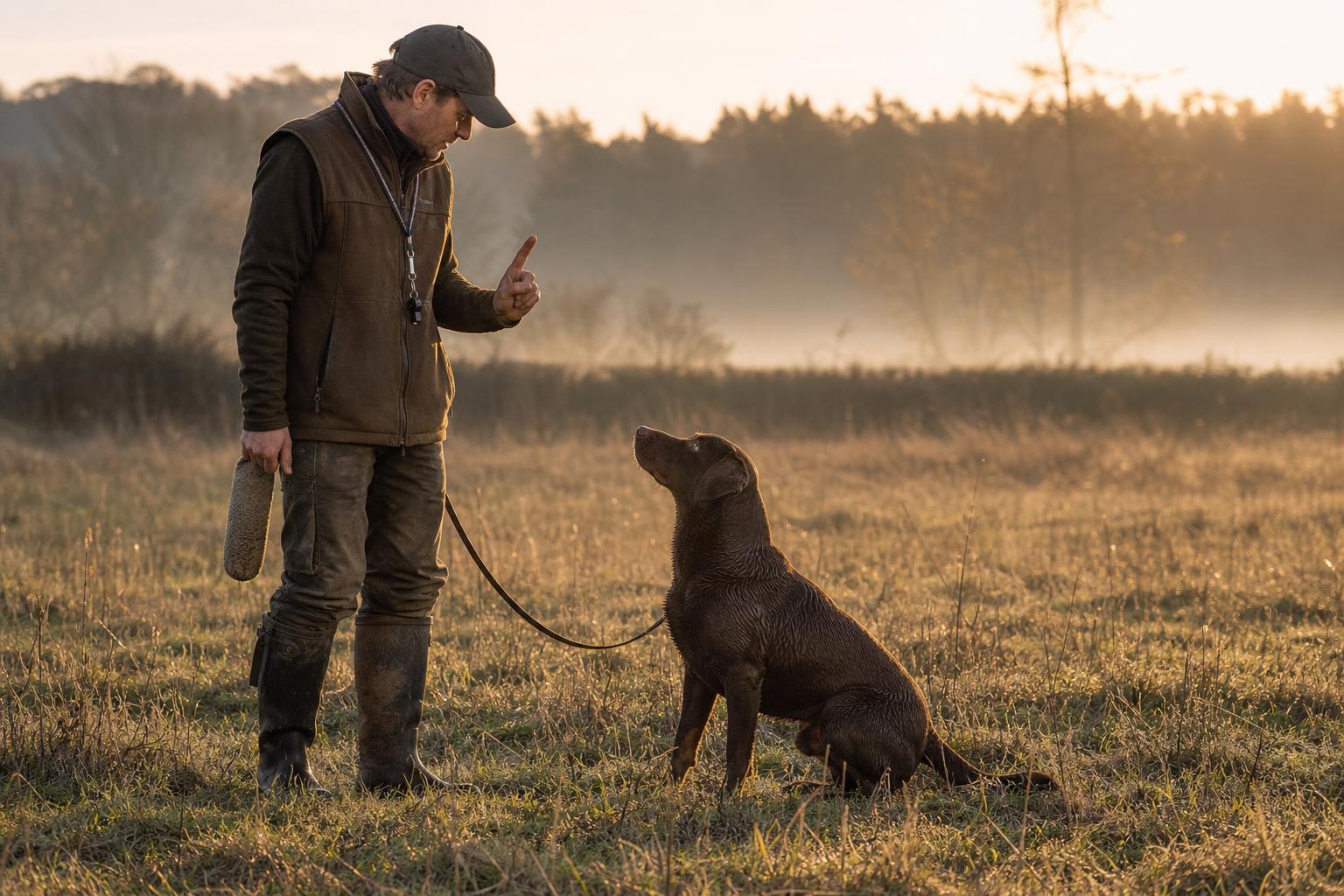
There comes a point in every good dog’s education when the basics are no longer enough. Sit, stay, heel, and recall may look polished in the yard, but a true working dog has to perform when the air is cold, the ground is rough, distractions are everywhere, and the job in front of him matters. That is where advanced working dog training techniques separate a pleasant companion from a reliable partner.
They are made through repetition, pressure applied with timing, and a relationship built on clarity. Whether you are training for hunting, tracking, protection, farm work, or demanding field tasks, advanced training is really about one thing: teaching the dog to think clearly while his instincts are running hot.
Many owners rush this stage. They see drive in a young dog and try to push for finished performance before the foundation is ready. That usually creates holes you end up paying for later. A dog that breaks under pressure, ignores commands when excitement spikes, or loses his head around heavy scent and movement is not lacking heart. More often than not, he is lacking structure in the training.
Build Advanced Skills on a Clean Foundation
Before moving into complex drills, the dog must understand how to respond promptly and confidently to known commands in different environments. Advanced work magnifies weakness. If the dog is loose on recall, sloppy on place, or inconsistent on leash pressure, those faults will show up louder once difficulty rises.
A seasoned handler learns to revisit the basics often. That does not mean the dog is going backward. It means you are tightening bolts before driving hard over rough country. A short session of polished heeling, clean remote sits, or directional control can sharpen a dog more than a long, messy workout full of corrections.
Proofing Commands Under Real Distraction
One of the most valuable advanced working dog training techniques is distraction proofing. A dog may know a command, but knowing is not the same as obeying under competing pressure. Start by increasing distractions in measured stages. Add movement, unfamiliar people, gun reports, other dogs, livestock, or strong scent, but never so much that the dog spirals into confusion. The goal is not to overwhelm him. The goal is to teach him that the command still means the same thing no matter what is happening around him.
You expose the dog to wind, rain, and hard use a little at a time until the response becomes part of him. That kind of reliability cannot be faked, and it cannot be rushed.
Drive Control Without Killing Desire
Plenty of owners can fire a dog up. The harder skill is teaching that dog to stay clear-headed while excited. In hunting and other working roles, drive is an asset only when it is under control. The dog that launches too early, vocalizes constantly, loses his line, or refuses direction is not showing advanced ability. He is showing unrefined impulse.
One of the best ways to improve drive control is to ask for obedience right before the reward the dog wants most. That may be a retrieve, a bite pillow, a release to track, or permission to hunt forward. When the dog learns that patience unlocks the job, discipline begins to live inside the work itself instead of standing apart from it.
At first, those seconds feel long to them. Then they begin to settle. Their eyes stay bright, their bodies stay loaded, but their minds stop leaking out the edges. That is a dog becoming useful.
Using Pressure With Precision
Advanced handlers understand that pressure is part of training, but sloppy pressure creates distrust and confusion. The timing has to be exact, and the dog must know how to turn pressure off through the correct action. That could be leash pressure, e-collar conditioning, spatial pressure, or the simple removal of reward. Whatever tool you use, the lesson must remain fair.
If he no longer connects the consequence to the action, you are not training. You are merely venting frustration. Calm, immediate, and understandable pressure teaches. Delayed emotion weakens a dog or makes him hard in the wrong way.
Advanced Scent Work and Problem Solving
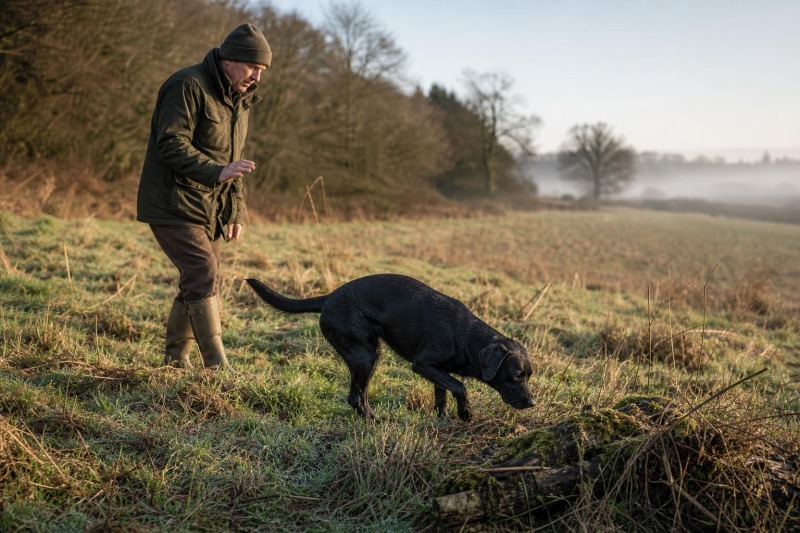
For many working dogs, nose work is where true maturity begins to show. Advanced scent training is not just about finding odor. It is about persistence, discrimination, and the ability to work through difficult conditions without falling apart. Wind shifts, old tracks, cross contamination, dry ground, standing water, and heavy cover all challenge a dog differently.
The smart approach is to vary conditions deliberately. Do not let the dog become brilliant only on easy tracks or straightforward scent pictures. Age your tracks longer. Introduce corners that test commitment. Work across mixed surfaces. Put the dog in places where scent pools, drifts, and breaks apart. Then give him enough room to solve the problem.
A handler can ruin advanced scent work by helping too much. If you constantly talk, steer, or crowd the dog, he begins looking to you instead of trusting his nose. Some of the best training days end with muddy boots, little conversation, and a dog learning to dig himself out of difficulty. That independence matters in the field, because real work rarely unfolds in a straight line.
Reading the Dog on the Ground
A skilled trainer watches the dog’s body language as closely as the terrain. Head carriage, tail rhythm, pace changes, casting, and breathing tell you whether the dog is in odor, losing it, or solving backward. Those details help you decide when to stand still, when to support, and when to quietly reset. This is the part of advanced training that no shortcut can replace. Time behind good dogs teaches an eye for truth.
Conditioning the Dog for Endurance and Recovery
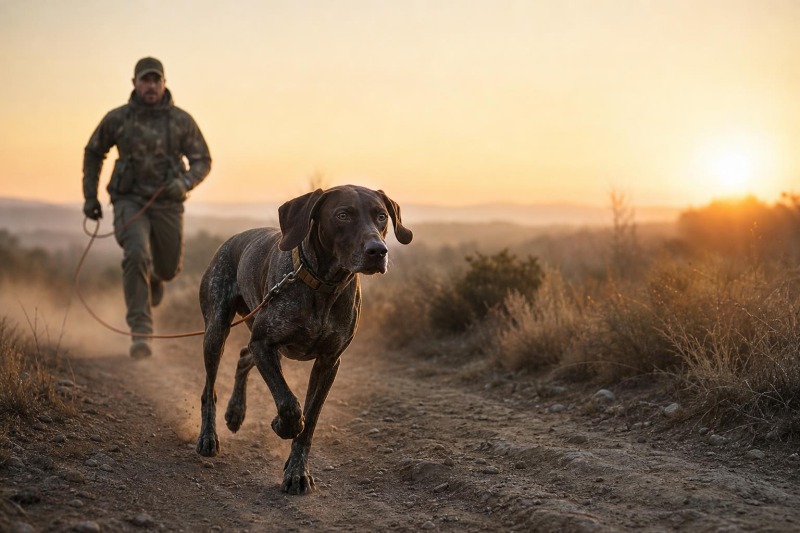
Advanced performance is physical as much as mental. A dog can be obedient and driven, but if he tires too quickly or struggles to recover, his work will suffer. Serious handlers treat conditioning as part of training, not an afterthought. Roading, controlled retrieves, hill work, swimming, and terrain variation all help build the muscles and wind a working dog needs.
Just as important is learning the difference between fatigue and avoidance. A tired dog slows honestly. A confused dog often shows conflict. A dog that has been overworked mentally may begin making sloppy choices before his body quits. Knowing which problem you are seeing lets you adjust the session without unfairness.
Recovery matters too. The best dogs are managed well between sessions. Good feed, hydration, paw care, joint awareness, and adequate rest are not glamorous topics, but they are often the reason one dog holds up through a season while another fades halfway through it.
Scenario Training for Real-World Reliability
One of the finest advanced working dog training techniques is scenario work. Once a dog understands commands and task expectations, you begin blending skills into realistic situations. For a hunting dog, that may mean honoring another dog, waiting quietly through delays, taking lines after long sits, and handling birds that do not fall where expected. For other working roles, it may mean navigating obstacles, searching unfamiliar areas, or responding under layered distractions.
The value of scenario training is simple: it exposes the cracks. Dogs often look finished when tasks are isolated. Put those same tasks together in changing order and truth comes out. Maybe the dog heels well but loses composure before release. Maybe he tracks well but struggles when transitioned into obedience. Maybe he handles pressure in one field but not around vehicles or strangers. Better to discover that in training than on the day the work counts.
Training the Handler Alongside the Dog
Most advanced dog work is limited by the handler, not the dog. The dog can only be as clear as the person giving direction. Your body language, timing, consistency, and emotional control all matter. If commands change from day to day, if standards slip when you are tired, or if frustration creeps into your hands and voice, the dog will reflect it.
Good handlers become predictable in the best possible way. They are fair, steady, and readable. Dogs thrive under that kind of leadership. The strongest teams are not always the flashiest. They are the ones who trust each other enough that very little has to be said when the work begins.
When to Advance and When to Slow Down
Progress in advanced training is rarely a straight climb. Some dogs leap ahead, then stall. Others mature slowly and suddenly click. The key is to judge the dog in front of you rather than the calendar. Move forward when the dog is confident, accurate, and engaged. Step back when confusion starts stacking up. There is no shame in simplifying a drill if it preserves understanding.
That is the heart of advanced training. It is not about showing how much control you have. It is about shaping a dog that can carry that control into honest work.
Advanced working dog training techniques are not tricks for making a dog look polished. They are practical methods for building reliability, composure, and problem-solving under real pressure. The best dogs keep their drive, but they also gain patience. They stay bold, but they learn precision. They work with intensity, yet remain connected to the handler when the situation gets complicated.
If you want a dog that performs when it matters, train beyond the comfort of the backyard and beyond the illusion of easy success. Teach the dog to obey under distraction, control himself in high drive, solve scent problems honestly, build physical endurance, and work through realistic scenarios. Do that with fairness and consistency, and over time you will have more than a trained dog. You will have a partner worth trusting.