Tracking dogs became part of law-enforcement practice through many local experiments and working traditions. The useful historical questions concern what the dogs were trained to do, how handlers worked them, and what surviving records actually establish.
The history of tracking dogs in law enforcement is not just a story about police methods. It is also a story about instinct, breeding, discipline, and the growing respect for what a trained dog can do under pressure. For dog owners interested in working dogs, this history shows how natural ability became a professional tool and why tracking remains one of the most valuable jobs a K9 can perform.
Early Roots of Tracking Dogs
Dogs were following human scent long before organized police forces ever existed. Hunters, gamekeepers, soldiers, and landowners all understood that certain dogs could trail a person or animal over difficult country. In the old world, scent hounds were used to follow poachers, fugitives, and lost travelers. Those early handlers may not have used modern training language, but they knew the basics: a dog with the right nose, enough grit, and steady handling could do work no man could match alone.
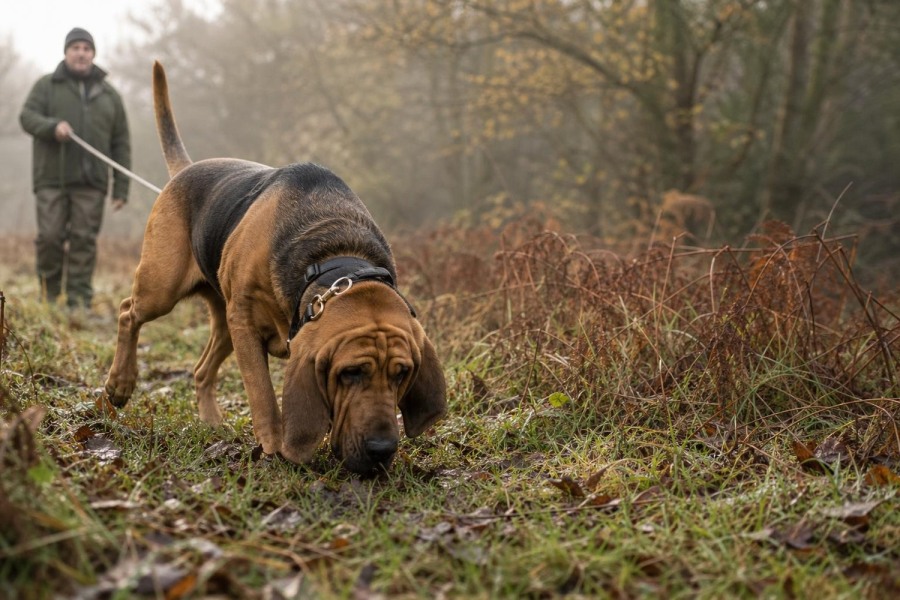
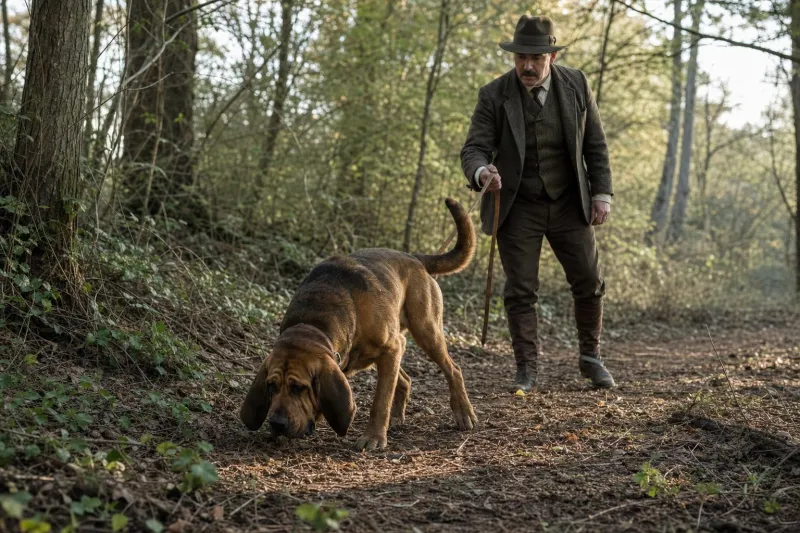
The bloodhound became the breed most closely tied to man-trailing, and for good reason. With its deep nasal structure, determination on a line, and willingness to work methodically, the bloodhound earned a reputation that spread well beyond hunting circles. By the 19th century, the dog was already associated with serious tracking work. In both Europe and the United States, bloodhounds were being used to follow escaped prisoners, fugitives, and missing persons.
That early period was not always polished, and standards varied from one place to another. Some dogs were excellent. Some were poorly trained and poorly handled. But the general idea had already taken hold: if a human had passed through an area, the right dog could often tell you where that person went.
Bloodhounds and the First Organized Police Use
As formal policing grew in the late 19th and early 20th centuries, departments began experimenting more seriously with dogs. In the United Kingdom, bloodhounds gained attention for criminal tracking work, especially in rural and semi-rural cases where a fleeing suspect had room to run. Their public image was dramatic, but behind the stories was a practical truth. A bloodhound could take a known scent article or work from a scene and push a track through fields, lanes, hedgerows, and village edges where evidence might otherwise go cold.
In the United States, bloodhounds also became associated with trailing work, especially in the South. Their use carried both legitimate law enforcement value and a difficult social history, particularly in the post-Civil War era and into the early 20th century. Any honest look at working dogs has to admit that dogs, like any tool, reflect the hands and systems that use them. Even so, their actual scenting ability helped establish the role of tracking dogs in criminal investigations and search operations.
Handlers learned hard lessons during those years. A dog needed more than a famous breed name. It needed controlled exposure, clean scent work, and a handler who could read body language instead of guessing. Those lessons would shape modern K9 work later on.
The Rise of Police Dog Programs
By the early 1900s, continental Europe, especially Germany and Belgium, began developing more structured police dog programs. This was a turning point. Rather than using dogs only as occasional trailing specialists, agencies began building systems for selection, training, and deployment. The German Shepherd Dog rose to the front during this era because it offered versatility. A shepherd could patrol, guard, search, and track, making it attractive for growing police forces.
That shift mattered. Bloodhounds remained respected for deep trailing ability, but law enforcement increasingly wanted dogs that could do more than one job. The patrol dog that could also track a suspect from a burglary scene or follow a fleeing felon across rough ground became highly valuable. As police work modernized, training grew more standardized, and dogs became part of a broader operational plan rather than a last-minute novelty.
What old-timers in the field would recognize right away is that this was the moment dog work started to become a profession. A talented dog was still essential, but so was recordkeeping, controlled training, obedience under stress, and careful certification. The romantic image of a hound simply being cast loose from the scene gave way to disciplined K9 deployment.
How Wars Influenced Tracking Dog Development
Military use of dogs during the world wars also pushed working dog development forward. Armies learned the value of dogs for sentry work, message carrying, casualty location, and tracking. After the wars, those lessons did not disappear. Training methods, breeding preferences, and handler expectations filtered back into civilian police work. Dogs were expected to be steadier under gunfire, more responsive to commands, and more capable in complex environments.
Urban policing changed tracking too. A dog now had to work not only through woods and fields but also along pavement, alleys, rail lines, neighborhoods, and crowded public spaces. That demanded different selection and more advanced training. It also widened the range of breeds used in law enforcement tracking.
From Bloodhounds to Multi-Purpose K9s
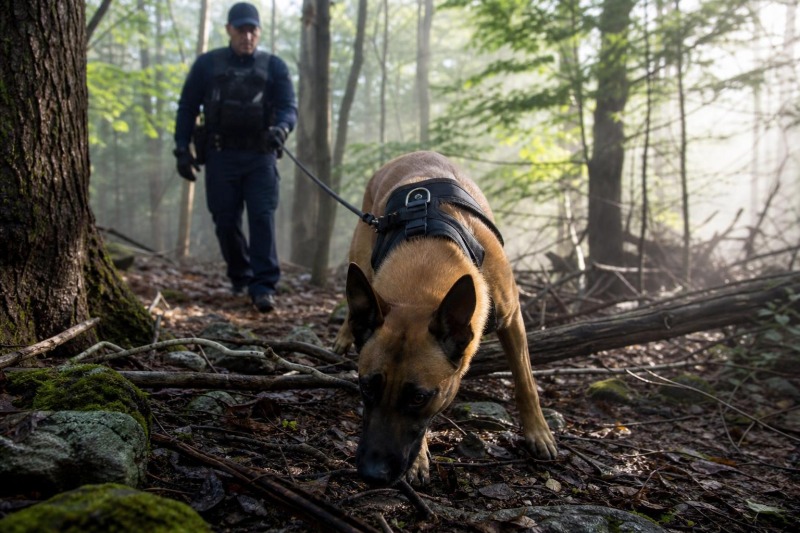
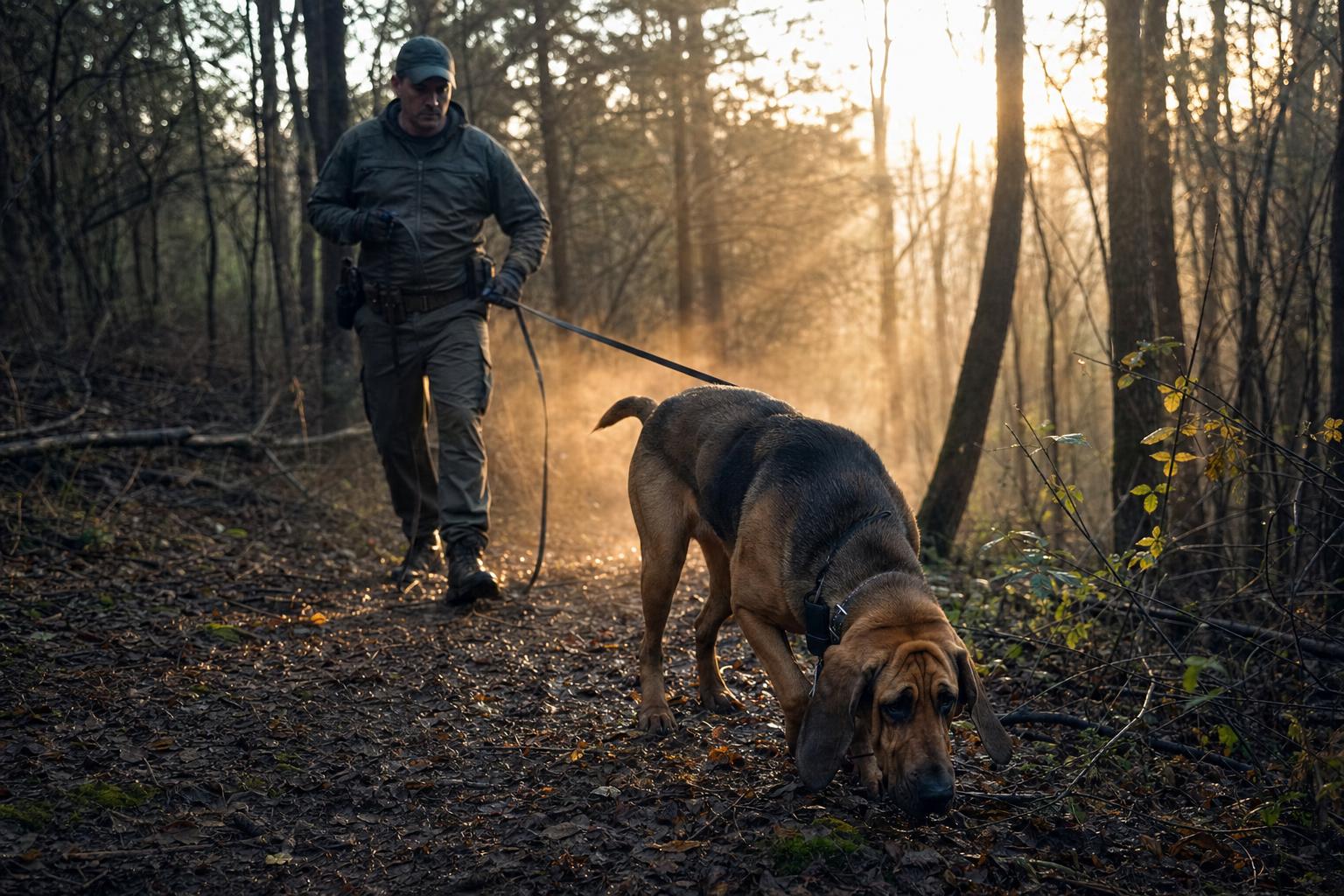
As the 20th century moved along, several breeds proved themselves in law enforcement. German Shepherds became the classic police dog. Belgian Malinois later gained major ground thanks to athleticism, intensity, and trainability. Labrador Retrievers found important roles in detection and some tracking contexts. Bloodhounds remained a favorite for long-distance trailing and missing person cases where patience and scent discrimination mattered more than patrol aggression.
That distinction is worth understanding. Tracking and trailing are often spoken of together, but in practical work they can involve different styles. A patrol dog may track ground disturbance and human scent in a fresher, tactical context, often after a suspect has fled a scene. A bloodhound may trail a specific individual’s scent over longer time periods and over more mixed terrain. Good agencies learned to use the right dog for the right task.
This evolution helped law enforcement become more effective. Instead of relying on one breed or one training philosophy, departments began matching dog and mission. That is still the backbone of successful K9 work today.
Modern Tracking Dogs in Law Enforcement
Today’s law enforcement tracking dogs are the result of decades of refinement. Training is more scientific. Handlers understand scent theory better. Operational standards are tighter. A modern police tracking dog may be called to locate a fleeing robbery suspect, track a missing child from a last known point, clear a wooded perimeter after a crash, or assist in evidence recovery tied to a trail.
Technology has changed policing, but it has not replaced the working dog. Drones can see from above. Cameras can review movement. GPS can help organize search patterns. Still, none of that duplicates what a dog does when it takes in scent and tells a handler, with conviction, that a human being passed this way and went there. In real conditions, especially in darkness, weather, thick cover, or broken terrain, that remains powerful.
The best handlers will tell you the same thing hunters have known for generations. Trust the dog, but earn that trust through training. A tracking dog is not magic. It is a partner. When training is rushed or standards are loose, mistakes happen. When breeding, preparation, and handling are sound, the dog becomes one of the most dependable assets on the ground.
The Handler’s Role in the Dog’s Success
History often celebrates the dog, but the handler deserves his share of the story. The finest nose in the world can be ruined by a handler who crowds the line, misreads behavior, contaminates the start, or asks for too much too soon. Through the years, law enforcement improved not only by training better dogs but also by producing more skilled handlers who understood wind, terrain, contamination, aging scent, and canine body language.
That relationship is where the real craft lives. You can see it in the field when a dog checks, circles, settles, and drives forward again, while the handler quietly gives it room and confidence. It is not loud work. It is thoughtful work. And it has deep roots in both hunting tradition and modern service training.
Why the History Still Matters
For dog owners interested in working dogs, this history is more than an old timeline. It explains why certain breeds are valued, why scent work remains such a respected discipline, and why law enforcement still invests in K9 tracking programs. These dogs were not added to policing for show. They earned their place over generations of real-world results.
It also reminds us that working ability is something to preserve. Strong nerves, sound structure, drive, intelligence, and trainability do not happen by accident. The history of tracking dogs in law enforcement is really a history of people recognizing those traits, shaping them carefully, and building a job around them that serves the public in ways few tools can.
Out in the field, whether you are watching a hound work an old trail through damp timber or seeing a patrol dog push a fresh track across a subdivision edge, the feeling is much the same. You are witnessing an ancient ability put to modern purpose. That bridge between instinct and service is what makes tracking dogs so compelling and so important.
Law enforcement has changed dramatically over the years, but one truth has held steady. When a person disappears into the dark and leaves little behind but scent, a well-trained dog still gives us one of the best chances of finding the way forward.