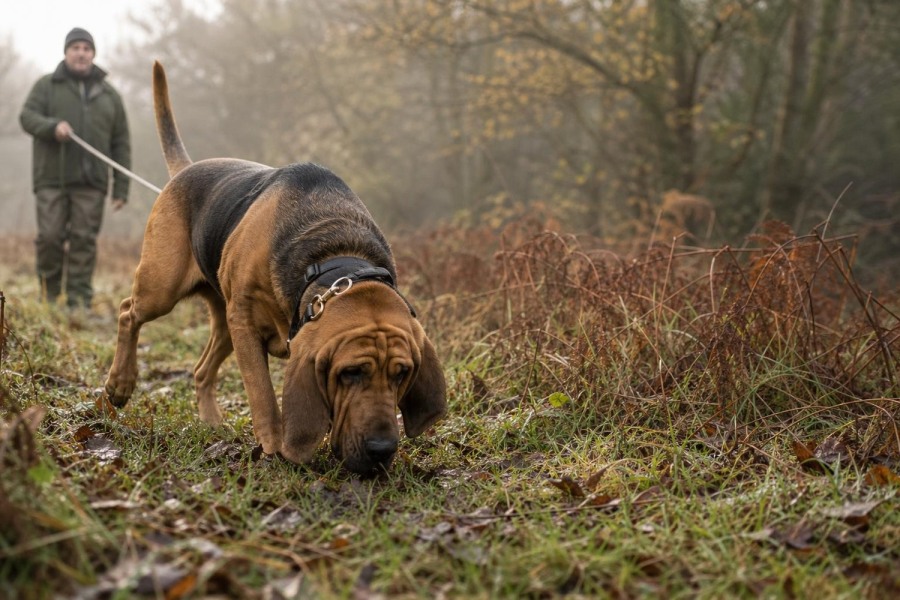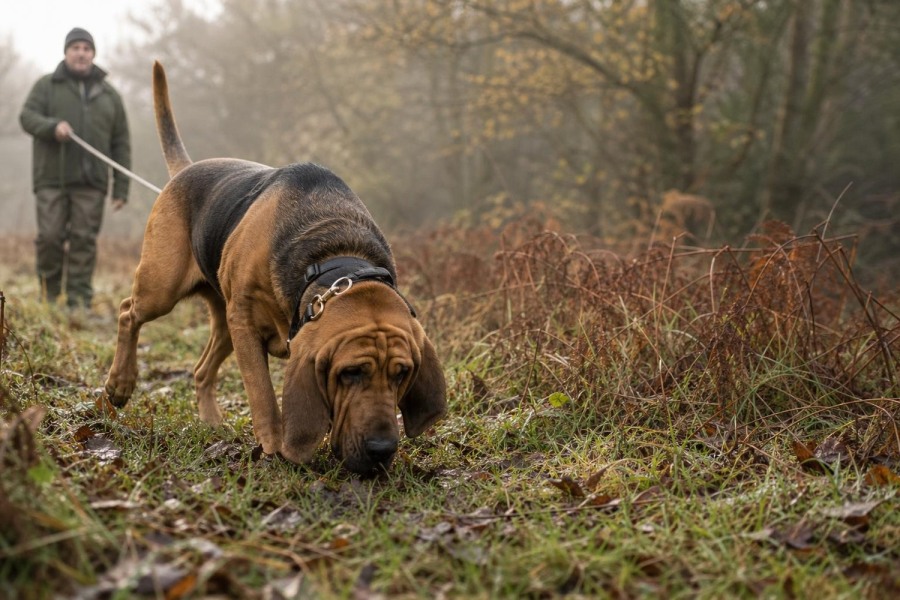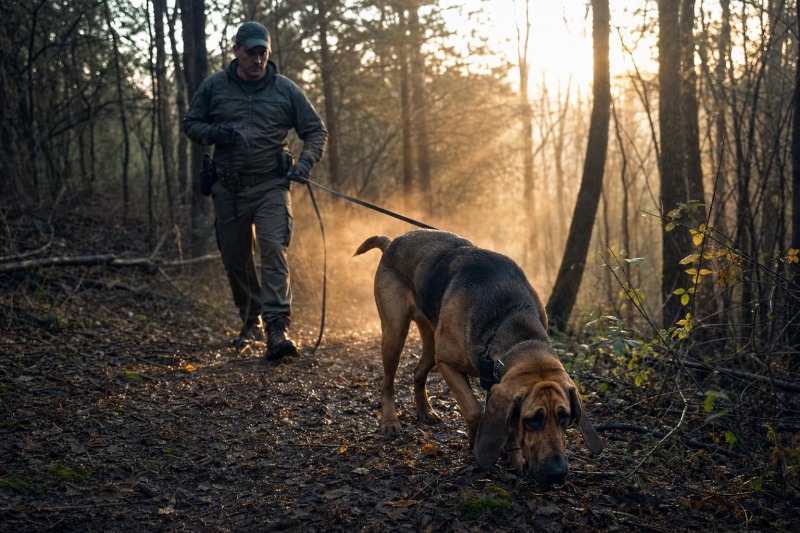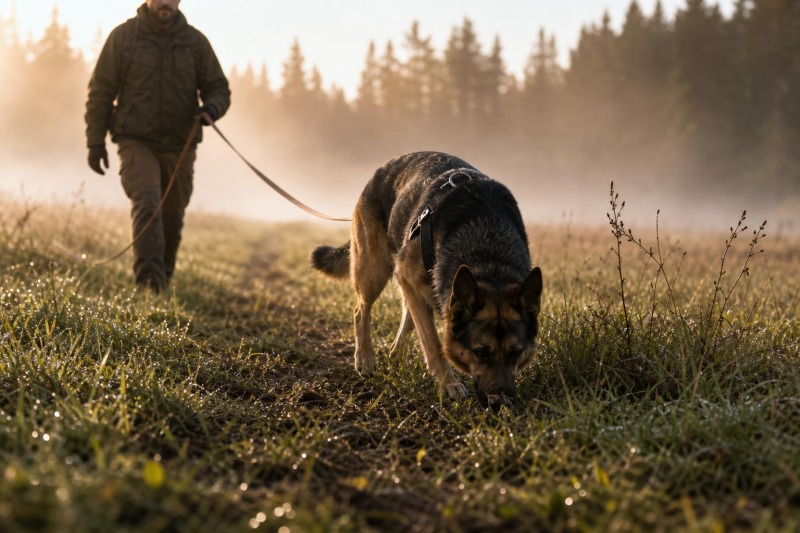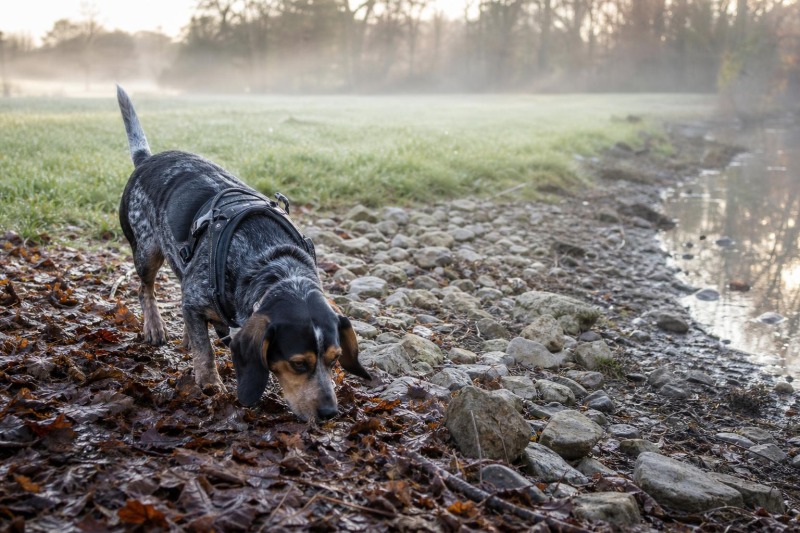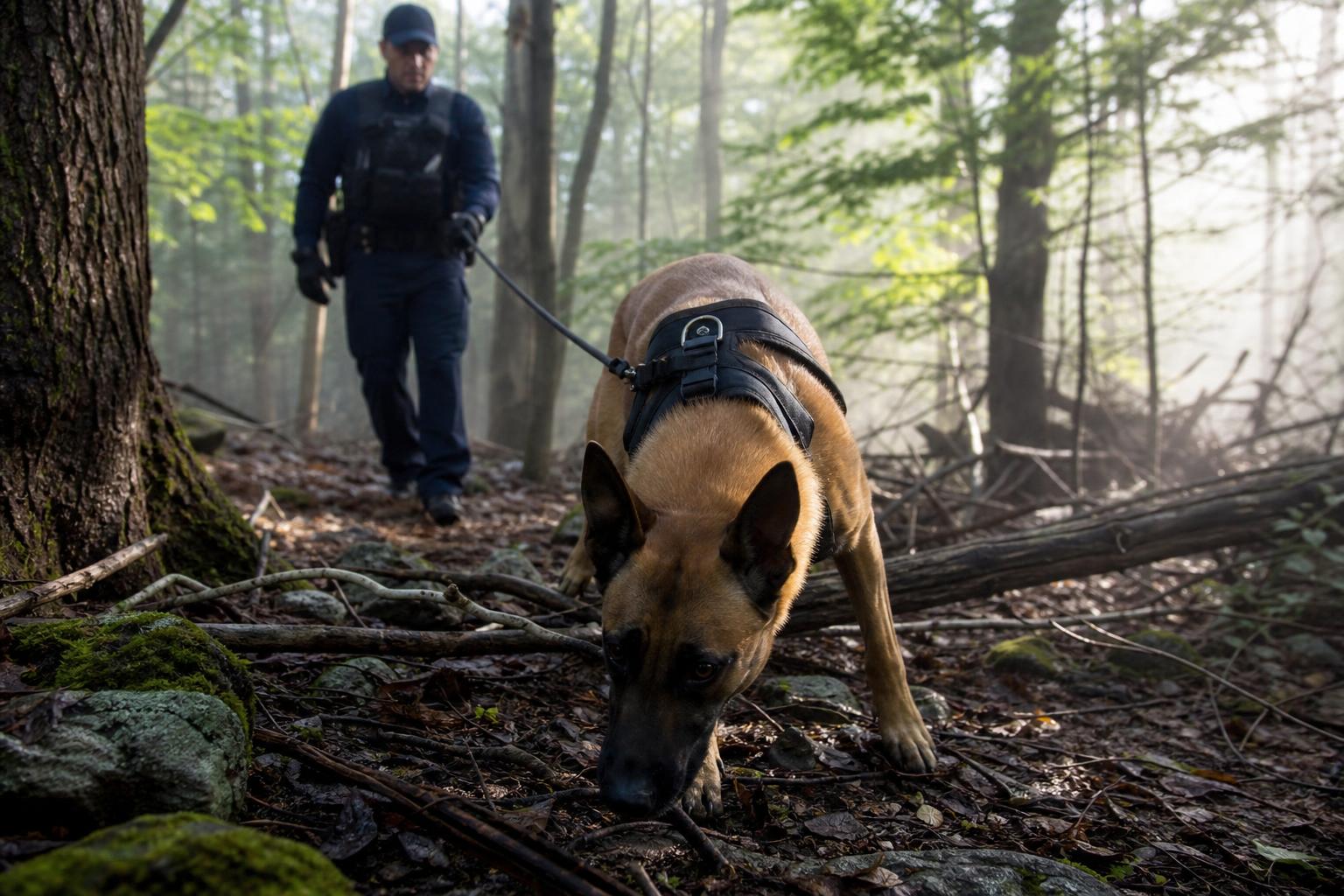
When a suspect slips into the dark and the trail goes cold for human eyes, that is often when a police tracking dog begins to shine. Folks who have spent time behind good dogs know there is nothing mystical about it, but there is something humbling in watching a trained animal sort out what people cannot see. In a manhunt, where fear, distance, weather, and rough country all work against the search, a solid K9 team can cut through confusion and put law enforcement back on a living trail.
Police tracking dogs in manhunts are not simply turned loose to perform miracles. They are carefully selected, conditioned, and handled with discipline. The dog brings the nose, drive, and determination. The handler brings judgment, timing, and the experience to know when the dog is working odor honestly and when conditions are beginning to erode the line. That partnership is what makes the difference.
What Police Tracking Dogs Actually Do in a Manhunt
At the heart of it, a tracking dog is following human scent left behind by a particular person or by fresh human passage. Depending on the training system, the dog may start from a scent article such as clothing, a hat, or an object the suspect handled. In other cases, the team may work from the point last seen and track the freshest human odor leaving that location. Either way, the mission is straightforward on paper and anything but simple in the field: locate, pursue, and indicate the path of a fleeing person.
In a real manhunt, the trail rarely runs neat and clean. The suspect may cut through backyards, cross pavement, enter timber, double back along a creek, or hide in heavy cover hoping the dog will overshoot. Add patrol vehicles, officers on foot, civilian contamination, shifting wind, and rising heat from concrete, and the picture gets complicated in a hurry. A proven police dog does not need perfect conditions, but it does need a handler who understands how scent behaves over changing ground.
Most working dog owners appreciate this point right away. Good dogs are honest, but scent is alive. It drifts, pools, weakens, hangs low in damp hollows, and breaks up over hot roads or windy ridges. A handler who learns to read both the dog and the terrain gives that dog its best chance to succeed.
Why Dogs Can Find What Humans Miss
A dog’s olfactory system is built for detail in a way people struggle to imagine. While humans walk through the world leaning hard on sight, dogs process layers of odor constantly. In a manhunt, that means a trained K9 can separate out useful scent where a person sees only trampled grass, open woods, or a line of houses that all look the same. The dog is not guessing. It is sorting information.
That matters because suspects under stress make mistakes. They brush against vegetation, leave microscopic skin cells, disturb soil, sweat heavily, and move fast. Every bit of that can contribute to the odor picture. A dog on a good line often shows confidence that is unmistakable to an experienced handler. The pace changes. The head carriage settles into a familiar pattern. The pull into the harness becomes direct and purposeful. Those are the moments when everyone behind the dog starts to trust the process.
Tracking Versus Trailing
In everyday talk, people use tracking and trailing as if they mean the same thing. In practical K9 work, the distinction can matter. Tracking often refers to following the actual path where the person walked, with the dog working close to footstep scent and ground disturbance. Trailing can involve following human odor that has drifted off the exact path, allowing the dog to move somewhat wider depending on wind and terrain. Many police dogs use a blend of both in the field. The key point is not the label. The key is that the dog is trained to stay committed to the target odor despite distractions.
How Police K9 Teams Prepare for Manhunts
No dog is born ready for law enforcement work just because it has a strong nose. Natural ability matters, but structure matters more. The best police tracking dogs are developed through repetition under controlled difficulty, then tested under increasing pressure until the work becomes dependable. Straight tracks become aged tracks. Easy surfaces give way to asphalt, gravel, brush, drainage ditches, and residential edges. Contamination is introduced. The dog learns that quitting is not an option and that the reward comes from solving the problem.
Handlers train just as hard, though their work is quieter and easier for the public to miss. A good handler learns line management, scent theory, tactical movement, safety around hidden suspects, and the discipline to trust the dog without pushing it into a false answer. That last part is harder than it sounds. In a tense manhunt, with radios crackling and command staff wanting answers, the temptation to rush is real. The teams that perform best are usually the ones that stay methodical.
Breed selection also plays a role. German Shepherds, Belgian Malinois, Bloodhounds, and several other breeds have all proven useful depending on agency needs and training philosophy. Some dogs bring intensity and versatility for patrol work along with tracking. Others are prized for a calm, deep commitment to scent over long distances. The ideal dog is not chosen for appearance. It is chosen for nerve, drive, sound structure, and a nose that holds up when conditions turn rough.
Weather, Terrain, and Time
If you have followed dogs in hunting country, you already know the morning can be a friend and the afternoon can be a thief. Cool, moist air often helps scent hold together. Heat dries things out and can make odor harder to pin down. Wind can carry scent helpfully or scatter it into confusing pockets. Rain may freshen scent in some conditions, but a pounding storm can wash away detail and complicate the picture.
Terrain changes everything. Wood lines, creek bottoms, cut fields, parking lots, subdivisions, and industrial ground each handle scent differently. Thick cover can trap odor. Open pavement can bake it. A ditch line may hold scent like a funnel while a breezy hilltop smears it thin. Then there is time. Fresh tracks are generally easier, but determined, well-trained dogs can work older trails if contamination is limited and the handler stays patient.
One of the biggest misunderstandings among the public is the idea that the dog either has the scent or does not. In truth, manhunts are fluid. The dog may lose intensity in one area, cast, pick it up again, and drive on. That is not failure. That is problem solving. Experienced handlers expect these moments and know the dog’s body language well enough to tell the difference between working through difficulty and simply wandering.
How Handlers Read Their Dogs Under Pressure
A police tracking dog talks constantly, just not with words. It speaks through tension on the line, changes in breathing, ear set, tail action, speed, and commitment at turns or obstacles. Some dogs become more deliberate when the scent weakens. Others widen out and cast until they reconnect. The handler has to know that dog as an individual, not as a textbook example.
They notice small things. A head snap at a fence gap. A sudden pull toward a treeline. A dog ignoring foot traffic and locking onto a brushy drainage where a suspect is likely to travel unseen. In a manhunt, those details are everything. A handler who misses them may pull the team off a hot line. One who catches them can end the search quickly and safely.
Safety is never far from the equation either. A cornered suspect may be desperate, armed, or hidden in a place where visibility is poor. The tracking dog is not just locating a person. It is often helping officers approach with better information. That can save lives on both sides of the badge.
Why Tracking Dogs Still Matter in Modern Policing
With drones, thermal imaging, surveillance cameras, and digital tracking tools, some people assume the dog has become secondary. The truth in the field is more practical. Technology helps, and smart agencies use it. But technology has blind spots. Batteries die. Thermal imagery struggles with cover and heat signatures. Cameras show only what they are pointed at. A skilled K9 team fills gaps that machines cannot close on their own.
That is why police tracking dogs remain so valuable in manhunts. They can move through woods, alleys, creek bottoms, and suburban edges with a kind of flexible efficiency no machine has fully replaced. They can indicate direction of travel when officers have almost nothing to go on. They can narrow the search area, recover discarded evidence, and bring order to a chaotic scene where minutes matter.
For dog owners interested in working dogs, there is a lesson here beyond law enforcement. The bond between training and instinct is what makes these animals extraordinary. A tracking dog is not effective because it is aggressive or flashy. It is effective because generations of canine ability are shaped by patient, demanding work into a useful craft.
The Real Value of a Good Police Tracking Dog
A police tracking dog in a manhunt is one of the clearest examples of a dog doing serious work for people. The dog does not care about headlines, courtroom talk, or public opinion. It cares about the task, the handler, and the reward at the end of the trail. There is something admirable in that plain honesty.
When the ground is hard, the night is long, and a fugitive thinks distance will cover his tracks, a seasoned K9 team can prove otherwise. They do it with nose, nerve, conditioning, and trust built one training day at a time. For those of us who respect working dogs, that is worth understanding and worth appreciating, because few sights in the field are finer than a good dog solving a hard problem while the rest of us scramble to keep up.