Certification tests a detection team against defined requirements. The odor, search setting, indication, and handling standard depend on the program. Understanding those details matters more than treating every certificate as evidence of the same ability.
For dog owners interested in working dogs, understanding how detection dogs are certified gives you a clear picture of what separates a talented prospect from a dependable professional. A dog may have drive, nerve, and a sharp nose, but until that dog proves those qualities under controlled testing, with real pressure and real standards, it is still only a promising trainee.
What Detection Dog Certification Means
At its core, detection dog certification is a formal evaluation of a dog and handler team. The goal is to confirm that the dog can reliably locate a target odor, ignore distractions, work safely, and communicate the find in a clear trained response. Depending on the discipline, that target odor may be narcotics, explosives, firearms, cadaver scent, bed bugs, electronic storage devices, or agricultural products.
Certification is not the same thing as basic training. Training is where the dog learns the game. Certification is where the dog proves it knows the game under rules that matter. In most quality programs, both the dog and the handler are evaluated together because detection work is never just about the nose. It is also about leash handling, search pattern, reading changes in behavior, keeping contamination down, and avoiding false alerts.
One thing folks outside the working dog world often miss is that there is no single universal certification for all detection dogs. Standards vary by agency, industry, state, organization, and specialty. A police K9 team may certify under one recognized body, while a private explosives detection team or a conservation detection dog team may use another. The strongest certifications are built around realistic search problems, blind testing, and regular recertification.
Before Certification: Building the Detection Dog
Long before a dog stands on a certification field or enters a test building, the groundwork has already been laid. Good detection dogs are selected for traits that cannot be faked. Hunt drive matters. Confidence matters. Environmental stability matters. A dog that shuts down on slick floors, loud machinery, tight spaces, or unfamiliar people is going to struggle once the training leaves the kennel yard.
Most detection dogs begin by learning that odor pays. Trainers imprint target odors by pairing them with a reward the dog values deeply, often a toy, tug, or food. Over time, the dog learns that finding a specific scent leads to the thing it wants most. This is where experienced trainers earn their keep. They shape not only odor recognition, but commitment, independence, and clarity in the final response.
Some dogs are trained to give an active alert, such as a sit, stare, or bark at source. Others are taught a passive alert, often a sit or down, especially in settings where scratching or biting at source could be dangerous. Explosives dogs, for example, generally need a calm, controlled indication. The alert must be repeatable, unmistakable, and safe.
Why Exposure Matters
Plenty of dogs can find odor in a tidy training room. That does not mean they are ready to certify. A serious certification candidate must work through vehicles, luggage, open fields, warehouses, schools, offices, and outdoor areas with wind, heat, contamination, and human scent everywhere. The dog needs to understand that odor is odor, no matter where it hides.
That kind of exposure is what turns a dog from a student into a worker. Certification exists to catch that weakness before the dog is trusted in the real world.
What Is Tested During Certification
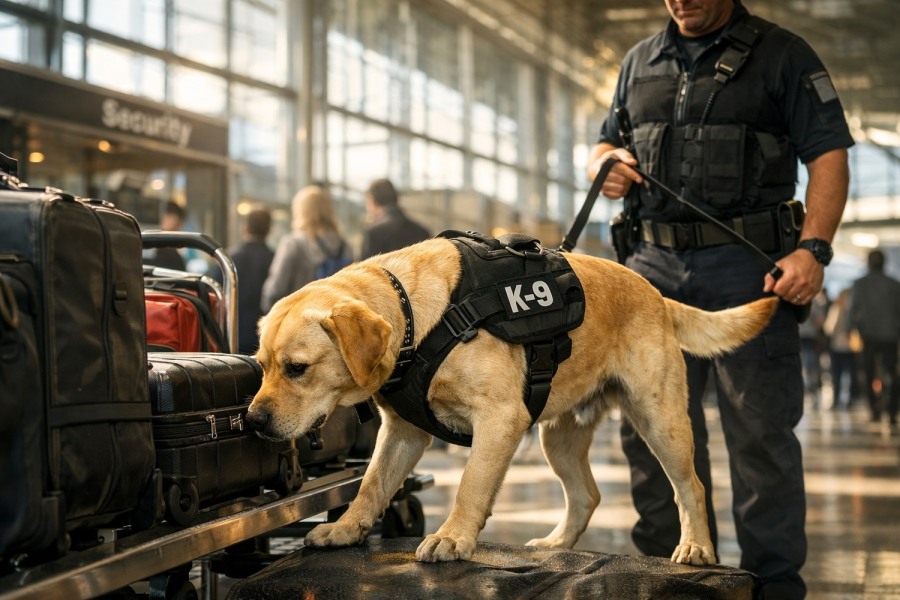
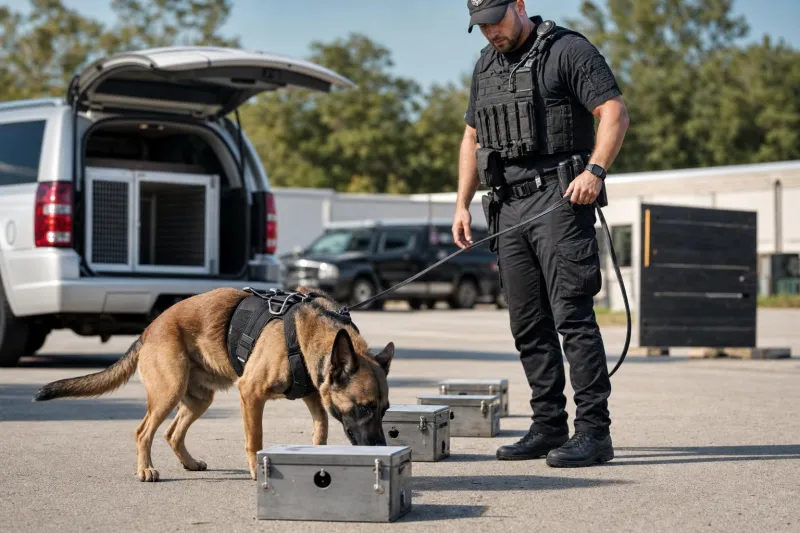
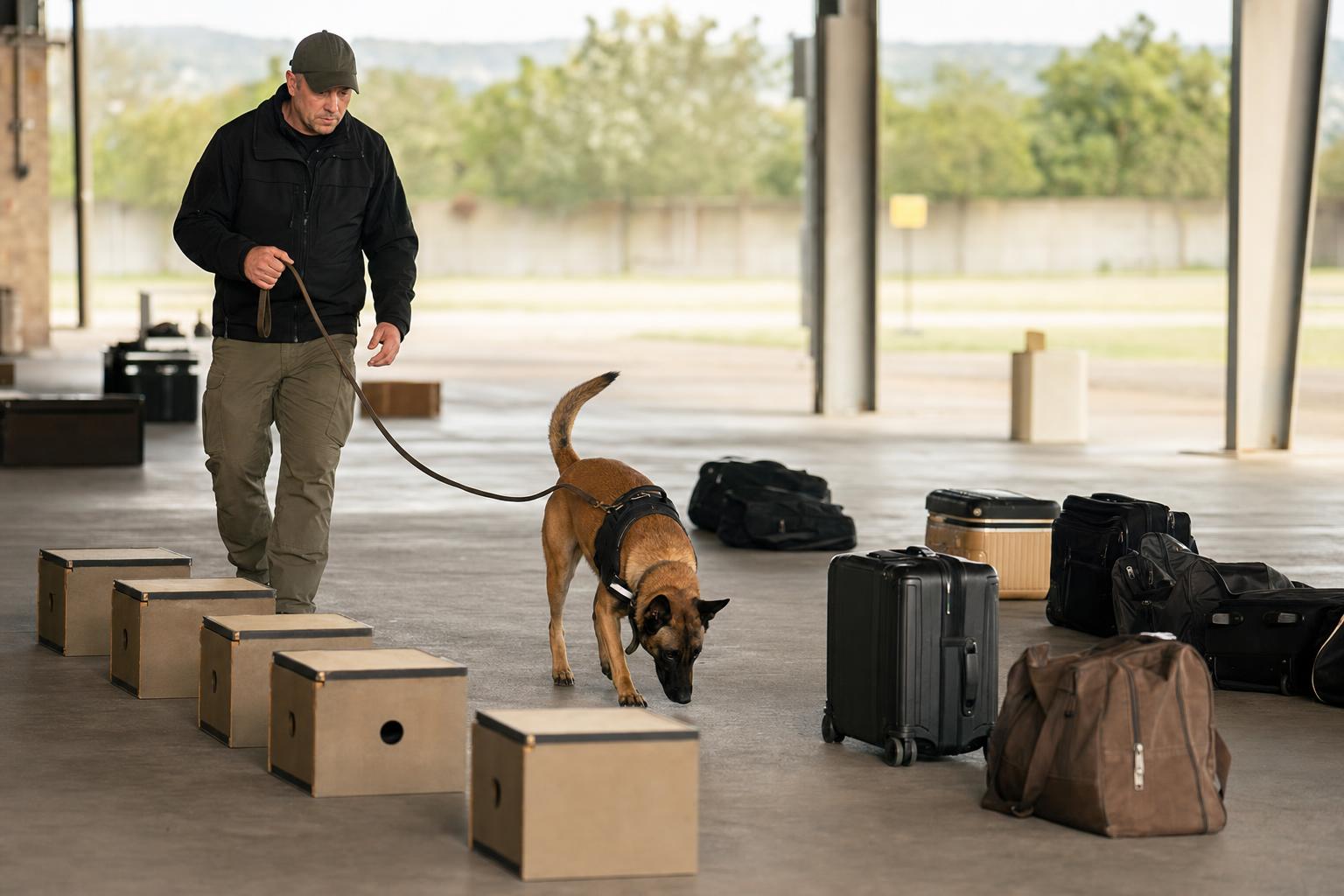
A proper detection dog certification usually includes several search scenarios designed to test reliability across different environments. The dog may be asked to search vehicles, rooms, packages, baggage, lockers, open areas, or building exteriors. The hides are placed so the dog has to work odor honestly, not just pattern-match a familiar setup.
Most certifications also test for clean negatives. In plain language, that means the dog must show it can search an area where no target odor is present and leave without inventing a find. That piece matters every bit as much as locating the hide. A dog that alerts where nothing exists is not dependable, no matter how flashy it looks on easy searches.
The certifying body may score things like search intensity, control, obedience during deployment, final response, source accuracy, and handler influence. Better tests are often blind or double-blind, meaning the handler does not know where the hide is, and sometimes the evaluator does not either. That prevents cuing, which can quietly ruin a team if nobody is honest about it.
The Role of the Handler
Detection work is a partnership. During certification, the handler is judged right alongside the dog. A skilled handler presents the search area properly, reads the dog without crowding it, and avoids steering the dog into a false alert. Handlers must know when to trust the nose and when to reset the search. They also need to maintain chain of control, safety, and professional standards.
This is where experience shows. A green handler can talk a dog into mistakes without realizing it. A seasoned one understands that the best searches often look quiet. The line stays loose, the dog works free within the task, and the handler lets the nose lead. Certification helps verify that the team functions as a unit, not as a handler dragging a talented dog around the room.
How Certification Standards Can Differ
Not all certifications carry equal weight. Some are demanding and grounded in operational reality. Others are little more than a rubber stamp. The strongest programs require known quantities of target odor, carefully controlled hides, clean search areas, documented scoring, and annual or scheduled recertification. They also expect the dog to perform under conditions that mirror actual field work.
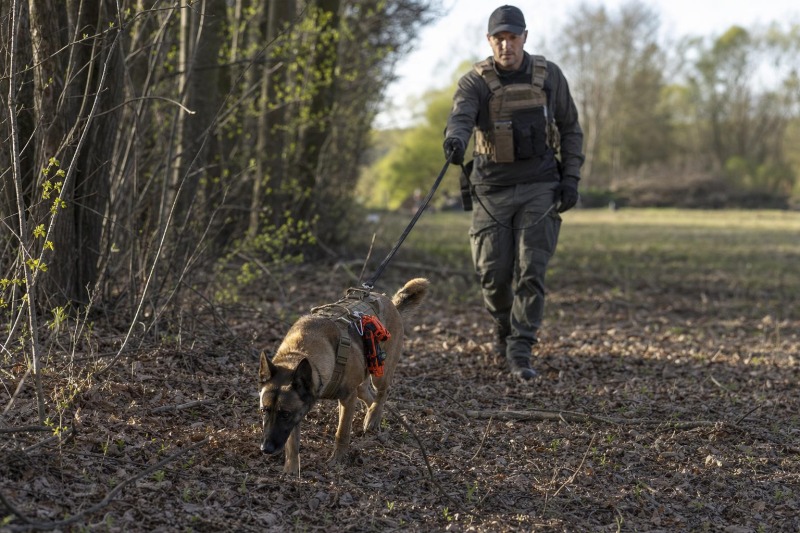
For example, an explosives detection dog may have to identify a range of explosive odors across vehicles, buildings, and luggage while showing a passive alert and safe search behavior. A narcotics dog may be tested on a different odor library and a different style of deployment. Human remains detection dogs often face outdoor search problems complicated by terrain, wind drift, buried source, or aged scent. The purpose of the work shapes the certification.
That is why anyone looking at a detection dog should ask not just whether the dog is certified, but by whom, under what standards, and how often. Those details tell you far more than the word certified ever can on its own.
Recertification and Maintenance Training
One of the surest signs of a legitimate program is that certification is not treated as permanent. Detection dogs need maintenance training throughout their working lives, and they need recertification at regular intervals. Odor recognition can stay strong, but sloppy handling, pattern training, environmental gaps, and overexposure to easy problems can dull a team if nobody keeps standards high.
Regular training keeps the dog sharp and honest. It also helps trainers catch drift early, whether that drift shows up as weak alerts, fringe responses, loss of motivation, or growing dependence on handler cues. Good teams train far more often than they test. Certification is simply the checkpoint that confirms the work between those dates is holding up.
Age, health, and workload matter too. A hard-charging detection dog may still want to work long after physical wear begins to show. Smart handlers pay attention to recovery, stamina, and orthopedic soundness. A dog cannot certify well, or work safely, if the body is failing the nose.
Why Certification Matters to Dog Owners and the Public
Certification protects more than reputation. It protects the mission, the handler, the agency or company, and the public that depends on accurate detection work. In legal settings, especially, a properly trained and certified detection dog may be subject to scrutiny. Clear records, recognized standards, and documented recertification can make the difference between confidence and doubt.
For dog owners interested in working dogs, certification also offers a useful lesson in what real performance looks like. It reminds us that talent is only the beginning. The finest hunting dogs, patrol dogs, and detection dogs all share one truth: drive has to be shaped, tested, and proven. A good nose is a gift, but a certifiable working dog is built through discipline and repetition.
When you strip away the jargon, detection dog certification comes down to trust. Can this dog find the target odor? Can it do so consistently, in varied environments, under pressure, without guessing? Can the handler deploy that dog fairly and read the outcome honestly? If the answer is yes, and a credible certifying body agrees, then you have more than a promising dog. You have a working team ready to be counted on.
Certification is the process that proves we are listening properly. In a field where mistakes can carry serious consequences, that proof matters. It matters in the kennel, in the truck, in the search area, and long after the ribbon or paperwork is handed over.