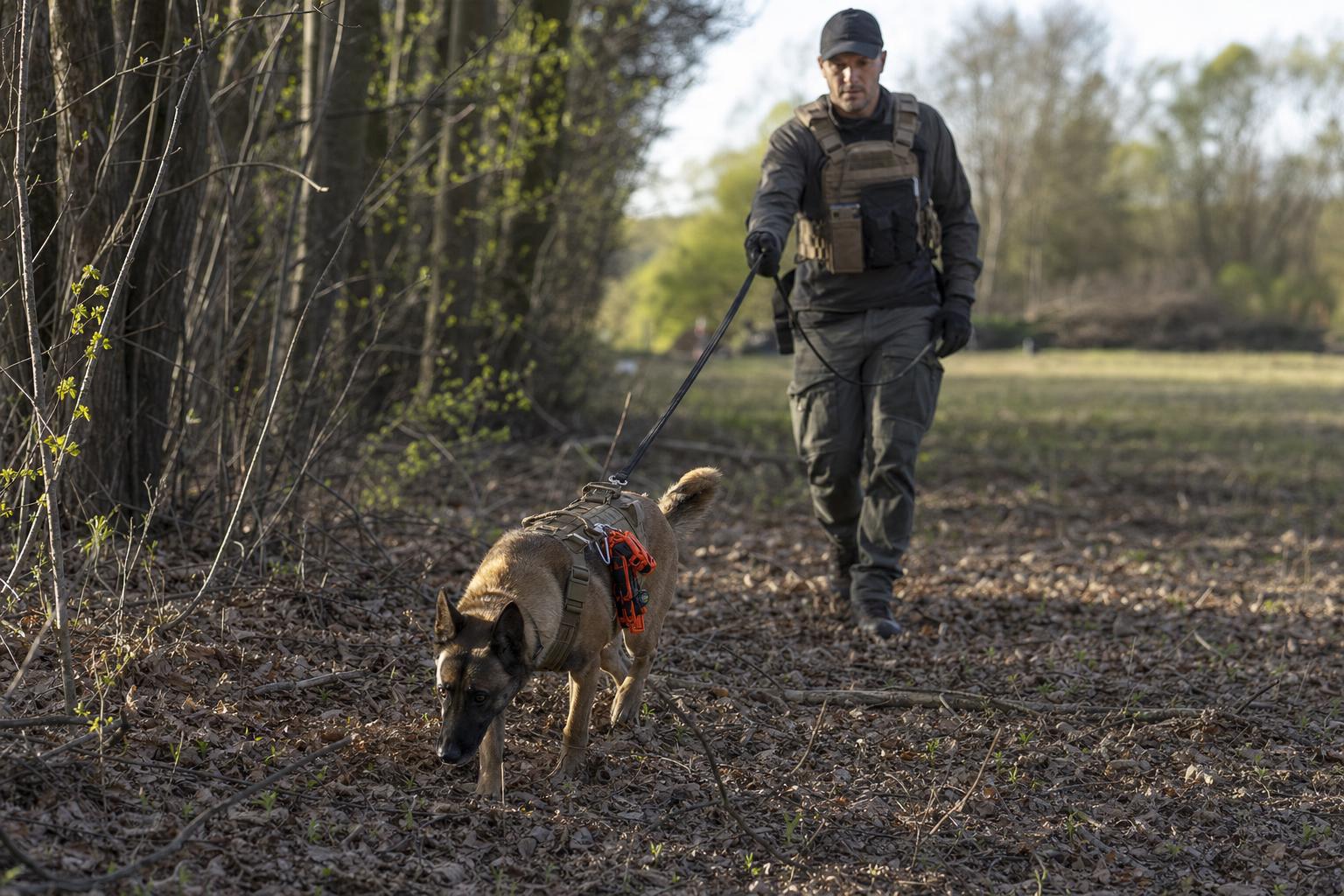
SAR Dog Certifications and Testing: What They Really Mean in the Field
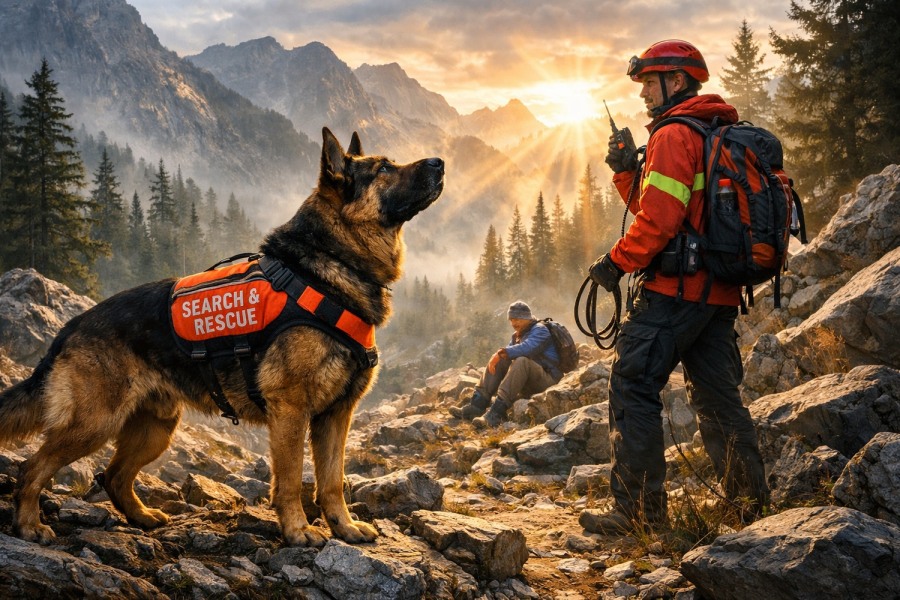
Anybody can say a dog has drive. Anybody can claim a dog is steady, smart, and ready for hard work. Search and rescue is where those claims get tested in a way that leaves no room for guesswork. SAR dog certifications and testing exist for one reason above all others: when a missing person is out there, often in rough country and under bad conditions, the dog and handler must perform to a standard that holds up under stress.
In the hunting world, a dog may look polished in training and then come apart when weather, scent, and pressure change. Search and rescue is no different, except the stakes are much higher. A certification is not just a ribbon or a line on a resume. It is a benchmark showing that the team has demonstrated control, reliability, and working ability in a structured test designed to reflect real-world demands.
What SAR Dog Certification Is Designed to Measure
At its core, SAR dog certification evaluates the dog, the handler, and the team together. A fine dog with a poor handler will struggle. A sharp handler with an unprepared dog will struggle just as badly. Good testing recognizes that search work is a partnership.
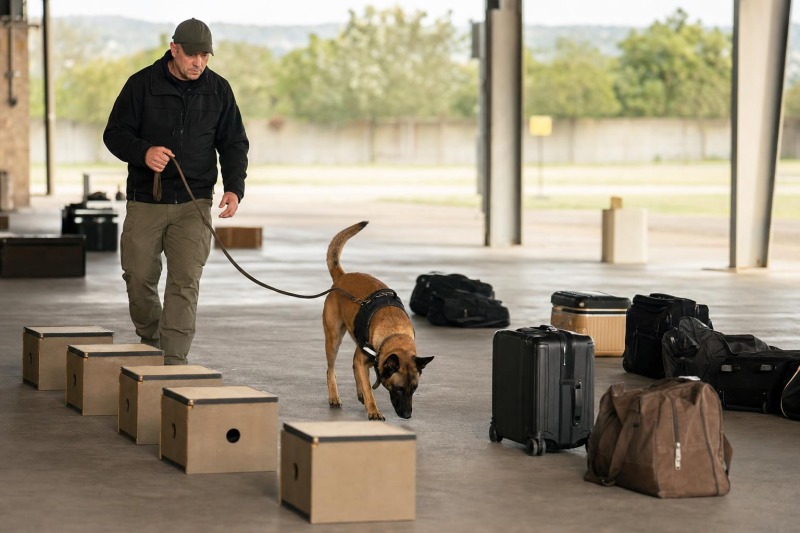
Most SAR certification programs look at foundational obedience, agility, stamina, environmental confidence, scent discrimination, and search commitment. Beyond that, they often measure the handler’s ability to read changes in behavior, work safely, communicate clearly, and stay organized during a search problem. In a proper test, evaluators are not simply waiting to see if a dog finds a subject. They are studying how that find happens, how the dog works scent, how distractions are handled, and whether the team could be trusted in an actual deployment.
That matters because search and rescue dogs work in conditions no clean training field can truly duplicate. Thick brush, wet timber, rocky draws, urban rubble, old scent, wildlife pressure, fatigue, and human emotion all get mixed together. Certifications try to put structure around chaos. No test can reproduce every field condition, but a solid testing program can reveal whether a dog has the tools and whether the handler has the judgment to use them.
Different Types of SAR Dog Testing
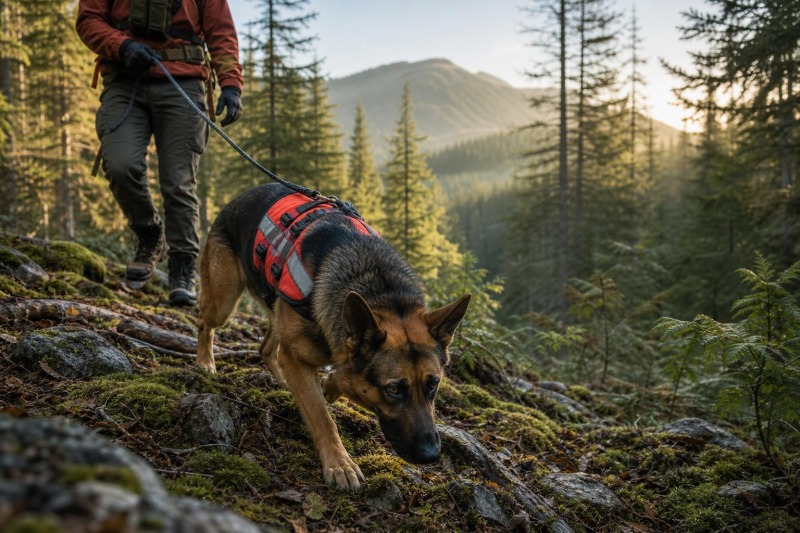
Not all search and rescue dogs do the same work, so not all certifications are built alike. Some dogs are tested in wilderness area search, where they range over large tracts of land and locate a missing person through airborne scent. Others are certified in trailing or tracking, where they follow a specific human scent path across changing terrain and contamination. Urban disaster dogs face a different challenge altogether, working collapsed structures, unstable footing, tight voids, and heavy distractions. Human remains detection dogs are judged on a separate set of scenting skills, and water recovery teams work under another standard entirely.
That is why dog owners need to look closely at the certifying organization and the discipline being tested. A wilderness air-scent dog may be excellent and still not be suitable for trailing. A trailing dog with precision on a scent track may not be the best fit for broad area work. The strongest handlers understand their dog’s natural strengths and train toward a mission profile instead of chasing titles that do not match the dog’s abilities.
Why Standards Vary by Organization
One point that surprises many newcomers is that SAR certifications are not universally identical. State teams, county teams, law enforcement-linked groups, and national working dog organizations may use different standards. Some certifications are practical and field-heavy. Others are layered, beginning with obedience and temperament work before moving into operational search problems. Some agencies require annual recertification, while others place a heavier emphasis on ongoing training records and mission readiness.
This variation is not necessarily a bad thing, but it does mean handlers should research what is recognized in their region. A certification only has value if the agencies calling out teams respect that standard. Before a dog owner commits to a training path, it pays to ask what local search teams require, what deployment agencies accept, and how often teams must prove themselves again.
What Evaluators Look for on Test Day
Test day can humble a team in a hurry. Dogs often feel the tension coming off the handler before the first command is given. Good evaluators know this and watch for steadiness from the start. They want to see a dog that can work with control but still show initiative. They want to see confidence without chaos.
Obedience is usually not judged as fancy sport obedience. In SAR work, obedience must be practical. The dog should recall, stay, load, unload, and respond under distraction. Agility is similar. No one is asking for circus tricks, but they do need to know the dog can negotiate logs, unstable footing, ladders, rubble, ditches, or tight spaces without shutting down.
Then comes the search itself. This is where a dog’s genetics, training, and heart all show up at once. Evaluators look for hunting drive, commitment to the problem, independence balanced by teamwork, and a clear trained alert. They also watch the handler closely. Is the handler pushing too much? Missing a behavioral change? Contaminating the problem by poor movement? In a strong team, the dog hunts with purpose and the handler supports the work instead of interfering with it.
A seasoned working dog owner learns sooner or later that your best asset in the field is often restraint. Let the dog work, watch honestly, and step in only when needed.
Preparing a Dog for SAR Certification
The best preparation is never rushed. Search and rescue dogs are built over time, not over weekends. Good teams lay a broad foundation first. That means physical conditioning, social stability, obedience, confidence on varied surfaces, and a deep love of the hunt. Without those pieces, advanced scent work rests on shaky ground.
Young dogs especially benefit from being exposed to different terrain, noises, vehicles, weather, and footing without pressure. A dog that has crossed creeks, climbed embankments, ridden in trucks, heard generators, and worked through timber in the dark will take test-day novelty in stride. A dog raised only on easy ground often tells on itself when the environment gets rough.
Building Search Drive the Right Way
Search drive is the engine under the hood. The dog must want to go out, hunt hard, and stay engaged even when the problem gets difficult. That drive is built through smart repetitions, rewarding finds, and carefully increasing complexity. The mistake some handlers make is adding challenge before the dog has confidence. A SAR dog should come to the search with expectation and urgency, not confusion.
Clear alerts matter just as much. Whether the dog gives a bark alert, a refind, or another trained response, that alert must be consistent under pressure. In thick woods, foul weather, or nighttime conditions, ambiguity wastes time. The cleaner the dog’s final response, the stronger the team becomes.
Handler Readiness Matters Too
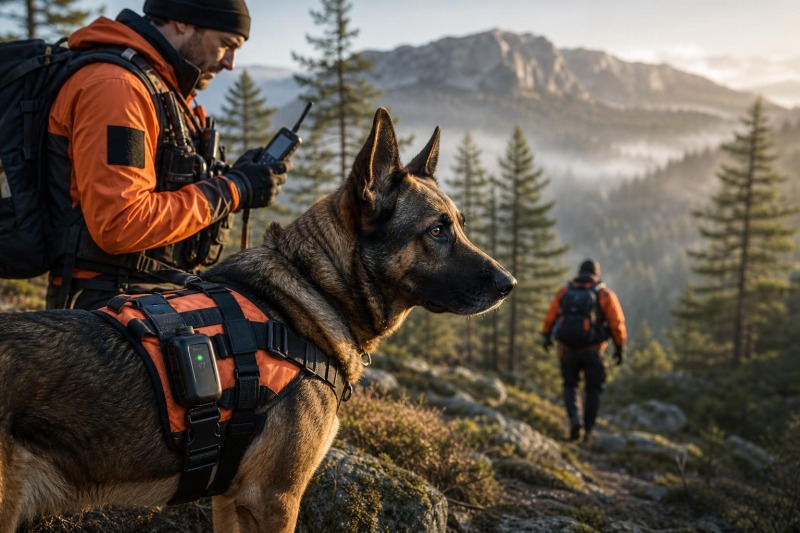
Many articles focus on the dog and forget that SAR certification tests the handler every bit as much. The handler needs map skills, radio discipline, knowledge of wind and terrain, understanding of scent behavior, and the humility to accept what the dog is showing. If you cannot tell the difference between a dog in odor and a dog simply ranging, certification day will expose it.
That is one reason training with experienced teams matters so much. Honest training groups create scenarios where the handler learns to read head snaps, body turns, change of pace, commitment, loss of odor, and source confirmation. Those details are hard to fake, and they are often what separates a passing team from one that nearly had it.
Common Reasons Teams Fail Certification
Most failures come from predictable weaknesses. Some dogs lack environmental confidence and hesitate on obstacles or strange footing. Some have plenty of enthusiasm but little control. Others can do the work in familiar training grounds but unravel in a new location. Handler errors are just as common. Poor timing, overhandling, weak search strategy, and failure to recognize the dog’s change in behavior can all sink a test.
Another common issue is training for the test instead of training for the job. Dogs notice patterns. If every hide looks the same, every search starts the same way, and every reward comes on cue, many dogs become test-wise without becoming field-ready. Strong SAR teams train with variety. They use different terrain, unknown subjects, changing wind, fresh scent, aged scent, elevated hides, buried odor where appropriate, and realistic access problems. They train for surprise because real searches are full of it.
Why Recertification and Ongoing Testing Matter
A SAR certification should never be viewed as a lifetime guarantee. Dogs age, handlers change, and skills get rusty if they are not sharpened. Recertification protects the integrity of the team and the safety of the mission. It confirms that the dog still has the physical ability, motivation, and clarity required to work and that the handler has kept standards from slipping.
That regular testing also keeps egos in check. Good working dog people know that ability is a perishable thing. You maintain it or you lose it. They are the ones quietly training in bad weather, documenting progress, fixing weaknesses, and showing up ready to prove the team again.
Choosing the Right Path as a Working Dog Owner
If you are a dog owner interested in working dogs, SAR certification should be approached with clear eyes. Start by finding reputable local teams and asking what standards they use. Learn what kind of search work is most needed in your area. Some regions need wilderness air-scent dogs. Others need trailing teams, disaster dogs, or human remains detection dogs. Match the dog to the mission whenever possible.
Temperament, nerve, stamina, and hunt drive all matter more than romantic ideas about hero dogs. A true search dog is not made by good intentions alone. It takes breeding, training, exposure, and a handler willing to learn the craft the hard way. But when it comes together, there is not much in the working dog world finer than watching a dog solve a human problem with its nose and heart.
SAR dog certifications and testing are there to protect that standard. They help separate promise from proof and enthusiasm from readiness. For the working dog owner, that is exactly how it should be. When the call comes and somebody out there needs to be found, the field does not care about talk. It cares whether the dog can do the work.