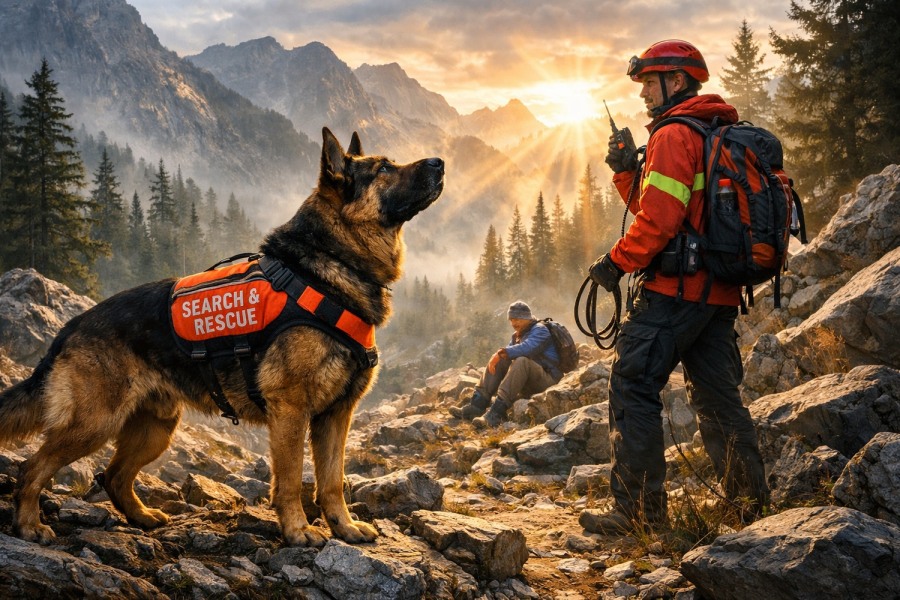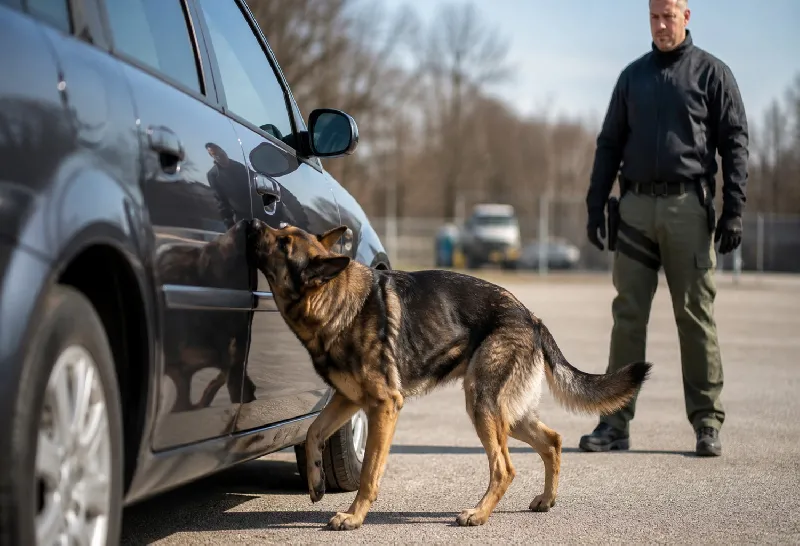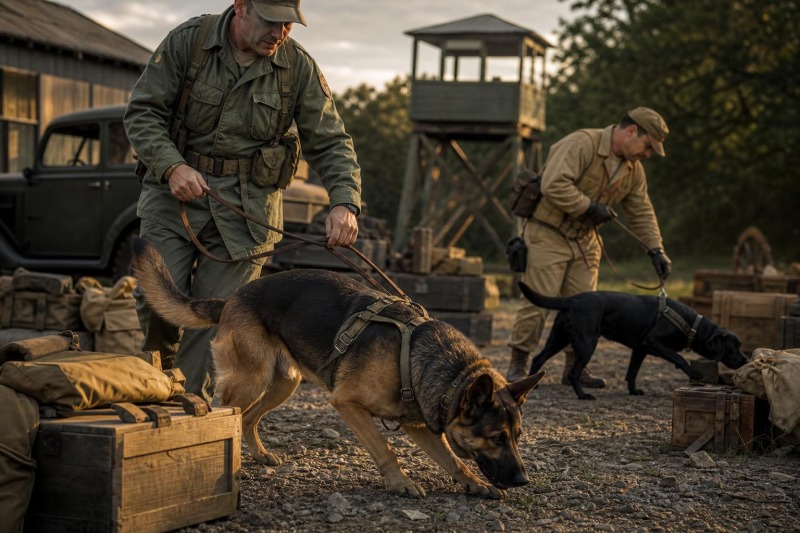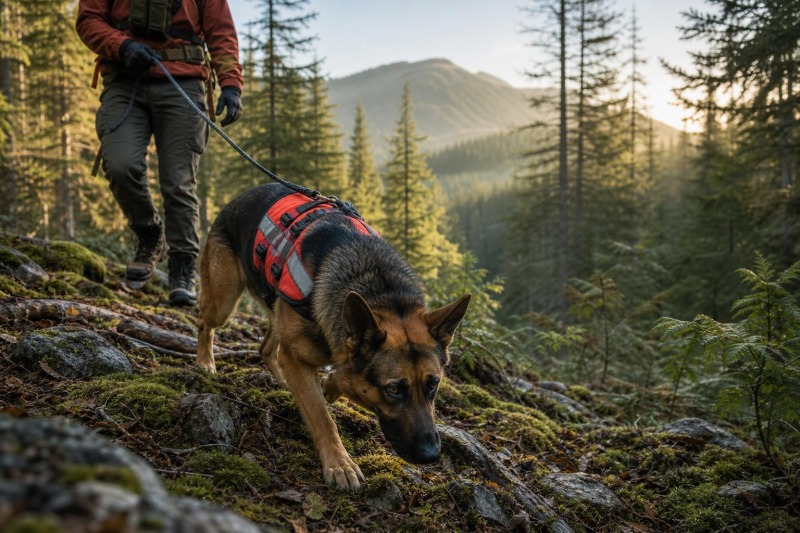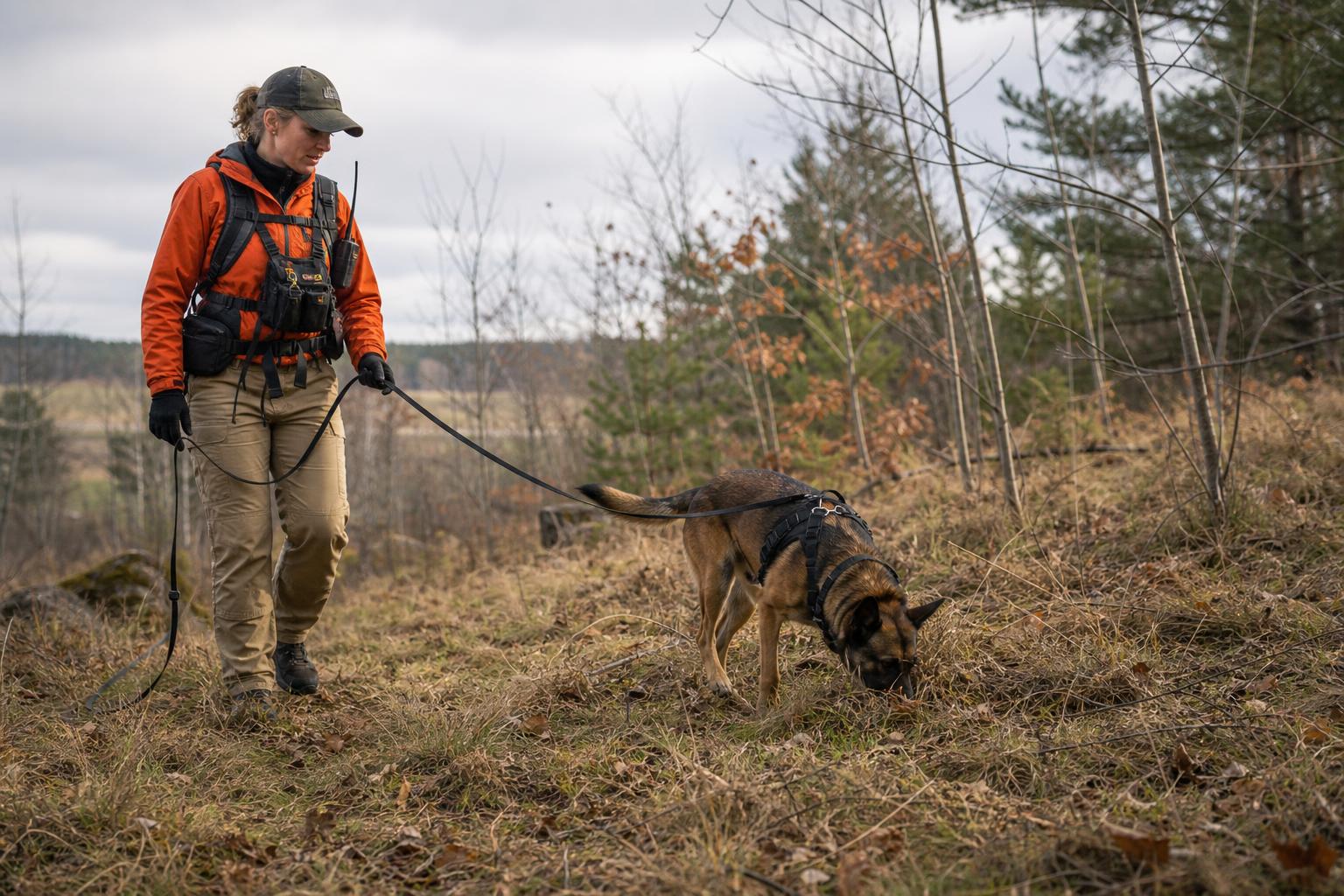
Some dogs are bred and trained to find birds in thick cover. Some trail wounded game through rain, mud, and a bad night’s wind. And then there are the dogs that work a task far heavier than any hunt, a job that asks for steadiness, accuracy, and a nose so disciplined it can separate one faint odor from a world full of distraction. Human remains detection dogs, often called HRD dogs or cadaver dogs, belong in that rare company of working dogs that do hard, necessary work most folks never fully see.
If you have spent time around good dogs in the field, you already understand one truth: a trained dog can reveal what human eyes walk past every day. In search and recovery, that truth carries real weight. Human remains detection dogs help law enforcement, recovery teams, and disaster response crews locate human decomposition scent on land, in water, in rubble, and across terrain where a person could search for days and still miss the smallest clue.
For dog owners interested in working dogs, this corner of the canine world is worth understanding. These are not magic animals, and they are not guessing. They are highly conditioned scent specialists, developed through careful training, steady handling, and repeated exposure to difficult conditions. What they do can look almost uncanny, but the foundation is the same one old bird hunters and houndsmen have respected for generations: trust the dog’s nose, then learn how to read it.
What Human Remains Detection Dogs Are Trained to Find
The first thing to understand is that human remains detection dogs are trained to recognize the odor associated with human decomposition. That can include a wide range of scent sources depending on the dog’s training, certification standards, and operational use. In practical terms, these dogs may be asked to locate buried remains, trace scent on the ground, decomposition odor rising through water, scent trapped in debris after a collapse, or microscopic residual odor in areas where remains were once present.
That last part surprises people. A skilled HRD dog may alert not only on a body or body part, but also on blood, tissue, bone, or decomposition residue left behind after movement or concealment. In the field, that ability can change an investigation. A place that looks clean to the eye may still carry odor information to a trained dog.
Just as important, these dogs are taught discrimination. They are not simply searching for any dead thing. A proper human remains detection dog is conditioned to identify human decomposition odor rather than the scent of animal remains. That distinction takes time, repetition, and strong handling, because the world is full of tempting off-odors, from roadkill and gut piles to livestock carcasses and old bone scattered by scavengers.
Why the Nose Matters More Than the Breed Hype
Folks love to argue breeds, and every working-dog man has his preferences. Labrador Retrievers, German Shepherd Dogs, Belgian Malinois, Springer Spaniels, Border Collies, and mixed-breed dogs have all done this work well. The best candidates tend to be athletic, environmentally confident, toy- or reward-driven, and willing to work through discomfort without shutting down.
That said, this is not a job for a soft dog that unravels under pressure. Human remains detection work can mean long days in oppressive heat, unstable footing, helicopters overhead, broken concrete underfoot, heavy woods, marsh edges, or foul-smelling recovery scenes that would test any animal’s composure. The dogs that last are the ones with clear heads and deep desire to keep hunting when the conditions turn rough.
The handler matters as much as the dog
Any experienced dog person knows a fine dog can be dulled by poor handling. In HRD work, the handler must understand wind, terrain, contamination, scent pools, and behavior change. A dog may not march straight to source the way people imagine. Scent drifts. It lifts in warmth, settles in cool pockets, hangs in brush lines, moves over water, and catches in low ground. A good handler watches for a head snap, a change in breathing, a tightening pattern, or that subtle moment when the dog goes from broad search to problem-solving. That partnership is everything.
How Human Remains Detection Dogs Are Trained
Training starts with reward and clarity. The dog learns that locating a target odor leads to something valuable, often a toy, tug, ball, or food reward. Over time, the search becomes a game built on precision. Trainers introduce the target scent in controlled settings, then gradually add complexity. Hides get deeper, older, smaller, and harder to access. Search areas expand. Distractions multiply. Weather changes. Terrain changes. The dog learns that success comes from staying on task, not freelancing.
One of the biggest challenges is proofing. A dog may look sharp in a training field, but operational work is another matter entirely. Search and recovery environments are messy. There may be trash, fuel, mold, standing water, animal remains, food waste, or human traffic crossing every which way. A reliable HRD dog has to work through all that without false alerting or losing confidence. That kind of reliability is built slowly, not rushed.
Many teams train for multiple scenarios. Land work is one thing. Water recovery is another. A dog working from a boat may indicate scent where decomposition gases rise from submerged remains and drift with current, temperature layers, and wind. Disaster work in collapsed structures asks for still another set of skills. The dog must climb confidently, search safely, and stay focused amid noise and unstable surfaces. These are specialized working dogs, and broad competence takes years to develop.
Certification and continuing training
Most serious teams pursue certification through recognized organizations and train regularly to maintain performance. Certification does not make a dog perfect, but it does establish a standard. More importantly, it forces the team to keep sharpening their edge. Even a strong dog needs maintenance. Scent work is perishable if neglected, and handling judgment only improves with repetition in varied conditions.
Where These Dogs Work Best
Human remains detection dogs are valuable in more places than most people realize. Woodlots, riverbanks, rural dumps, abandoned homesteads, shallow graves, flood zones, burned structures, vehicles, and storage areas can all become search environments. In open country, wind can help a dog cast wide and pick up odor from distance. In thick cover, scent may hold close and require careful grid work. Around water, conditions can fool inexperienced observers, because the strongest odor may not surface directly above source.
Swales hold scent. Tree lines break wind. South-facing slopes warm differently than shaded hollows. Wet ground behaves differently from dry gravel. Handlers who come from hunting, tracking, or stock work often appreciate this quickly because they already know the land is never neutral. It shapes every search.
Common Misunderstandings About Cadaver Dogs
One common misunderstanding is that these dogs can do the job alone. They cannot. They are part of a search team and their indications must be interpreted in context. Another misconception is that an alert always means visible remains are immediately present. Sometimes the dog is indicating residual odor, trace evidence, or scent movement rather than a recoverable source at the exact spot of alert.
People also tend to underestimate how physically and mentally demanding this work is. A search may stretch for hours, with the dog repeatedly asked to re-engage after difficult terrain, weather shifts, or unproductive sections. That requires conditioning, hydration management, rest cycles, and a handler who knows when the dog is still working odor and when fatigue is clouding the picture.
Then there is the idea that any pet with a good nose could be turned into a human remains detection dog. The truth is harder than that. Plenty of dogs can sniff. Far fewer can perform this specific task reliably under operational pressure. It takes a rare combination of instinct, nerve, training, and consistency.
Why Human Remains Detection Dogs Matter to Working Dog Owners
Even if you never plan to train an HRD dog, there is a lot to admire and learn here as a working dog owner. These dogs showcase the upper end of canine scent capability and the value of patient, structured development. They remind us that drive without control is wasted, and obedience without initiative is just as limited. The finest working dogs carry both traits in balance.
They also illustrate something every old hand eventually learns: a dog rises or falls on clarity. When the job is well taught, the reward is fair, and the handler listens, the dog can do remarkable things. Human remains detection dogs do not work for drama or applause. They work because the task is clear, the partnership is strong, and the hunt itself has meaning.
For families and communities waiting on answers, that work matters deeply. Search and recovery is not the glamorous side of the dog world, but it may be one of the most honorable. These dogs help bring resolution where there has been uncertainty and locate evidence where there may have been none at all. In a world quick to celebrate flash, that kind of usefulness deserves respect.
Human remains detection dogs stand among the most disciplined scent workers we have. Their success comes from more than a gifted nose. It comes from careful selection, relentless training, seasoned handling, and the kind of grit that only shows up when conditions turn difficult. For dog owners drawn to working dogs, they offer a powerful example of what purposeful breeding and honest training can produce.
Spend enough time around serious dog people and you learn to admire utility over noise. Human remains detection dogs embody that idea. They are steady, skilled, and often asked to work in the hardest moments people face. That is not ordinary dog work. It is a craft, a calling, and in the hands of the right team, an extraordinary service.