Wilderness Search and Rescue Dogs: Built for Hard Country and Honest Work
A wilderness search can cover ground that looks very different on a map and on foot. Search dogs and handlers need the fitness, navigation skills, and training to work that country safely. Weather, daylight, access, and the missing person’s likely movements all affect the plan.
Search and rescue dogs belong in that second category. They are not showpieces, and they are not weekend novelties. These dogs are trained to cover unforgiving ground, sort old scent from fresh air, ignore distractions, and keep working when people are tired, cold, and second-guessing themselves. In rough country, that kind of reliability matters.
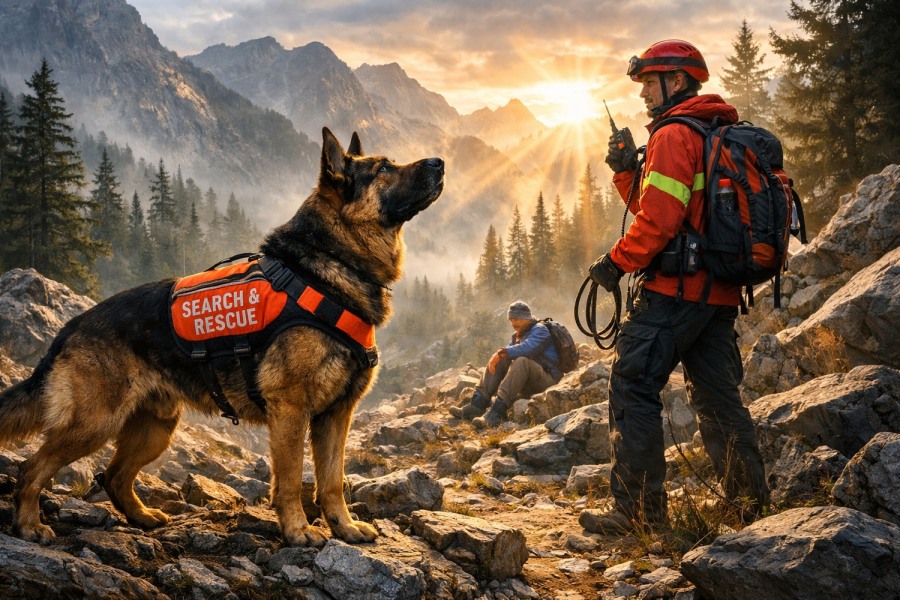
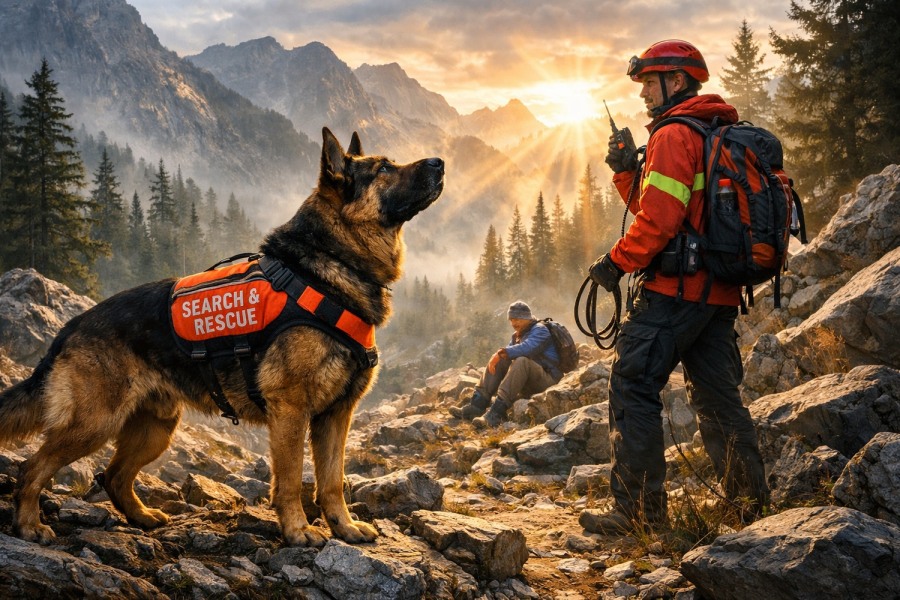
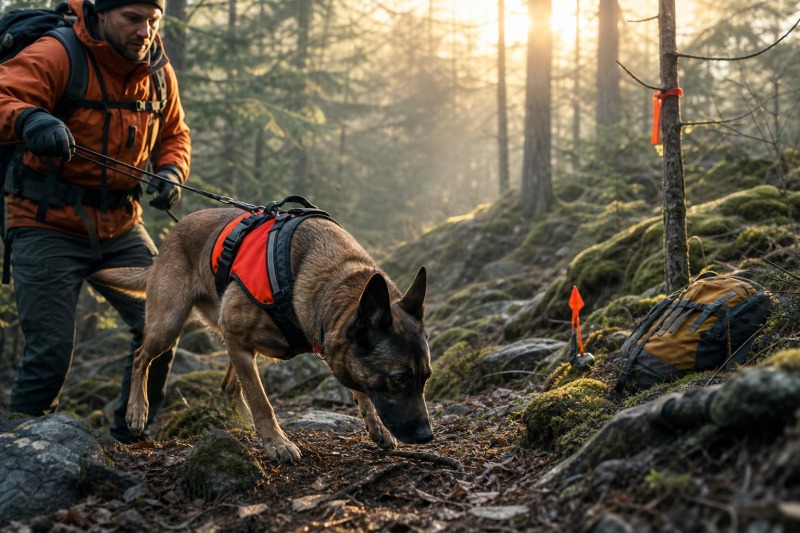
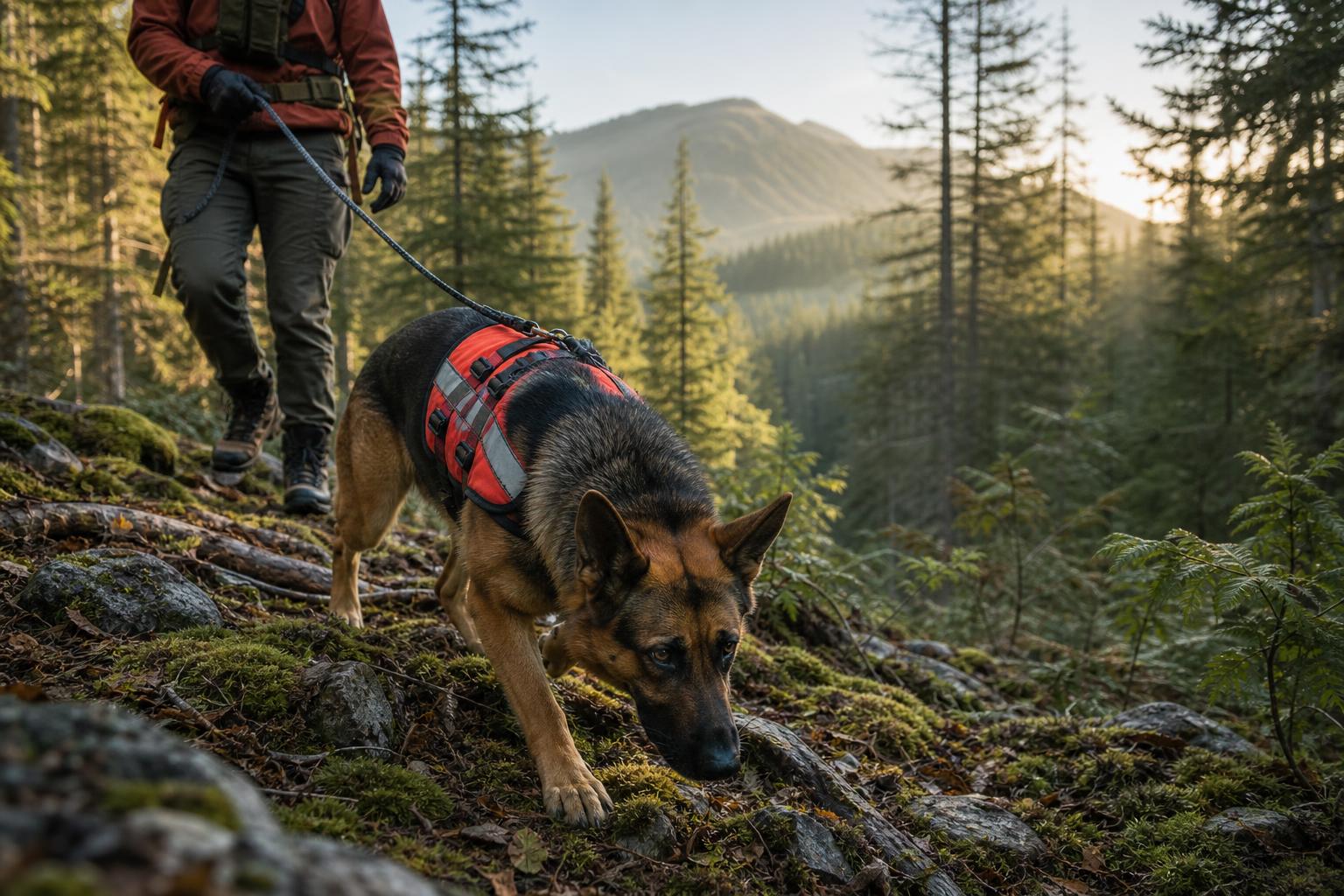
For dog owners interested in working dogs, wilderness search and rescue dogs are some of the finest examples of drive paired with control. They carry a rare mix of athleticism, focus, stamina, and composure. Watching a seasoned SAR dog work a hillside or cut through creek bottoms is like watching any top field animal do what it was bred and trained to do. There is economy in the movement, confidence in the search pattern, and a seriousness that tells you this is not a game.
What Wilderness Search and Rescue Dogs Actually Do
At the most basic level, wilderness search and rescue dogs locate missing people in natural terrain. That sounds straightforward until you picture the conditions. Searches may happen in steep mountain country, swamp edges, heavy pine, desert washes, or tangled hardwood bottoms. Wind shifts. Temperatures change. Human scent moves, settles, lifts, and scatters. The dog has to work through all of it.
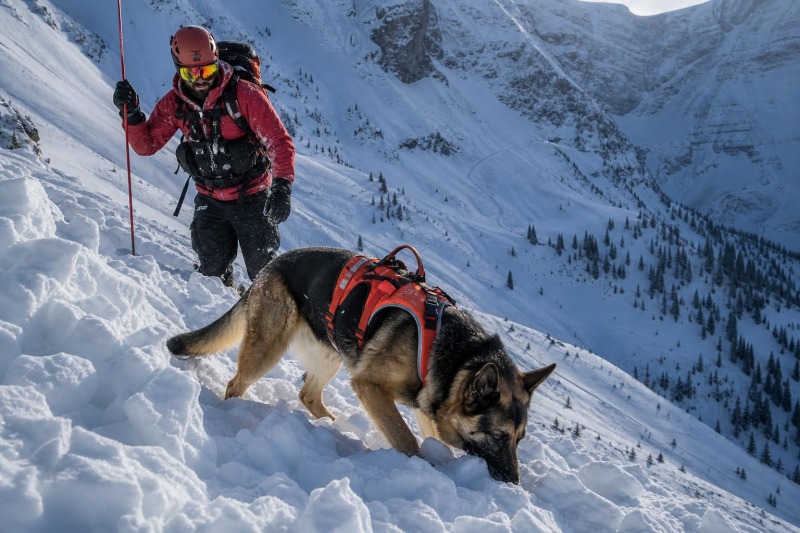
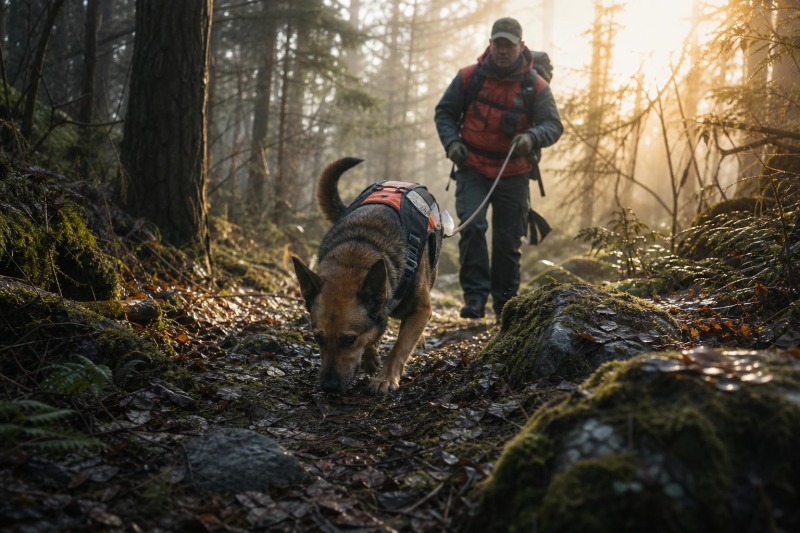
Most wilderness SAR dogs are trained either in air scent work, trailing, or both depending on the team and mission profile. Air scent dogs hunt for human odor carried on the wind and can cover broad areas efficiently. Trailing dogs work from a specific scent article and follow the individual track of a missing person. There are also area search dogs, cadaver dogs, and specialized disaster dogs, but in wilderness operations the common thread is the same: find the human target as quickly and accurately as possible.
A good search dog does not simply run around until it gets lucky. It hunts with purpose. It reads terrain, wind, cover, and scent behavior. Handlers read the dog in return, paying attention to changes in head carriage, speed, body tension, and commitment. The partnership is everything. The dog brings the nose. The handler brings strategy, timing, and trust.
The Role of the Handler in the Field
People sometimes talk about SAR dogs as though the dog works alone and the handler just follows along with a leash and a radio. That is not field reality. A strong handler knows navigation, survival, radio procedure, scent theory, terrain management, and dog behavior at a very high level. In many ways, handling a wilderness search dog resembles hunting behind a polished bird dog in difficult cover. You have to know when to trust what you are seeing, when to slow down, and when to stay out of the dog’s way.
The finest handlers are calm under stress. They do not crowd the dog. They do not force the picture to fit their assumptions. They let the dog tell the truth, even when the truth leads into ugly country nobody wants to climb after midnight.
Why Certain Dogs Excel in Search and Rescue
Not every dog belongs in wilderness search and rescue, and that is no insult. Good working dogs are built for specific tasks. Some are made for stock, some for protection, some for birds, some for sledding, and some for detection. SAR dogs need a very specific toolkit. They need hunt drive without recklessness, boldness without chaos, endurance without quitting, and enough nerve to push into dark timber, moving water, or unstable footing without melting down.
Breed matters, but temperament matters more. Labrador Retrievers, German Shepherd Dogs, Belgian Malinois, Border Collies, Golden Retrievers, German Shorthaired Pointers, and mixed-breed dogs with the right mental and physical qualities can all do well. What separates a prospect from a passenger is not simply pedigree. It is the dog’s desire to search, its resilience under stress, and its willingness to work for reward through fatigue and confusion.
The best wilderness working dogs carry a kind of forward hunger. They want the puzzle. They want the hunt. You see it in the eyes and in the way they attack country. They are not casual about work. Yet the good ones also switch off when needed, ride quietly, settle in camp, and conserve themselves between efforts. That balance is worth a lot.
Physical Traits That Matter in Rough Terrain
Wilderness search and rescue dogs need more than a strong nose. They need sound structure, efficient movement, durable feet, weather tolerance, and the cardiovascular engine to work hour after hour. A dog may have excellent scenting ability, but if it breaks down on rocky slopes or overheats in thick summer cover, it will not hold up over time.
That is why conditioning is such a central piece of the picture. These dogs are canine athletes. Hill work, endurance building, core strength, and careful management of recovery are all part of keeping them field-ready. Hard country finds weakness fast, whether it is in muscle, nerves, or training.
How Wilderness Search and Rescue Dogs Are Trained
Training a SAR dog is a long road, not a quick trick. It begins with building hunt drive, confidence, environmental stability, and a clear reward system. Young dogs learn that locating human scent leads to something they value deeply, whether that is a toy, food, praise, or the game of the search itself. From there, complexity builds layer by layer.
Early sessions are often simple and designed to let the dog win. A hidden subject, a short problem, easy wind, open terrain. Then training expands into longer searches, aged trails, multiple scent pools, contamination, difficult terrain, adverse weather, and low-visibility work. The dog learns that odor is not always neat and direct. It eddies in draws, hangs in timber, skips across rock, and funnels through creek bottoms in strange ways. If you have worked scent dogs of any kind, you know there is no substitute for repetitions in real ground.
One thing that separates real SAR training from backyard games is proofing. A wilderness dog must work around wildlife, livestock, strangers, helicopters, vehicles, and all the normal clutter of a live mission. It must ignore food on the ground, stay engaged when the scent picture gets thin, and indicate clearly when it finds the subject. Reliability is not built through enthusiasm alone. It comes from disciplined exposure and consistent standards.
Certification and Ongoing Practice
Credible search and rescue teams do not rely on good intentions. Dogs and handlers usually train for months or years before operational deployment, and many organizations require formal testing or certification. Even after a team is cleared to work, training never really stops. Skills dull when they are not sharpened. Scent work especially demands maintenance.
The strongest teams train across seasons because the woods do not stay the same. A dog that works clean in cool fall air may face an entirely different scent puzzle in summer heat or after a winter storm. Good teams seek out those hard days. That is where honest dogs are made.
The Temperament Behind a Trustworthy SAR Dog
There is a mental side to wilderness search and rescue that does not get enough attention. These dogs must be driven, yes, but they must also be emotionally steady. A frantic dog that burns hot and loses its head is difficult to trust. The best SAR dogs are intense without being brittle. They can take pressure, recover from confusion, and stay clear-headed in unfamiliar places.
In SAR, composure saves time. It allows the dog to think through scent instead of exploding through the country on adrenaline alone. It lets the handler read subtle changes. It keeps the team useful deep into a search, when lesser dogs begin to unravel.
That steadiness is one reason these dogs earn such respect. They are not just talented. They are dependable. In the middle of a long night when a family is waiting for news and the terrain keeps stacking odds against you, dependable is the word that matters most.
Are Wilderness Search and Rescue Dogs Good for Typical Owners?
This is where honesty helps. Many wilderness SAR breeds and individuals can be excellent companions, but true search and rescue prospects are not low-maintenance pets. They need work, structure, physical conditioning, and mental challenge. A dog bred and trained to hunt for human scent across miles of broken country will not be satisfied with a slow walk around the block and an idle backyard.
For dog owners who love working dogs, though, there is much to admire and learn from the SAR world. Even if you never join a team, studying these dogs teaches you what purposeful breeding, patient training, and daily consistency can produce. It reminds you that a good dog often wants more from life than comfort. It wants a job, clear expectations, and a chance to use the gifts it was given.
If you are considering this path, spend time with a reputable search and rescue group first. Watch training. Ask hard questions. Learn what is involved before romantic ideas take over. The work is rewarding, but it asks a lot from both dog and handler.
The Lasting Value of Wilderness Search and Rescue Dogs
There are plenty of impressive dogs in the world, but wilderness search and rescue dogs occupy special ground. They serve in moments when skill matters more than appearance and when grit matters more than hype. Their work is practical, urgent, and often deeply human. They go where people are lost, injured, frightened, or beyond the reach of ordinary search methods.
In that sense, these dogs represent the best of the working dog tradition. They are shaped by instinct, polished by training, and proven by real conditions. They do not care about applause. They care about the search, the find, and the bond with the handler beside them.
For those of us who respect honest canine work, that is a powerful thing to witness. A SAR dog moving through the wilderness with nose high and purpose in every stride tells an old truth better than any speech can. A well-made dog with a real job is one of the finest sights in the world.