Professional Protection Dog Trainers: More Than Bark and Bite
Professional protection training depends on assessment, control, and clear communication with owners as well as work with the dog. A trainer needs to explain the plan, evaluate progress, and recognize limits. Judging that service takes more than watching a demonstration.
One looks impressive in a short demonstration. The other can live in a home, ride in a truck, settle in public, and still switch on when a legitimate threat appears. That difference matters, especially for families, handlers, and dog owners who need reliability rather than theater.
What Professional Protection Dog Trainers Actually Do
A good protection trainer starts with evaluation, not promises. Before a sleeve ever comes out, the trainer should be looking at nerve strength, environmental confidence, prey drive, defensive instincts, sociability, and the dog’s ability to recover from stress. Not every confident dog is suited for personal protection, and not every bold dog has the clear head needed for the work. A professional knows this and does not force a square peg into a round hole.
That evaluation stage is where many dog owners save themselves heartache and money. A reputable trainer will tell you if your dog is better suited for obedience, sport, tracking, or family companionship instead of protection work. There is honesty in that. In this field, honesty is worth a great deal.
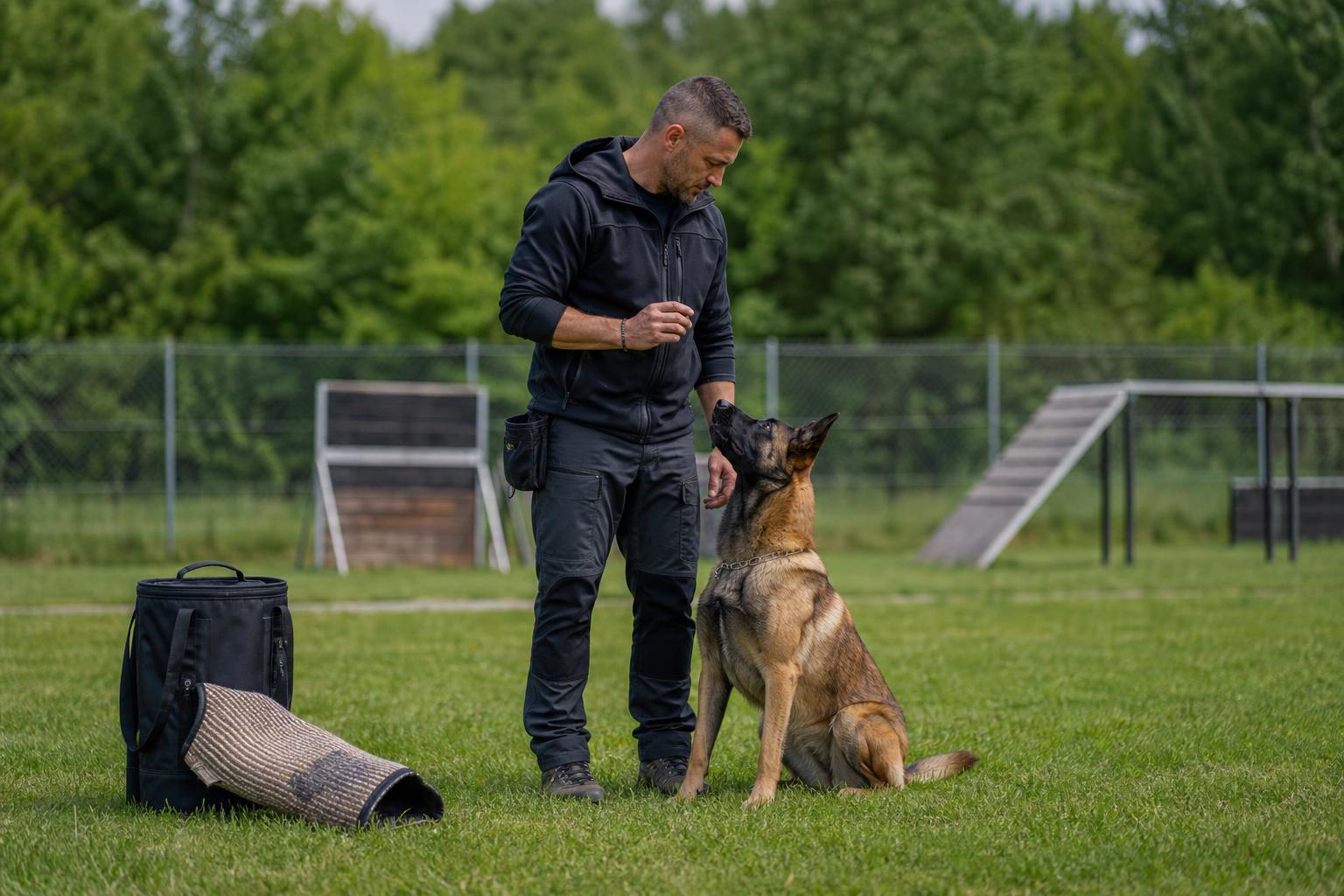
Once the dog proves suitable, the training should build from obedience and engagement into controlled protection skills. That means teaching the dog to out cleanly, recall under stimulation, remain neutral when no threat is present, and distinguish between pressure and normal life. The best professional protection dog trainers are students of behavior as much as they are handlers. They understand that protection without obedience is a liability, and drive without control is a disaster waiting to happen.
The Difference Between Real Protection Training and Flashy Demonstrations
A lot of people are impressed by a dog that charges a decoy, slams a sleeve, and thrashes with intensity. It is dramatic, and to an untrained eye it looks like proof of quality. But field experience teaches you to watch the quieter details. Does the dog stay composed before the engagement? Does it release immediately on command? Can it return to heel with a clear head? Will it work on slick floors, in dim light, around noise, or in unfamiliar places? Can the handler actually control the animal, or is the dog dragging the whole show along?
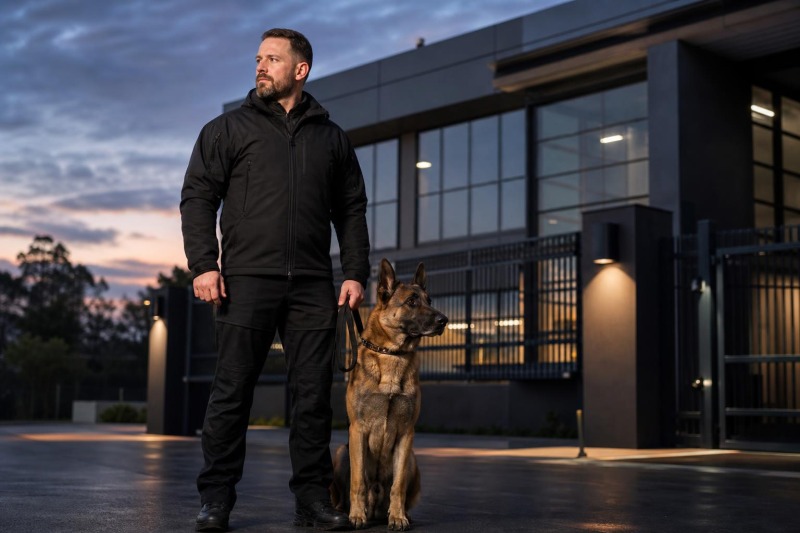
True professional trainers prepare dogs for real-world environments. Parking lots, doorways, vehicles, narrow hallways, and shifting footing all tell you more about a dog than a clean training field on a sunny afternoon. The right trainer puts structure around stress. That is where confidence is built honestly.
Qualities to Look for in Professional Protection Dog Trainers
When you are searching for a trainer, the first thing to look for is not a slick website or a social media highlight reel. Look for dogs that are stable and handlers who are calm. Strong trainers do not need to create chaos to prove they know what they are doing. Their dogs tell the story in the way they move, settle, and listen.
Experience matters, but not just years on paper. Ask what kinds of dogs the trainer has developed. Ask how they test temperament. Ask what role obedience plays in their program. Ask how they transition a dog from training scenarios into practical household life. A seasoned trainer should be able to explain their process in plain language without dodging questions or hiding behind jargon.
You also want transparency. Good trainers are usually willing to show training sessions, explain progression, and discuss limitations. Any honest professional knows no dog is infallible. Working dogs are living animals, not machines. The best trainers respect that truth.
Red Flags Dog Owners Should Not Ignore
If a trainer talks only about aggression, be cautious. If every dog in the kennel is frantic, over-aroused, or hard to handle, pay attention. If obedience looks sloppy and the dog only shines when the decoy appears, that tells you something. Protection work should sharpen discipline, not replace it.
Another warning sign is a trainer who pushes every dog into bite work regardless of temperament. Some dogs lack the nerve for pressure. Some are too environmentally soft. Some have unstable edges that should never be amplified. A professional protection dog trainer should know when not to proceed. In many cases, restraint is the clearest sign of competence.
How Training Should Fit the Owner, Not Just the Dog
This part gets overlooked too often. A protection dog is not only a training project. It is a working partner that must fit the owner’s lifestyle, skill level, and expectations. A highly driven dog in the hands of an inexperienced handler can become a burden in a hurry. Good trainers account for that from the beginning.
They teach leash handling, timing, commands, household management, and how to read stress signals before problems start. That owner education is not extra. It is essential. Even the finest dog can come unraveled under poor handling, while a capable owner can bring out the best in a well-trained animal.
A good protection program should include transfer sessions where the owner learns how to maintain obedience, reinforce boundaries, and handle the dog in practical settings. The handoff matters. Without it, the dog may perform beautifully for the trainer and poorly for the person who actually lives with it.
The Breeds and Temperaments Commonly Seen in Protection Work
Dog owners interested in working dogs often ask whether breed alone determines success. Breed matters, but temperament matters more. German Shepherds, Belgian Malinois, Dutch Shepherds, Rottweilers, and certain working-line mastiff types often show the traits needed for protection training, but not every individual from those breeds is suitable. On the other hand, the occasional dog surprises you by having exactly the balance of confidence, clarity, and trainability the work demands.
The best trainers do not chase hype. They look for dogs with solid nerves, willingness to work, sound social behavior, and enough drive to engage without becoming hectic. In plain terms, they want a dog that can switch on when needed and switch off when the job is done. That on-off balance is worth more than flashy intensity alone.
Why Local Reputation Still Matters
In the hunting world and the working dog world, reputation travels the old-fashioned way. Folks talk. Kennel owners talk. Handlers talk. Veterinarians, decoys, and club members all know who produces steady dogs and who produces headaches. Before committing to a trainer, spend time asking around. Watch dogs that have finished the program and have been living with owners for six months or a year. That is where the truth shows up.
A polished young dog can look excellent for a weekend. A mature dog living under real conditions tells a better story. Is it obedient around guests? Can it relax in the house? Is it sharp without being unstable? Those are the qualities that separate professional protection dog trainers from people selling an image.
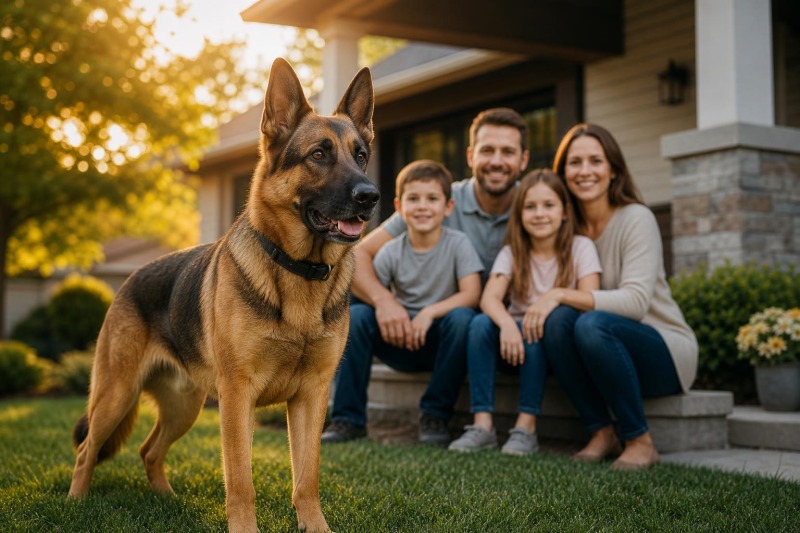
There is nothing wrong with wanting a dog that can protect home and family. For some owners, it is a practical decision. For others, it grows naturally out of a deeper interest in working dogs. Either way, the trainer you choose will shape not only the dog’s skills, but its habits, confidence, and long-term reliability.
Choose the trainer the way you would choose a guide for rough country. Pick the one who stays steady when conditions get difficult, who reads the terrain before charging ahead, and who knows when to push and when to hold back. Real professional protection dog trainers are craftsmen. They build dogs that can think, obey, and respond under pressure without becoming reckless. That kind of training is worth seeking out, because when it comes to a working dog, control is the foundation everything else stands on.