Private-security dog handling brings responsibility for the dog, the site, and the people who may encounter the team. Training standards, legal requirements, and safe control need to be clear. Everyday care and management remain part of the assignment.
Private security dog handlers work in a corner of the dog world that is often misunderstood. To the public, it may look simple enough: a powerful dog on a leash beside a uniformed handler, patrolling a property, screening threats, or standing watch where trouble tends to gather. In the field, though, it is never that simple. Good handlers are reading human behavior, environmental stress, their dog’s body language, and the legal boundaries of their work all at once. The best ones make it look easy because they have put in the hours.
What Private Security Dog Handlers Really Do
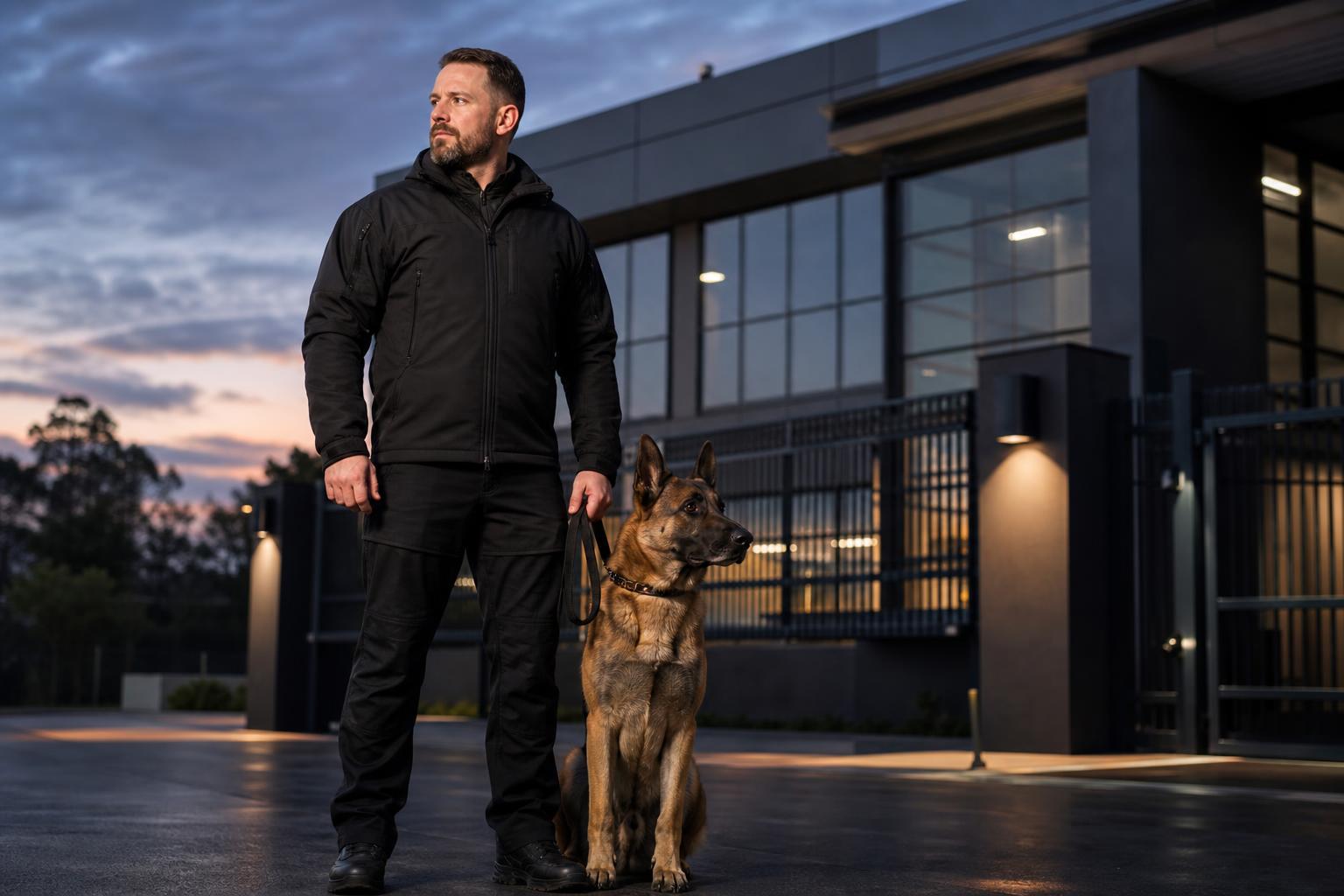
At its core, this job is about deterrence and control. A properly trained security dog can stop bad intentions before a situation ever turns physical. The sight of a serious dog, steady at heel and attentive to its handler, changes the mood in a hurry. That visible presence is one of the greatest tools in private security work. The dog is not there to create chaos. The dog is there to help prevent it.
Handlers may work commercial properties, warehouses, private estates, construction sites, events, or high-risk locations where theft, trespassing, or violence is a concern. Some teams are mobile, moving through parking areas and perimeter fences. Others are stationed in fixed locations where access control matters. In every setting, the dog has to stay reliable in noise, crowds, poor footing, changing light, and the kind of tension that can travel straight down a leash.
A seasoned handler knows that private security work is as much about restraint as action. The dog must be able to switch from quiet watchfulness to controlled engagement and then settle back down without confusion. That kind of steadiness does not happen by accident. It is built through repetition, trust, and a handler who does not ask for more than the dog understands.
The Dogs Best Suited for Security Work
Not every strong dog belongs in protection work. That may disappoint folks who admire bold breeds, but it is the truth. A private security dog needs clear nerves, trainability, environmental confidence, and the kind of social stability that allows the handler to make sound decisions. Sharpness without control is a liability. Fear dressed up as aggression is worse.
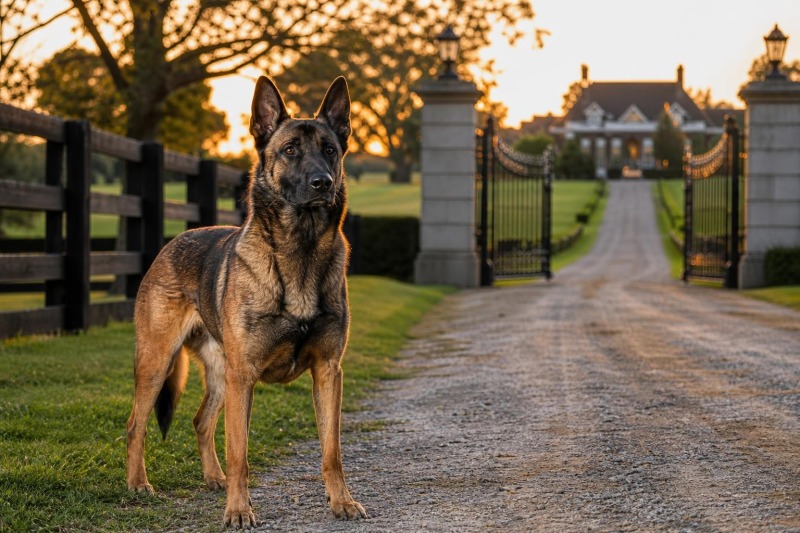
German Shepherds, Belgian Malinois, Dutch Shepherds, and certain working-line crosses are common in the field for a reason. They tend to offer athleticism, responsiveness, and the ability to stay mentally engaged during long shifts. Still, breed alone tells you very little. Within any breed, there are dogs that are suitable for hard work and dogs that are not. The right dog has to carry itself with calm confidence. It must recover quickly from stress and remain obedient under distraction.
Temperament Matters More Than Image
Ears high, chest out, plenty of noise on the training field, but no staying power when confronted by uncertainty. Then you will see another dog, not nearly as flashy, step onto a dark lot at midnight with a kind of quiet seriousness that tells you everything. Those are the dogs handlers remember. In private security, performance beats image every time.
Training Standards That Separate Professionals from Pretenders
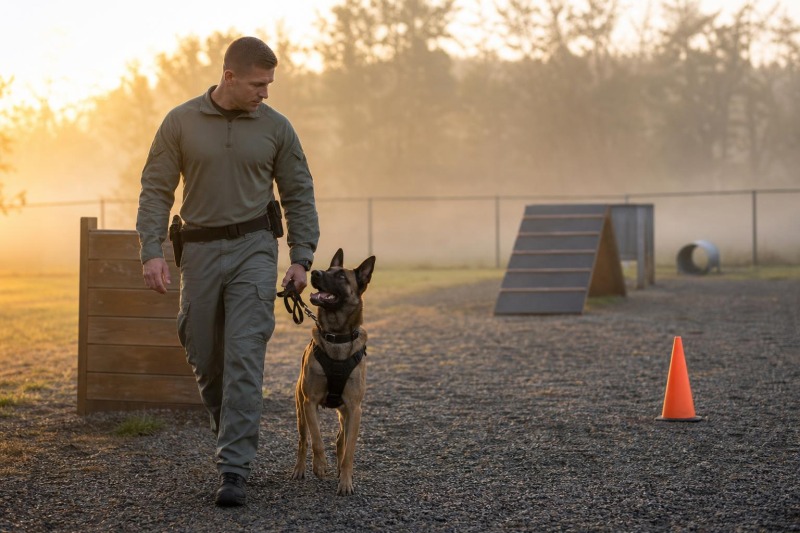
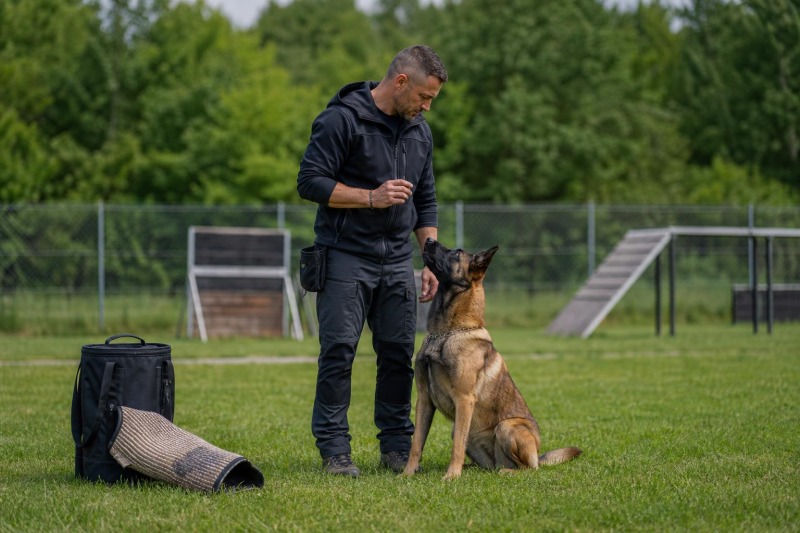
Anyone can buy a tactical collar, throw around protection terms, and talk big. Real private security dog handling starts with obedience. If the dog cannot heel cleanly, out on command, hold position under stress, and remain neutral when asked, nothing else matters. Bite work may get attention, but control is the real foundation.
The dog must be conditioned to search, patrol, and respond to threat cues without becoming frantic. It has to tolerate slippery floors, stairwells, vehicles, narrow corridors, fence lines, shouting, and sudden movement. It should be clear-headed around innocent people and able to discriminate between routine activity and legitimate concern. That takes patient training and regular maintenance. Skills left untouched grow rusty, and rusty skills are dangerous in this line of work.
Handlers train too, or at least they should. A dog team is only as good as the person on the leash. Timing, leash handling, body positioning, scenario awareness, and verbal command consistency all shape the dog’s behavior. A handler who panics, overcorrects, or sends mixed signals can unravel even a talented dog. Good trainers understand this and work the team, not just the animal.
Why Scenario Training Matters
Field work does not happen on a clean decoy line with spectators off to the side. It happens near chain-link gates, idling trucks, barking stray dogs, and people who may be unpredictable, intoxicated, or desperate. Scenario training exposes the dog and handler to the mess of real life. It teaches the team to think through clutter and pressure. That is where confidence gets honest.
The Handler’s Responsibility in the Real World
Dog owners interested in working dogs sometimes focus on the power side of protection and miss the ethical weight of it. A private security dog handler carries serious responsibility. That dog is not sporting equipment and not a prop. It is a trained working partner capable of force, which means every deployment decision matters.
Handlers must understand use-of-force standards, site rules, liability, and local law. Just as important, they must know when not to use the dog. They were calm, observant, and hard to rattle. They valued prevention, distance, communication, and control. They respected what the dog could do and never treated that ability casually.
There is also the welfare side, which ought to be discussed more than it is. Long hours, heat, cold, confinement between patrols, repeated stress, and poor kennel management can wear a dog down. A professional handler watches hydration, foot condition, weight, recovery, and mental attitude. If a dog starts to dull, avoid, or lose clarity, something needs attention. Working dogs give a lot. Good handlers notice before the wheels come loose.
What Dog Owners Should Know Before Admiring the Profession
For the average dog owner fascinated by private security work, there is plenty to admire. The bond between handler and dog can be remarkable. A well-trained team moves with a kind of silent understanding that is hard to fake. Still, this is not a hobby to imitate casually in the backyard. Protection training without proper guidance can create confusion, conflict, and dangerous behavior.
If you own a high-drive dog and feel drawn to working disciplines, start with obedience, engagement, neutrality, and environmental confidence. Learn your dog honestly. Some dogs are beautifully suited for scent work, tracking, hunting, or sport and should be left there. Not every driven dog needs bite work, and not every owner is equipped to manage a true protection animal. There is no shame in that. Good sense has saved more dogs than ego ever did.
That said, the lessons from private security dog handlers are useful for nearly every working dog owner. Clear communication, consistent standards, calm leadership, and fair correction apply whether your dog is guarding property, trailing game, or riding in the truck to a training field at daylight. Working dogs thrive when they know the job and trust the person giving it.
The Value of Experience Over Talk
In the dog world, there is never a shortage of talkers. Security work attracts some of them because the image is powerful. But any old hand who has watched a dog read a shadowed doorway, shift its weight, and tell the handler something is not right knows this business strips away pretense in a hurry. The leash does not care about internet swagger. The dog does not care about branding. Under pressure, what remains is training, nerve, and the relationship between human and canine.
That is why the best private security dog handlers tend to carry themselves quietly. They have seen enough to know that sound work speaks for itself. They respect capable dogs, train constantly, and stay inside the bounds of professionalism. When a team like that comes onto a property, you can feel the difference before anything happens. The dog is attentive, the handler is measured, and the whole picture says one thing plainly: this is a working team, not a performance.
For dog owners who love working breeds, there is much to learn from that example. Build obedience first. Value steadiness over drama. Seek trainers who emphasize control, clarity, and real-world reliability. And never forget that a serious dog deserves serious handling. In private security work, that truth is the difference between a partner you can trust and a problem waiting for the wrong moment.