Training Rewards and Toys for Working Dogs
A reward is valuable when the individual dog is willing to work for it. Toys differ in how they invite chasing, gripping, carrying, and interaction with the handler. Choosing and presenting them thoughtfully can make a training session clearer.
For working dogs, rewards are not about spoiling a dog or bribing one into cooperation. They are about building clarity. A dog that understands what earns the payoff learns faster, works with more confidence, and stays engaged when the training gets demanding. The toy, the treat, the retrieve, the praise, and even the chance to go hunt can all become powerful rewards when they are used with good timing and good judgment.
Why Rewards Matter in Working Dog Training
Handlers who come from older school backgrounds sometimes talk as if rewards are soft. In practical training, especially with bird dogs, retrievers, protection dogs, and other high-drive workers, the right reward can create more intensity and more precision than pressure ever could by itself. Pressure may stop behavior. Reward builds behavior you can use again tomorrow.
A young dog in early training is always learning something, even when you did not mean to teach it. If the dog sits and immediately gets access to a tossed bumper, the sit starts to carry value. If the dog recalls and finds a tug waiting at your side, coming in becomes worthwhile. If the dog has to guess through ten muddy repetitions before it finds success, drive often starts to leak out of the session. Rewards help mark the right answer and make the dog want to repeat it.
That is especially important with working dogs because many of them have large engines. They are bred for effort. They are not house pets who need to be coaxed into mild activity. A good working dog is often ready to do something right now. Your job is to channel that energy into clean, useful behaviors. Rewards and toys give you a steering wheel.
Choosing the Right Reward for the Dog in Front of You
Not every working dog values the same thing, and that is where inexperienced handlers often go wrong. They buy one bag of treats, one flashy toy, and assume every dog should light up for it. Some will. Many will not. The best reward is the one your dog will truly work to earn in that moment, in that environment, under that level of distraction.
Food rewards are often excellent for teaching precision, shaping new behaviors, and slowing down dogs that tend to get frantic. For puppies and dogs new to structured training, food creates a clean way to repeat many short successes without over-arousing them. A soft, high-value treat can help teach positions, heel work, place training, or steadiness foundations without turning the session into a wrestling match.
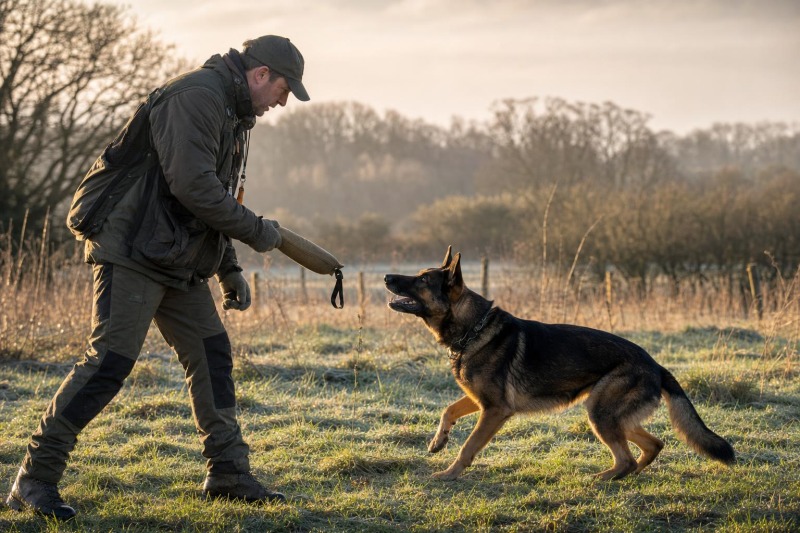
Toy rewards are often better for building speed, animation, persistence, and attitude. A dog that will chase, tug, carry, or hunt for a toy has something a trainer can use in a hundred ways. In many working dogs, toys switch the brain on in a different way than food does. The dog becomes active rather than passive. It reaches. It drives. It commits. That matters when you are trying to build a dog that must work through weather, cover, noise, distance, and fatigue.
Then there are life rewards, which seasoned handlers sometimes overlook because they do not come from a pocket or vest. The release to retrieve, the send to a blind, the chance to quarter a field, the permission to jump into water, or the opportunity to search cover can all reinforce behavior. In field training, these are often some of the strongest rewards of all because they tie directly into the work the dog was bred to love.
Reading Drive and Arousal
One of the finer points in reward-based training is understanding arousal. A toy that sharpens one dog may scatter another. The reward has to match both the task and the dog’s emotional state.
If your dog is thoughtful but slow, a toy reward may help build speed. If your dog is already volcanic, food or calm verbal praise may give you better control while you teach the behavior. Good training is not only about what motivates the dog. It is also about what keeps the dog in a useful frame of mind.
Using Toys with Purpose, Not Just Excitement
Toys are at their best when they have a job to do. Too many handlers wave a toy around, create noise and frenzy, and call that motivation. That sort of excitement looks impressive for thirty seconds, but it often produces sloppy grips, crooked fronts, weak outs, and dogs that fixate on the toy instead of the task.
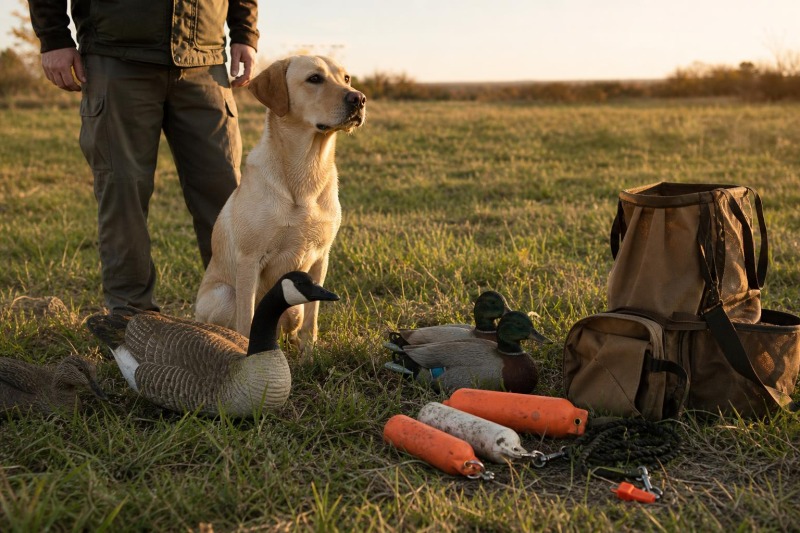
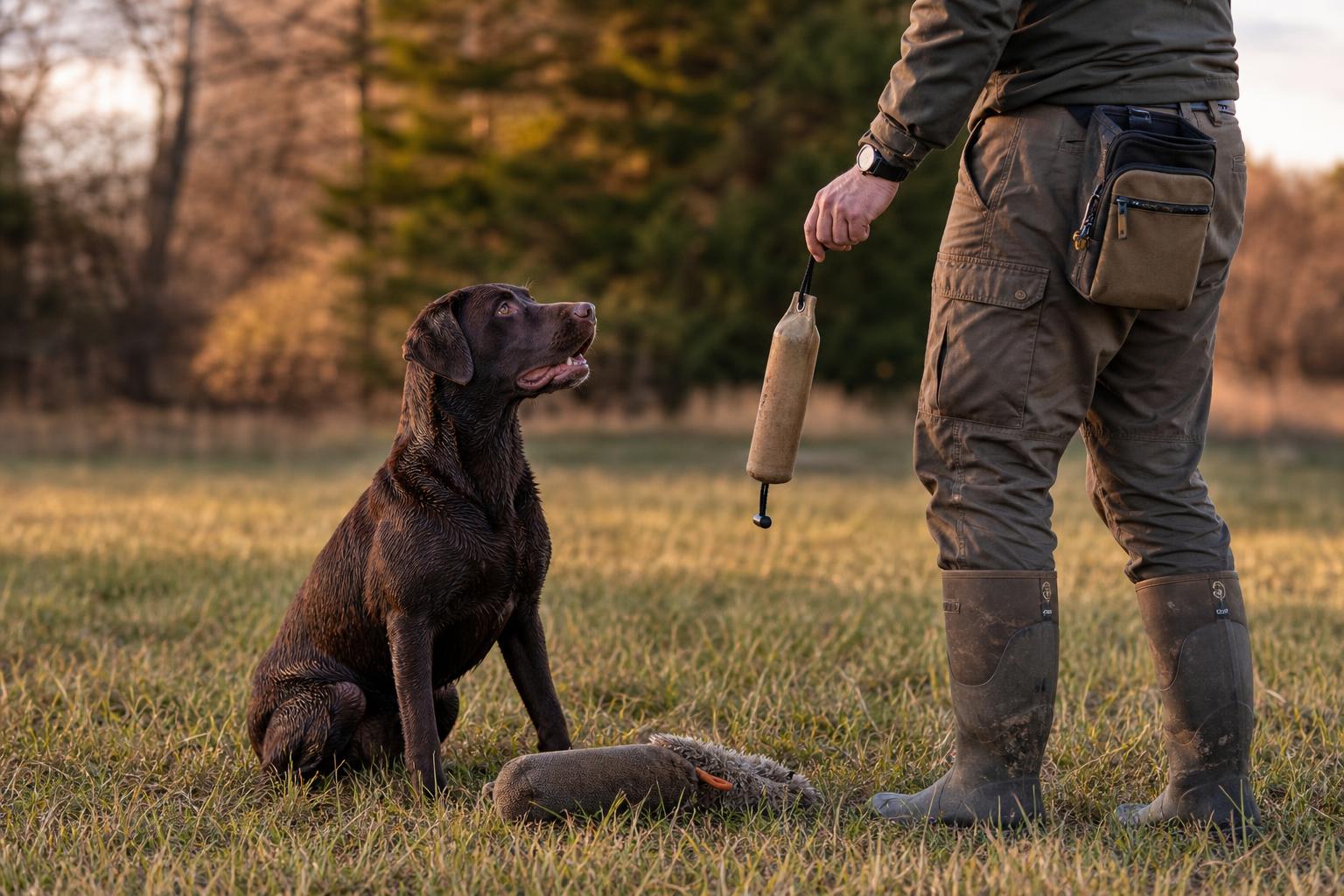
A toy should clarify the lesson. A bumper can teach lining, delivery, steadiness, and memory. A tug can teach engagement, possession, targeting, and a clean release. A ball can reward speed and commitment if it is used sparingly and with timing. Even a simple canvas dummy can become a high-value training reward when the dog learns that calm obedience is what unlocks the retrieve.
They come out for work, not for random chaos. That keeps value high. It also keeps the dog from learning that grabbing, pestering, and self-rewarding are part of the game. A dog that believes the reward appears through your direction will stay more connected to you.
When to End the Reward
This is one of those details that separates clean training from messy training. Many handlers know when to give the reward, but not when to shut it off. If the dog gets the bumper, tug, or ball, enjoy the moment briefly, then reset with purpose. Letting the reward drag on until the dog disengages teaches the dog to end the game on its own terms. Better to stop while the dog still wants more. That leaves value in the bank for the next repetition.
Same reward, better structure.
Common Mistakes with Training Rewards and Toys
The most common mistake is poor timing. If the dog does three things and only one was correct, but the reward comes late, the dog may connect the payoff to the wrong behavior. Precision matters. Mark the right choice as clearly and as quickly as you can.
Another mistake is overusing rewards until they lose value. If the toy is always available, always visible, or always handed over with little effort, it becomes ordinary. Working dogs tend to respect access that must be earned. Keep the reward special.
Handlers also make the mistake of relying on one reward forever. Dogs change as they mature. Weather, age, pressure, and the training environment all affect motivation. The reward that worked in the backyard may not hold up around gunfire, birds, decoys, livestock, or other dogs. A flexible handler has more than one way to pay a dog.
There is also a practical field mistake: using rewards that do not match the real job. If you own a hunting retriever, all your reward systems should eventually support steadiness, marking, delivery, and control under excitement. If you own a pointing dog, your rewards should not create sticky, handler-dependent movement that fights natural forward application. Reward strategy should serve the finished dog you want, not just the puppy in front of you.
Building Reliability Without Losing Enthusiasm
The goal of reward-based training is not to create a dog that only works when it sees the prize. The goal is to build understanding so thoroughly that the behavior becomes reliable, while the dog keeps its attitude. That means rewards should be frequent when teaching, then varied as the dog learns. Once the behavior is clear, you can reward unpredictably, use life rewards more often, and ask for longer chains of behavior before the payoff arrives.
This is where many good young dogs either bloom or come apart. Push too much control too early and you flatten them. Keep everything as a party forever and you raise a dog that performs only when it expects a visible paycheck. The middle path is better. Teach clearly, reward honestly, and then gradually ask the dog to trust the process.
In the best working dogs, reward does more than buy compliance. It creates a style of work. The dog learns that discipline leads to opportunity. Steadiness leads to the send. Clean recall leads to another retrieve. Focus on the handler leads to access to the hunt. When that lesson sinks in, training starts to feel less like a contest and more like a partnership.
Training rewards and toys are only useful if they help produce a dog you can count on when conditions are rough and the stakes are real. A dog that performs beautifully in the yard but unravels in the marsh has not been fully trained. A dog that understands how to earn reward under distraction, pressure, and rising excitement is on the right track.
They watched the dog. They paid attention to attitude. They knew when to build, when to hold back, and when to let the work itself become the reward. That kind of feel cannot be bought off a shelf, but it can be learned through honest training and careful observation.
Answer that well, and rewards and toys stop being gimmicks. They become part of a practical, field-ready training system that builds drive, focus, and reliability for the long haul.