Decoy equipment supports a training exercise whose purpose must already be clear. Sleeves, suits, and other tools present different pictures to the dog. The decoy’s skill, the handler’s control, and the plan for the session determine how useful that equipment becomes.
Good equipment should help develop grip, confidence, targeting, and control. It should never become a crutch that teaches the dog to hunt for gear instead of engaging the man, the scenario, and the command structure behind the work.
Why Decoy Equipment Matters in Working Dog Training
Whether you are training for protection sports, personal protection, police-style scenarios, or advanced obedience with bite development, the decoy equipment sets the stage for what the dog learns. A dog remembers pressure. He remembers success. He remembers confusion too. That is why the choice of sleeves, suits, hidden gear, tugs, and bite pillows matters so much.
The right setup gives the dog a clear picture. A young dog may need a broad, forgiving target that rewards a full, calm grip. A more advanced dog may need equipment that asks for precision under stress. A finished dog may need hidden equipment and realistic movement so he does not become sleeve-wise. Every step builds on the last one, and trying to skip those steps usually shows up later as weak grips, hectic barking, poor targeting, or conflict in the dog’s head.
Training the Dog, Not the Equipment
One of the oldest mistakes in bite development is letting the dog become fixated on visible gear. If all he ever sees is a flashy sleeve presented the same way, he begins solving the wrong puzzle. Instead of reading the decoy’s body, the handler’s command, and the scenario, he starts keying on the equipment itself. That may look impressive in a controlled session, but it often falls apart when the picture changes.
The purpose of decoy equipment for training is to help the dog generalize the work correctly. The equipment should support the lesson, not replace it. That means changing presentation, changing environments, and eventually reducing the obvious visual cues that tell the dog where to go.
Core Types of Decoy Equipment
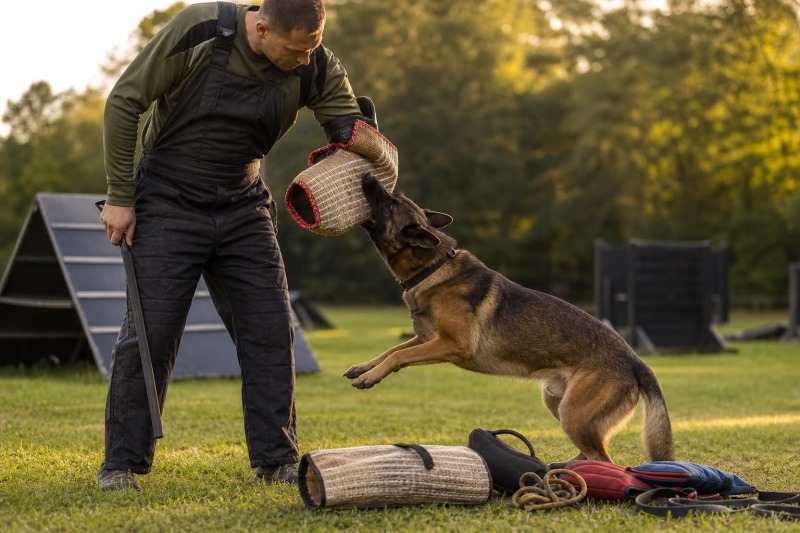
Most training programs start with softer development tools. Bite rags, puppy tugs, wedges, and pillows are common because they encourage possession, prey drive, and full-mouth engagement without overwhelming the dog. These are especially useful for young prospects that need confidence before they ever feel more serious defensive pressure. A pup that learns to drive into the bite cleanly and carry his prize with confidence is laying a foundation that matters later.
As the dog matures, many trainers move into sleeves. A trial sleeve, intermediate sleeve, or hidden sleeve each teaches something a little different. Standard sleeves give a visible target and allow a decoy to shape entry, grip, and drive. They are useful, but they can also create dependency if overused. Hidden sleeves are a step toward realism. They help teach the dog that the threat matters more than the obvious picture of equipment.
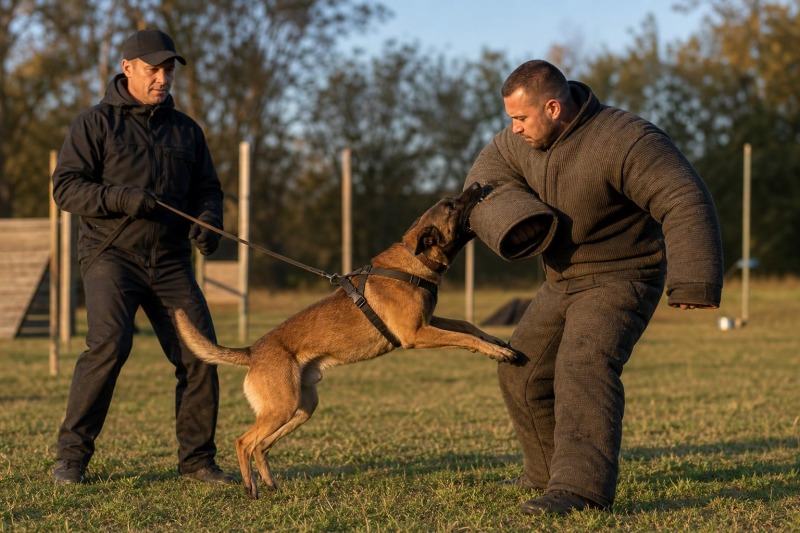
Bite suits have their place as well. A good suit allows for safer, more flexible targeting and more realistic movement. It can help a dog learn to engage a human picture rather than only an arm presentation. But a suit is not beginner gear just because it covers the body. Used poorly, it can create hectic targeting and messy entries. Used well, it lets a skilled decoy bring realism into the training without sacrificing safety.
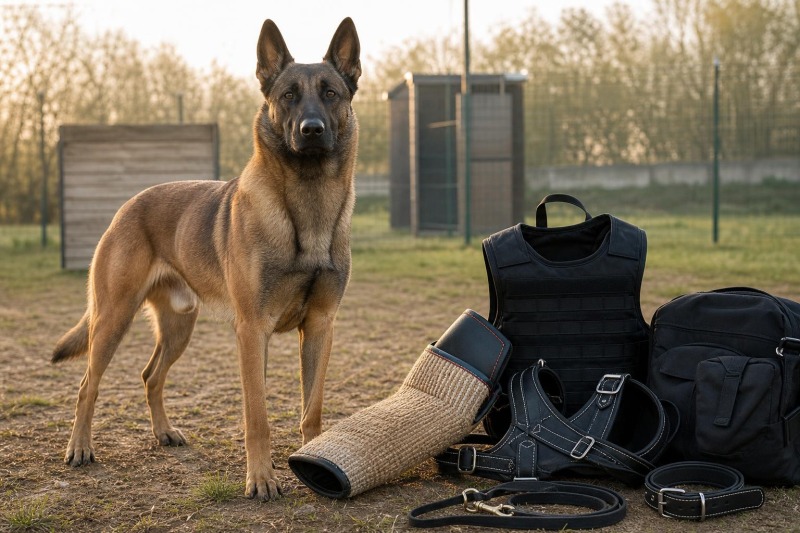
There is also protective gear that is not directly part of the bite picture but still matters. Good gauntlets, hidden forearm protection, shin guards, groin protection, quality footwear, and weather-appropriate layers all help the decoy move well and stay safe. A decoy who cannot move naturally because his gear fits poorly is not helping the dog learn cleanly.
Choosing the Right Equipment for the Dog’s Stage
A strong working dog program matches the equipment to the dog standing in front of you, not the one you hope to have six months from now. A green dog with natural intensity may still need softer presentations to teach calm, deep grips. A more cautious dog may need confidence-building work before he is asked to deal with stronger frontal pressure. Equipment selection should reflect temperament, age, physical development, and training goals.
That does not mean making things easy in a sloppy way. It means creating a clear path to success. Soft wedges and pillows allow a dog to clamp down, push in, and feel rewarded. Once that grip behavior is stable, sleeves can refine targeting and commitment. Later, hidden equipment and suit work can make the picture more honest.
If you put a dog into advanced gear too early, he may still bite, but the quality of the work tells the truth. He may chatter, regrip wildly, target shallow, or show stress he is not ready to process. That is not toughness. That is poor progression.
Fit, Build Quality, and Safety
Cheap equipment has a way of costing more in the long run. Poor stitching, uneven bite bars, inconsistent fill, and slick outer material can all create training problems. More important, low-quality gear can injure dogs and decoys. A bite pillow that twists unexpectedly, a sleeve that collapses badly, or a suit that restricts movement in the wrong places can turn a clean lesson into a bad experience.
Look for equipment built for repeated use, with materials suited to your training environment. Mud, heat, cold, and heavy repetition all expose weaknesses fast. The gear should also fit the decoy correctly. Loose, awkward equipment changes presentation, timing, and pressure. Dogs notice those details, even if the handler does not.
What Good Decoy Work Looks Like
The equipment matters, but the decoy matters more. A skilled decoy knows when to invite, when to resist, when to go still, and when to let the dog carry success off the field. He reads the dog in real time. He knows the difference between building confidence and creating avoidance. He understands that every movement, every slip, every ounce of pressure teaches something.
That is a hard truth, but it is true all the same. The decoy should use the equipment to shape behavior, not simply absorb impact.
A dog that comes off the field fuller in confidence, clearer in his job, and steadier under command is getting good work. A dog that gets more frantic, more gear-focused, or more conflicted every week is telling you something is wrong.
Common Mistakes with Decoy Equipment for Training
The biggest mistake is overexposing the dog to one picture. Too much visible sleeve work can create a dog that only understands one target in one setting. Another mistake is using pressure before the dog has enough understanding to handle it. A dog should not be asked questions he has never been prepared to answer.
Another problem is mistaking intensity for quality. Fast barking, thrashing, and frantic engagement can impress people standing on the sideline, but often that behavior points to weak foundations. Strong work usually looks more deliberate than dramatic. The dog drives in, grips fully, and stays present in the fight instead of unraveling inside it.
Handlers also make errors by buying gear before they have a clear training plan. Equipment should serve a progression. If you do not know why you are choosing a hidden sleeve over a standard sleeve, or a suit over a pillow session, then the dog is likely paying for that uncertainty.
Building Realism Without Losing Control
There comes a point in training when the dog needs a more truthful picture. That is where hidden equipment, civil agitation, environmental distractions, and scenario-based work begin to matter. But realism is only useful when the dog still understands the rules. Grip, out, recall, transport, and obedience under pressure all need to stay intact.
The decoy wore hidden protection under normal clothes. The dog was sent clean, committed without hesitation, and stayed obedient through every phase. No theatrics, no chaos, just a clear-headed dog doing real work. That kind of performance is built through thoughtful use of decoy equipment, not random hard sessions.
When to Upgrade or Change Gear
If the dog is consistently solving the current picture with confidence and precision, it may be time to change the challenge. That could mean moving from a pillow to a sleeve, from a visible sleeve to hidden equipment, or from simple bite development into more scenario-based work. But progression should be earned. The dog should show understanding before the picture gets harder.
Sometimes the right move is not upgrading at all. Sometimes it is going back to simpler equipment to clean up grip, confidence, or clarity. Good trainers are not afraid to revisit fundamentals. In fact, the best ones do it often.
Decoy equipment for training is not about collecting gear or chasing the toughest-looking setup. It is about developing a dog that is confident, controllable, and honest in the work. The equipment should fit the dog’s stage, protect the decoy, and create a clear path from early development to advanced performance.
If you own a working dog, remember that the bite is only one piece of the picture. The real goal is a dog that understands pressure, stays in command, and brings the same clarity to the field every time. Choose your equipment with that end in mind, and you will save yourself a lot of confusion later on. Good dogs deserve clean training, and clean training starts with the right tools in the right hands.