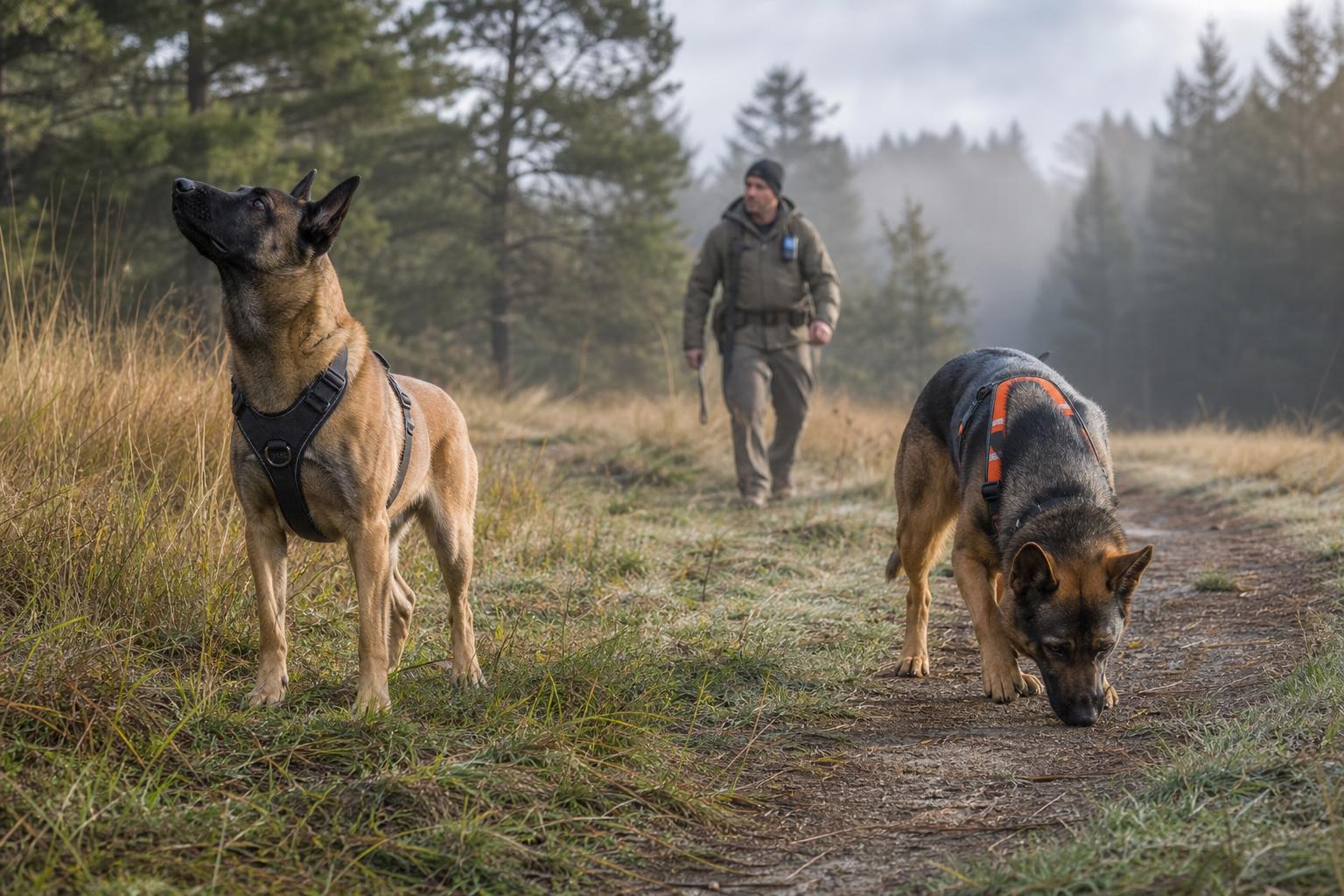
Folks new to search and rescue often talk about scent work as if it were all one thing. Out in the field, it never feels that simple. A dog working airborne human odor across a broken ridge is doing a very different job than a dog driving nose-down along a subject’s path through wet grass, gravel, and timber duff. Both are valuable. Both are impressive. And both demand a clear understanding from handlers and dog owners who want to appreciate what these dogs are truly doing when the stakes are high.
When people ask about air scenting vs tracking in SAR dogs, they are really asking how a dog uses odor, terrain, wind, and instinct to solve a human problem. The short answer is that air scenting dogs hunt human odor carried on the wind, while tracking dogs follow the specific trail a person left on the ground and in the immediate scent picture. The longer answer matters more, because that is where training, deployment, and real-world performance begin to separate.
What Air Scenting Means in Search and Rescue
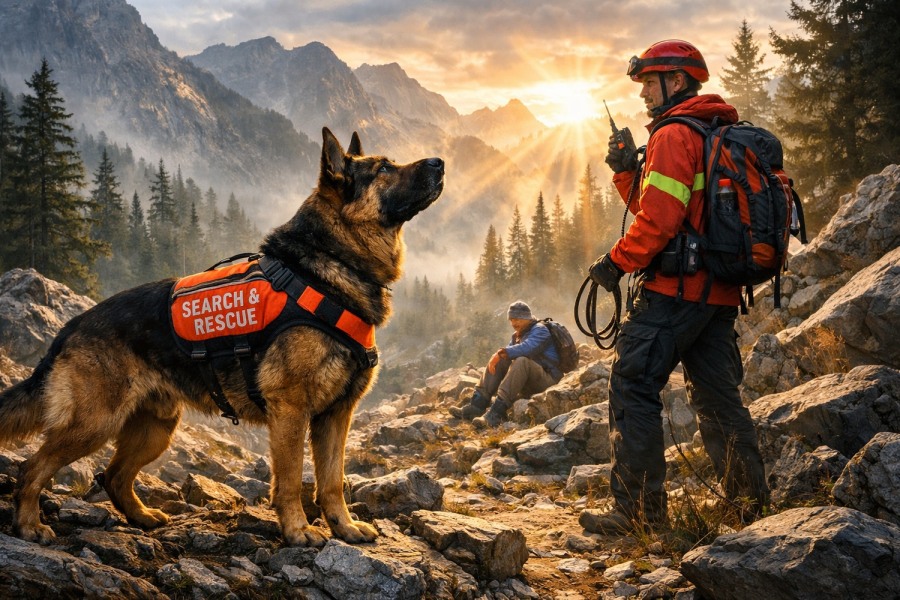
An air scenting dog searches for human odor drifting away from the source. Think of a dog quartering a field, cutting through timber, or pushing up a draw with its head high, sampling the air and casting for scent cones. The dog is not tied to the exact footsteps of the missing person. Instead, it is working the odor that rises, moves, pools, lifts, and settles depending on wind, temperature, cover, humidity, and terrain.
On a cool morning with a steady breeze dropping into a hollow, a dog can strike scent far below or far off the subject’s actual location. To somebody who has only seen pet obedience, it can look like magic. It is not magic. It is a talented dog, good breeding, smart training, and a handler who understands how scent behaves across country.
Air scenting is often favored in wilderness SAR, disaster response, and broad-area searches where the subject’s exact route is unknown. If a child wandered from a campsite, or an overdue hiker disappeared somewhere on a mountain trail system, an air scent dog can cover ground efficiently and locate human odor without needing a clean starting point for the track.
How Air Scenting Dogs Work the Environment
These dogs hunt into the wind when possible, using movement patterns designed to intercept odor. They may range out ahead, sweep side to side, and then snap into alert body language once they catch enough scent to commit. A seasoned handler reads every shift: the head turn, the tail change, the quickening feet, the moment the dog leaves a pattern and drives toward source. In broken country, scent can fool the untrained eye. It may drift over a ravine, hang in cool shade, or ride a thermal uphill late in the day. Air scent work is as much about reading country as reading dog.
What Tracking Means in SAR Dogs
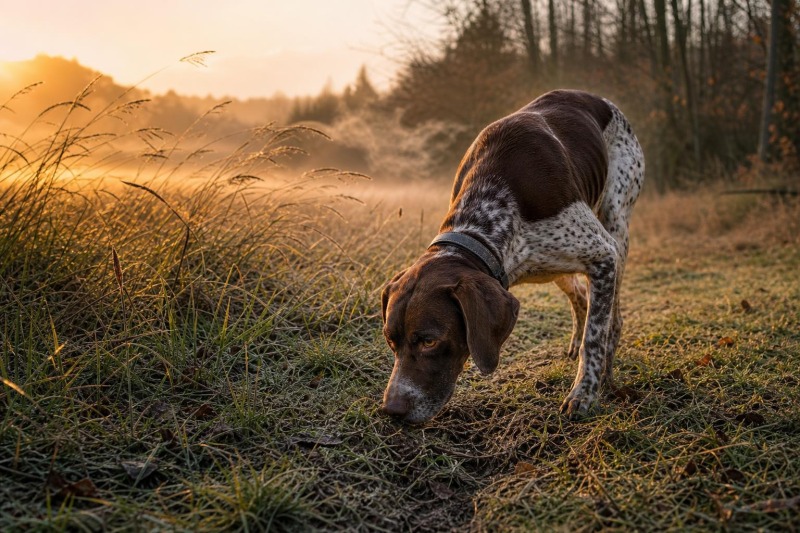
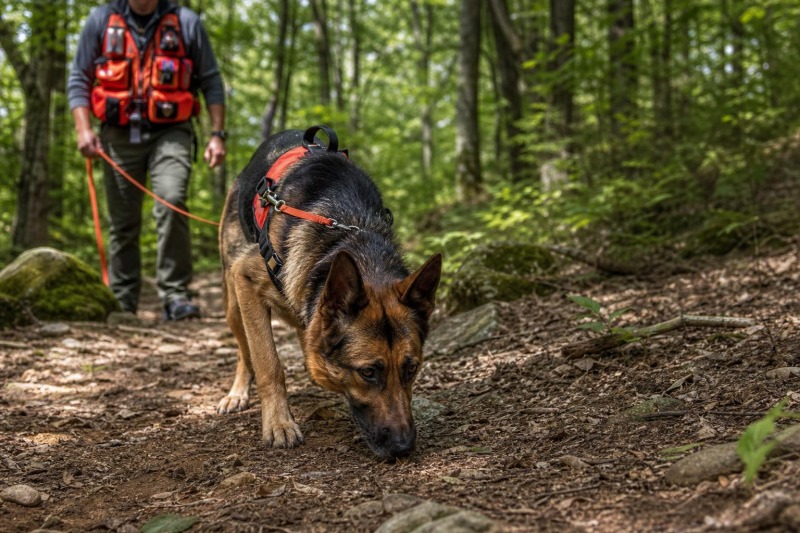
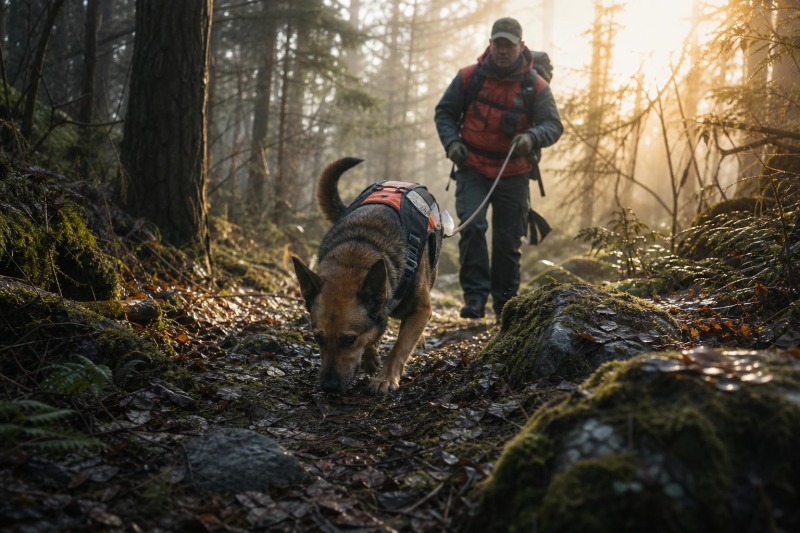
Tracking is more exact. A tracking dog follows the path a person actually traveled, using ground disturbance, crushed vegetation, skin rafts, perspiration, and the total scent picture left in each footstep and along the line of travel. These dogs usually work with their noses lower, often methodically, and they stay faithful to the track rather than searching broadly for any reachable human odor.
That distinction is important. In a true tracking scenario, the dog is not simply trying to find a person somewhere in the area. The dog is trying to follow where that specific person went. That makes tracking especially useful when investigators or SAR teams have a known last point, a directional clue, or a need to reconstruct movement from one place to another.
Anyone who has followed a serious tracking dog knows the work has a different rhythm from air scenting. It is less like casting for birds and more like reading sign on the ground, except the dog is reading what we cannot see. Every corner, hesitation, contamination point, and surface change matters. Pavement, gravel roads, creek crossings, and heavily traveled areas can all complicate the picture.
Tracking vs Trailing
Some SAR circles draw a clear line between tracking and trailing. Tracking usually refers to following the exact footsteps, while trailing allows a dog to work the scent path of the individual even if it drifts slightly off the precise footfall pattern. In common conversation, people often lump them together, but the training style and deployment expectations can differ. For dog owners trying to understand the broader comparison, the key idea is that both are more route-specific than air scenting.
Air Scenting vs Tracking in SAR Dogs: The Real Differences
The biggest difference comes down to source and strategy. Air scenting dogs search for airborne human odor from any person in the search area unless they are trained and deployed under specific parameters. Tracking dogs are generally following the route of a particular subject from a known starting point, often with an article carrying that person’s scent.
That means air scenting is usually faster for covering large areas, especially when time is short and the subject location is unknown. Tracking is often more deliberate and can provide valuable information about where the subject traveled, where they turned, and whether they entered or exited a location. One style is not better than the other in every situation. A wise team leader matches the dog to the mission.
Wind also changes the equation. Air scenting dogs depend heavily on odor movement through the environment, so weather and terrain can either help them shine or make the search more difficult. Tracking dogs are also affected by weather, but in different ways. Heavy rain, heat, surface contamination, and time lapse can age or distort a trail. Both disciplines require strong dogs and thoughtful handlers, but the problems they solve are not the same.
Which SAR Dog Style Is Better?
That is the wrong question, though it gets asked all the time. The better question is, better for what? If you need to sweep a woodland block for any missing person and you do not know the route, an air scenting dog may be the sharpest tool in the truck. If you have a confirmed last known point and need to know where the subject went from there, a tracking dog may be exactly what the operation calls for.
Some dogs and handlers cross-train, and some teams maintain separate specialties. Cross-training can be useful, but it is not a shortcut. Clear indication, odor picture, search pattern, and handler expectations must be carefully maintained. Sloppy training blurs the dog’s job, and blurred jobs create confusion when a real search goes live.
An honest dog tells you what it knows and what it does not know. In SAR, honesty is everything. Whether the dog is air scenting or tracking, reliability beats flash every single time.
Choosing the Right Dog and Training Approach
Not every dog is suited for every scent discipline. Good air scenting dogs often show independence, athletic range, confidence in difficult terrain, and a strong desire to hunt for odor. Good tracking dogs tend to bring concentration, persistence, methodical problem-solving, and a steady mind through aged tracks and heavy contamination. There is overlap, of course, and great trainers can shape a lot, but natural strengths still matter.
For owners interested in working dogs, the lesson is simple: let the dog’s traits guide the work. A hard-charging dog that loves to range and use wind may thrive in air scent. A deliberate dog that locks in and solves puzzles step by step may excel in tracking. The romance of the job should never outweigh the reality of what the dog can do well.
Handler Skill Matters as Much as the Dog
No dog works in a vacuum. In air scenting, the handler must understand search strategy, wind, topography, and how to avoid overhandling a dog that needs room to hunt. In tracking, the handler has to protect the line, read subtle behavior changes, manage contamination, and trust the dog through difficult turns and loss points. A strong dog with a weak handler is a compromised team. The best SAR work comes from partnership, not raw canine talent alone.
Why This Difference Matters to Dog Owners
Even if your dog never sets foot on an official SAR deployment, understanding air scenting vs tracking helps you see the working dog world with clearer eyes. It explains why training methods differ, why one dog works head-up while another works nose-down, and why scent work titles do not always translate directly from one discipline to another. It also gives you a better sense of what purposeful breeding, proper development, and serious field training look like.
For many owners, that knowledge changes how they evaluate their own dogs. Instead of asking whether a dog is generally “good at scent work,” they begin asking more useful questions. Does this dog solve odor in motion or on line? Does it naturally cast into wind or grind through a trail problem? Does it show the nerve, fitness, and focus needed for real work? Those are the kinds of questions that move a dog from hobby to function.
Search and rescue dogs do not all work the same, and they should not. Air scenting and tracking are different crafts shaped by odor theory, field conditions, and the specific mission at hand. Air scenting dogs reach out for human odor on the wind and can clear country quickly. Tracking dogs follow the subject’s line of travel and often tell a more detailed story about movement. Both save time. Both save lives. Both deserve respect.
If you spend enough days in the field, you stop looking for one perfect dog that does everything and start appreciating teams that know their job cold. That is the heart of good SAR work. Not showmanship. Not guesswork. Just a capable dog, a disciplined handler, and the kind of partnership that holds together when the woods go quiet and the search gets serious.