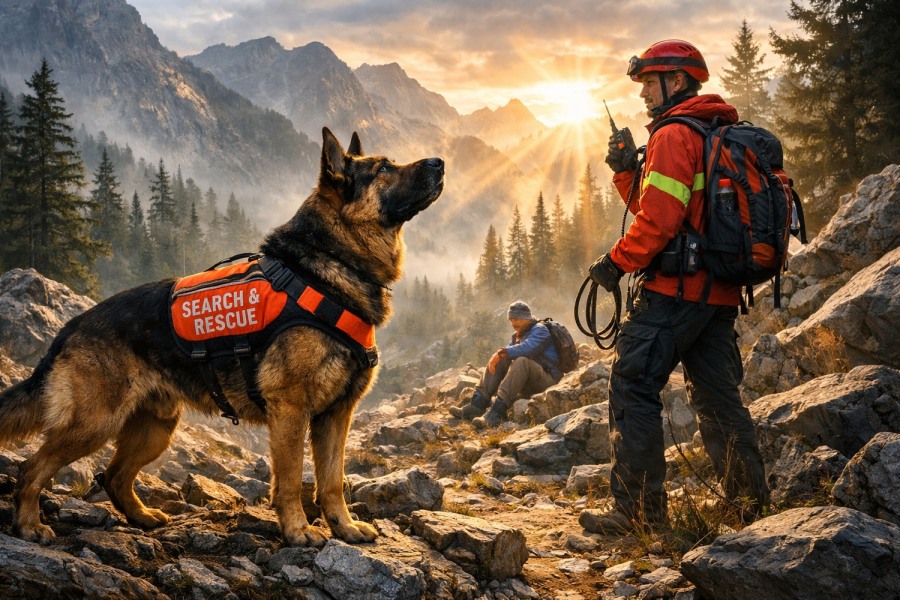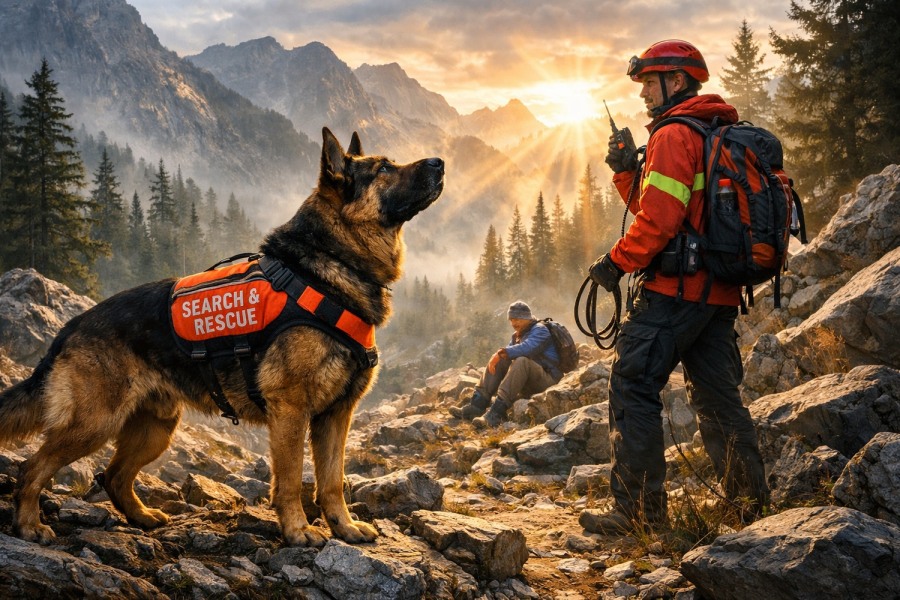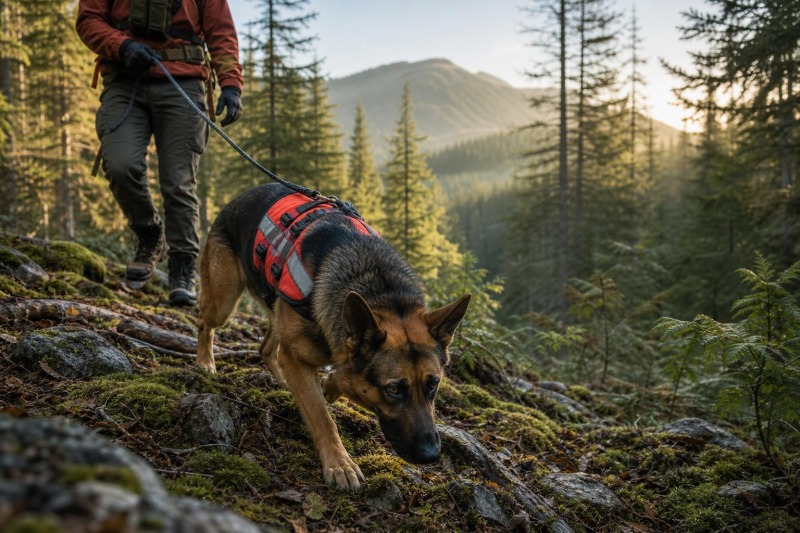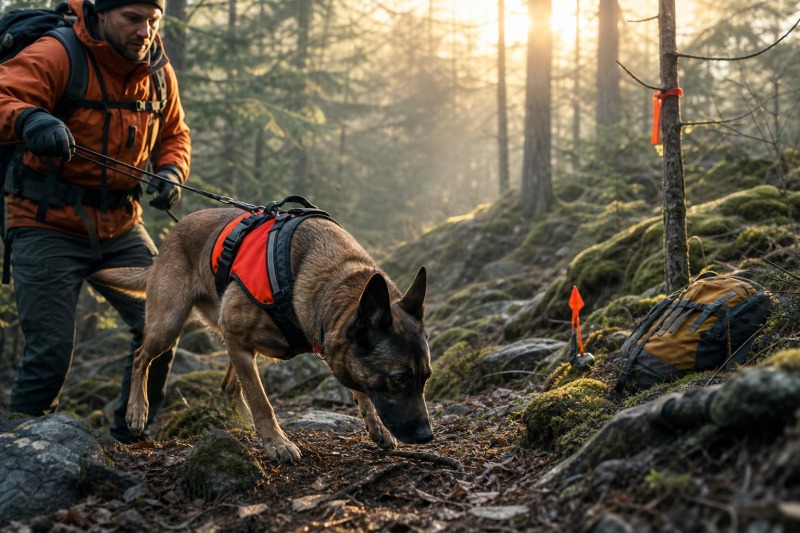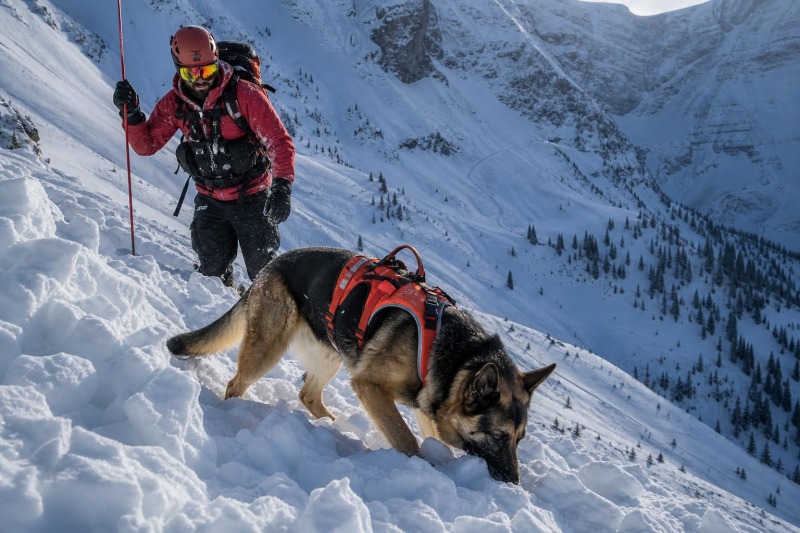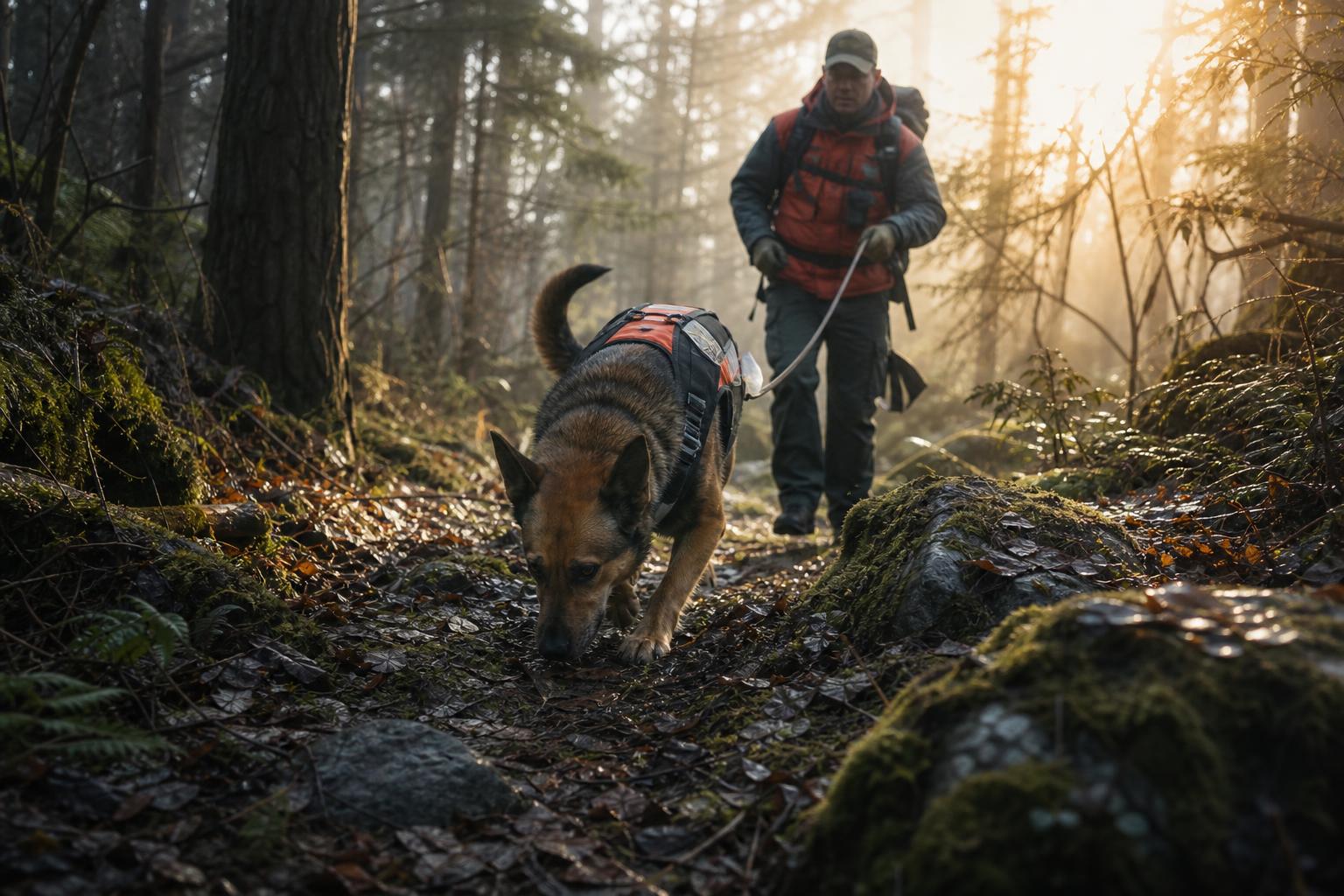
Search and rescue dogs help teams locate people by working human scent. Wind, terrain, available odor, and the search plan shape how a dog is deployed. A useful result depends on the handler interpreting the work accurately and communicating it to the wider team.
For dog owners interested in working dogs, search and rescue work is one of the clearest examples of what selective breeding, careful training, and real partnership can produce. These dogs are not simply obedient pets wearing a vest. They are athletes and problem-solvers, expected to work through confusion, pressure, and rough country while staying focused on the one thing that matters: finding the person who needs help.
The Scent Picture Dogs Work From
When a person moves through an area, they leave behind far more than footprints. Skin cells slough off constantly. Sweat, body oils, disturbed vegetation, and the scent crushed into the ground all become part of a scent picture. Add in what the wind does with that odor, and the scene gets complicated in a hurry. A missing person’s scent may cling to a path, drift into a ditch, pool in cool shade, or rise and carry over an open hillside.
Search and rescue dogs are trained to recognize human scent within that messy picture and work it according to the job they have been given. Some dogs are asked to follow the specific route a person traveled. Others are taught to search an area for any human presence. That difference matters, because not all SAR dogs hunt scent the same way.
Tracking Dogs and Trailing Dogs
Tracking dogs generally work closer to the actual footsteps of the missing person. They often keep their nose lower and sort through ground disturbance and concentrated scent left in the path of travel. Trailing dogs may work a little more freely, following the person’s odor where it has drifted and spread beyond the exact line of footsteps. In practical terms, a dog may appear to swing, cast, and arc as it works, not because it is confused, but because scent rarely stays put in a neat line.
The truth in the field is rougher than that. Scent is pushed by wind, broken up by traffic, washed by moisture, and scrambled by temperature shifts. A capable dog learns to solve that puzzle one piece at a time.
Air Scent Dogs
Air scent dogs work differently. Rather than following a single trail of footsteps, they search for human odor carried on the wind. These are often the dogs people see in wilderness searches, quartering through an area with speed and purpose, heads lifting and turning as they catch scent drifting from somewhere ahead. Once they strike odor, they move to source, tightening the picture until they locate the missing person.
That style of work is especially effective when search teams need to cover larger areas quickly. An air scent dog is not asking, “Where did this person step?” The dog is asking, “Where is the human odor strongest, and where is it coming from?”
Why Weather and Terrain Matter So Much
No two searches are exactly alike because scent is at the mercy of conditions. Early morning cool air can hold scent low to the ground. As the day warms, thermals begin to lift and move odor in surprising ways. Wind can carry scent across a drainage and leave very little where the person actually walked. Rain may dampen ground and help preserve scent in one moment, then wash away useful information in the next. Snow can either contain odor or scatter it depending on temperature and age.
Terrain changes everything too. Thick brush traps scent. Open fields let it travel. Rocky slopes create odd currents. Water presents its own challenge, with odor collecting near banks, bridges, and downstream edges. Urban environments add another layer with traffic, pavement, buildings, and heavy human contamination.
This is why experienced handlers read the country almost like a hunter reads sign. They consider wind direction, time of day, humidity, access points, likely travel corridors, and hazards. Good handlers do not just release a dog and hope. They set the dog up to succeed.
How Search and Rescue Dogs Are Trained
Strong search dogs are built through repetition, reward, and confidence. Most begin with simple games that teach them finding a person is the best thing in the world. A hidden helper appears, the dog locates them, and the reward comes fast. Over time, the work gets harder. The hides get older. The terrain gets rougher. Distractions increase. The dog learns that solving the scent problem, even when it is tough, always leads to success.
The best trainers protect drive while building control. You want a dog that hunts hard, but you also need one that can work under direction, ignore wildlife, move safely through difficult ground, and stay mentally steady around helicopters, sirens, strangers, and stress. That balance is not accidental. It takes patient handling and many hours in the field.
Alert Behaviors and Teamwork
Once the dog finds the missing person, it has to communicate clearly. Some SAR dogs bark at the find. Others return to the handler and lead them back, a behavior often called a refind. Some stay with the subject until the team arrives. The alert style depends on the discipline, the terrain, and the training program, but clarity is everything. In a real search, confusion wastes time.
That teamwork between dog and handler is what separates polished search teams from dogs that merely enjoy finding people in training. Handlers learn their dog’s changes of behavior, the small shifts in pace, head carriage, tail action, and breathing that say scent is getting stronger or weaker. From the outside, it can be hard to see. To a seasoned handler, those little changes are the dog talking.
What Makes a Good Search and Rescue Dog
Not every dog is suited for SAR work, even if it has a fine nose. Search dogs need physical soundness, stamina, confidence, and a genuine desire to hunt for the reward. They must work through thick cover, unstable footing, darkness, bad weather, and strange environments without falling apart. Nerve matters. So does recoverability. A dog can be excited and driven, but it also needs to regain focus quickly when something startling happens.
Breed can play a role, but the individual dog matters more. You will see German Shepherds, Labrador Retrievers, Belgian Malinois, Border Collies, and mixed-breed dogs doing excellent search work. The common thread is not looks. It is work ethic, nose, resilience, and trainability.
In many ways, the qualities overlap with what old hands admire in any serious working dog. Heart. Brains. Endurance. The willingness to keep hunting when the easy answer has run out.
The Difference Between Training and the Real World
Training fields are useful, but real searches are untidy. The missing person may be injured, moving, hiding, unconscious, or no longer in the place where the scent first built up. Family emotions run high. Information can be incomplete or wrong. Crowds contaminate areas. Weather changes halfway through the operation. The dog must still work, and the handler must still make sound decisions.
That is why certification, ongoing practice, and scenario-based training matter so much. A reliable search and rescue dog is not made in a weekend seminar. Teams earn competence over time, under many conditions, with plenty of failures along the way. Good organizations know that humility is part of the craft. Scent work will expose shortcuts in a hurry.
Now and then, though, everything comes together. The dog catches odor, drives with purpose, and takes the team right where they need to go. When you witness that in the field, it leaves an impression. It reminds you what dogs have been doing for mankind all along: finding what we cannot, reading what we overlook, and staying on task when our own senses fall short.
Why SAR Dogs Matter to Dog Owners
For ordinary dog owners, search and rescue work offers a powerful lesson in canine ability. It shows just how capable dogs are when their natural gifts are developed instead of ignored. Even if your own dog never works a missing-person case, understanding SAR helps you appreciate the importance of scent games, obedience, confidence building, and meaningful work. Dogs were made to use their minds and noses. When they do, you often see the best version of them.
Search and rescue dogs find missing people through a combination of scent detection, careful training, environmental awareness, and trust between dog and handler. That may sound simple on paper, but out in the real world it is one of the most demanding jobs a working dog can do. And when done well, it can mean hope arriving on four legs.