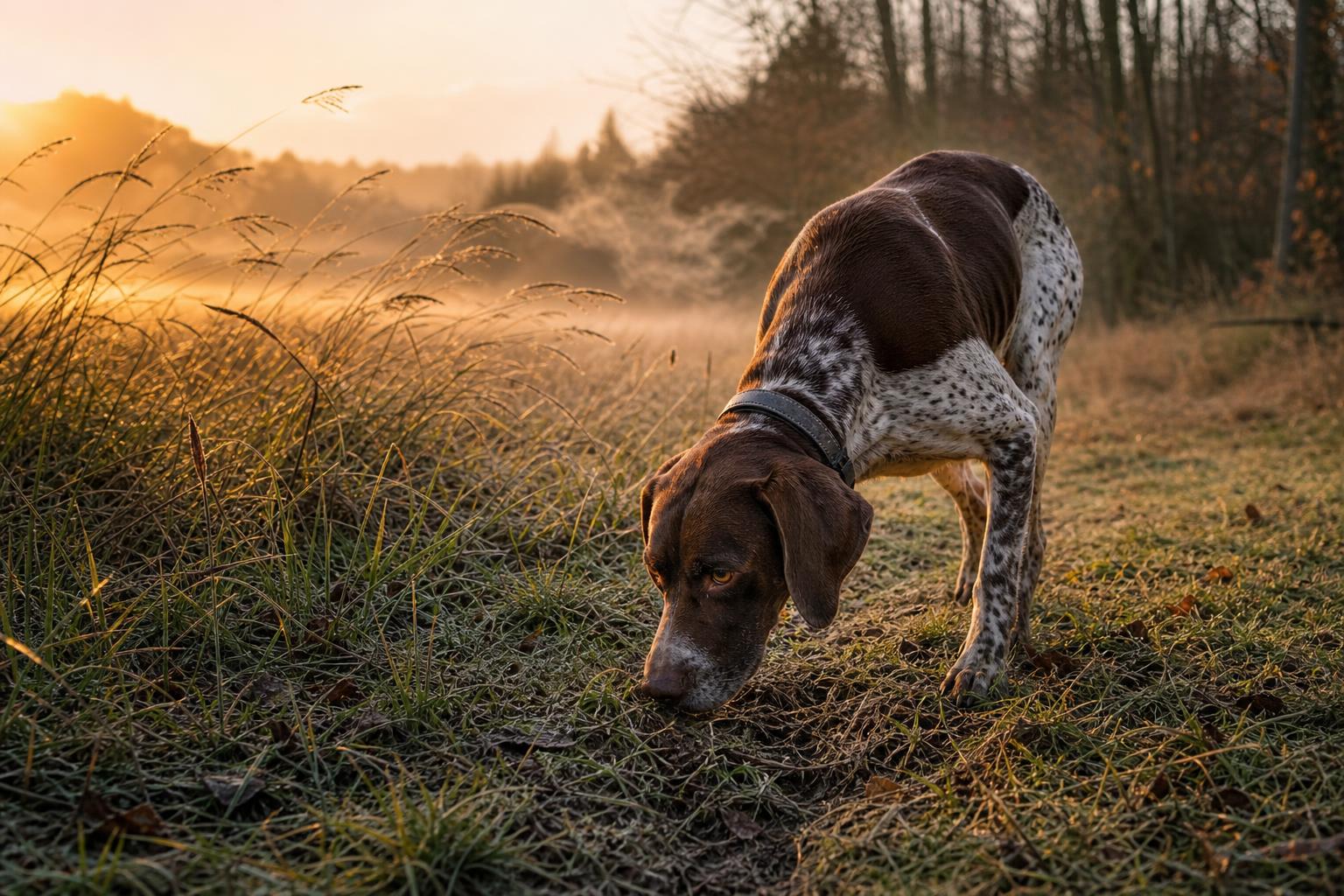
Tracking, trailing, and air scenting describe different approaches to finding a person or following their movement. Training systems sometimes use the terms differently. Clarifying the intended task makes it easier to understand what the dog is being asked to do.
A handler thinks the dog is being stubborn, when in truth the dog is solving the scent problem in a different way than expected. That misunderstanding can slow training and sour good dogs. Once you learn what each style of scent work really looks like, the whole thing starts to make sense.
What Tracking Means
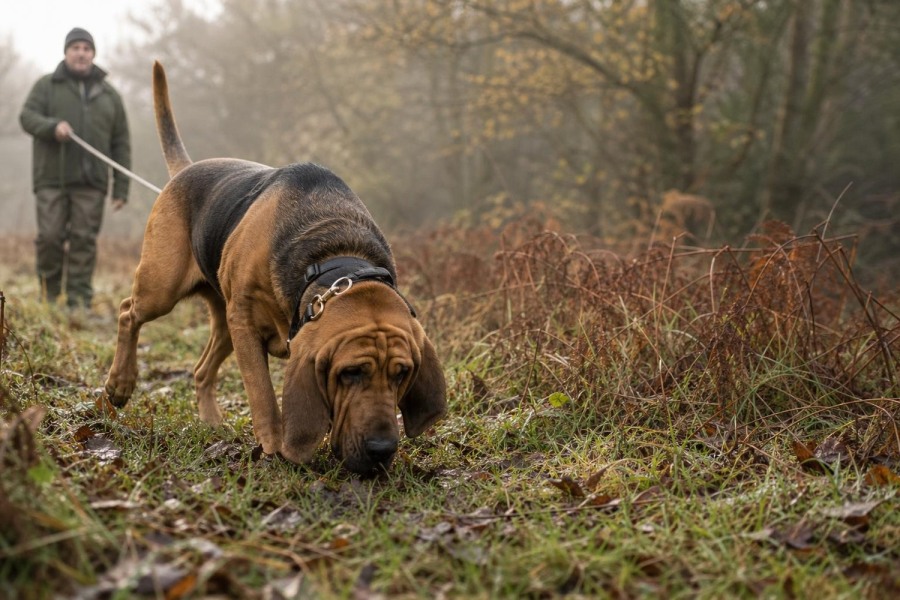
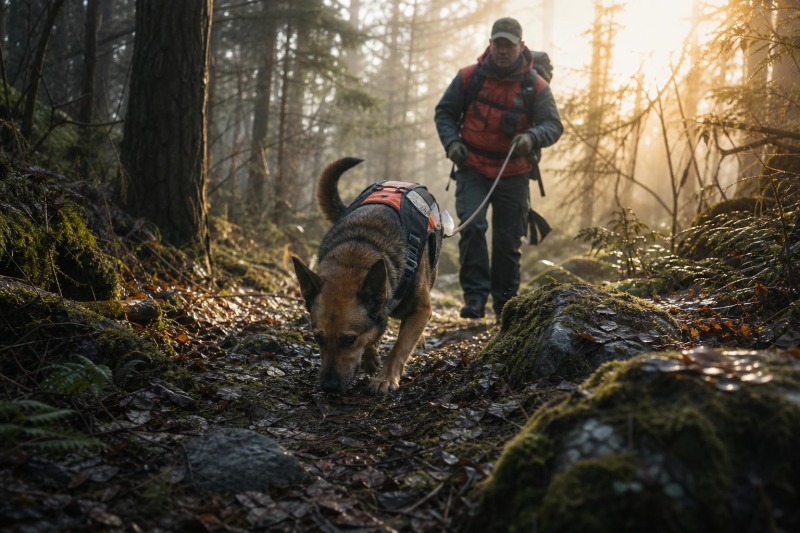
Tracking is the most exact of the three. In true tracking work, the dog is expected to follow the actual path where a person or animal traveled, often step by step or very close to it. The scent picture is usually tied to ground disturbance, crushed vegetation, skin rafts, and odor left directly in the footsteps. A dog that is tracking tends to work with its nose low, staying honest to the line.
This style of scent work is common in disciplines where precision matters. Many tracking dogs are trained to indicate articles left on the track and to stay close to the exact route of travel. In practical terms, tracking asks the dog to say, “This is where the subject went,” not merely, “The subject passed somewhere through here.”
On a cool morning with a bit of moisture on the ground, a good tracking dog can make you look smarter than you are. But put that same dog on baked dirt with swirling crosswinds and old contamination, and the work gets harder. Tracking depends heavily on the scent that remains on or near the track itself.
When Tracking Is Most Useful
Tracking shines when you need precision. It is valuable in organized sport work, in some law enforcement applications, and in training scenarios where discipline and accuracy are the goal. For hunting dog owners, the principles of tracking can also help with blood tracking and recovery work, though game recovery often drifts into trailing depending on conditions and species.
What Trailing Means
Trailing is a little looser and, in many real-world situations, a little more practical. A trailing dog follows the scent of the subject, but not necessarily the exact footstep pattern. The dog is working the overall odor path and may range off the literal track if scent has drifted, pooled, or been carried by terrain and weather. The dog is still following where the subject went, but it is not chained to every footfall.
This is where a lot of experienced hounds and versatile working dogs earn respect. A true trailing dog can sort old scent from fresh scent, move through difficult cover, and account for conditions that pull odor away from the original line. If a track crosses a logging road and the scent blows into the ditch, the dog may work that ditch because that is where the scent is strongest. To an untrained eye, it can look sloppy. To a seasoned handler, it often looks efficient.
A minute later he hooked left, dropped into a shaded draw, and put us right on the deer. That is trailing in a nutshell.
How Trailing Differs from Tracking
The simplest way to put it is this: tracking is about the path; trailing is about the scent picture connected to that path. A tracking dog often shows more exactness. A trailing dog often shows more adaptability. Both are skilled, but they solve the problem differently. Many dogs naturally blend the two depending on age of track, humidity, wind, terrain, and training history.
What Air Scenting Means
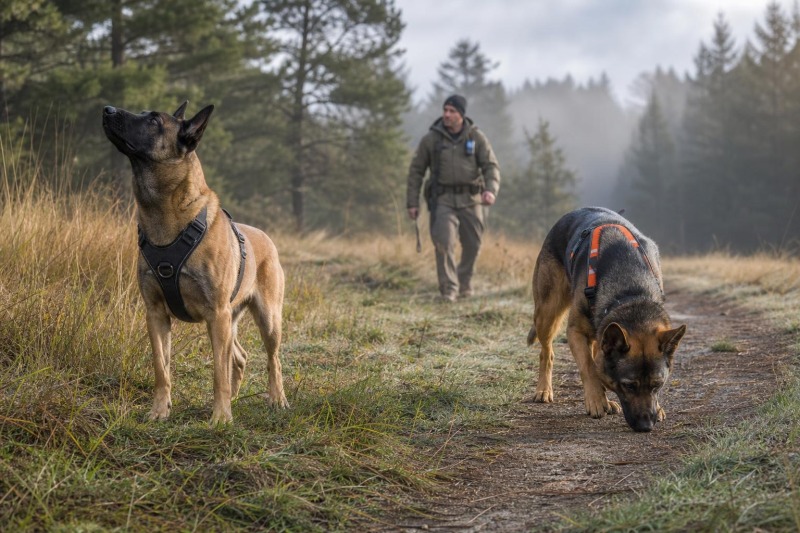
Air scenting is the most free-ranging of the three. Instead of following the ground track or the line of travel, the dog works odor carried through the air. These dogs lift their head, cast into the wind, and search for scent cones, pockets, and drift. They may locate a person or animal without ever touching the exact route that subject traveled.
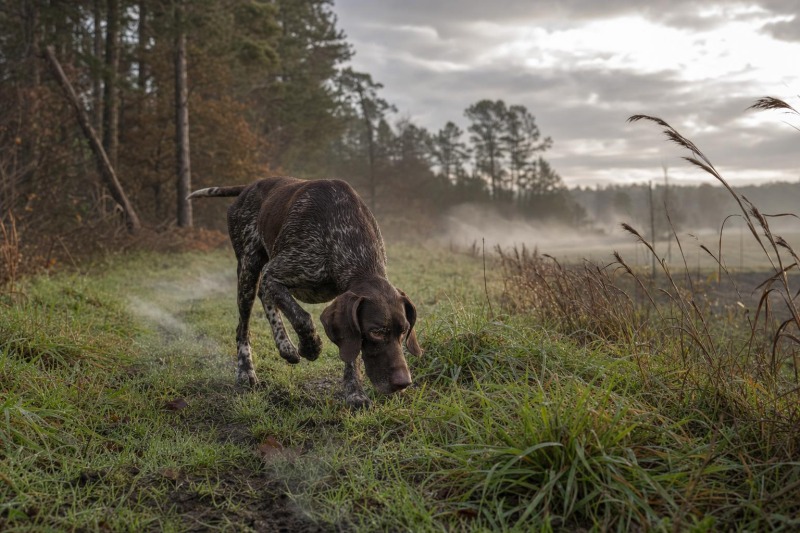
This style is common in bird dogs, many search and rescue dogs, and some detection scenarios. If you have ever watched a pointing dog snap into bird scent from thirty yards away with its head high and tail rigid, you have seen air scenting at its finest. The dog is not reading footsteps. It is reading airborne odor.
Air scenting can be spectacular in the right conditions. A breeze moving steadily across open cover can let a sharp dog locate game or a hidden subject quickly and efficiently. But it also has limits. In dead air, swirling timber, steep draws, or thermals that shift with the sun, airborne scent can play tricks. Dogs that rely heavily on air scent may need room to cast and may miss the exact line of travel entirely.
Why Bird Dog Owners Should Understand Air Scenting
For owners of pointing dogs, flushing dogs, and multipurpose gundogs, air scenting is central to field work. Dogs locate birds by catching odor on the wind and narrowing down the source. Handlers who understand wind direction, terrain changes, and scent pooling can position themselves better and read their dogs more accurately. It is one thing to own a dog with nose; it is another thing to know what that nose is telling you.
How Scent Conditions Change Everything
No discussion of tracking, trailing, and air scenting means much unless you respect conditions. Moisture usually helps hold scent. Heat can burn it off. Wind can carry it, spread it, or scatter it into nothing useful. Cover traps scent differently than bare ground. Shade, dew, frost, dust, and sun all matter. Even the time of day can change how a dog works the same area.
That is why labels alone can be misleading. A dog may start by tracking on damp ground, shift into trailing as the scent drifts across a slope, then lift its head and air scent the final approach when odor gathers in front of the target. Good working dogs are often fluid. Great handlers learn to recognize those transitions instead of forcing the dog into one picture.
Which Style Is Best for Your Dog?
That depends on the job. If you want a dog for formal tracking work or disciplined footstep accuracy, tracking matters most. If you are interested in practical recovery work, trailing ability may be more important. If you hunt upland birds or need a dog to locate hidden subjects in moving air, air scenting is critical.
Breed tendencies play a role, but they are not the whole story. Bloodhounds and other scent hounds often excel at trailing. Many shepherds, Malinois, and sporting breeds can be taught precise tracking. Pointing breeds are naturally gifted at air scenting, yet many of them can also handle a track when properly trained. The individual dog matters. Desire, nerve, focus, and training shape how nose talent shows up in the field.
Training Considerations for Working Dog Owners
Handlers ask for one style of scent work while rewarding another. If you want precision tracking, lay tracks that reward nose-down commitment and exactness. If you want a practical trailing dog, do not overcorrect every cast away from the footpath when the dog is honestly working odor. If you want strong air scenting, train in ways that encourage the dog to use wind and hunt independently without losing responsiveness.
Be careful about reading too much into a dog’s posture without context. Nose down does not always mean tracking well, and head up does not always mean the dog is guessing. Watch the whole dog. Confidence, tempo, tail carriage, changes in breathing, and how the dog handles turns all tell a story. Field time teaches that better than any textbook ever will.
The real difference between tracking, trailing, and air scenting comes down to how the dog accesses and follows odor. Tracking follows the path with precision. Trailing follows the scent picture of the subject with more flexibility. Air scenting hunts odor carried on the wind. None of them is automatically better than the others. They are tools, and the right tool depends on the job in front of the dog.
For working dog owners, this knowledge pays off fast. You stop blaming dogs for solving scent problems correctly. You start setting better training expectations. Most of all, you gain a deeper respect for what a good dog is doing when its nose goes to work. Out in the field, where weather changes by the hour and scent never sits still for long, that understanding can be the difference between frustration and success.