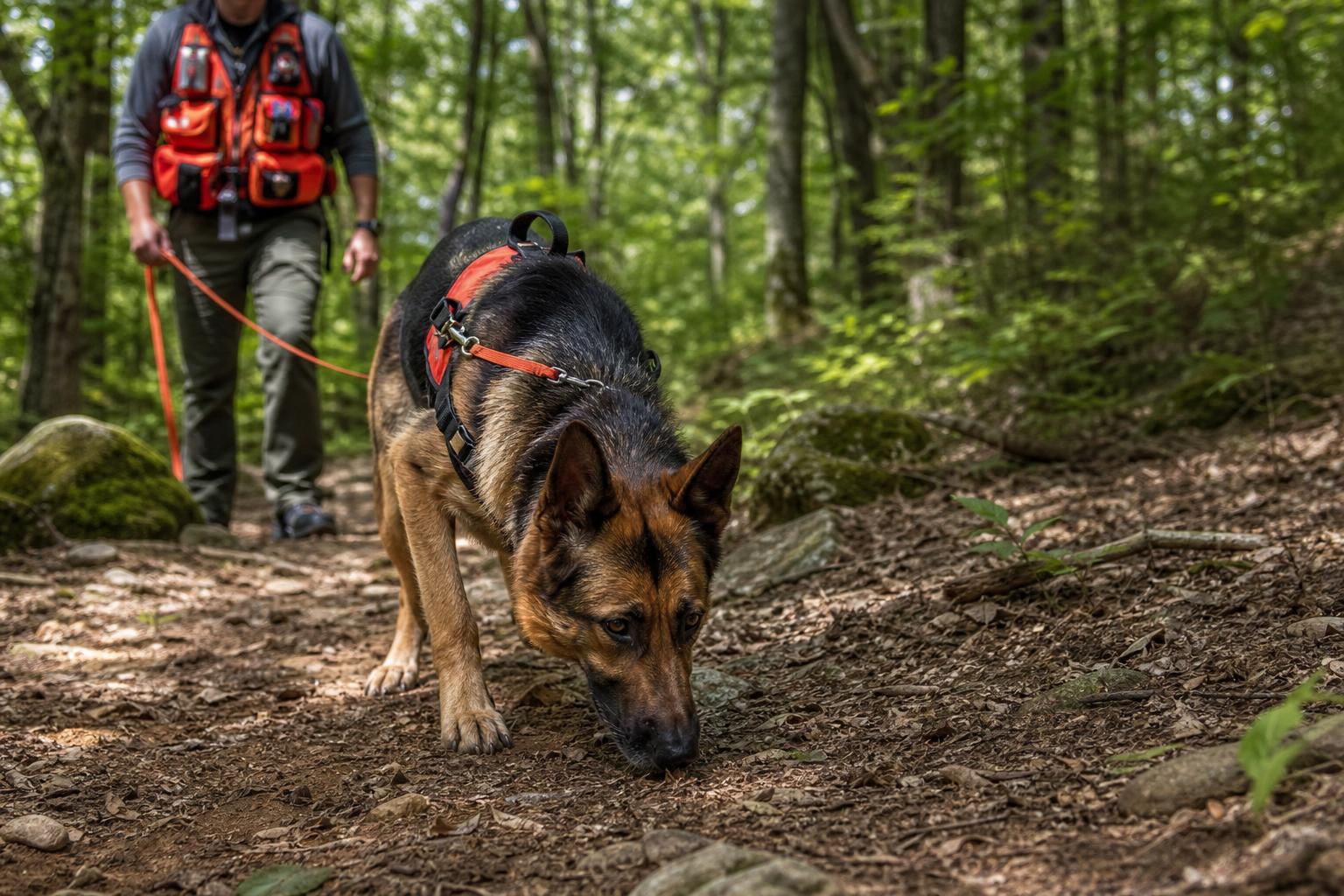
Search and Rescue Tracking Dogs: Real Work for Real Stakes
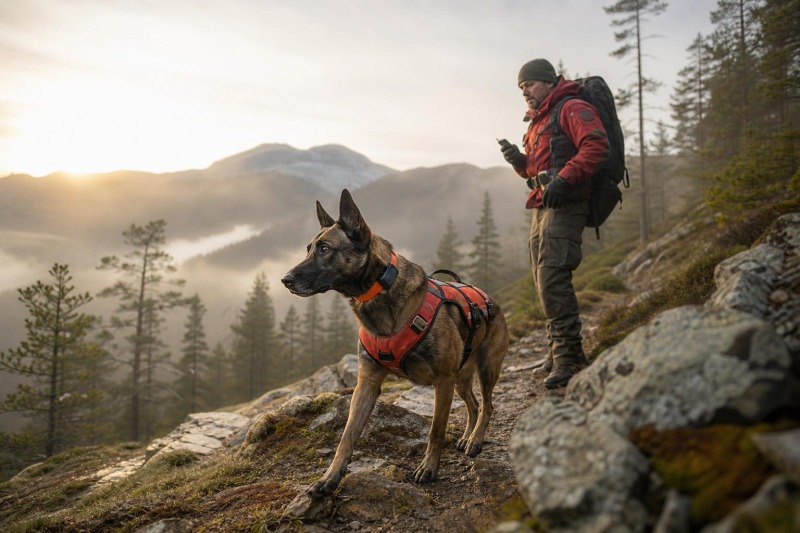
Tracking is one of the disciplines used by search-and-rescue dog teams. The work asks a dog to follow useful scent and a handler to make sense of the result within a larger search plan. Preparation includes navigation, communications, and safe movement through the country.
For dog owners interested in working dogs, search and rescue work holds a special kind of gravity. It asks for brains, nerve, endurance, and trust between dog and handler. The dog must sort old scent from fresh disturbance, ignore distractions, and keep working when the ground turns hard, the air shifts, or the track grows thin. The handler, for his part, has to read subtle changes in body language and know when to trust the dog over his own assumptions. That partnership is what turns raw ability into a dog that can help bring somebody home.
What Search and Rescue Tracking Dogs Actually Do
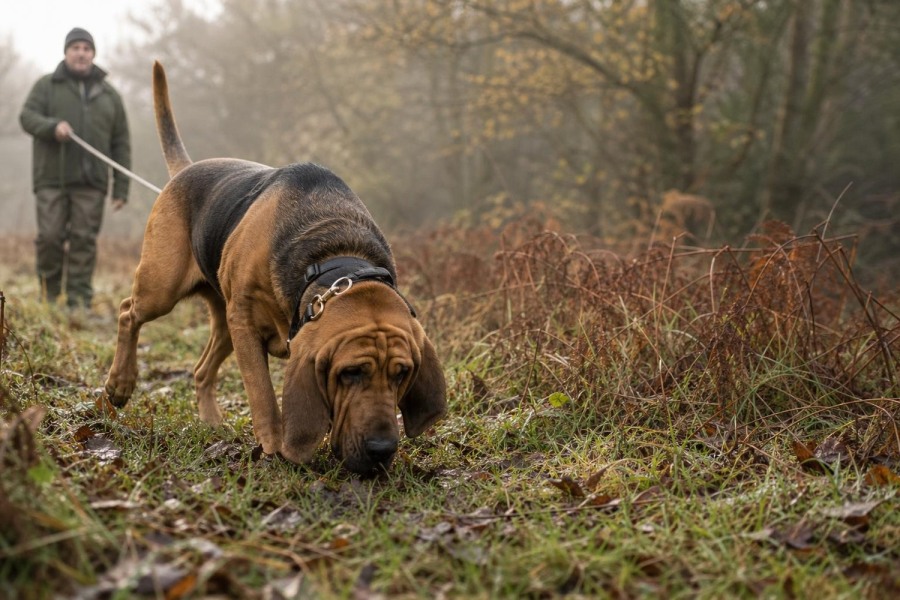
When most people hear the term search and rescue dogs, they picture a dog racing through rubble or quartering a mountain slope with its head high. That is one part of the broader SAR world, but tracking dogs have a more specific assignment. A search and rescue tracking dog follows the scent trail left by a particular person moving through an area. That trail can be laid in woods, farm country, desert, suburbs, or city streets. Depending on conditions, the dog may work with its nose deep to the ground, or it may lift and cast when scent drifts off the path.
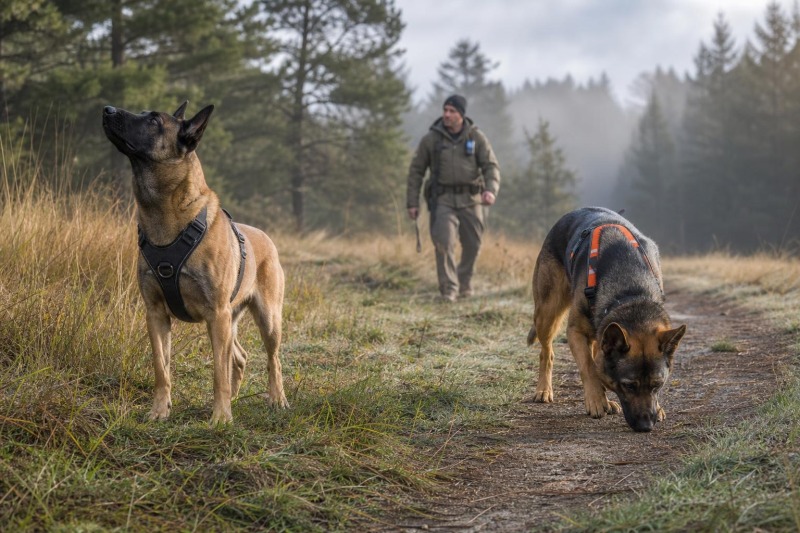
Tracking differs from trailing and area search, though in the real world the lines sometimes blur. A true tracking dog often keys on crushed vegetation, disturbed soil, and the concentrated footstep-to-footstep scent left along a path of travel. A trailing dog may work a broader scent picture and follow the human odor carried away from the exact footsteps. Both jobs demand concentration and honesty. The dog cannot guess. Guessing wastes time, and wasted time can cost lives.
Plenty of high-drive dogs want to charge ahead. The valuable ones learn to slow their mind down, process what their nose is telling them, and move with purpose rather than panic.
Why Their Nose Matters More Than Speed
A fast dog can cover ground, but a useful SAR tracking dog covers the right ground. Scent behaves differently from one hour to the next. Morning dew may hold odor low. Dry wind can scatter it. Heat can lift it. Rain can soften and reshape the scent picture. In heavy cover, scent may pool. On pavement, it may drift and collect in edges, curbs, and shaded pockets. A seasoned tracking dog learns to work through those changes without losing confidence.
That is why good handlers prize consistency over theatrics. The best tracking dogs are often not flashy. They are methodical. They show commitment at the line, settle into the trail, and communicate through posture, tail carriage, breathing rhythm, and line tension. To an experienced eye, all of that speaks volumes.
Best Breeds for Search and Rescue Tracking Dogs
Breed matters, but not in the simple way people sometimes think. There is no single perfect search and rescue breed. What matters most is the individual dog’s nose, nerve, health, biddability, resilience, and desire to work for extended periods. That said, some breeds show up again and again because generations of selection gave them useful tools.
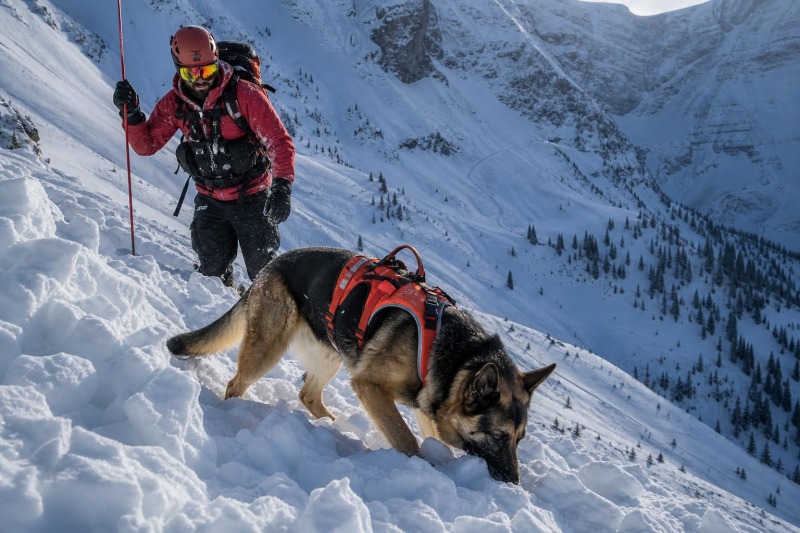
German Shepherds remain respected for their trainability, athleticism, and versatility. Labrador Retrievers bring excellent hunt drive, social stability, and strong scenting ability. Bloodhounds are legendary for trailing, with a scenting reputation earned honestly over time. Belgian Malinois can excel when their drive is channeled by a skilled handler, though they are not a casual choice. Coonhounds and other hound types may also prove exceptional in tracking roles, especially where persistence and scent focus are prized.
Still, breed alone never certifies a dog for this work. In search and rescue, the dog has to want the work, and then it has to keep wanting it when conditions turn sour.
The Temperament You Want in a SAR Tracking Dog
If you are evaluating a prospect, look past hype and watch how the dog handles uncertainty. Does it recover quickly from a startling sound? Does it investigate new ground with confidence? Can it work independently without becoming disconnected from the handler? Is it social enough to operate around teams, vehicles, and strangers, yet serious enough to stay on task?
A search and rescue tracking dog needs more than prey drive or toy drive. It needs emotional balance. These dogs may work around injured people, grieving families, helicopters, sirens, darkness, steep footing, and human stress thick enough to feel in the air. A dog that falls apart in that atmosphere is not wrong; it is simply unsuited for the job.
How Search and Rescue Tracking Dogs Are Trained
Strong SAR dogs are developed, not discovered overnight. Training usually begins with building desire and clarity. Young dogs learn that following human scent leads to reward. At first the tracks are short, simple, and fresh. The dog gains confidence by solving easy problems correctly. Then the trainer adds age, length, turns, cross-tracks, varied surfaces, and distractions. Before long, the dog is no longer just chasing a visible helper. It is learning scent discrimination and disciplined problem solving.
Good training avoids muddying the picture. The dog should understand the assignment clearly. If the dog is being taught tracking, the trainer rewards accurate scent work, not wild casting and freelancing. If the dog overshoots a turn, the handler learns how to support without contaminating the exercise. Timing matters. So does restraint. A handler who talks too much, guides too much, or second-guesses every hesitation can do real damage to a promising dog.
Over time, the work becomes more realistic. Tracks age longer. Surfaces get tougher. Weather gets less forgiving. Unknown subjects replace familiar helpers. Night problems are introduced. Contamination from other people increases. The dog learns that the game is still the game, even when the scent is faint and the trail no longer feels simple.
Reading the Dog on the Line
This is where many newcomers underestimate the craft. The line between handler and dog is not just equipment. It is a conversation. A committed dog often changes pressure on the line before anything obvious appears on the ground. Its head carriage may lower when it is locked in. Its tail may steady. Its breathing may change. On a loss, you may see the dog check, circle, drift, and then reestablish. A handler who learns those signals becomes far more effective than one who merely follows behind.
That skill comes with time in the field. You cannot fake hours. You have to watch dogs work in wet grass, leaf litter, gravel roads, creek bottoms, and parking lots after the sun has baked the scent thin. Every condition teaches something.
Real-World Challenges in SAR Tracking
No two searches unfold alike. A missing child in a neighborhood presents one picture. An overdue hunter in steep timber presents another. An elderly person with memory loss may move unpredictably and cover surprising distance. Wind, temperature, time since last seen, foot traffic, wildlife, and terrain all complicate the problem. The tracking dog must sort through that clutter while the handler manages logistics and keeps the team moving safely.
There is also the matter of physical durability. SAR tracking dogs need sound feet, efficient movement, and the fitness to work long hours without mentally fading. Rough country can punish a weak dog in a hurry. So can repeated deployments without proper conditioning. This is one reason seasoned handlers take care with off-season work, nutrition, hydration, and recovery. You do not build a dependable dog by running it only when the pager goes off.
Early in a track, a lot of dogs look good. Five miles later, after a creek crossing and a dead-end check in briars, the honest ones are still trying to solve the problem.
The Bond Between Handler and Dog
If there is one thing outsiders miss, it is how personal this work becomes. A search and rescue tracking dog does not operate like a machine. It works through a relationship. The dog must believe the handler will put it in the right place and let it work. The handler must believe the dog is telling the truth, even when the answer is inconvenient. That kind of trust is built in training, in travel, in repetition, and in the quiet hours that never show up in photographs.
When that bond is right, the dog works with confidence and the handler moves with less doubt. When it is wrong, every uncertainty grows. The line gets busy. Corrections come too quickly. The dog checks the handler instead of the scent. In a discipline this precise, small cracks can widen fast.
Why Search and Rescue Tracking Dogs Matter
In a world crowded with gadgets, maps, drones, and digital tools, a good tracking dog still brings something nothing else can fully replace. It can take a tiny shred of human scent and turn it into direction. It can tell searchers where to focus, where not to waste time, and when a trail continues beyond the point where human eyes would have quit. That ability is not magic. It is biology sharpened by training and held steady by partnership.
For dog owners drawn to working dogs, search and rescue tracking represents the best side of canine purpose. It is hard work with real meaning. It rewards patience, field sense, and humility. And it reminds us that the finest dogs are not only athletes or companions. Sometimes they are problem solvers in fur, moving through darkness with their nose full of a story we cannot read, yet trusting them enough to follow anyway.
If you are considering this path, respect the commitment it demands. Search and rescue tracking dogs are made through time, structure, and honest training. But for the right dog and the right handler, there are few more worthwhile jobs in the working dog world.