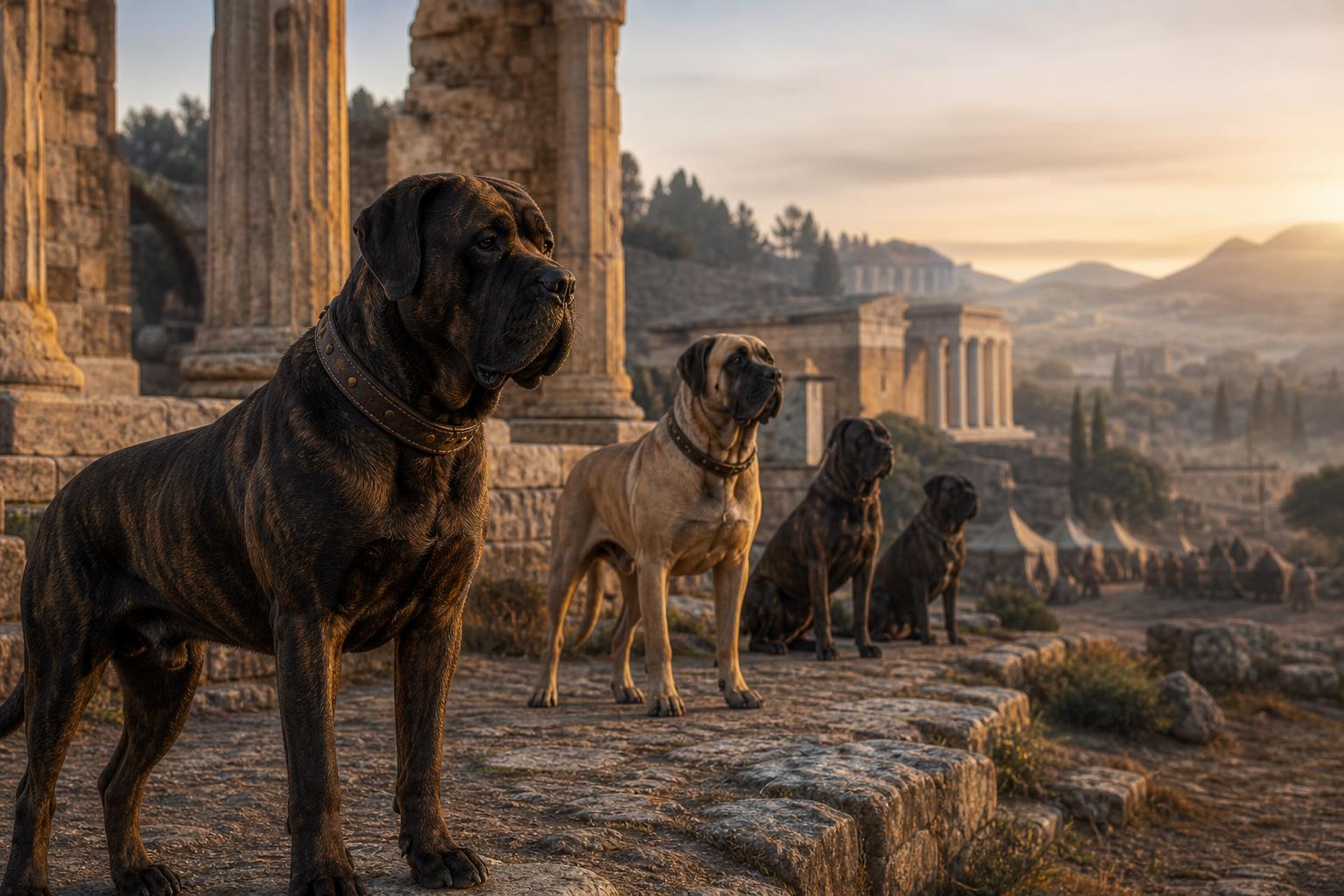
Ancient accounts of guard dogs need to be read in their historical setting. Their roles, management, and appearance were shaped by the work and societies around them. Clear distinctions between recorded evidence and later interpretation make the subject more useful.
When we talk about ancient guard dogs of Rome and Greece, we are really talking about the roots of the guardian instinct in Western working dogs. These were not decorative animals. They guarded estates, defended livestock, accompanied armies, and stood as living barriers between order and chaos. The men who kept them depended on them in practical ways, and that pressure shaped dogs with strong nerves, powerful frames, and a willingness to confront danger without falling apart.
For modern dog owners interested in working dogs, these ancient guardians matter because their bloodlines, type, and purpose still echo in mastiff-type breeds and livestock guardians today. If you admire a dog that can think under pressure and stand its post without constant direction, you are looking at a legacy that stretches back to the classical world.
The Greek Foundation of the Ancient Guardian Dog
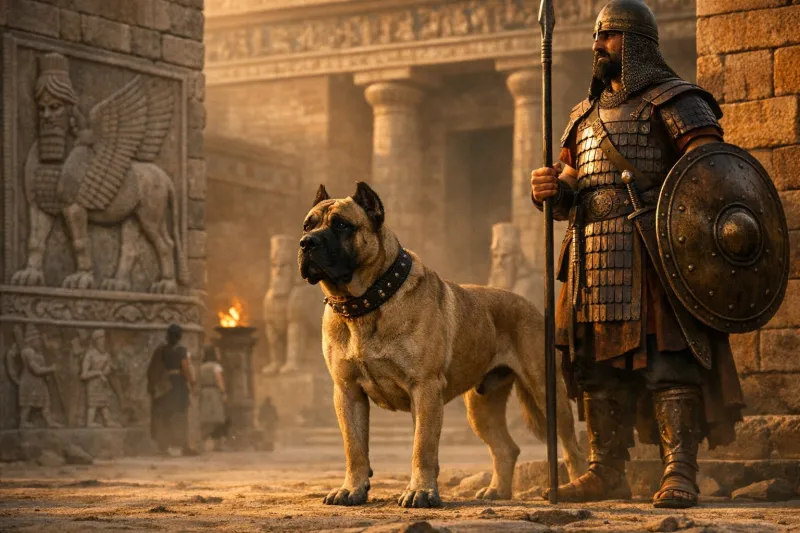
Any honest discussion starts in Greece, especially with the famed Molossian dogs of Epirus. The Molossians were a people of northwestern Greece, and their dogs earned a reputation that traveled far beyond their homeland. Ancient writers described them as large, imposing animals used for guarding property, protecting herds, and in some cases going to war. The exact appearance of these dogs is still debated, and that is common whenever you look this far back. What remains clear is their function. They were valued because they had strength, courage, and the steadiness to face predators and intruders.
That tells an experienced dog man a lot. A true guardian in rough country could not be some unstable brute that fired off at every shadow. The dog had to stay with stock, know familiar people, and respond when wolves, thieves, or armed men came too close. It had to conserve energy until needed and then meet force with force. In that sense, the old Greek guard dog was likely much like the better livestock guardians and estate protectors we still respect today: calm in routine, serious in threat, and difficult to intimidate.
The Molossian Reputation
The Molossian name became almost a byword in antiquity for powerful dogs. Greek and later Roman sources praised them for their size and utility. Some were probably used on big game as catch dogs or war companions, but guarding appears to have been one of their most enduring tasks. In a world where wealth often stood on four legs in the form of sheep, cattle, and horses, a dependable guardian dog was no luxury. It was part of a household’s security system.
Dogs do not become legendary over centuries because they look impressive in a courtyard. They do it because they consistently deliver when stakes are high. The Molossian dogs clearly did enough of that to leave a mark on history and breeding alike.
How Rome Shaped and Spread the Guardian Type
Rome had a talent for taking what worked and making it larger, wider, and more systematic. That included dogs. As Roman influence spread, so did its use of working dogs for military camps, rural estates, roads, and urban homes. The Romans encountered regional dog types throughout their expansion, but they especially valued strong mastiff-like animals for guarding and control. Many historians believe Roman guard and war dogs drew heavily from Greek Molossian stock, later crossed with local dogs as the empire absorbed new territories.
Roman households often kept dogs specifically for protection. On rural properties, a good dog served as an early warning, a deterrent, and if needed, a fighter. In towns and villas, dogs guarded gates and inner courtyards. The famous warning mosaics, including the well-known cave canem, or beware of the dog, show that Romans recognized both the presence and the practical deterrent value of these animals. Those signs were not there for decoration alone. They told visitors that the property was guarded by a serious dog and that crossing a line might come at a cost.
Guard Dogs in Roman Military Life
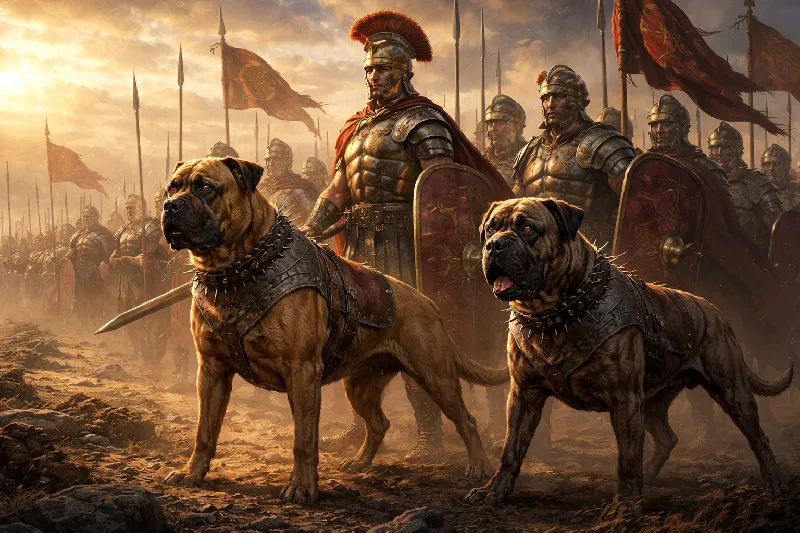
There is a lasting fascination with Roman war dogs, and some of it can drift into exaggeration. Still, dogs certainly had roles around military movement and encampments. A sharp-eared, reliable guardian was useful on the march and invaluable in camp. Before a sentry saw movement in the dark, a dog might hear it, scent it, or sense a disturbance in a way men often miss. They notice change before we do.
That does not mean every Roman dog was charging enemy lines in armor, despite how often that image gets repeated. More likely, many of these dogs served in practical guarding roles, protecting supplies, camp perimeters, and handlers. In hard country and uncertain times, a dog that could settle at your feet one hour and stand hard at the edge of camp the next was worth keeping.
What These Ancient Guard Dogs Were Really Like
One mistake modern readers make is imagining all ancient guard dogs as oversized, heavy-headed giants built like statues. Some may have been substantial, but true working form always reflects local need. A dog expected to move with herds across rough ground would need sound feet, enough athleticism to endure distance, and the lungs to work in heat and cold. An estate guardian might be heavier, but it still needed enough mobility to intercept a threat and enough brain to tell a servant from a stranger.
That balance is what stands out when you study old working types. Power mattered, but so did nerve, endurance, and discernment. The best ancient guardian dogs were likely not frantic barkers or mindless attackers. They were composed. They watched. They made intruders think twice. And when pressure came, they did not fold.
From a hunter’s perspective, that mental steadiness means as much as muscle. The ancients would have known the same lesson. A guardian that panics, quits, or turns unstable around its own people is worse than useless. The dogs that earned a place in Roman and Greek life must have proven themselves over and over in real conditions.
The Link to Modern Working Dogs
If this history feels familiar, it should. Many modern mastiff and livestock guardian breeds carry some part of this old classical pattern, whether by direct ancestry, shared type, or repeated selection for the same job. The Cane Corso is often cited as a descendant of Roman working dogs, and while ancient pedigrees are never simple, the connection in function is easy to see. It is a serious farm and estate guardian with strength, alertness, and enough athletic ability to work rather than merely pose.
The broader mastiff family also reflects that ancient guardian mold. So do several flock guardians from southern and eastern Europe that preserve the old formula of vigilance, loyalty, territorial instinct, and independent judgment. Different lands shaped them differently, but the core task remained familiar: protect what is yours, hold steady, and do not waste motion.
Why This History Matters to Dog Owners Today
For owners drawn to working dogs, the ancient guard dogs of Rome and Greece offer a useful reminder that these breeds were built for responsibility. They were never meant to be casual ornaments. A true guardian needs structure, social understanding, and a handler who respects what the dog was bred to do. These dogs can be deeply loyal and impressive beyond words, but they thrive when given clarity and purpose.
When you understand the old job, modern behavior makes more sense. Territorial awareness, suspicion of strangers, calm watchfulness, and selective responses are not flaws in the right setting. They are inherited tools. The trouble starts when people want the look of an ancient protector without accepting the management, training, and responsibility that come with one.
The Enduring Legacy of the Classical Guardian
The ancient guard dogs of Rome and Greece were products of a demanding world. They protected homes without electric lights, livestock without modern fencing, and camps without the comforts of modern security. Men trusted them because they had to. The weak, foolish, and unreliable dogs did not leave much mark. The capable ones did, and that is why their shadow still falls across so many working breeds today.
There is something admirable in that old partnership. A man, a boundary, a flock, a gate, and a dog that understands its duty. Strip away the centuries and the principle remains unchanged. Working dogs earn their keep through usefulness, and the ancient guardians of the classical world were useful in the hardest sense of the word.
For those of us who appreciate a real dog, one with substance under the hide and judgment behind the eyes, these Roman and Greek guardians are more than historical curiosities. They are the foundation stones of a tradition that still matters. You can see it in a modern estate guardian watching the lane at dusk, in a livestock dog holding pressure from a predator, and in any honest working breed that knows when to stay quiet and when to stand tall. That old blood, in one form or another, is still on watch.