Autism Assistance Dogs: More Than a Good Dog at Your Side
Autism assistance-dog programs need to consider the individual, the household, and the specific tasks proposed. A dog’s temperament and training are only part of that assessment. Daily care, handling arrangements, and the family’s circumstances also shape whether a placement is suitable.
An autism assistance dog is not simply a pet with a calm nature. It is a purpose-trained working dog taught to provide support to an autistic child or adult in ways that are practical, emotional, and sometimes life-changing. In the best cases, these dogs help bring a measure of order to days that can otherwise feel unpredictable. They can interrupt spiraling behavior, provide grounding during sensory overload, support safe movement in public, and offer the kind of constant, nonjudgmental companionship that many people find deeply reassuring.
Folks outside the working dog world sometimes underestimate what a properly trained assistance dog can do. They see a dog lying quietly at someone’s feet and assume the animal is just naturally gentle. But seasoned dog people know better. Calm in a crowd, steadiness around noise, responsiveness under stress, and the ability to read a handler’s needs do not happen by accident. Those are built through selection, training, repetition, and a dog’s own temperament.
What Autism Assistance Dogs Actually Do
The duties of autism assistance dogs vary from one handler to another, because autism presents differently in every person. Some dogs are trained to help reduce wandering or bolting, especially with children who may try to run when overwhelmed. In those situations, the dog may work with a tethering system under professional guidance, helping the caregiver maintain safer control during transitions in public spaces.
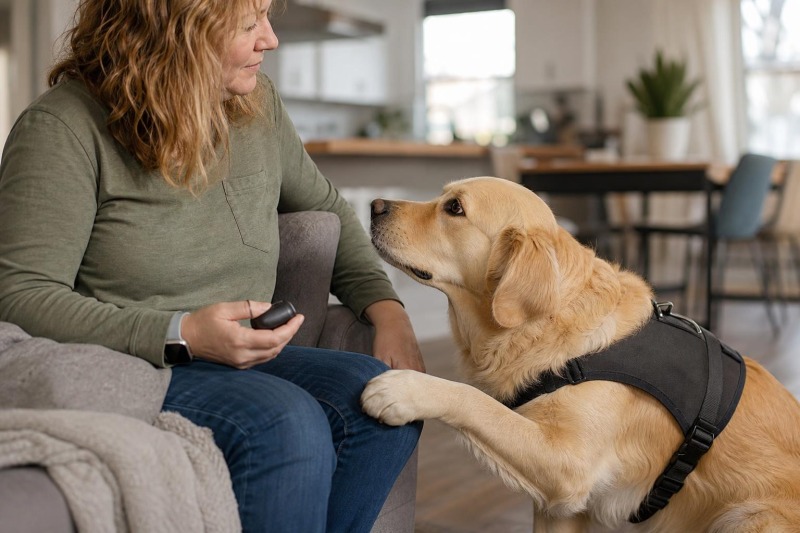
Other dogs are trained to recognize and respond to signs of distress. A dog may nudge, lean, or apply deep pressure by laying across the handler’s lap or legs. That kind of contact can have a settling effect, much like a firm hand on a shoulder from someone you trust. Some dogs assist with transitions, bedtime routines, or entering stimulating environments such as stores, schools, or medical offices. Even when the task seems simple on paper, the real value often comes from consistency. The dog does not get impatient. It does not lose interest in a hard day. It shows up the same way, over and over.
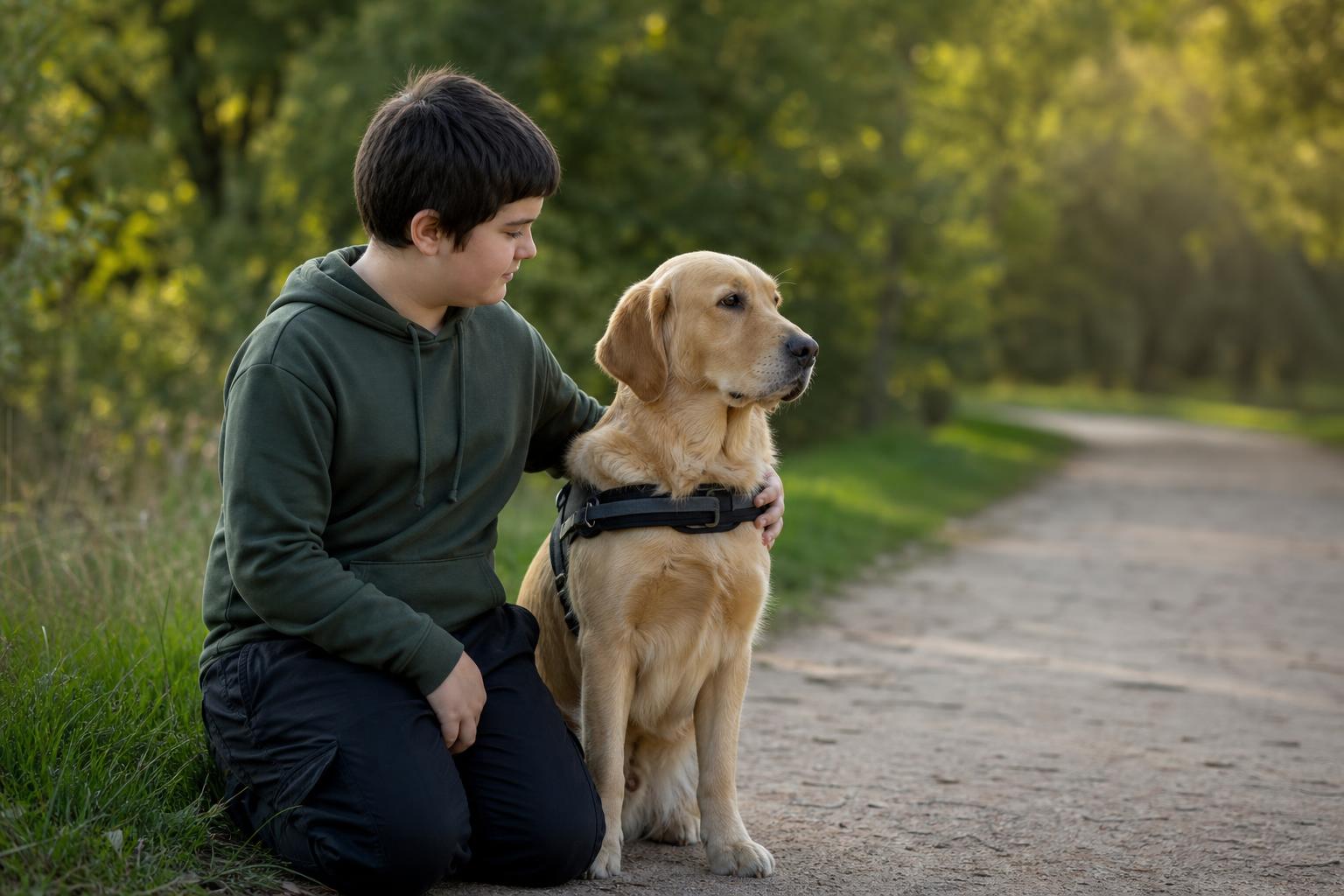
There is also the plain fact of companionship. A lot of families describe the dog as a bridge to the wider world. A child who struggles with social connection may talk to the dog, care for the dog, or feel more comfortable leaving the house because the dog is there. Adults on the spectrum may find that a dog provides a steady anchor in situations that would otherwise feel overwhelming. That is not sentimentality. It is working support, every bit as real as any other job a dog is trained to do.
Safety, grounding, and routine
Three words come up again and again when talking about autism assistance dogs: safety, grounding, and routine. Safety matters because some individuals are prone to wandering, darting, or becoming disoriented in public. Grounding matters because sensory overload and anxiety can build fast, and a dog’s physical presence can help bring attention back to the moment. Routine matters because dogs thrive on consistency, and that natural rhythm often helps the handler as well. Feeding times, walks, grooming, training sessions, and rest periods all create structure around the day.
What Makes a Good Autism Assistance Dog
Not every nice dog is cut out for this kind of work. That is something experienced handlers learn early. A dog can be affectionate, obedient, and wonderful at home, yet still lack the nerve, focus, or adaptability needed for public-access work. Autism assistance dogs need stable temperaments above all else. They must be comfortable around noise, movement, strangers, uneven schedules, and the occasional awkward interaction from the public.
Trainability is equally important. The dog has to understand tasks, generalize those tasks across environments, and stay responsive even when the handler is under stress. Sensitivity helps, but too much sensitivity can be a problem. A dog that startles easily or absorbs every bit of tension in the room may struggle in this role. What you want is a dog with a balanced mind, one that notices the world without being rattled by it.
Breed can matter, though it should never be the only factor. Labrador Retrievers and Golden Retrievers are often chosen because they tend to combine sociability, biddability, and emotional steadiness. Standard Poodles are another common option, especially for families needing a lower-shedding coat. That said, good individual dogs can come from several backgrounds. In working dogs, the individual in front of you is often more important than the label on the pedigree.
Temperament always comes first
Assistance work favors the second kind. A dog for autism support should be patient, adaptable, and unflappable. It should recover quickly from surprises and stay engaged with the handler rather than constantly scanning for the next distraction. That sort of stability is worth more than all the tricks in the world.
Training and Placement: Why Professional Standards Matter
There is a powerful temptation for families to take a beloved pet and hope to shape it into an assistance dog. Sometimes pieces of that can work, especially for support in the home. But public-access assistance work is a different matter. Reliable autism assistance dogs are usually developed through careful breeding, puppy raising, structured socialization, task training, and intensive proofing in real-world settings. That takes skill and time.
Professional programs evaluate dogs for soundness, confidence, health, and suitability before investing heavily in training. They also work with the family or handler to match the dog to actual needs, not just broad assumptions. A child who needs help with transitions may require something different from an adult who needs interruption of repetitive stress behaviors or grounding during sensory overload. Good placement is not random, and neither is good training.
Even after placement, the work continues. Families have to maintain routines, reinforce training, and learn how to handle the dog correctly. A working dog is not a machine you switch on and forget. It is a living partner that needs clarity, rest, exercise, veterinary care, and ongoing handling. When families understand that from the start, the partnership tends to be stronger and more sustainable.
Life at Home with an Autism Assistance Dog
One of the finest things about a well-trained working dog is that it can bring calm without demanding the spotlight. In many homes, the dog becomes part of the rhythm of the household. It walks alongside morning routines, settles during homework or quiet time, rides to appointments, and helps soften rough edges that once seemed sharp every single day.
Still, families need realistic expectations. An autism assistance dog will not erase every challenge, and it is not a cure. What it can do is help create space to breathe. It can add predictability where there was too much uncertainty. It can provide a measure of independence, confidence, and safety that changes how a family moves through the world.
A hand resting on a dog’s shoulder before walking into a crowded store. A child sleeping more soundly because the dog is bedded nearby. A parent whose posture finally drops an inch because there is another steady presence helping carry the day. Those moments may not look dramatic from the outside, but they matter.
Is an Autism Assistance Dog Right for Your Family?
That is a fair question, and it deserves an honest answer. These dogs can be remarkable, but they also require time, money, patience, and commitment. Families should consider lifestyle, travel needs, home environment, allergies, grooming demands, and whether everyone in the household is ready to support a working dog’s routine. It is also worth thinking hard about whether the individual who will rely on the dog is likely to benefit from close canine partnership.
For many families, the answer is yes, and strongly so. For others, different supports may be a better fit. The important thing is not to chase the idea of an assistance dog because it sounds hopeful. The important thing is to evaluate whether a trained dog truly meets the needs at hand and whether the home can support the dog’s welfare for the long haul.
When the match is right, autism assistance dogs can be among the most meaningful examples of what working dogs do best. They step into human need with steadiness and purpose. They do not solve everything, but they often make the path safer and calmer. And for a family that has spent a long time searching for that kind of support, a good dog can feel like a blessing with paws on the ground.