Diabetic Alert Dogs: A Working Partner With Real Purpose
Diabetic-alert dogs are trained for a particular assistance role, and owners need a clear account of what an individual dog can reliably do. Training claims, ongoing evaluation, and the person’s clinical care plan all deserve attention when considering such a partnership.
Diabetic alert dogs are trained to detect changes in human blood sugar, often before the person feels symptoms. For someone living with diabetes, especially those prone to hypoglycemia or sudden swings, that kind of warning can be life-changing. These dogs are not a novelty, and they are not simply emotional support animals wearing a vest. A true diabetic alert dog is a working animal with a job to do, and the best ones perform it with the same steady seriousness you would expect from any dependable dog bred and trained for a purpose.
There is a lot of confusion around what these dogs can and cannot do. Some stories oversell them, while others dismiss them altogether. The truth sits in the middle, where most dog work does. A well-bred, well-trained diabetic alert dog can be a tremendous asset, but success depends on the dog, the training, the handler, and the household built around that partnership.
How Diabetic Alert Dogs Detect Blood Sugar Changes
A dog experiences the world nose-first. Anyone who has watched a retriever lock onto scent on a cool morning or seen a hound sort old track from fresh knows just how powerful that nose really is. Diabetic alert dogs use that same biological gift to detect chemical changes in a person’s body odor or breath associated with rising or falling blood sugar.
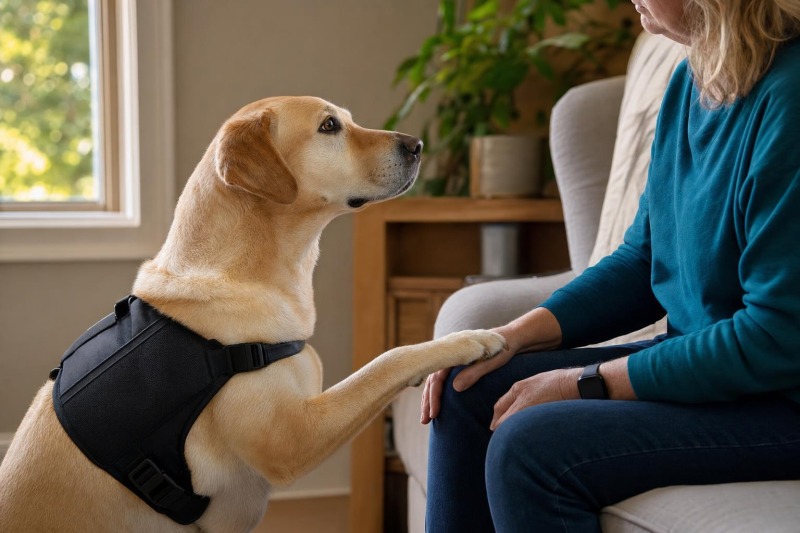
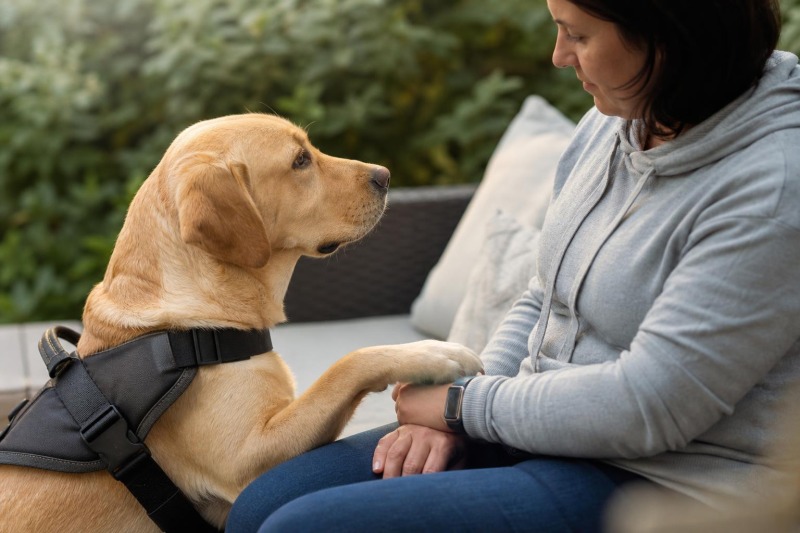
When blood glucose shifts, the human body produces subtle scent changes. Those changes may be too faint for any machine in the room to notice right away, but a dog’s nose works on an entirely different scale. Through careful training, the dog learns that a certain scent profile means low blood sugar, another may suggest a high, and the correct response earns praise or reward. Over time, the dog begins actively monitoring its person, often alerting through a paw, nose bump, stare, bark, or retrieval behavior.
That alert is not magic. It is scent work, repetition, and reinforcement sharpened by instinct and discipline. In many cases, handlers report that their dogs alert before a continuous glucose monitor sounds. That does not mean the dog replaces medical technology. It means the dog may serve as one more layer of warning, especially valuable during sleep, exercise, stress, or moments when a person is distracted and not paying attention to physical symptoms.
The Difference Between a Pet and a True Medical Alert Dog
Plenty of dogs seem tuned in to their owners. Some naturally become clingy or restless when their person feels unwell, and that bond is real. But a diabetic alert dog is held to a much higher standard. The dog must reliably identify target odors, respond consistently in different environments, and remain steady under pressure. A dog that only alerts at home, only sometimes, or only when cued by owner behavior is not performing the same level of work.
That distinction matters. A diabetic alert dog needs both scenting ability and the right temperament. He cannot be sharp, unstable, noisy, or environmentally soft. He has to work around crowds, distractions, new places, and long idle stretches without losing focus. In practical terms, that means the dog must be equal parts nose, nerve, and trainability.
How Diabetic Alert Dogs Are Trained
Training a diabetic alert dog starts with selecting the right dog. Not every smart dog is suitable, and not every scent-driven dog has the steadiness required for public access work. Trainers often look for dogs with strong food or toy drive, confidence in unfamiliar settings, social stability, and a willingness to work closely with people. Labrador Retrievers, Golden Retrievers, Poodles, and Lab-Poodle crosses commonly appear in this work, though the individual dog matters more than the breed label.
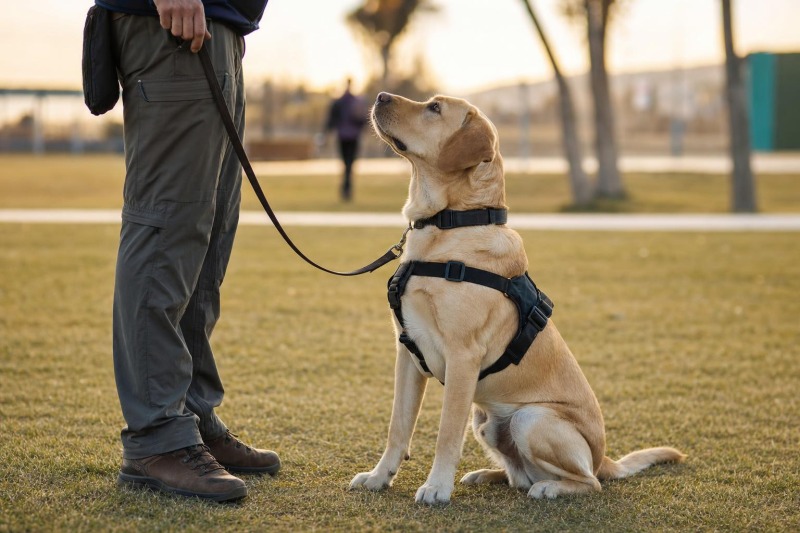
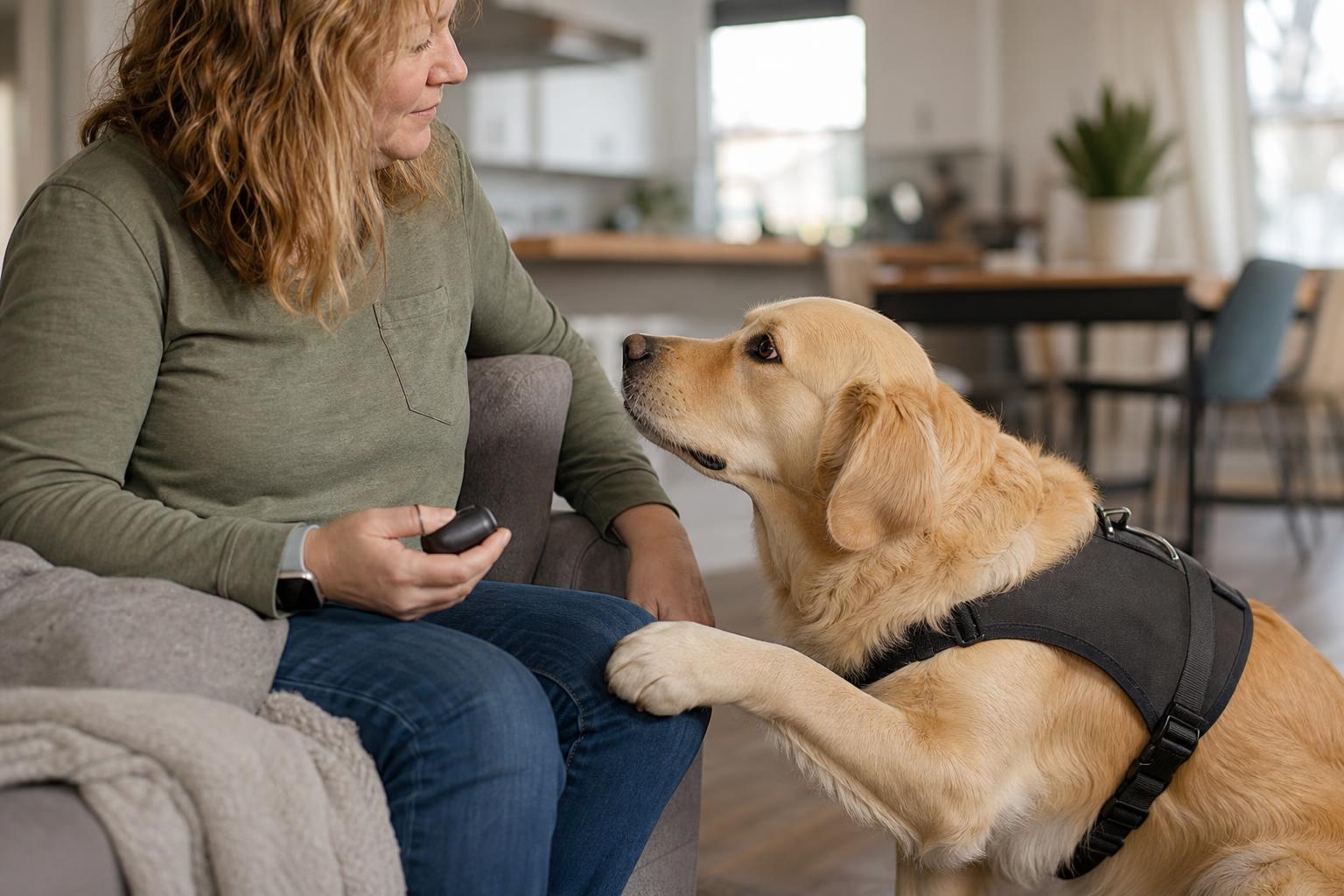
From there, trainers pair the scent of low or high blood sugar samples with a reward. The dog learns to recognize that target odor and indicate it with a specific alert behavior. Once the dog understands the scent itself, training expands into real-life situations. The dog must generalize the alert to different rooms, different clothing, changing routines, and outdoor environments. Then comes the harder part: teaching the dog to work through noise, visitors, travel, school pick-up lines, grocery stores, and all the ordinary clutter of daily life.
Some diabetic alert dogs are also taught secondary tasks. They may fetch a glucose kit, bring a phone, wake a sleeping handler, get another family member, or press an emergency button. Those added tasks can make the dog more useful, but the foundation is always the same: accurate scent detection and a clear alert.
Good training takes time. Reliable dogs are not built in a weekend course or with a handful of online videos. This kind of work usually requires months, and often much longer, of structured training and maintenance. Like any serious working dog, a diabetic alert dog needs regular practice to stay sharp.
Who Benefits Most From a Diabetic Alert Dog
Not every person with diabetes needs a diabetic alert dog, and that is worth saying plainly. For some owners, modern glucose monitoring technology, family support, and good routines already provide enough coverage. But there are people who can benefit tremendously from a dog’s added presence.
Children with diabetes are one clear example, particularly those who cannot always recognize symptoms or communicate what they are feeling. Parents often gain peace of mind from having a trained dog in the house, especially overnight. Adults with hypoglycemia unawareness may also benefit, as may people whose blood sugar changes quickly during work, exercise, or sleep. In some homes, the dog becomes not only an early warning system but also a source of confidence that helps the handler move through life with less fear.
Still, a dog is not a shortcut. If a household is too busy to manage training, grooming, exercise, veterinary care, and ongoing reinforcement, then even the most talented dog can struggle. The best outcomes happen when the family understands that they are not buying a device. They are building a partnership with a living working animal.
What Life With One Really Looks Like
Living with a diabetic alert dog is not all dramatic saves and heartwarming moments. Most days are ordinary. The dog eats breakfast, goes outside, settles by your feet, and keeps one eye and one nose on the person he is assigned to. Then, somewhere in the middle of a normal day, he may suddenly lift his head, step in close, and insist on being noticed. That quiet insistence is where the value often lies.
Like any capable working dog, he thrives on routine, fair expectations, and clear communication. He needs time off, exercise, and a chance to simply be a dog. The strongest teams are the ones that respect both sides of the equation. They trust the dog’s nose, but they also verify alerts with proper monitoring and follow medical advice.
Cost, Access, and Choosing the Right Program
One of the first realities families face is cost. Professionally trained diabetic alert dogs can be expensive, often ranging from several thousand dollars to much more depending on the program, the dog’s level of training, and the support provided after placement. Some nonprofit organizations offset part of that cost, while other programs offer fundraising guidance or payment structures.
Price alone does not tell you whether a dog is worth it. What matters is the quality of training, the honesty of the provider, and the support available after the dog comes home. A reputable program should be transparent about success rates, training methods, matching process, public access preparation, and ongoing follow-up. They should also be clear that no dog is perfect and no alert system is foolproof.
If a trainer guarantees flawless detection every time, that is a red flag. Good dog people do not talk that way. Real working dogs are impressive, but they are still dogs. Their performance depends on maintenance, health, environment, and the strength of the handler bond.
Are Diabetic Alert Dogs Worth It?
For the right person, yes, they absolutely can be. A well-trained diabetic alert dog offers more than companionship. He provides awareness, routine, and another line of defense against a condition that can turn dangerous in a hurry. He may catch a low before symptoms strike hard, wake someone in the night, or push a child’s parent to act quickly. That is serious work, and when done well, it deserves respect.
But the decision should be made with clear eyes. A diabetic alert dog is not a replacement for glucose monitors, medication, or sound medical care. He is a partner within a larger management plan. The households that benefit most are the ones willing to invest in that partnership day after day.
Diabetic alert dogs remind us of something dog men and women have known for generations. A capable dog, given a real job and handled with honesty, can change the shape of a person’s life. In the marsh, in the uplands, on the farm, or beside a bed in the middle of the night, that truth holds steady. A good working dog shows up when it counts. For many families living with diabetes, that steady presence is worth more than words can cover.