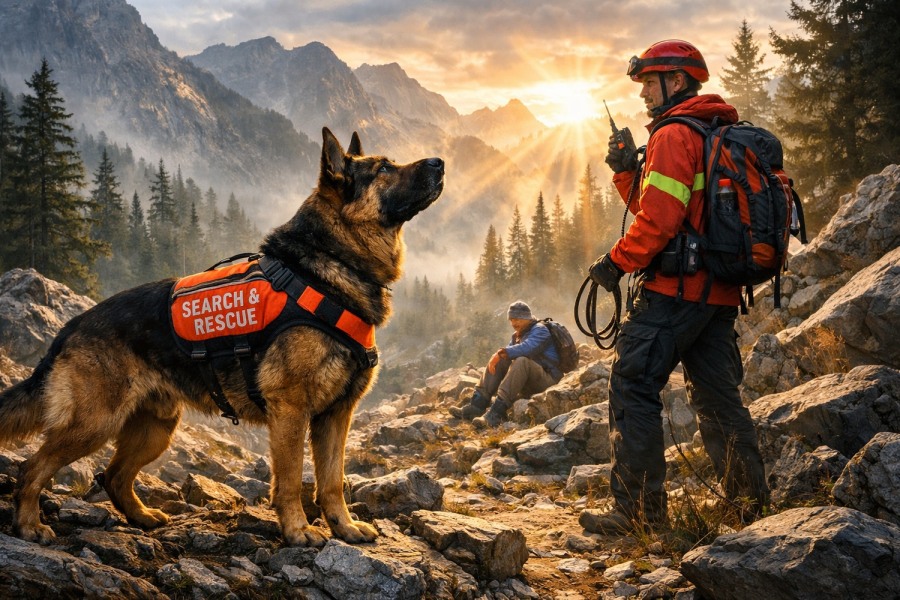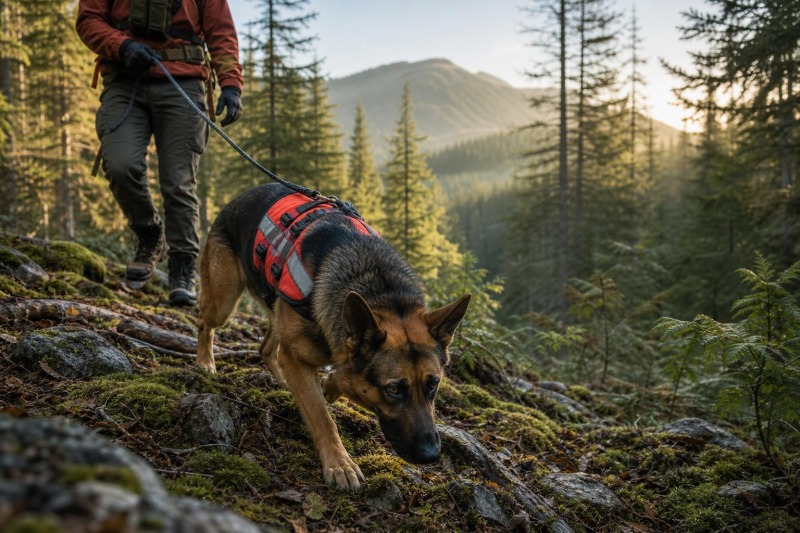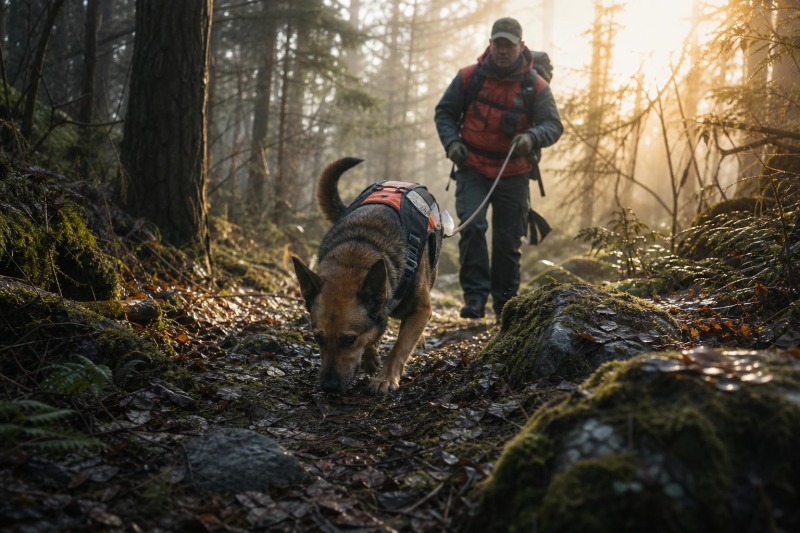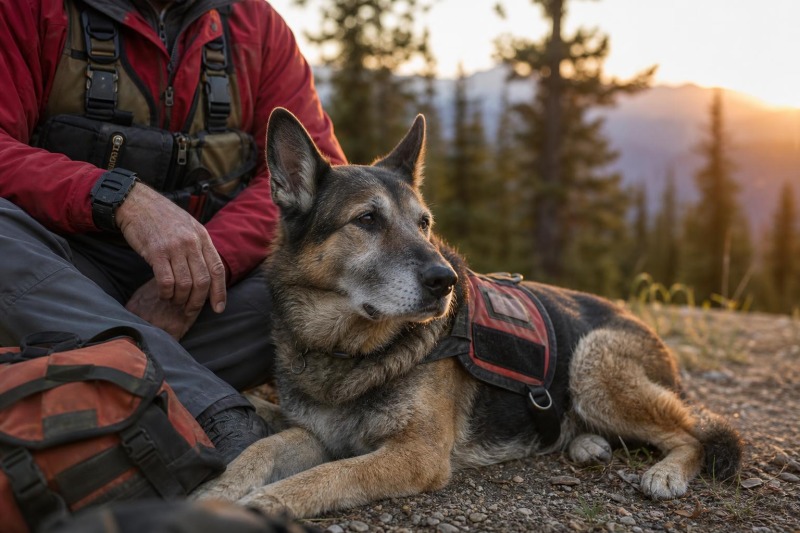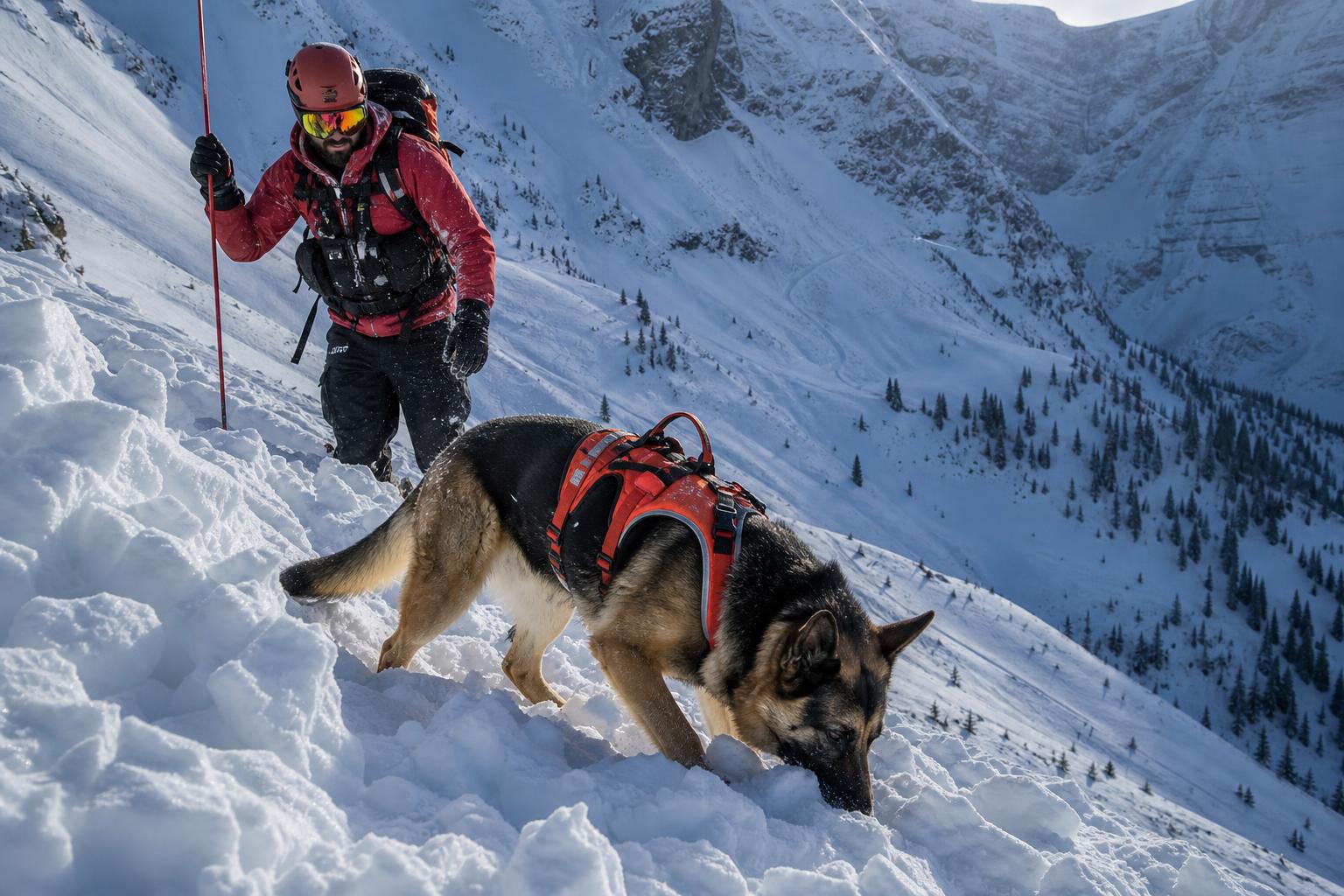
Avalanche rescue dogs search snow for human odor within a coordinated rescue response. Dog work, handler judgment, and safe deployment have to fit the wider operation. The training is specialized because both the search surface and its hazards are unusually demanding.
Folks who admire working dogs often think first of retrievers in a duck blind, hounds on a cold track, or patrol dogs hitting scent in a city alley. Avalanche rescue dogs belong in that same conversation. They are specialists, but the tools they rely on are familiar to anyone who has spent time around a driven dog. Nose, confidence, stamina, trainability, and the kind of partnership with a handler that holds together when conditions turn rough. In mountain rescue, those traits are not just admirable. They save lives.
What Avalanche Rescue Dogs Actually Do
An avalanche rescue dog is trained to locate people buried beneath snow after a slide. That sounds straightforward until you picture the setting. Wind can be howling. The terrain may be broken and steep. Snow depth can vary wildly. Human scent filters through layers of compacted snow in unpredictable ways, and the search area may be large enough to humble a machine. Yet a trained dog can move fast, cover ground efficiently, and alert on a buried person with a speed no tool has fully replaced.
In the field, these dogs are used to search avalanche debris for live human scent. Their job is not to leisurely cast around for an old trail. They work air scent, picking up odor that rises through the snowpack. When they detect that scent cone, they narrow the source, dig, bark, or otherwise indicate depending on their training. The key is speed. Survival odds for buried victims drop quickly, especially after the first fifteen minutes. That urgency is what makes these dogs so valuable. They can search terrain that would take human teams far longer to probe by hand.
Why the Dog’s Nose Matters So Much in Snow
Anyone who has hunted behind a good nose knows scent is a living thing. It drifts, pools, hangs low, lifts high, and fools the impatient. Snow adds another layer of complexity. Cold temperatures, wind loading, moisture content, and the depth of burial all affect how scent escapes. A dog trained for avalanche work learns to trust faint odor and work through distraction. That is not magic. It is disciplined, repeated training built on natural ability.
Even in deep winter, human scent does not simply vanish. Tiny particles move upward through the snow, sometimes through vents and weak spots in the debris. A capable avalanche dog can detect that trace, then work back and forth until the source becomes clear. To watch a finished dog do it is to be reminded that dogs still outperform modern gear in certain situations, especially when a buried victim is not carrying a transceiver or when the slide scene is chaotic.
The Breeds Commonly Chosen for Avalanche Rescue
There is no single perfect breed for avalanche rescue, but certain kinds of dogs show up again and again because they bring the right mix of athleticism, nerve, and willingness to work with people. Labrador Retrievers, German Shepherds, Border Collies, Belgian Malinois, Golden Retrievers, and mixes from strong working lines are all seen in rescue programs. In some regions, you will also find dogs selected more for individual traits than pedigree.
The best avalanche rescue dogs are usually social, energetic, environmentally sound, and highly toy or reward motivated. A dog that shuts down under helicopter noise, strange footing, or crowds will struggle in this line of work. So will a dog with weak hunt drive. The ideal candidate loves the game, because training begins as a game long before the dog is ever trusted on a real slide. That playful intensity carries forward into serious work.
Size matters, but not in the way some people think. A huge dog may look impressive in the snow, but excess bulk can cost speed and endurance. A smaller, agile dog often floats better over crust and broken debris. Structure, feet, coat, and physical conditioning all count. In winter mountains, a dog must be tough enough to work in bitter cold, scramble over unstable surfaces, and keep going when the handler is breathing hard.
How Avalanche Rescue Dogs Are Trained
Good avalanche dogs are not made in a weekend seminar. Their training starts young and is layered carefully. Early work focuses on confidence, play, recall, environmental exposure, and building the dog’s belief that finding a hidden person leads to the best reward in the world. That reward may be a tug, ball, praise, or a favorite game. The point is simple: the dog learns that hunting for human scent is exciting and worthwhile.
At first, the hides are easy. A helper ducks behind a snowbank or shallow cover while the puppy watches. The dog runs out, finds the person, and wins big. Over time, the difficulty increases. The helper is hidden deeper, farther away, or in more complex terrain. Eventually the dog learns to search without seeing where the subject went. That transition from visual game to true scent work is where the foundation either holds or cracks.
From Simple Hides to Realistic Avalanche Scenarios
As the dog matures, training scenarios become more demanding. Buried subjects are placed under snow with safe breathing space during controlled exercises. The dog learns to work wind, cover broad debris fields, and stay engaged even when scent is faint. Handlers also train obedience, directional control, transport tolerance, and the dog’s ability to load into snow machines, helicopters, or lifts if the program requires it.
One of the biggest misconceptions is that avalanche dogs just run around until they happen onto scent. In truth, a strong team is methodical. The handler reads terrain, wind, and likely burial patterns while also reading the dog. A slight head snap, a change in speed, a deeper commitment to one patch of snow, these are clues. The dog speaks in movement long before it gives a final alert, and experienced handlers learn that language the same way an old bird hunter learns what his dog means before the flush ever comes.
The Bond Between Handler and Dog
If you spend enough time around working dogs, you come to understand that the finest teams operate with very little wasted motion. Avalanche rescue is no different. The handler has to trust the dog completely, especially in ugly conditions when visibility is poor and nerves are stretched tight. The dog, in turn, must trust the handler enough to range out, hunt independently, and stay in the game amid noise, gear, and confusion.
This bond is built in training, travel, repetition, and plain old time together. It is also forged through stress. Mountain rescue is not staged for convenience. Teams may be called out at odd hours into dangerous weather. The snow can be unstable. Other rescuers may be probing, digging, shouting, and moving fast. A dog that can hold focus in that mess is worth its weight in gold, and the handler’s calm matters just as much. Dogs read emotion better than most people admit.
Where Avalanche Rescue Dogs Fit in Modern Search and Rescue
Today’s rescue teams have transceivers, RECCO systems, probes, drones, and organized search protocols. All of those tools matter. But avalanche rescue dogs remain a critical part of the response because they bring mobility and scent discrimination that technology still struggles to match in every scenario. If a victim is missing gear, if multiple burial zones exist, or if debris is extensive, a dog can quickly direct human effort where it matters most.
That does not mean dogs work alone or replace equipment. The best operations are integrated. Handlers coordinate with ski patrol, mountain rescue, and medical personnel. Once a dog alerts, rescuers move in to probe and dig. In that sense, the dog is both scout and accelerator, reducing uncertainty and buying precious time.
The Physical and Mental Demands on the Dog
People sometimes romanticize rescue dogs without appreciating the wear this work puts on them. Cold, glare, altitude, and repeated travel across rough snow take a toll. Conditioning is essential. So is recovery. Paw care, hydration, nutrition, and off-season fitness all contribute to a dog’s longevity. Mentally, these dogs need balance too. A dog that only knows pressure will eventually lose some spark. Smart handlers preserve drive by keeping training rewarding and ending on success whenever possible.
Retirement is part of the picture as well. Like any hardworking dog, an avalanche rescue dog eventually ages out. That does not diminish the work it gave. In many ways, retired rescue dogs serve as living proof of what good breeding, good training, and a meaningful job can produce in a dog’s life.
What Dog Owners Can Learn From Avalanche Rescue Dogs
Most readers will never deploy a dog on an avalanche field, but there is still plenty to learn from these remarkable animals. First, purpose matters. Dogs bred to work tend to thrive when their minds and bodies are engaged. Second, scent work taps into something deeply natural and satisfying. Even simple hide-and-seek games or beginner nose work can transform a restless dog at home. Third, the relationship between dog and handler is never an accessory. It is the engine behind performance.
That is one reason avalanche rescue dogs capture people’s imagination. They represent the highest expression of cooperation between human and dog. Not because they are flashy, but because they are useful. In a hard country of snow, wind, and danger, usefulness still means something.
The best ones are eager without being frantic, confident without being wild. Avalanche rescue dogs fit that mold. When they break into the search, they are doing what generations of good dogs have always done for people: stepping into rough conditions and using their gifts where we need them most. In the mountains, that gift is often the difference between hope and heartbreak.