Blood Tracking Dogs for Hunting: The Dog That Finishes the Job
Any hunter who has spent enough time in the woods has lived through it. The shot felt right. The deer kicked hard, bounded into the cover, and then the woods went quiet. You climb down with confidence, only to find a sparse line of blood, a scuffed leaf, and a sinking feeling in your gut. That is where blood tracking dogs for hunting earn their keep. A well-trained dog can sort out what human eyes miss, stay on a line through confusion and pressure, and lead you to game that otherwise might never be recovered.
Time after time, the difference is not magic. It is nose, discipline, and a handler who knows when to trust the dog. For hunters who care about ethical recovery and making every shot count, a blood tracking dog is not a novelty. It is one of the most practical working dogs in the field.
Why Blood Tracking Dogs Matter
Every responsible hunter wants a quick kill and a clean recovery. Real life does not always cooperate. Angles shift, deer move at the shot, brush interferes, and adrenaline can turn even a good hit into a difficult track. On marginal hits, a dog gives you the best chance of recovering that animal before weather, predators, or distance take it away.
That matters for more than pride. It matters because game deserves every effort we can give it. A trained tracking dog can detect interdigital scent, blood droplets, gland scent, and the whole invisible story a wounded animal leaves behind. Where a hunter sees three pinhead drops and a patch of trampled grass, the dog often reads direction, confidence, and change in speed.
Good tracking also saves time and poor decisions. Hunters without a dog often push wounded deer too soon, especially when blood runs thin. A tracking dog encourages patience. You wait, you start smart, and you let the dog tell you whether the animal is still moving well or beginning to weaken. That alone can be the difference between recovery and losing the trail altogether.
How a Blood Tracking Dog Works a Trail
Most hunters talk about blood, but experienced handlers know the dog is not simply chasing the smell of blood itself. Blood helps, of course, yet the trail is usually a blend of scent sources. A wounded deer leaves disturbed ground odor, body scent, gland scent, and microscopic material along the path. The dog learns to follow the unique line of that specific animal rather than every tempting distraction in the woods.
That is why the best tracking dogs can work old tracks and sparse tracks with surprising consistency. On cold mornings with high humidity, scent may hold low and well. On dry, windy afternoons, the trail can break apart, drift, and fool both dog and handler. Success depends on training, the dog’s temperament, and the handler’s ability to read behavior without contaminating the process.
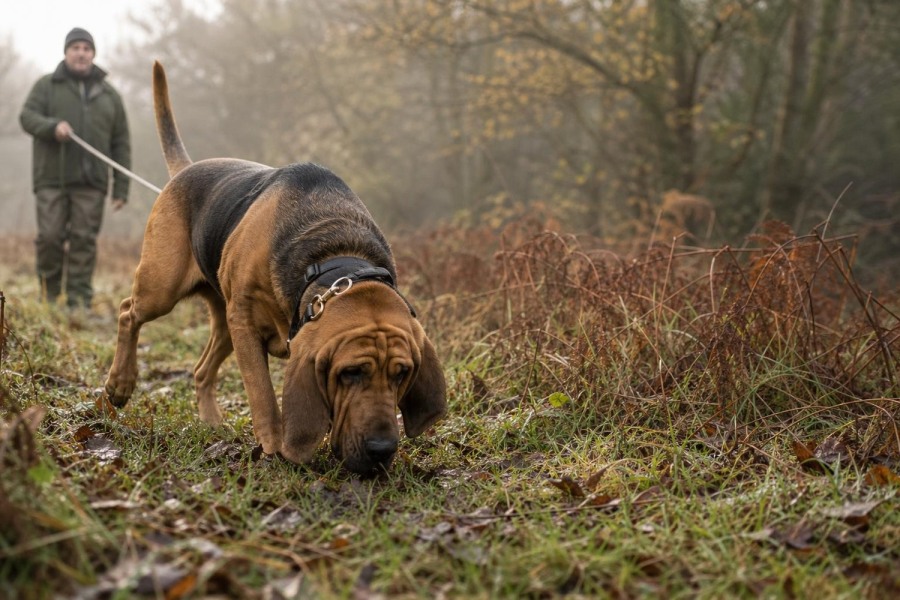
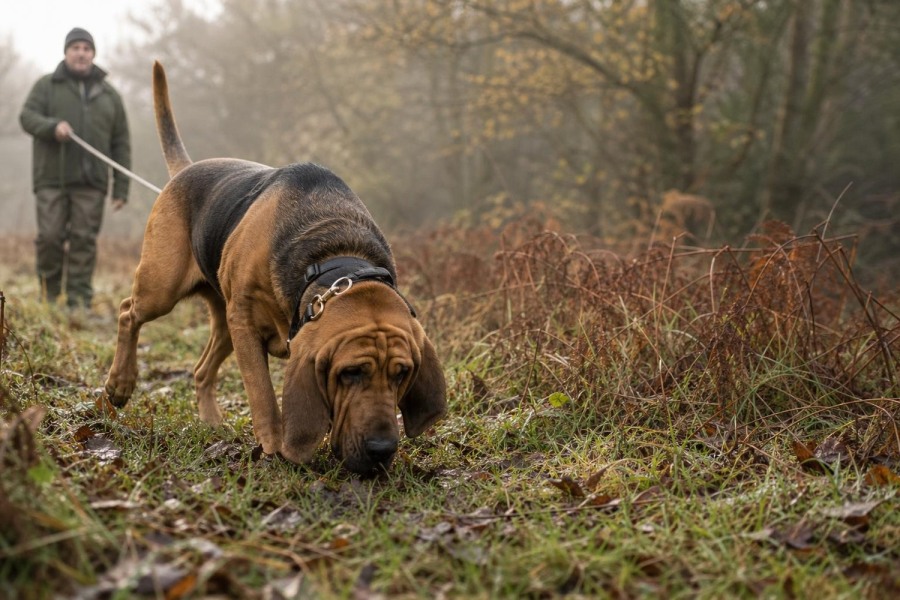
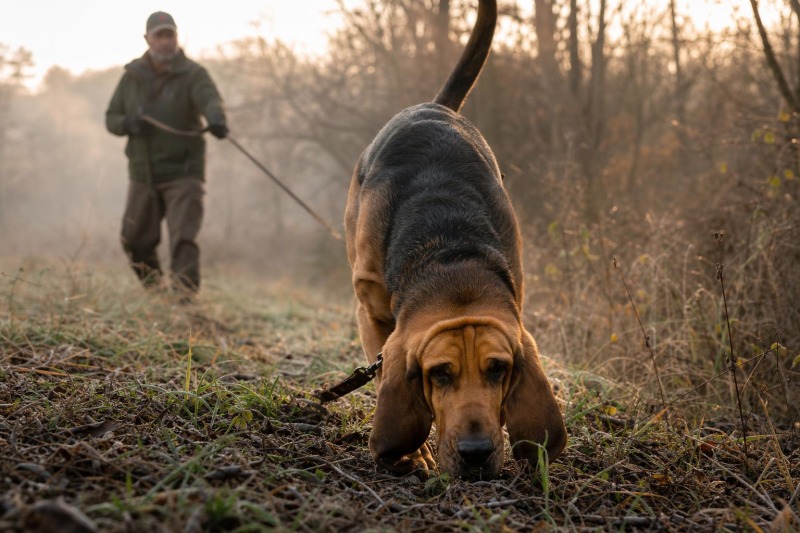
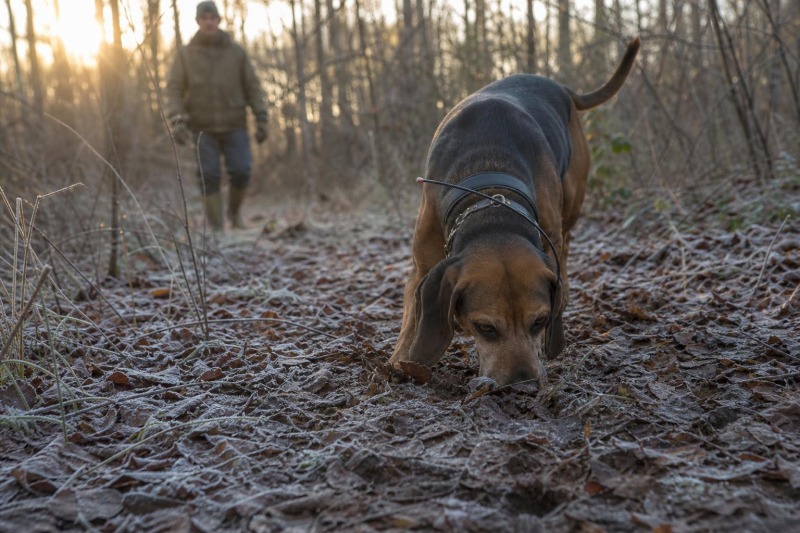
A seasoned tracking dog does not always look dramatic. Sometimes the dog pulls with purpose, nose low, tail steady, moving like it knows exactly where the deer went. Other times it checks, circles, re-centers, and solves a puzzle one small piece at a time. Inexperienced hunters often mistake that problem-solving for failure. It is usually the opposite.
What Handlers Watch For
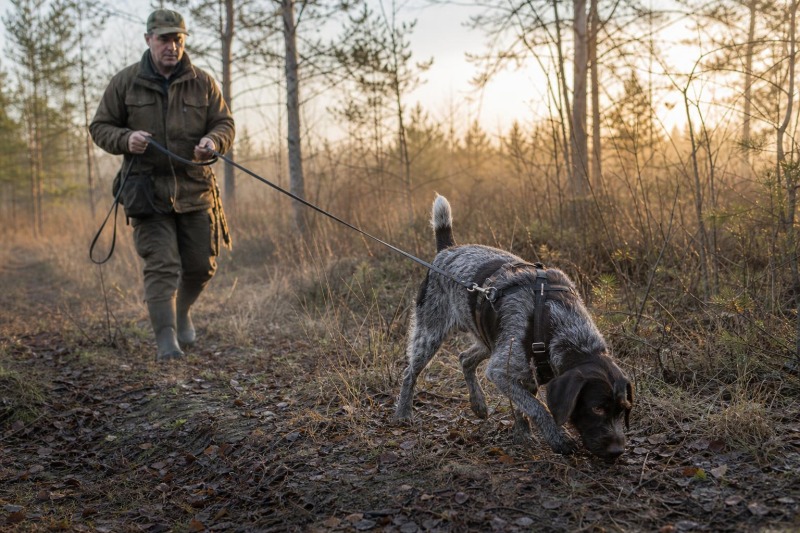
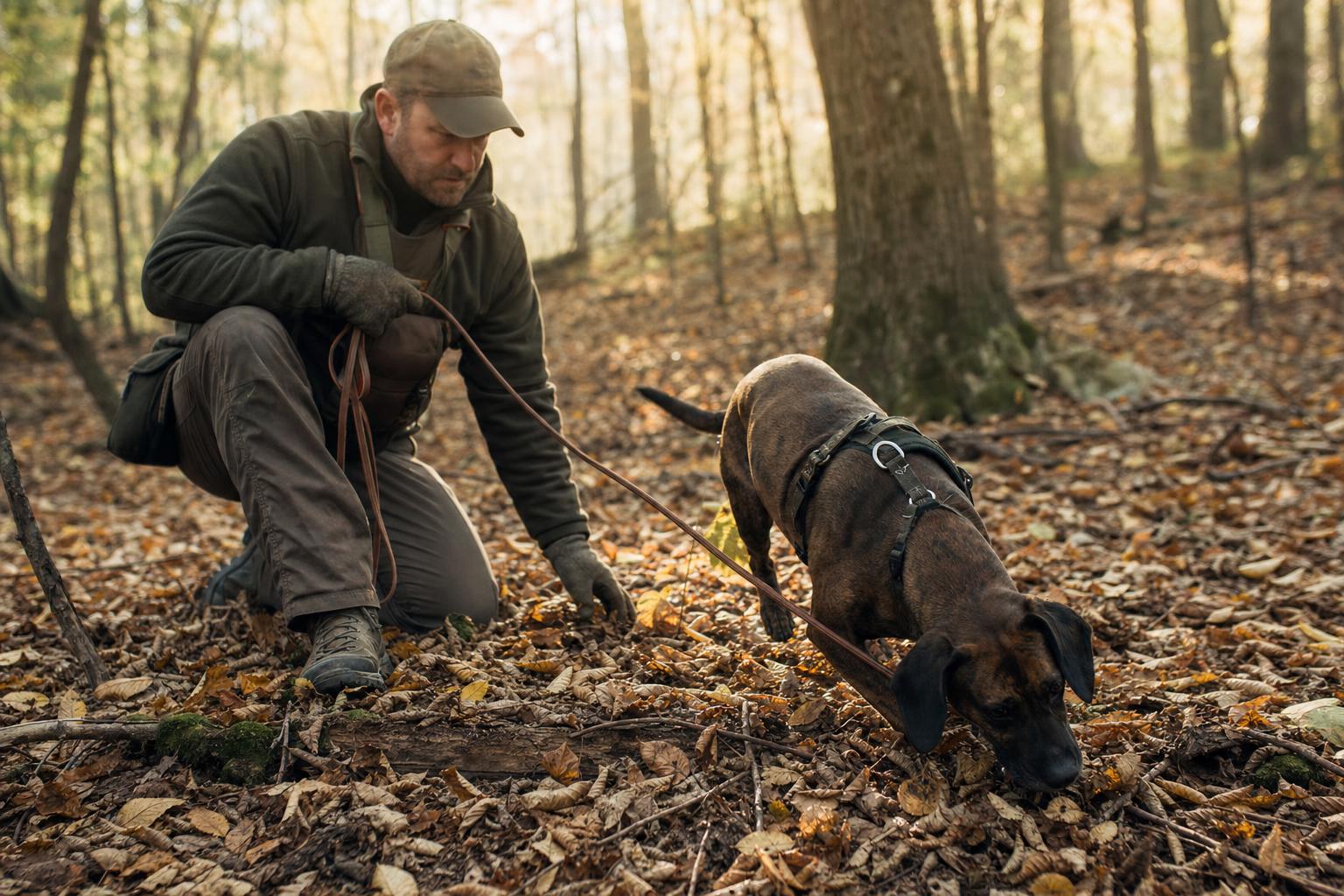
A handler learns the difference between a dog that is honestly working and a dog that is guessing. There is a certain tension in the lead when the scent is solid. There is a rhythm to the dog’s breathing, head carriage, and movement through turns or obstacles. When the dog overshoots and snaps back to the line, that tells a story. When it loses intensity and begins shopping for scent, that tells another. Blood tracking is as much about reading your dog as it is about reading sign on the ground.
Best Breeds for Blood Tracking Dogs
Several breeds can do this work well, and the best choice often depends on the terrain you hunt, the game you pursue, and the kind of dog you want to live with year-round. Dachshunds have earned a serious reputation in tracking circles. They are compact, driven, and often remarkably focused on a line. Jagdterriers bring grit and intensity, though they need firm handling and a job to stay balanced. Beagles, especially those with a steady temperament and good nose, can also make capable tracking dogs.
Then there are the specialists many hunters think of first: Bavarian Mountain Hounds and Hanoverian Scenthounds. These breeds were built for wounded game tracking and bring exceptional nose and concentration to the task. They are not as common in every region, but in experienced hands they can be outstanding.
Labrador Retrievers and other versatile hunting breeds should not be overlooked either. A calm, methodical Lab with proper training can become a dependable blood tracker, especially for hunters who also want a dog that retrieves birds, lives easily in the home, and handles varied work. In truth, breed matters, but not as much as nose, nerve, trainability, and consistency.
Training a Blood Tracking Dog the Right Way
Training begins with simplicity and repetition. A young dog learns that following ground scent leads to success. Early tracks are short, clean, and set up for winning. Over time, they become longer, older, and more complicated, with turns, light blood, hoof scent, and realistic interruptions. The dog is not being taught to race. It is being taught to stay honest.
That honesty is everything. A flashy dog that charges off with confidence but leaves the line is worse than a slower dog that solves each problem correctly. Good trainers reward accuracy, not speed. They also avoid making every track look the same. Real wounded game does not read a training manual. Trails cross creeks, hit roads, angle through bedding cover, and double back when pressure rises.
One of the best lessons a handler can learn is to let the dog work. Too much handling, too much talking, and too much steering can ruin a promising tracker. The dog’s nose is the instrument. Your job is to support, observe, and know when to help without taking over.
Starting Young Dogs
Puppies do not need complicated setups. They need enthusiasm and clear success. A short drag with a tiny reward at the end can light the fire. As maturity comes, you can add aging time, corners, and sparse blood. By the time a dog is tracking realistic lines under controlled conditions, it should already believe that methodical nose work pays off every time.
Field Realities Hunters Should Understand
Not every recovery ends with a dog baying over a deer fifty yards away. Sometimes the dog works for an hour through almost nothing, crosses old deer traffic, sorts out livestock scent, and finally takes you to a buck laid up in a patch of cane so tight you would have walked past it twice. Other times, the track reveals a hard truth: the hit was superficial and the animal is likely not recoverable that day. A good tracking dog provides answers, and answers matter even when they are not the ones you hoped for.
There is also a practical side hunters need to respect. State laws vary on leash requirements, tracking permissions, nighttime recovery, and whether handlers may carry a firearm. Anyone serious about using blood tracking dogs for hunting should know local regulations before the season opens. The legal side is part of responsible dog work, just like conditioning, hydration, and keeping the dog safe around wounded game.
Weather can humble any team. Heavy rain can wash out visible sign while still leaving enough ground scent for a talented dog. Hot, dry conditions can do the opposite, leaving occasional blood but weak scenting conditions. Older tracks often become a mental test for the handler because progress can look painfully slow. That is when experience matters most.
What Makes a Reliable Tracking Dog
The finest blood tracking dogs are not always the loudest, hardest-charging, or most impressive in the kennel yard. Reliability comes from composure. You want a dog with desire, yes, but also one that can handle pressure, think through a loss, and return to the line without falling apart. A dog that is steady around gunfire, calm in transport, and clear-headed around wounded game will usually serve you better than an overamped dog running on nerves.
Physical stamina matters too. Tracking can mean miles of uneven ground, deadfall, thorns, mud, and temperature swings. A dog in poor condition may still have the nose but not the endurance. Conditioning should be part of the program, not an afterthought once deer season arrives.
Just as important is the bond between dog and handler. Blood tracking is close work. It is one person, one dog, one line, and a lot of quiet communication. The more time you spend together outside of the recovery itself, the better that partnership becomes when the pressure is real.
The Ethical Edge of Hunting with a Tracking Dog
There is an old feeling in hunting that stays with a man after dark when a deer is not found. It sits heavy because we know the obligation does not end at the trigger pull. Blood tracking dogs for hunting answer that obligation in the most practical way possible. They help us recover game more cleanly, learn from poor shots more honestly, and hunt with a little more humility.
That is what this work is about. Not showing off the dog, though good dogs deserve plenty of praise. Not turning recovery into entertainment. It is about finishing what we started and respecting the animal enough to bring our best effort to the trail.
If you are a dog owner interested in working dogs, this is one of the finest jobs you can give a capable canine. It taps into instinct, builds a serious partnership, and serves a purpose that matters in the field. A true blood tracking dog is not just a hunting accessory. It is a specialist, a teammate, and on some hard days in the woods, the difference between uncertainty and closure.