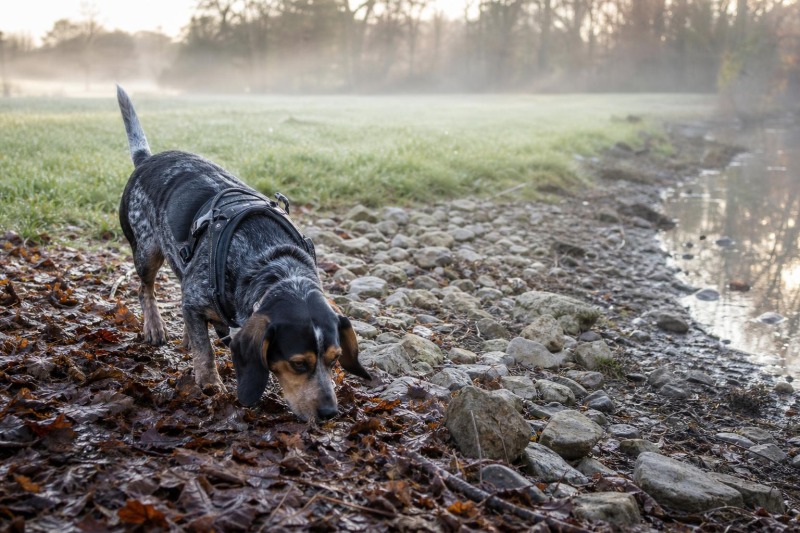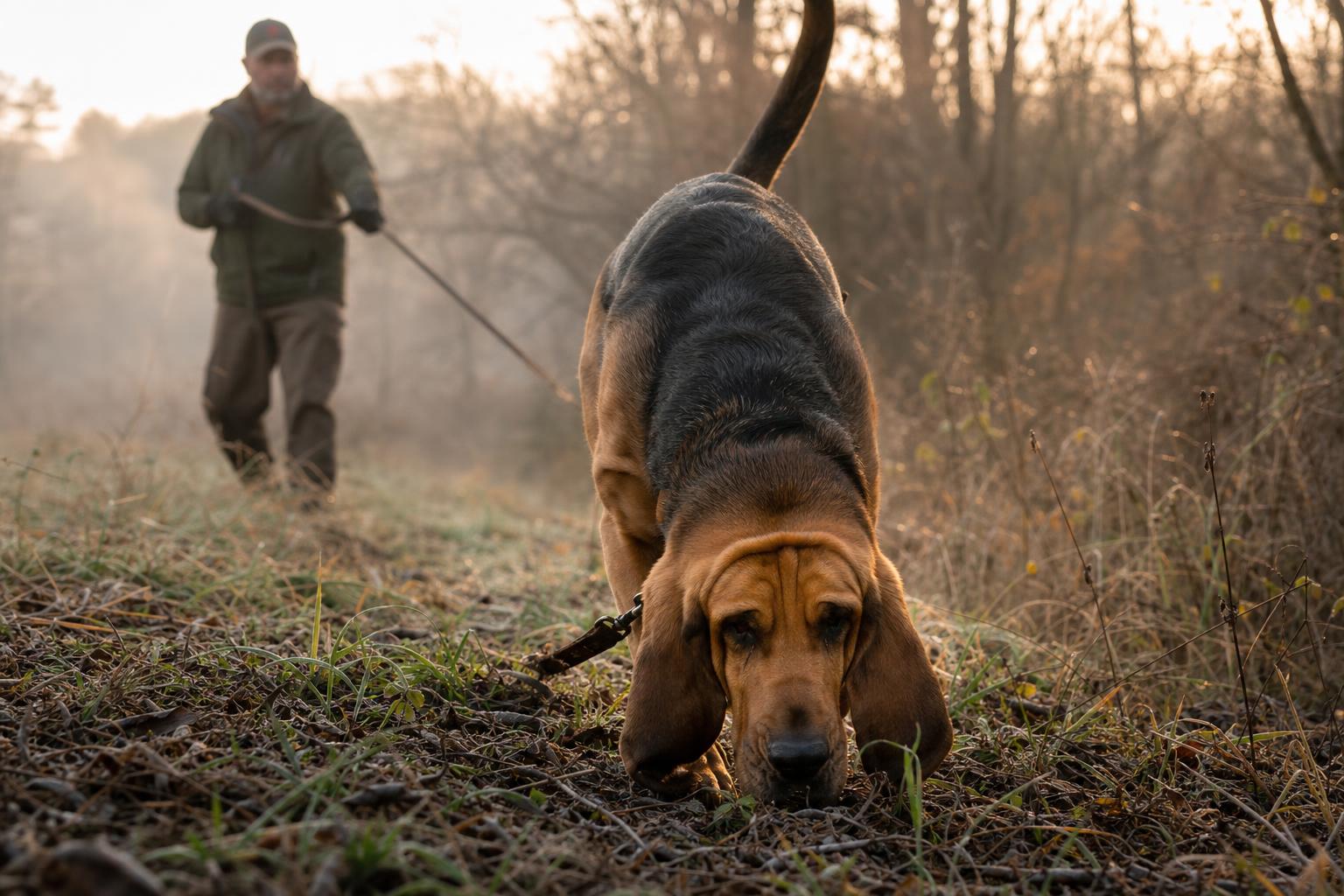
Tracking dogs work scent along a route, with the details shaped by the discipline and the target. Good work combines persistence with the ability to recover from uncertainty. The handler’s job is to support that process without deciding the trail for the dog.
When people hear the term tracking dogs, they often picture law enforcement K9s or blood trailing dogs used after a shot. Both are fair examples, but the real story runs deeper. These dogs are specialists in ground scent. They are built, trained, and mentally wired to sort through layers of odor left behind by a person or animal and stay committed to that trail through changing terrain, wind shifts, time gaps, and distractions. It is honest work, and it demands more than a good nose. It takes steadiness, discipline, intelligence, and heart.
What Makes Tracking Dogs Different
A tracking dog is not simply a dog with a strong sense of smell. Plenty of dogs can smell well. What separates true tracking dogs is their ability to follow the specific scent path left in footsteps and ground disturbance. Every step presses odor into soil, vegetation, and debris. Skin cells fall, scent glands leave trace odor, and crushed plant matter adds another layer to the track. A trained dog learns to interpret that scent picture and move forward one footstep at a time, even when the line weakens or bends unexpectedly.
That ground-oriented focus is what makes tracking dogs so dependable in difficult conditions. Air-scenting dogs work odor floating on wind currents. Tracking dogs work what is under them. In thick cover, on damp leaves, across field edges, through creek bottoms, and along logging roads, a good tracker stays honest to the trail. That kind of work does not happen by accident.
The Nose Is Only Part of the Equation
Folks who are new to working dogs sometimes think success starts and ends with scenting ability. It does not. The best tracking dogs also have a calm mind and a steady temperament. They cannot be frantic. They cannot quit when the scent grows thin. They cannot fall apart when crossing deer trails, livestock scent, or old human traffic. A tracking dog needs enough drive to stay engaged and enough composure to think through problems. In many ways, that balance is harder to find than raw desire.
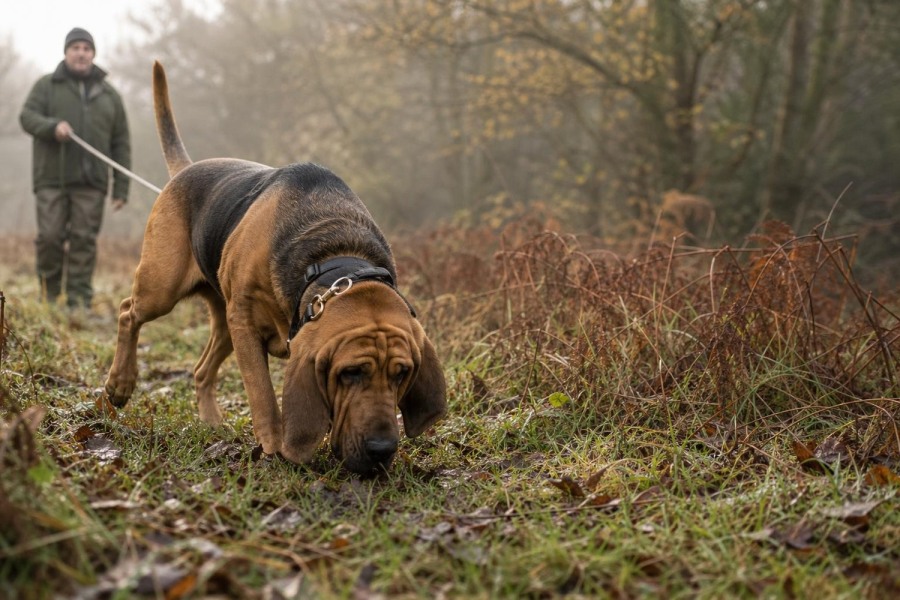
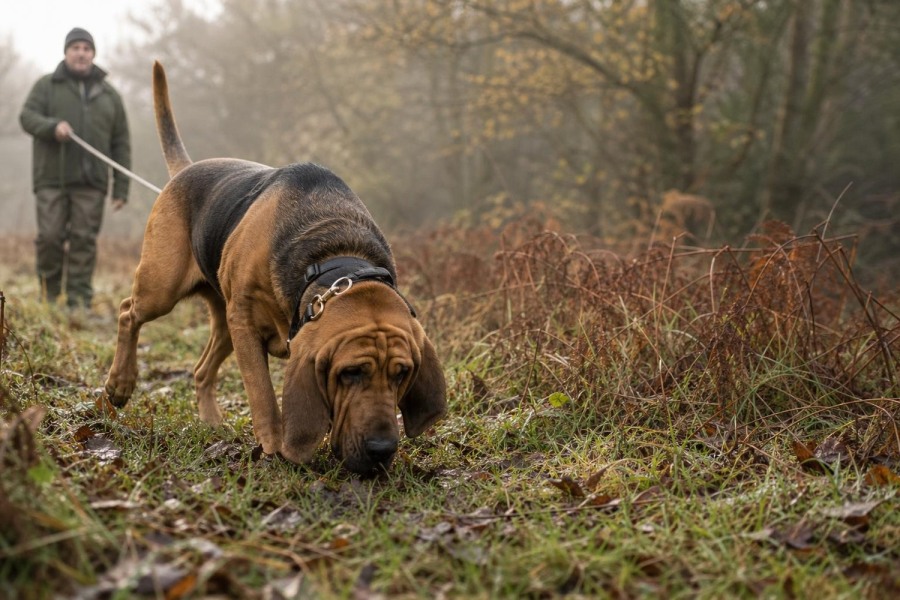
Breed plays a role, but it is not the whole story either. Bloodhounds, Bavarian Mountain Scent Hounds, Hanoverian Scenthounds, Labrador Retrievers, German Shepherds, and even some versatile hunting breeds can all do excellent tracking work in the right hands. What matters most is the individual dog. Good trackers tend to show persistence, concentration, and a willingness to work closely with a handler while still solving scent problems on their own.
How Tracking Dogs Follow a Ground Trail
The mystery of scent work is part of what keeps people fascinated by tracking dogs. We know the dog is detecting a mix of human or animal odor, crushed vegetation, moisture changes, and microscopic disturbance. What we cannot fully know is exactly how the dog sorts all that information with such precision. In the field, though, you see the results plainly enough. A fresh track may be driven with confidence and rhythm. An older trail often slows the dog down, forcing it to puzzle through weaker scent and contamination from newer crossing lines.
To the eye, there was almost nothing left. No blood worth following, no clear print in the leaf litter, just a place where the deer had entered the timber and vanished. The dog worked methodically, nose low, tail steady, and every few yards you could tell when it hit a stronger pocket of scent. Twenty minutes later, that deer was found piled up in a tangle of greenbrier. That is the value of a real tracking dog. It gives the trail a second life after human eyes have run out of answers.
Age, Weather, and Terrain Matter
Ground scent changes with conditions. Cool, damp mornings usually favor a dog. Hot, dry afternoons can challenge even the best one. Wind, frost, rain, bare dirt, plowed ground, pine needles, creek crossings, and heavy foot traffic all affect how scent holds and moves. Experienced handlers learn to read not just the dog, but the day itself. They know when to trust forward momentum, when to slow down, and when a dog is telling them the trail has aged, shifted, or broken apart.
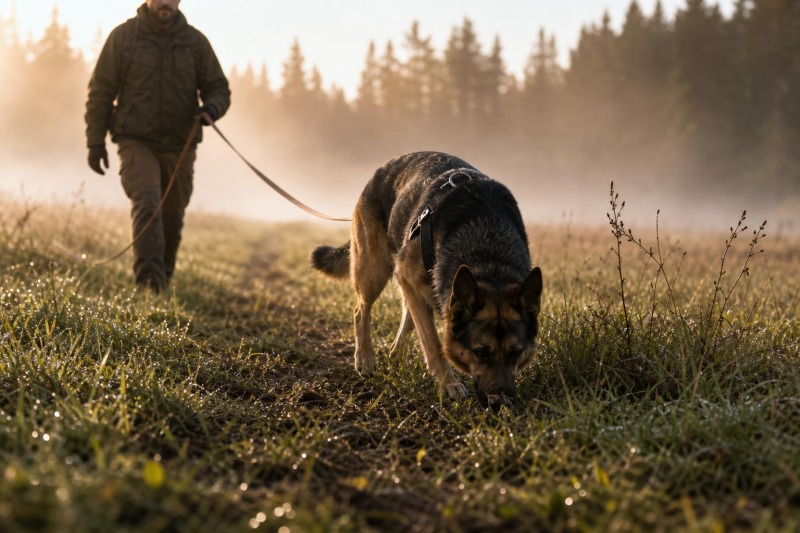
Terrain can either help or humble a tracking team. Open pasture may look simple, but direct sunlight and dry grass can burn scent off quickly. Thick woods often hold odor better, though leaf cover and crossing animal traffic can complicate things. Swamps, creek bottoms, and edges of agricultural fields can be especially tricky because scent tends to settle, swirl, and spread. A seasoned dog learns these lessons through repetition, and a good handler learns them by paying attention.
Training a Reliable Tracking Dog
Good tracking dogs are made through careful, patient training. Natural ability gives a dog a head start, but consistency in training is what turns promise into dependable work. Most trainers begin with short, straightforward tracks that let the dog understand the game. The scent line is clean, the reward is clear, and the dog learns that nose-down effort leads to success. From there, the challenges increase gradually. Tracks get older, turns become sharper, surfaces change, and distractions are added.
A young dog that is pushed too fast often starts guessing rather than tracking. Once a dog learns to shortcut the process, fixing that habit can take time. It is far better to build confidence step by step. Let the dog solve problems without overwhelming it. Reward accuracy, not speed. A true tracking dog does not need to be flashy. It needs to be right.
The Handler Matters More Than People Think
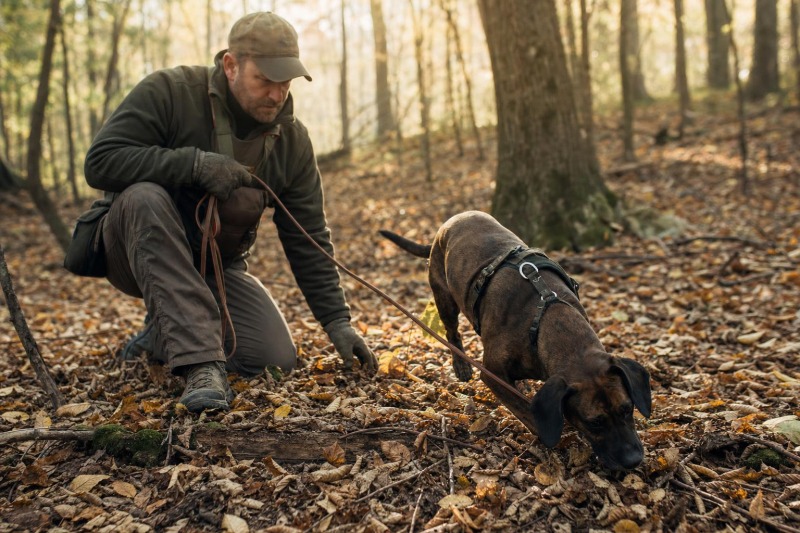
Tracking is a partnership. The dog may carry the nose, but the handler carries the discipline to support it. Too much pressure on the line, too much talking, too much second-guessing, and you can pull a dog off the track without realizing it. Good handlers learn to read body language: the change in tail carriage, the deeper inhalation, the slight hesitation at a turn, the difference between uncertainty and confirmation. The dog is speaking the whole time. The question is whether the person on the other end is listening.
That is especially important for hunters using tracking dogs on wounded game. Emotions run high after a marginal shot or a long wait. People want quick answers. But pushing too fast can spoil a recoverable trail. A composed handler trusts the dog, manages the pace, and lets the process unfold. More game is recovered that way, and the dog gains experience instead of chaos.
Why Tracking Dogs Matter to Hunters and Working Dog Owners
For hunters, tracking dogs are not just useful; in many cases they are ethical partners. No responsible hunter wants to lose wounded game. A trained dog improves recovery rates, shortens searches, and brings clarity when sign is sparse. In dense cover or after poor weather, that can make all the difference. The dog does not replace woodsmanship, but it extends it in a way nothing else can.
For working dog owners, tracking offers something just as valuable beyond the hunt. It gives a dog meaningful mental work. Tracking channels instinct into a job with purpose. It builds patience, focus, and teamwork, and it often suits dogs that thrive when given structured challenges. Even for owners who never intend to trail wounded deer or work operational tracks, training in scent work can be one of the most rewarding things they ever do with a dog.
There is also a deep satisfaction in seeing a dog do exactly what it was bred and trained to do. In a world where too many capable dogs are underworked, tracking reminds us what these animals are made for. It is practical, demanding, and deeply rooted in the old bond between dog and handler.
The Enduring Appeal of the Ground Trail
Tracking dogs remain some of the most respected working dogs in the world because their job is both simple and extraordinary. Find the line. Stay on it. Solve the puzzle. Finish the work. That sounds plain enough until you watch a dog do it over hard ground, through old scent, around distractions, and into the kind of country where people would be lost in minutes. Then you understand why seasoned handlers speak of good tracking dogs with such admiration.
If you own a working breed and want to tap into something real, tracking is worth your time. It sharpens the dog, humbles the handler, and reveals just how much can be accomplished when instinct and training come together. Out in the timber, with a lead in your hand and a dog sorting scent one step at a time, you get a front-row seat to one of the finest jobs a dog can do. That is why tracking dogs will always have their place. They are, plain and simple, masters of the ground trail.