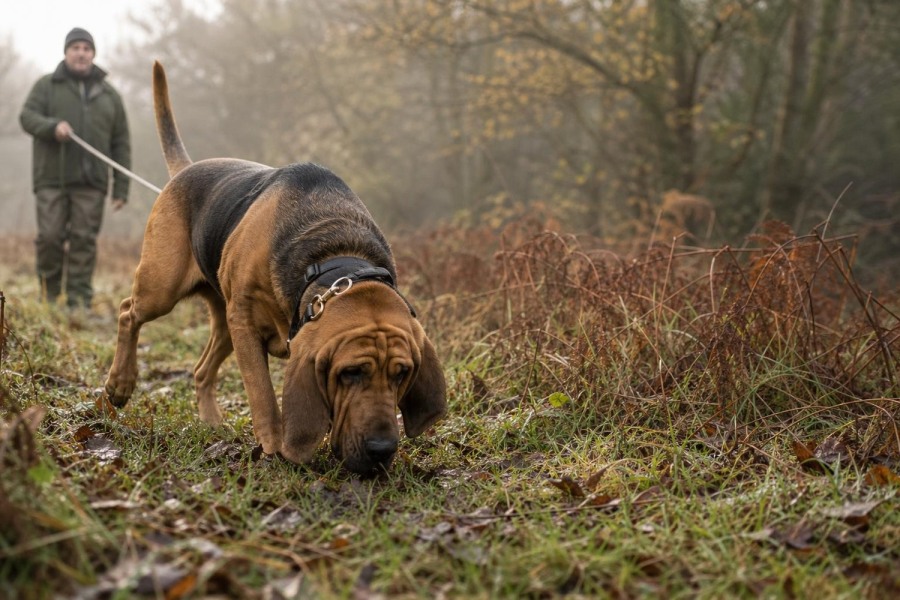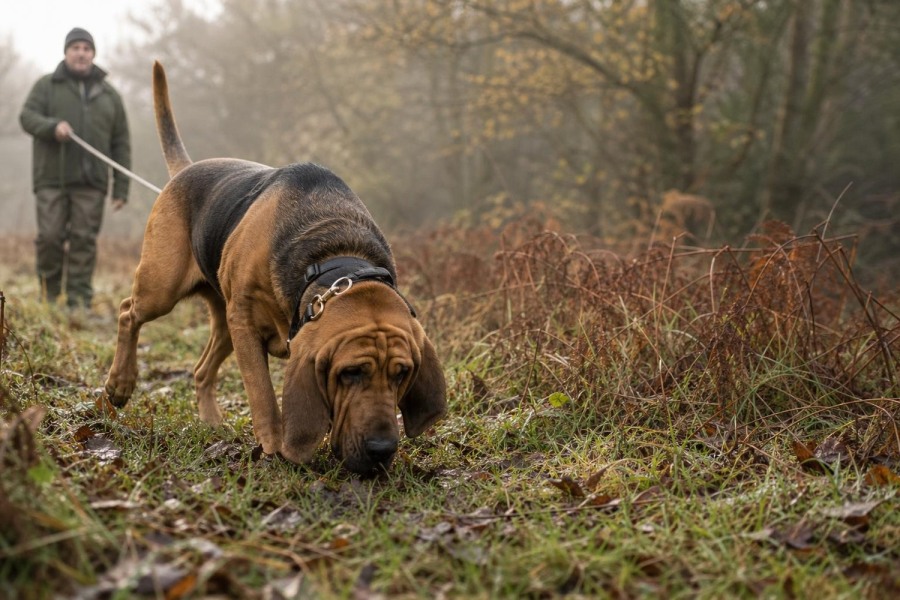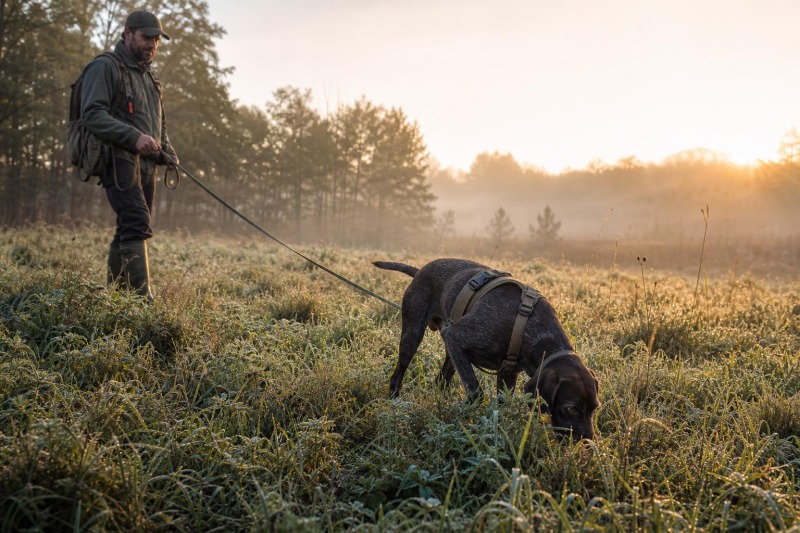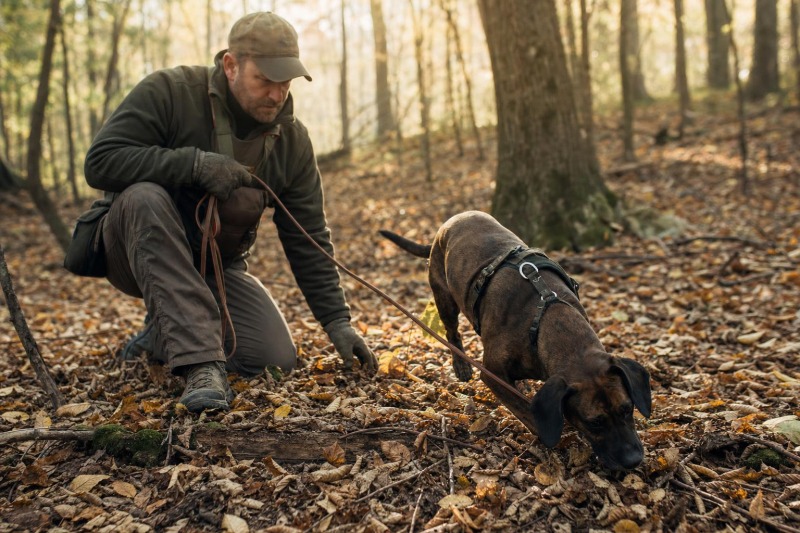
A good tracking dog can change everything in the field. Whether you are following a wounded deer through wet creek bottoms or asking a young dog to sort out an old line in dry leaves, reliability is what separates a useful partner from a dog that simply gets excited by scent.
Training a reliable tracking dog is not about teaching chaos with enthusiasm. It is about shaping discipline around natural instinct. Most dogs can smell more than we can imagine, but not every dog learns how to use that nose with purpose. Your job as a trainer is to help the dog understand one simple truth: the track matters, and staying with it always leads to success.
Start with the Right Expectations
Before you ever lay a training track, you need the right mindset. A tracking dog does not become dependable through shortcuts. Reliability comes from repetition, clarity, and gradual difficulty. The biggest mistakes usually happen early. Handlers want long tracks too soon. They add distractions before the dog understands the game. They talk too much, correct too much, and end up making the dog unsure.
In the beginning, confidence matters more than complexity. You are not trying to prove how talented your dog is in week one. You are teaching the dog that following ground scent is rewarding and that patient nose work is better than casting around in excitement. A dog that trusts the process will stay calmer when conditions get tough later on.
Choosing a Suitable Dog
Not every tracking dog looks the same, and that is worth remembering. Some breeds are bred for trailing, some for versatile hunting work, and some simply carry enough nose and determination to do the job if trained properly. What you want is a dog with desire, steadiness, and enough mental balance to work through confusion without falling apart. Extreme independence can be hard to manage. So can a dog that folds under pressure.
A reliable tracking dog should show curiosity on scent, willingness to work, and the ability to settle into a task. Raw speed is less important than commitment. In real tracking work, especially on wounded game, method beats flash every time.
Build the Foundation the Right Way
That reward might be food, a toy, or game hide depending on the dog and the final purpose of the training. The dog needs to understand that nose down, moving carefully on the line, brings success. If the lesson is muddy, progress will be slow.
Lay a short track in light cover where scent can hold well. Early morning grass, damp field edges, or soft woodland lanes can all work. Make the line straightforward at first. There is no prize in creating a puzzle before the dog knows the game. Let the scent age just a little, enough that the dog must actually follow rather than sight-hunt, but not so long that the work becomes frustrating.
Once at the start, keep your handling quiet. Too many handlers contaminate the lesson with chatter and leash pressure. Show the dog the start, encourage it to engage, and then let the nose work. If the dog wants to surge ahead, resist the urge to turn it into a tug-of-war. The tracking line should guide, not fight. You are teaching the dog to solve the problem, not rely on your body language.
Why Short Successes Matter
Short successful tracks build understanding faster than long sloppy ones. A dog that finishes cleanly carries confidence into the next session. A dog that fails repeatedly starts guessing. Guessing is poison in a tracking dog. You want deliberate work, not a frantic search pattern that occasionally stumbles into the answer.
The field has a way of humbling us later. Training should prepare the dog, not overwhelm it.
Developing Focus and Track Discipline
Once the dog understands the basic task, the real work begins. Reliability is built when the dog learns to stay on the correct line through turns, changing cover, and drifting scent. This is where many promising dogs either sharpen up or become loose in their work.
Start introducing gentle corners, then longer straightaways, then a mix of terrain. A field edge into sparse woods, woods into thicker cover, or a trail crossing can all teach the dog to work through normal interruptions. Increase difficulty one piece at a time. If you lengthen the track, do not also make it older, drier, and full of game scent at the same moment. Good trainers separate variables so the dog can learn what caused success or failure.
You could see the temptation in every muscle. The dog checked off the track, lifted its head, then circled back and found the original line again. That was a better lesson than a perfect easy run. A tracking dog earns reliability by learning that distractions are not the answer, even when they smell exciting.
Reading Your Dog on the Line
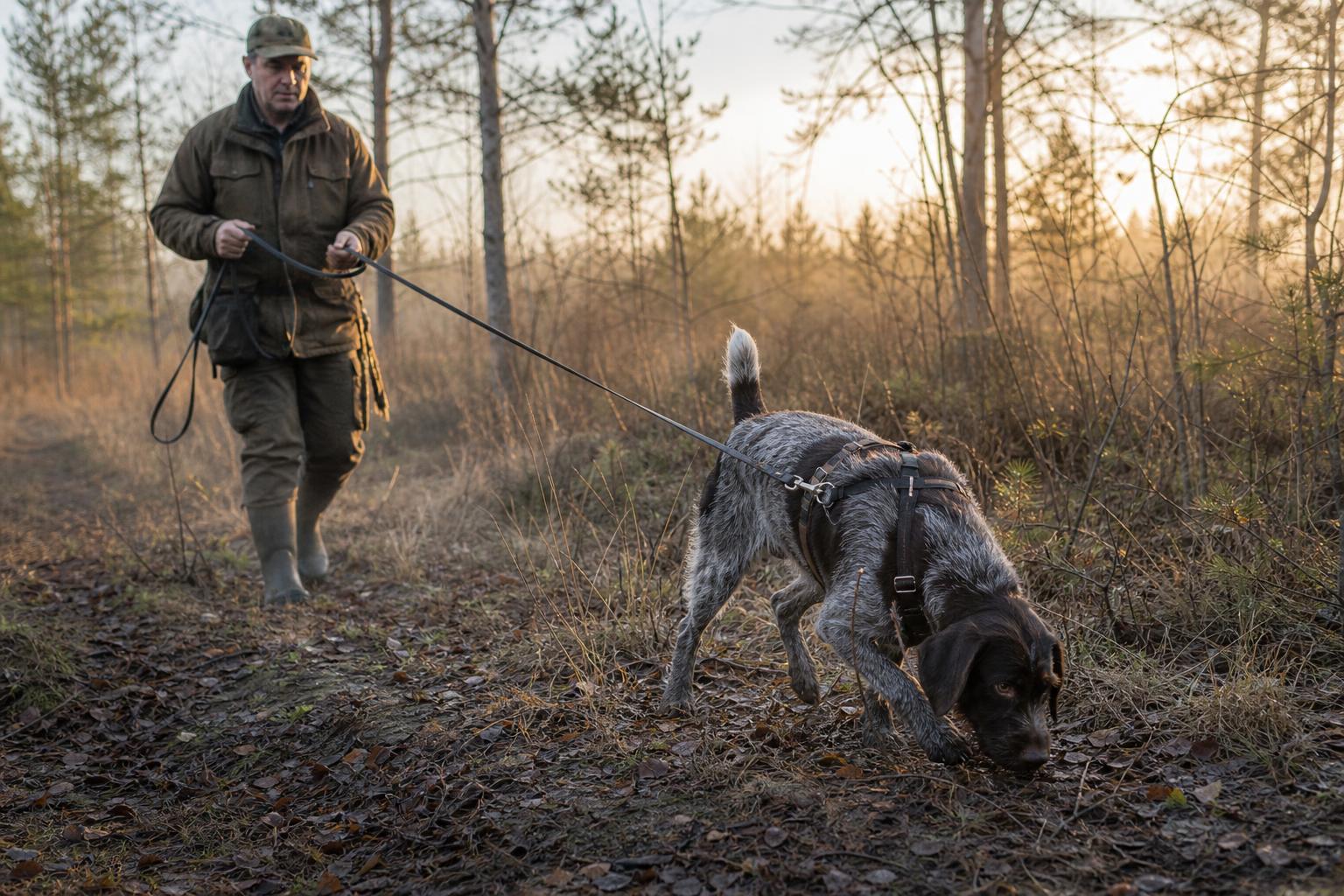
A skilled handler learns to read body language. When a dog is honestly on scent, there is usually rhythm to it. The pull becomes purposeful. The tail, posture, and pace settle into a pattern. When the dog loses the track, you will often see uncertainty before you feel it in the line. Maybe the head comes up. Maybe the dog starts casting wider. Maybe the movement loses commitment.
This matters because timing matters. If you intervene too soon, the dog never learns to recover. If you wait too long while the dog is clearly freelancing, you risk rewarding bad habits. Good handling is quiet, patient, and observant. Let the dog work out small problems. Step in only when the lesson is about to unravel.
Adding Realism Without Losing Control
At some point, every tracking dog must move beyond clean training scenarios. Real-world tracking is messy. Wind shifts. Scent pools in low ground and burns off on ridges. Deer cross one another. Rain changes everything. Human excitement can leak down the line and make a young dog hurry. If your dog has only seen perfect setups, the first true challenge may expose the cracks.
This is why realism should be introduced gradually. Age tracks longer. Add blood if your purpose is recovery work. Use game hide or hoof where legal and appropriate. Cross old farm lanes, shallow ditches, and patches of bare ground. Let the dog encounter honest problems, then solve them. A dog that learns recovery is far more valuable than a dog that only looks good when scent is easy.
Still, do not confuse realism with chaos. The training setup should always teach something specific. If the dog fails, you should know why. Random difficulty wastes time and muddies the picture.
Control Matters as Much as Drive
There is a romantic idea that the best tracking dogs are all fire and fury, dragging a handler through the woods on sheer instinct. That makes for a good story at camp, but in real work, control saves tracks. A dog that tears ahead without method can overshoot turns, miss subtle changes, and become harder to read. Controlled intensity is the target. The dog should want the work badly, but stay mentally available and physically manageable.
That starts with routine. Use the same harness for tracking. Use the same start ritual. Keep obedience sharp outside of tracking sessions so you are not trying to teach basic manners in the middle of scent work. Clarity in one area supports confidence in another.
Common Mistakes That Undermine Reliability
The first mistake is rushing progression. Handlers often mistake enthusiasm for understanding. A dog that charges down a fresh line may not actually understand tracking at all. The second mistake is overhandling. Constant talking, steering, and leash corrections can make a dog dependent or hesitant. The third is poor session planning. If every track is different in ten ways, you cannot fairly evaluate the dog.
Another problem is training only when conditions are ideal. A dog needs wins, but it also needs experience in heat, damp cold, leaf litter, and shifting winds. You are building a field dog, not a demonstration dog. Lastly, some handlers ignore their own emotions. On game recovery tracks especially, handler tension can travel straight down the line. Dogs feel it. Calmness is part of the craft.
Turning Training into Trust
The goal of tracking training is not simply to create a dog that can follow scent. The real goal is trust. You need to trust that when the line gets thin and the cover turns rough, the dog will keep working honestly. The dog needs to trust that staying with the track is always the right answer, even when the scent picture gets complicated.
That kind of trust is built one session at a time. It comes from fair setups, patient handling, and enough field exposure that the dog becomes steady instead of lucky. There is no substitute for time behind a dog on a line. Every track teaches something if you pay attention.
A reliable tracking dog is one of the finest working partners a person can own. There is deep satisfaction in watching a dog lower its head, sort out a difficult line, and carry the job forward with quiet certainty. It is not flashy work, and that is exactly why it earns so much respect. The best tracking dogs are not guessing. They know their job, and they do it when it counts.