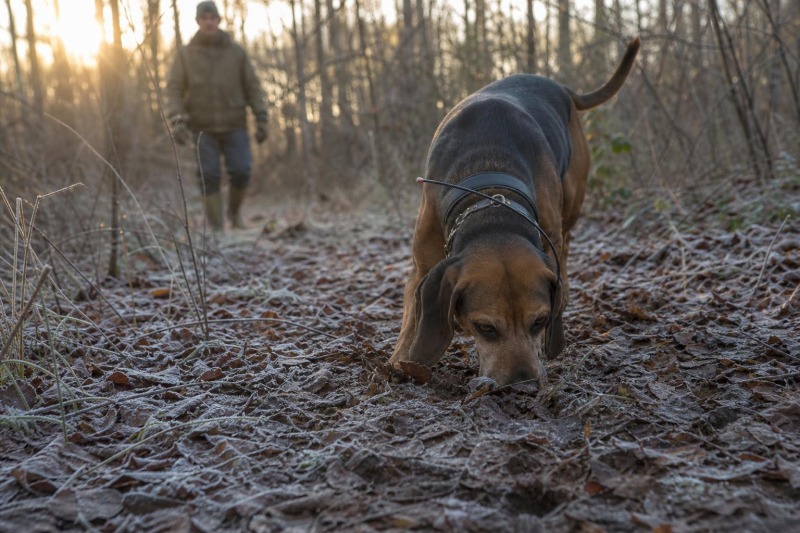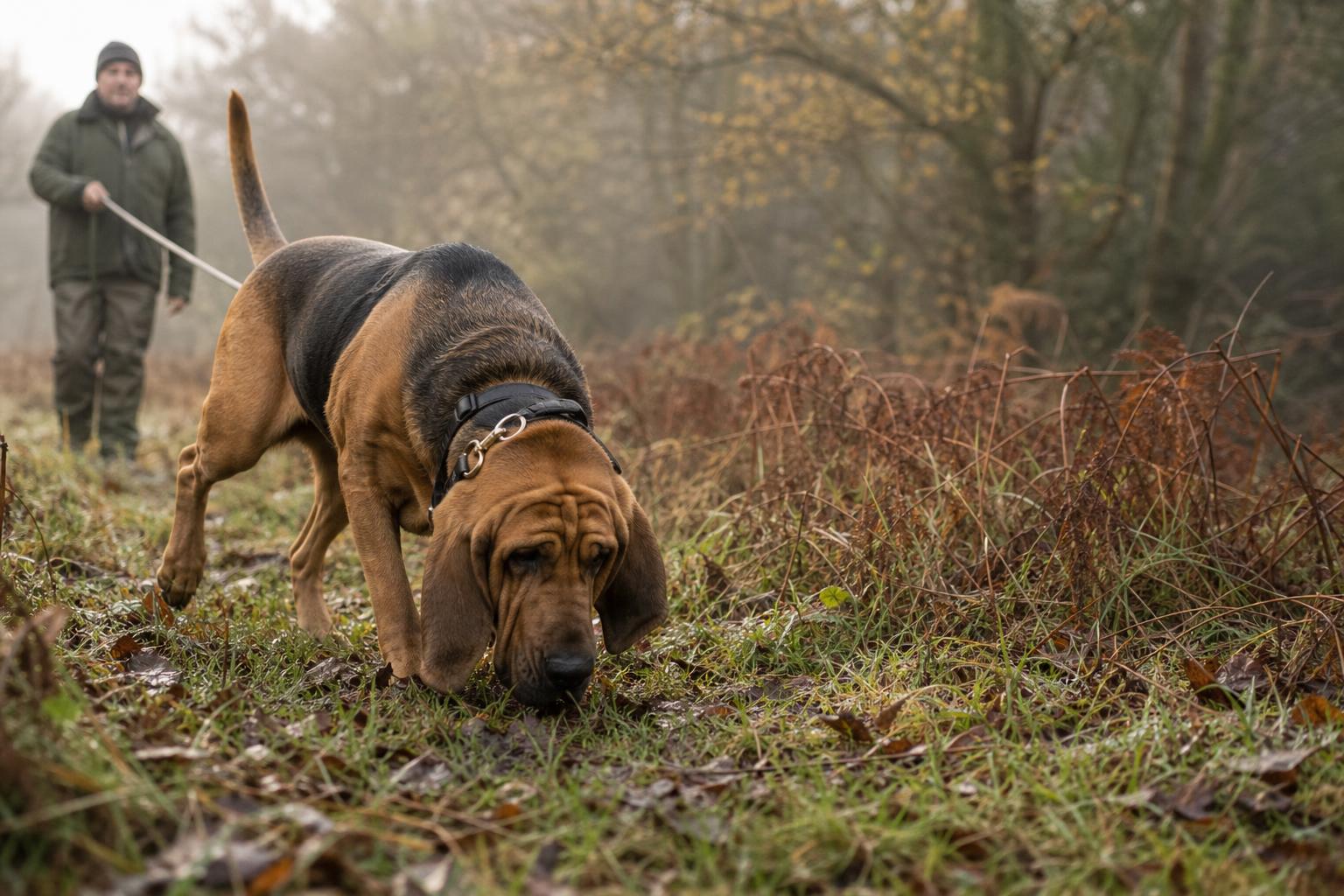
Bloodhounds have a long association with following human scent. Their trailing style and persistence can be useful in trained teams, but their work still depends on preparation and handling. Understanding that partnership gives a clearer picture than the breed’s reputation alone.
Folks who have only seen Bloodhounds in pictures often underestimate them. They notice the droopy face, the heavy frame, and the calm expression and assume they are slow or sleepy dogs. That is a mistake. A working Bloodhound may not move with the sharp, electric pace of some sport-bred dogs, but it carries a rare kind of determination. Once locked onto a trail, it can become one of the most single-minded workers a handler will ever put a lead on.
What Makes a Bloodhound So Effective on a Track
The Bloodhound’s nose is the obvious place to start, but the breed’s tracking talent is more than simple scenting power. Plenty of dogs can smell well. Bloodhounds combine scenting ability with patience, physical structure, and mental endurance. That combination matters in real tracking work, where conditions are rarely neat and simple.
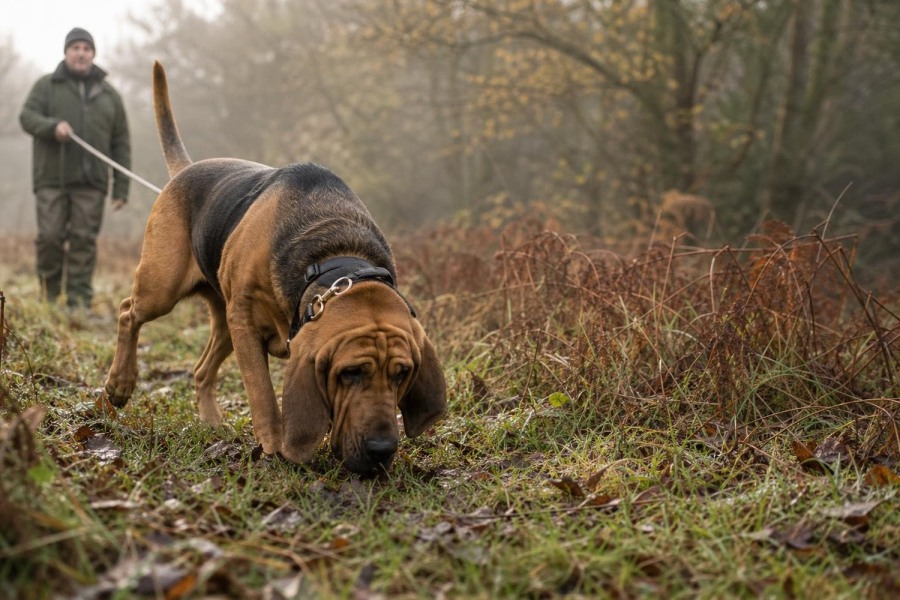
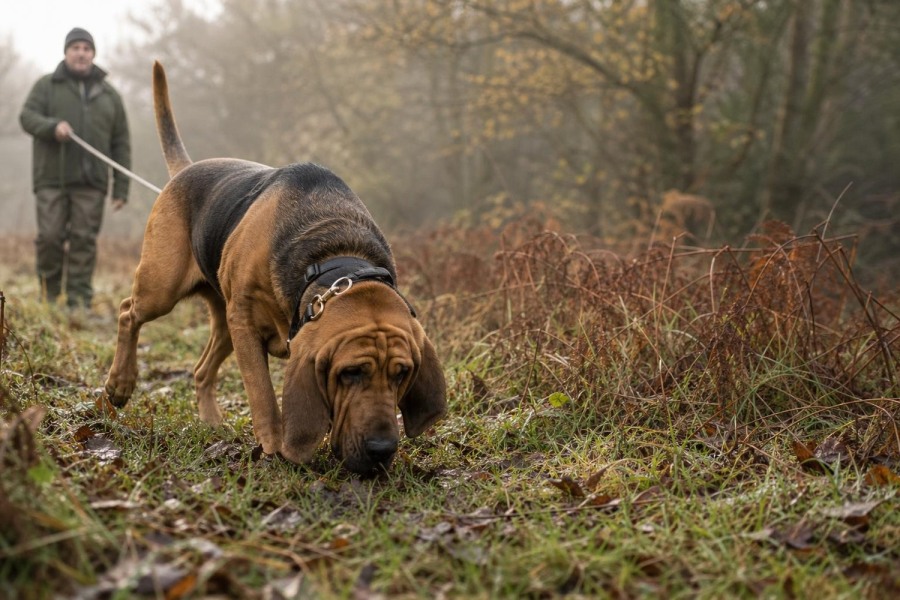
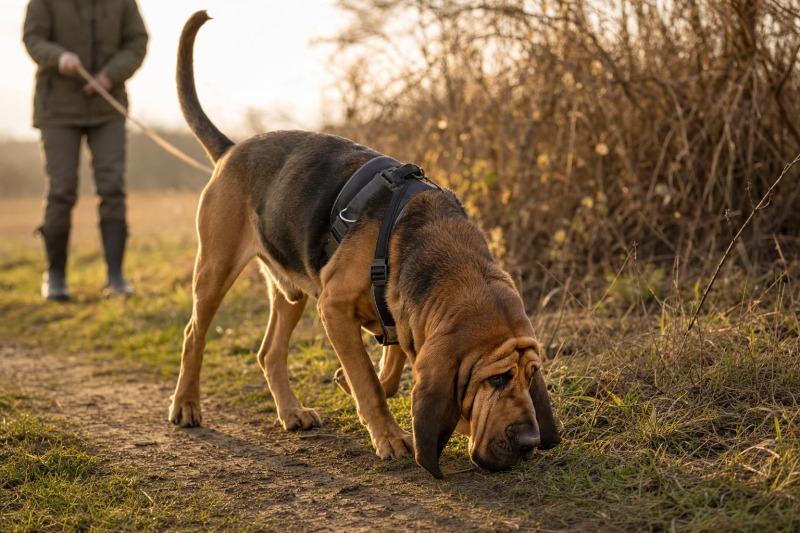
Those long ears are not just part of the breed’s signature look. As the dog works with its nose close to the ground, the ears help stir and trap scent near the muzzle. The loose skin around the face serves a similar purpose, helping hold scent close as the dog sorts out a trail. Add a large nasal cavity and generations of breeding for man-trailing, and you get a dog that can work scent that seems all but gone to the human mind.
What has impressed me most in the field is not only that a Bloodhound can smell a trail, but that it can stay with one. Tracking is not always dramatic. Sometimes it is a long lesson in discipline. There are pauses, losses, corrections, and stretches where progress feels painfully slow. Bloodhounds shine because they are willing to keep working through the puzzle instead of rushing ahead and making wild guesses.
Built for Endurance, Not Hurry
A Bloodhound is not a dog for someone who wants a frantic, high-speed performance every minute of the day. This breed works with purpose. In many cases, that steady style is exactly what makes it superior on difficult tracks. A rushed dog overruns scent, misses turns, and gets fooled by contamination. A seasoned Bloodhound tends to grind out the answer. It may look methodical from the outside, but that care is often what keeps the track alive.
That style also makes the breed valuable in search work, wounded game recovery, and other forms of practical trailing. In rough cover, after rain, in leaf litter, along field edges, and across old human traffic, a Bloodhound’s patient approach can be the difference between success and a blank ending.
Bloodhounds in Real Working Roles
The public usually connects Bloodhounds with law enforcement and missing person cases, and that reputation is well earned. For a long time, they have been trusted to follow human scent where evidence is thin and conditions are far from ideal. A trained Bloodhound handled correctly can trail over distance and through distracting environments in a way that still amazes people who have never watched one work.
But the breed’s ability reaches beyond formal police work. Bloodhounds have also been used in search and rescue, recovery work, and game tracking. Hunters who appreciate practical dogs understand the value of a nose that can move an old line after a marginal hit. Any man who has stood at last blood while daylight fades knows there is nothing theoretical about tracking skill. In those moments, a calm and dependable trailing dog becomes one of the most useful animals on the place.
Bloodhounds, at their best, do not rely on theatrics. They rely on concentration. There is a quiet confidence in a serious trailing dog that experienced handlers learn to trust. You feel it through the lead. The dog is not guessing. It is working.
Temperament and Trainability in the Bloodhound
One thing prospective owners need to understand is that Bloodhounds are specialists, and specialists often come with a mind of their own. This breed is generally gentle, social, and good-natured, but it is not a machine waiting to take orders. Bloodhounds can be independent thinkers. That independence is part of what allows them to solve scent problems, but it can frustrate owners who expect instant obedience.
Training a Bloodhound requires patience, consistency, and a little humility. If you try to bully one, you usually create resistance. If you get sloppy and inconsistent, the dog will notice that too. The best results come from building clear habits early, rewarding the dog for working correctly, and understanding that trailing work must be developed with care. A Bloodhound should not be rushed through foundation work any more than a young gun dog should be pushed too hard before it understands the basics.
Early Scent Work Matters
The best Bloodhound tracking dogs are started with purpose. Early exposure to scent games, short confidence-building trails, and calm, positive handling lays the groundwork for more serious work later on. Young dogs need success before they need difficulty. Build desire first, then build precision, then start asking for more from aging tracks, harder surfaces, and greater distractions.
A common mistake is assuming natural ability removes the need for training. Bloodhounds are gifted, but gifts still need direction. A dog with all the nose in the world can become careless, handler-dependent, or confused if the training process is weak. The great ones are not just born; they are shaped.
Challenges of Owning a Bloodhound
For all their talent, Bloodhounds are not the right fit for every dog owner interested in working dogs. They are large, powerful, scent-driven animals that need structure and room to work. When they catch an interesting odor, they can become remarkably committed to following it. That means containment is not optional. Good fencing, lead discipline, and reliable management are part of responsible ownership.
They also bring some practical realities. Bloodhounds drool, they can be stubborn, and they often mature slowly compared to breeds that sharpen early. Their ears and skin require regular attention. Their size means poor manners become a serious problem fast if training is neglected. None of this is a reason to avoid the breed, but it is a reason to be honest before bringing one home.
A Bloodhound belongs with someone who values working ability enough to live with the inconveniences that sometimes come with it. The same deep nose that makes the breed exceptional on a track can also make day-to-day life more interesting than some owners expect. These dogs notice the world through scent first and foremost, and they act like it.
Why Bloodhounds Still Matter Today
Modern technology has changed a lot in the dog world and in search work more broadly, but a Bloodhound on a confirmed trail remains an extraordinary tool. Batteries die, devices fail, and conditions shift. A well-trained dog still brings something no machine has fully replaced. It can interpret tiny scent traces, adjust to changing conditions, and continue working through complexity in a living, adaptive way.
That is why Bloodhounds continue to hold respect among serious handlers. Their value is not based on nostalgia. It is based on results. This breed has kept its place because it does a job at a level few others can match. In a world full of trends, that kind of staying power says something.
The Handler Matters Too
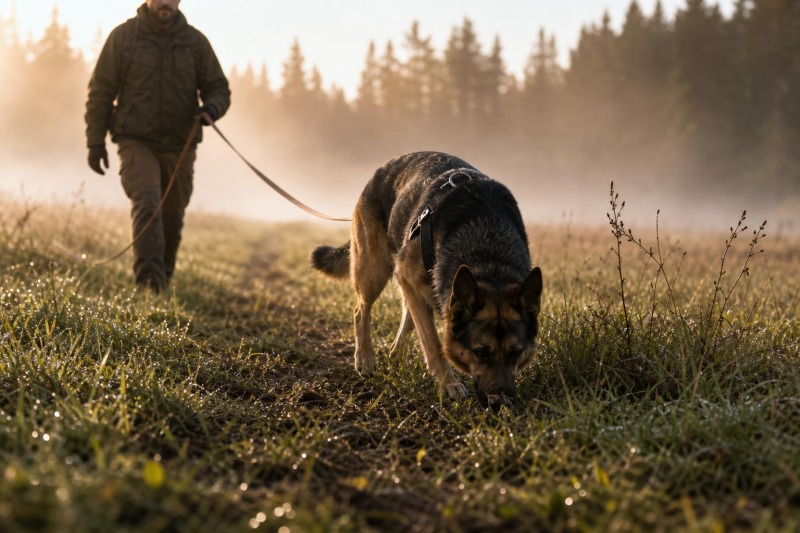
It is worth saying that even the finest Bloodhound is only as effective as the partnership behind it. Good handling is not about dragging a dog toward an answer. It is about reading body language, understanding changes in behavior, knowing when the dog is in scent and when it is checking, and giving it the room to work honestly. The best tracking teams move with trust. The dog brings the nose, but the handler brings judgment.
That balance is part of what makes Bloodhound work so compelling. It is not just instinct. It is cooperation shaped by training and experience. When the dog settles into a trail and the handler learns to believe what the lead is saying, the work takes on a rhythm that is hard to forget.
If you are drawn to working dogs because you admire practical ability over flash, it is easy to appreciate the Bloodhound. This breed is not trying to impress anybody with speed or style points. It is built to solve one of the oldest problems in the field: finding what has moved on ahead and following it until the answer is clear.
For dog owners interested in working dogs, Bloodhounds offer a remarkable example of purpose breeding done right. They are challenging, powerful, and deeply specialized, but in the right hands they are also dependable, fascinating, and useful in ways that still matter. A true tracking Bloodhound is not just following scent. It is carrying forward generations of instinct, discipline, and hard-earned reputation every time it lowers its head and starts down the line.