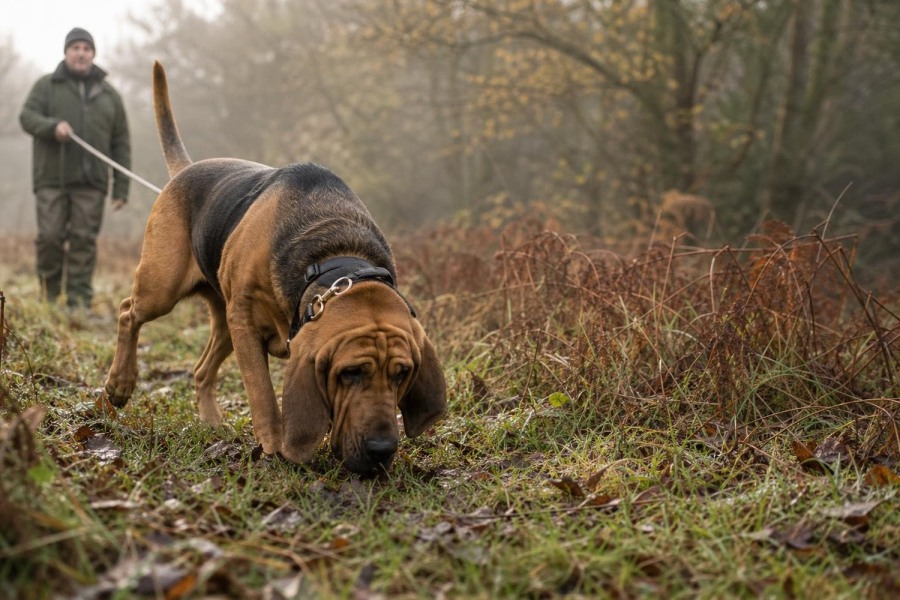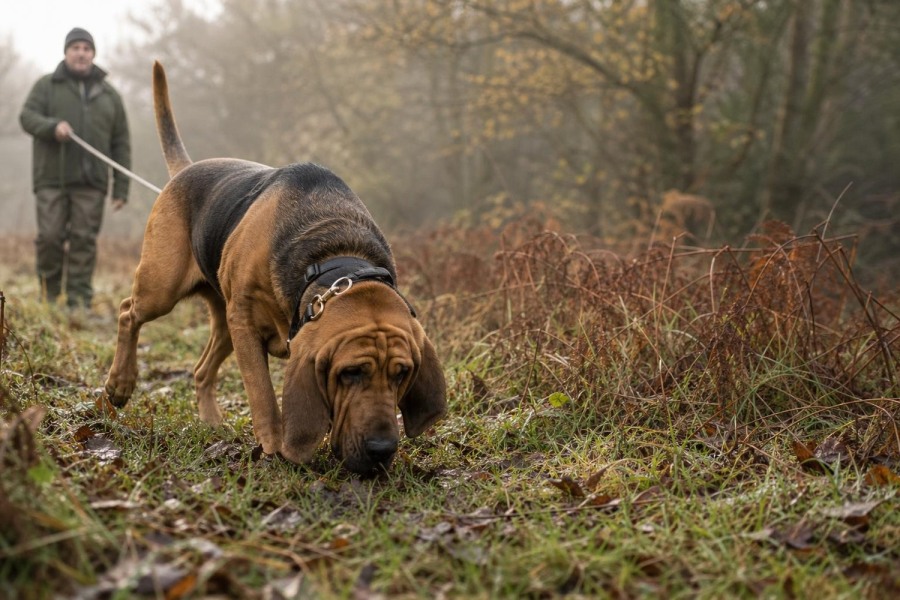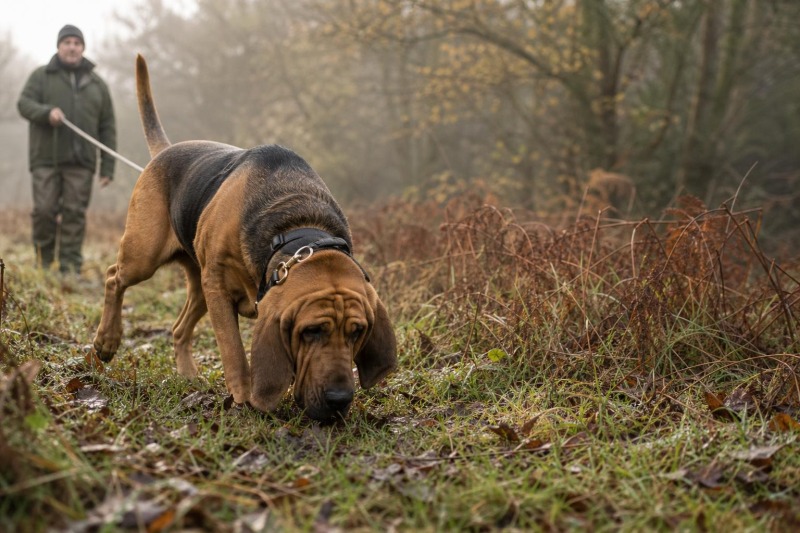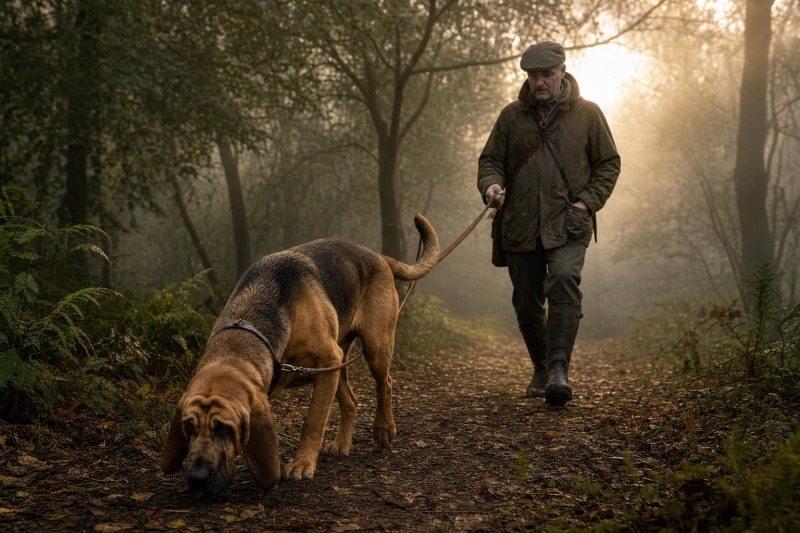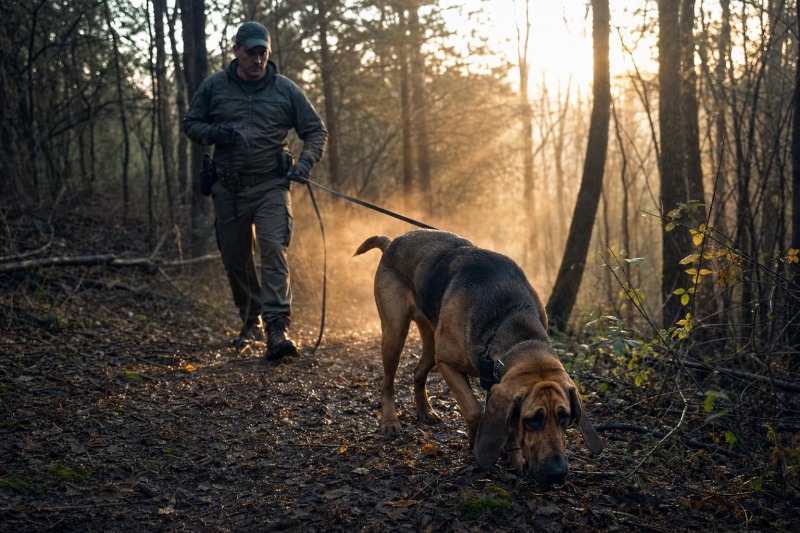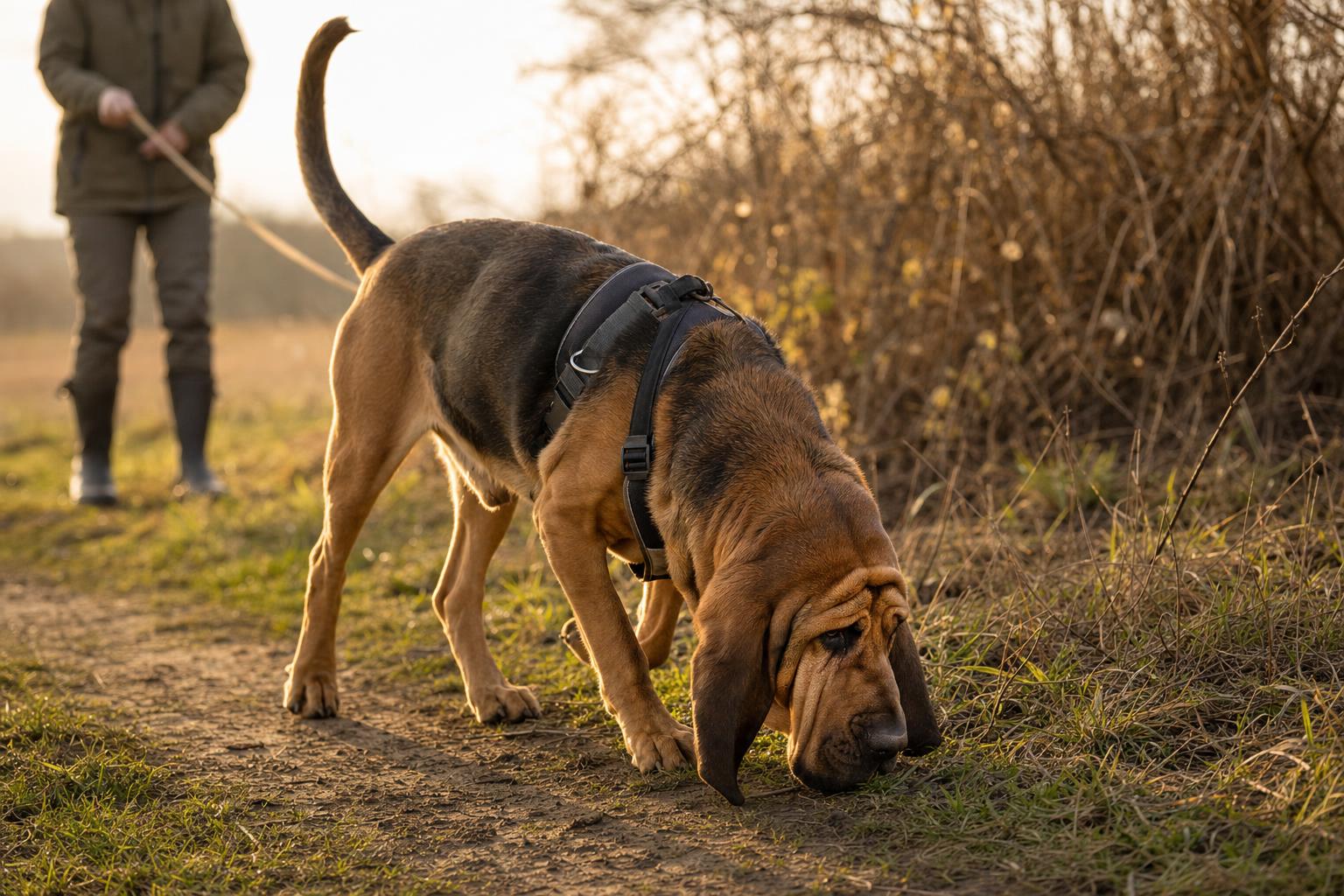
The Bloodhound’s tracking reputation reflects a history of selection and work in trained teams. Persistence and interest in human scent are important parts of the picture. The individual dog’s preparation and the handler’s skill remain essential to understanding the result.
For dog owners interested in working dogs, the Bloodhound stands as one of the finest examples of form meeting function. This is a breed shaped by purpose. Whether tracking wounded game, locating missing people, or following an aged trail through rough country, the Bloodhound has abilities that border on unbelievable until you see them firsthand. Folks often talk about a dog having a “good nose,” but with a Bloodhound that phrase hardly covers it. These dogs are in a class of their own.
The Nose That Changed Tracking History
The first reason Bloodhounds are legendary trackers is simple: scenting ability. A Bloodhound’s nose is among the most powerful in the canine world, and the breed has been refined for scent work over generations. While plenty of hounds can smell game and trail fresh scent, Bloodhounds are famous for holding onto old, difficult tracks that would leave many other dogs puzzled and casting.
That talent matters because real tracking is rarely neat. Scent drifts. Ground conditions change. Wind shifts. Rain dampens one patch of earth and dries another. A trail might cross running water, gravel, leaf litter, pasture, roadbeds, or trampled cover. In those situations, average dogs begin to lose confidence. A Bloodhound often digs in deeper. It works methodically, sorting out the mess one breath at a time.
A Bloodhound is different. It is not in a hurry to impress you. It wants to be right. That patience is part of what makes the breed so valuable on difficult tracks.
How a Bloodhound Uses Scent
Bloodhounds do not track the way people imagine from old movies. They are not simply smelling footprints one by one in a straight line. They are processing a complex scent picture made up of ground disturbance, human or animal odor, environmental conditions, and the movement of air. Their long muzzle provides room for an extraordinary scenting apparatus, and the breed’s brain is wired to make sense of what the nose gathers.
When a Bloodhound is on a track, you can often watch it solve a problem in real time. It may overshoot, circle back, test the wind, and then recommit with conviction. That is not confusion. That is analysis. A seasoned handler learns to trust those moments instead of interfering. One of the quickest ways to spoil good tracking work is to assume the dog is lost every time it slows down to think.
Built for the Job
Bloodhounds are legendary trackers not only because of their nose, but because their whole body is designed around scent work. The long ears help stir up scent from the ground. The loose, wrinkled skin around the head and neck helps trap odor close to the nose. Their deep chest supports endurance, and their powerful frame allows them to cover hard country for long periods without falling apart.
None of that is ornamental. Every bit of that classic Bloodhound look serves a purpose. Some breeds are handsome because people bred them to be attractive. Bloodhounds are impressive because function carved their appearance. A true working Bloodhound is one of the best examples in the dog world of a breed whose physical traits tell you exactly what it was made to do.
That said, people who are new to the breed sometimes underestimate just how much dog they are dealing with. A determined Bloodhound on a hot line can drag an unprepared handler into the next county. These are not casual dogs in working mode. They may look solemn and even lazy in the kennel, but when the switch flips and they catch scent worth following, they become powerful, focused animals with one objective.
The Temperament Behind the Talent
Great tracking is not only about nose power. It also depends on temperament, and this is another place where Bloodhounds shine. The breed carries a deep, stubborn determination that serves it well on long trails. Some people call it hardheadedness, and they are not wrong, but in the field that trait can be a blessing. A dog that quits when the trail gets thin is no tracker at all. A Bloodhound has the grit to stay with a problem.
This determination is one reason the breed has been trusted in serious trailing work for generations. Bloodhounds are not flashy in the way some working dogs are. They do not always seek approval every second. Instead, they tend to commit to the task itself. In practical terms, that means they can keep pushing through fatigue, distraction, and rough going when a less resolute dog might start looking for an excuse to check out.
Of course, the same quality that makes them dependable trackers can make them challenging for inexperienced owners. Training a Bloodhound requires patience, consistency, and respect for the breed’s independent mind. You do not bully a good hound into becoming better. You build habits, reward honesty, and let the dog mature into its work.
Why Independence Matters in a Tracking Dog
In the field, a tracking dog has to make decisions that the handler cannot make. The nose belongs to the dog. The handler can read terrain, note wind, and manage the line, but the dog is the one interpreting the scent picture. Bloodhounds excel because they are willing to trust their nose over human uncertainty. That independence, handled correctly, becomes a major asset.
They may not be easy, and they may not flatter your ego, but they tell the truth on scent. Bloodhounds have earned that kind of respect from handlers who depend on results, not style points.
Bloodhounds on Real Tracks
Spend enough time around tracking work and you hear stories that sound exaggerated until you realize they are true. Bloodhounds have followed human scent over astonishing distances and on trails aged far beyond what most people think possible. They have worked through towns, woods, creek bottoms, fields, and road crossings where scent gets scattered and trampled. They have found lost children, fugitives, and wounded game that would otherwise have vanished into the landscape.
That is where the legend really comes from—not from show rings or old paintings, but from hard evidence in difficult conditions. A Bloodhound that can unravel a line after weather, time, and terrain have all taken their bite out of it is a dog that leaves a lasting impression.
Lesser dogs would have bounced between scents and made a circus out of it. That Bloodhound worked with a slow certainty that made everyone around it quiet down. No wasted drama. Just steady pressure on the line until the answer was there. That kind of work stays with you.
Why Bloodhounds Still Matter Today
Modern gear has changed many parts of the hunting and working dog world, but it has not replaced what a Bloodhound can do. GPS collars, mapping tools, thermal equipment, and better communication all have their place. Still, none of them duplicate a seasoned trailing dog on the ground. When the job requires following the exact path of a living being through real country, the Bloodhound remains one of the finest tools available.
For dog owners interested in working dogs, that matters because the breed represents something increasingly rare: a dog still deeply tied to its original function. Bloodhounds are not just historical curiosities with a dramatic face and a famous name. In the right hands, they are still serious working animals with practical value.
They also remind us that true working ability is often quiet. It does not always come packaged in speed, intensity, or flashy obedience. Sometimes it looks like a droopy hound leaning into a line with stubborn focus while everyone else wonders if anything can be found at all. Then, an hour later, the dog proves the point.
The Legacy of a Legendary Tracking Dog
Bloodhounds are legendary trackers because they combine everything a true trailing dog needs: an extraordinary nose, a body built for scent work, the endurance to stay on task, and the determination to follow a line through setbacks. Their legend was built over centuries of proving themselves where failure had real consequences.
If you admire working dogs, it is hard not to respect the Bloodhound. This breed is not for everyone. It demands patience, room, handling skill, and an appreciation for hound independence. But for those who understand what a real tracking dog is meant to be, the Bloodhound remains one of the great standards by which all other trackers are judged.
That is why the breed still carries its reputation with such weight. Not because people say Bloodhounds are legendary, but because time after time, trail after trail, they have shown exactly why they are.