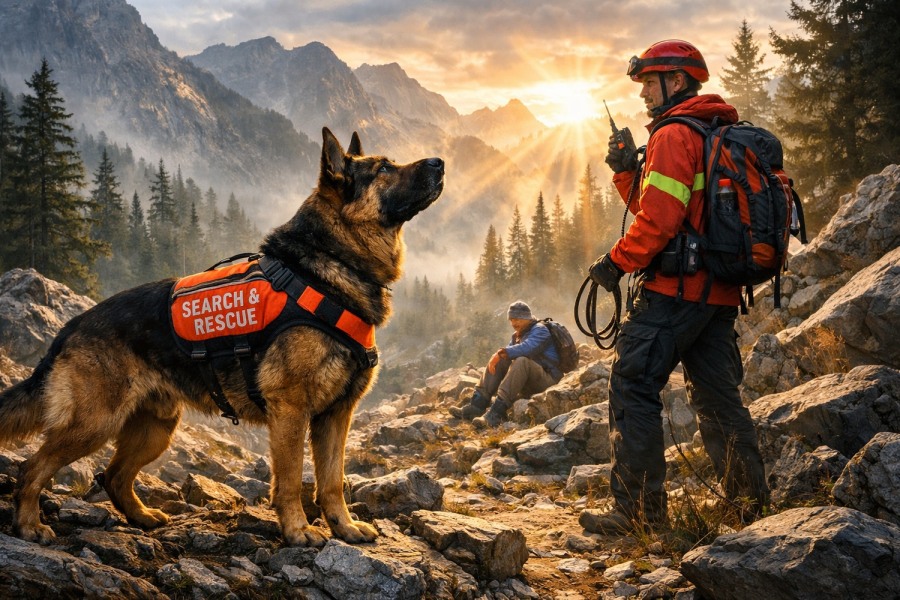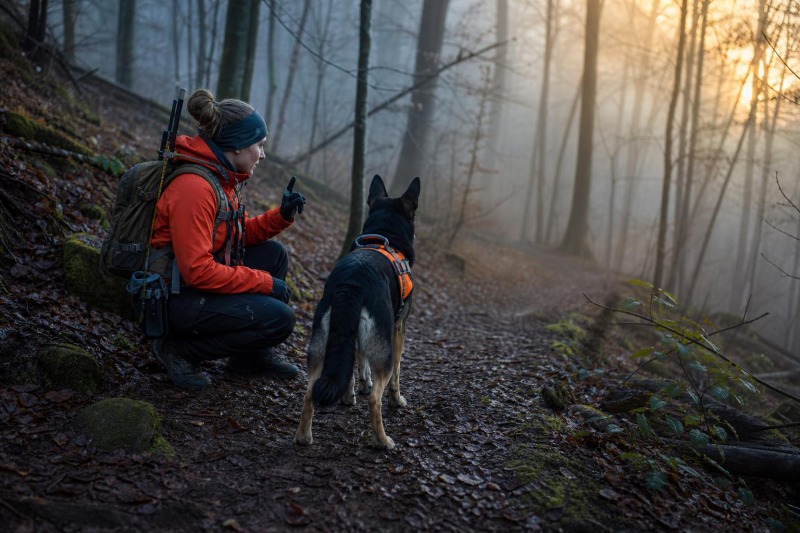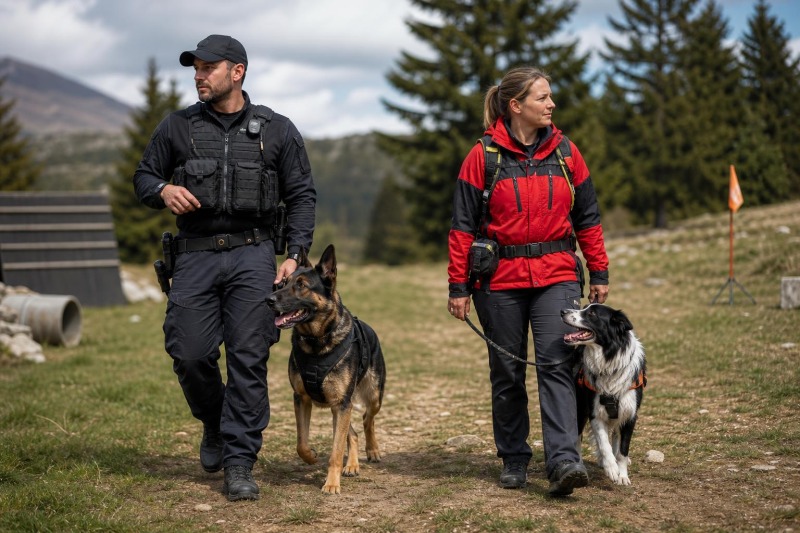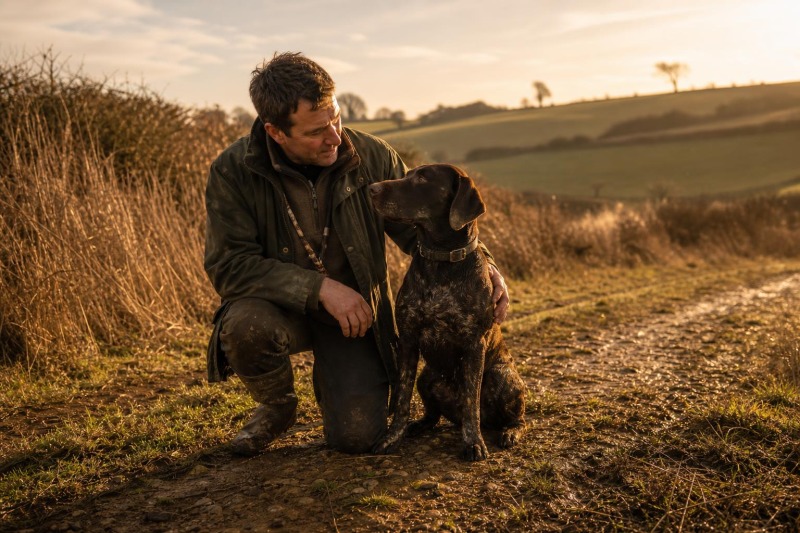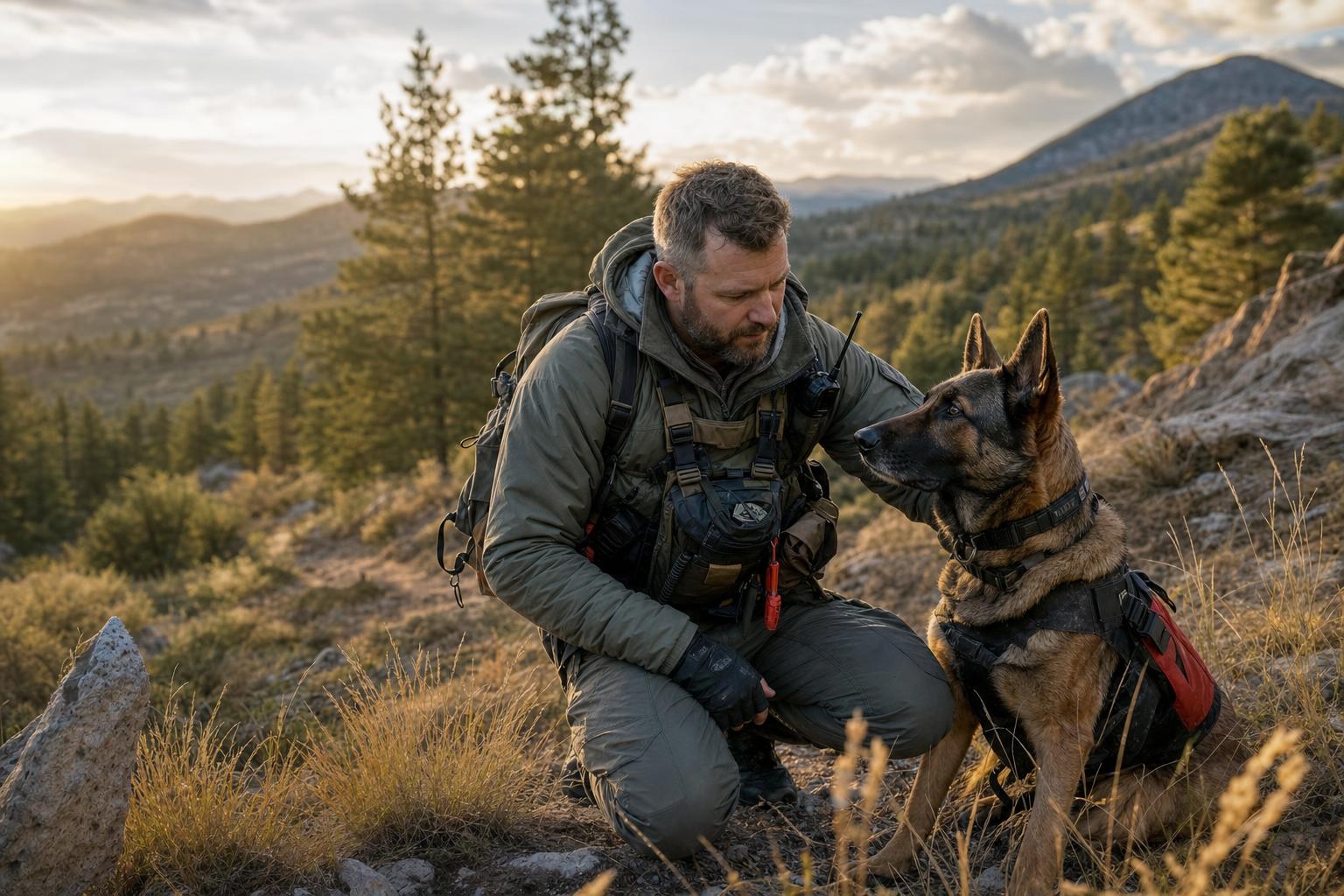
Trust between a search dog and handler grows through repeatable training and careful observation. The handler learns how that dog works; the dog learns which responses are dependable. That familiarity becomes valuable when a real search presents uncertainty.
It is one thing to admire a dog’s drive on a training field and another thing altogether to watch that same dog work a dark timber edge, a washed-out creek bottom, or the broken remains of a disaster site with complete commitment. In those moments, the relationship between handler and dog becomes plain. You can see whether the dog checks in with confidence, whether the handler reads subtle changes in posture and pace, and whether the team has the calm steadiness that separates polished work from hopeful guessing.
Why the SAR Dog and Handler Bond Matters
Search and rescue dogs are asked to do difficult work in conditions that would challenge even seasoned human responders. They may track a missing child through wet grass and roadside contamination, air scent through heavy woods after a storm, or search rubble where footing is uncertain and distractions are everywhere. In every case, the dog must trust the handler enough to range out, commit to odor, and stay in the hunt. The handler, in turn, has to trust the dog’s nose, body language, and instinct, even when the dog’s choices are not immediately obvious.
That kind of confidence cannot be faked. If a handler micromanages every step, the dog becomes dependent or hesitant. If the handler is inattentive, the dog’s communication gets missed. Good SAR work lives in the middle ground. The handler gives direction, structure, and support, but also leaves room for the dog to do the one thing no human can do well enough to replace: follow scent with conviction.
When the bond is strong, the dog works with freedom and purpose. When it is weak, small cracks show early. The dog may second-guess itself, drift out of focus, or stay too tightly connected to the handler instead of hunting independently. In a line of work where minutes matter and ground must be covered efficiently, those cracks can become costly.
Trust Under Pressure
Pressure reveals everything. On easy training days, many teams look solid. The dog is energetic, the handler is upbeat, and the problems are clean and predictable. But on the hard days, when scent is poor, visibility is low, and fatigue starts to creep in, the real nature of the bond comes out. A reliable SAR dog keeps working because it trusts the handler’s leadership and the routine built through months or years of training. A skilled handler stays composed because experience has taught them what their dog looks like when it is in odor, when it is puzzled, and when it needs a reset.
That is bond in usable form. It is not a slogan. It is a working advantage.
How the Bond Is Built
The bond between SAR dogs and handlers grows in the truck before dawn, on the training ground after everyone else is tired, and in the quiet minutes after a good run when the dog gets praise it truly understands. It is built in consistency. Dogs learn who we are by what we do every day.
Handlers who form strong SAR partnerships tend to be clear, fair, and steady. Their dogs know what is expected. Corrections, if needed, are timely and understandable. Praise is real. The dog is not left guessing what earned the reward or what caused the disappointment. That clarity creates confidence, and confidence is fuel for any working dog.
There is also the simple matter of time. A SAR dog that lives, trains, travels, and works beside its handler gathers a thousand small pieces of information. It learns the handler’s voice under stress, the rhythm of preparation, the meaning of certain movements, and the emotional steadiness that tells the dog all is well even when the environment is chaotic. The handler gathers just as much. They learn the dog’s natural range, its hunt pattern, its threshold for frustration, and the tiny physical tells that signal scent, uncertainty, or fatigue.
Training Creates Conversation
The finest SAR teams develop something close to a private language. It is not mystical, though from the outside it can look that way. The dog reads body posture, leash pressure, tone, and routine. The handler reads tail carriage, head snap, air sampling, foot speed, and changes in commitment. Every productive training session adds another layer to that conversation.
Repetition is what sharpens that understanding. A dog that has solved many scent problems with a trusted handler gains resilience. It learns that difficult conditions are not a reason to quit. A handler who has watched that dog work in heat, cold, wind, rain, and human-heavy environments learns when to push forward and when to regroup. That sort of experience matters more than flashy talk ever will.
Communication in the Field
In the field, the bond shows itself through communication that often happens without a word. A seasoned SAR dog may quarter naturally, then drift with purpose toward a scent cone. The handler notices the head lift, the change in breathing, the sudden certainty in the dog’s movement. Maybe the dog circles once to locate source, then commits. A weaker team may miss that whole sequence. A stronger team works through it smoothly because each side is paying attention to the other.
One of the hardest lessons for new handlers is learning when to stay out of the dog’s way. Folks with good intentions often over-handle, especially when nerves get involved. But a SAR dog is not a machine waiting for commands at every turn. It is a specialist. The handler’s job is to set the dog up well, read what the dog is saying, and support the search with judgment and discipline. That takes humility, and good handlers usually have it.
At the same time, the dog must accept guidance. Search areas have hazards, boundaries, and practical limits. A bonded dog responds to direction without losing heart. It trusts that the handler is not shutting down the hunt, only shaping it. That balance between independence and control is one of the clearest signs of a mature SAR partnership.
The Emotional Side of the Partnership
There is no sense pretending this work is all mechanics. Search and rescue carries emotional weight. Some searches end in relief and tears of joy. Others do not. Dogs may not understand the full human gravity of those outcomes, but they absolutely read us. A handler who has put in the time with a dog can help it stay stable through stress, changing tempo, and tense scenes. The dog, for its part, often becomes an anchor for the handler as well.
They give you something honest to focus on when noise, confusion, and emotion threaten to cloud judgment. In SAR, that steadiness matters. Handlers often rely on routine with their dogs not just for performance, but for mental footing. Gear up, warm up, send the dog, read the dog, reward the dog. There is comfort in competent work.
Resilience After Hard Searches
Another part of the bond comes after the search is over. Recovery matters. Dogs need rest, care, and the chance to decompress, just like people do. Handlers who know their dogs well can spot the difference between ordinary fatigue and genuine stress. They know when the dog needs quiet, light play, food, hydration, or simply to lie close and settle. These moments may not look important to outsiders, but they are part of the relationship that keeps a team effective over the long haul.
Longevity in SAR work is not built on adrenaline. It is built on management, respect, and understanding the dog as both an athlete and a partner. The strongest teams protect that bond because they know it is the foundation beneath every successful search.
What Dog Owners Can Learn from SAR Teams
Even if a person never handles a search and rescue dog, there is a lot to learn from these partnerships. First, dogs thrive when purpose is clear. They do better with consistency than chaos, with fair expectations rather than mixed signals. Second, trust is not created by affection alone. It comes from reliability. Dogs believe what our actions teach them. Third, communication is always deeper than commands. A dog watches us closely, and the quality of that relationship shapes everything from obedience to confidence.
Working dogs have a way of exposing shortcuts. If the bond is thin, pressure will show it. If the bond is strong, pressure often strengthens it. That is why SAR handlers invest so much in training, handling skills, fitness, and day-to-day connection. They understand that when the call comes, there will be no time to build trust on the spot. It must already be there.
The bond between SAR dogs and handlers is one of the finest examples of what a human and dog can become together. It is not soft or shallow. It is practical, tested, and proven in places where confusion, danger, and urgency are all part of the job. A SAR dog brings nose, drive, courage, and heart. The handler brings judgment, preparation, and leadership. Tie those together with time and trust, and you get a team capable of extraordinary work.
For those of us who have spent our lives around working dogs, that kind of partnership never stops being impressive. It reminds you that the best dogs do more than obey. They commit. And when a handler earns that commitment honestly, through steady work and mutual trust, the result is something powerful enough to save lives.