There is a certain kind of person who never quite gets over seeing a good dog work. Maybe it starts with watching a bird dog lock up on point at first light, or seeing a blood tracking dog sort out a cold trail that looked lost to every human eye in camp. Once you have seen a dog use its nose, nerve, and heart to solve a problem, it is hard not to wonder what life might look like if working with dogs was more than a hobby. For many people, it becomes a calling.
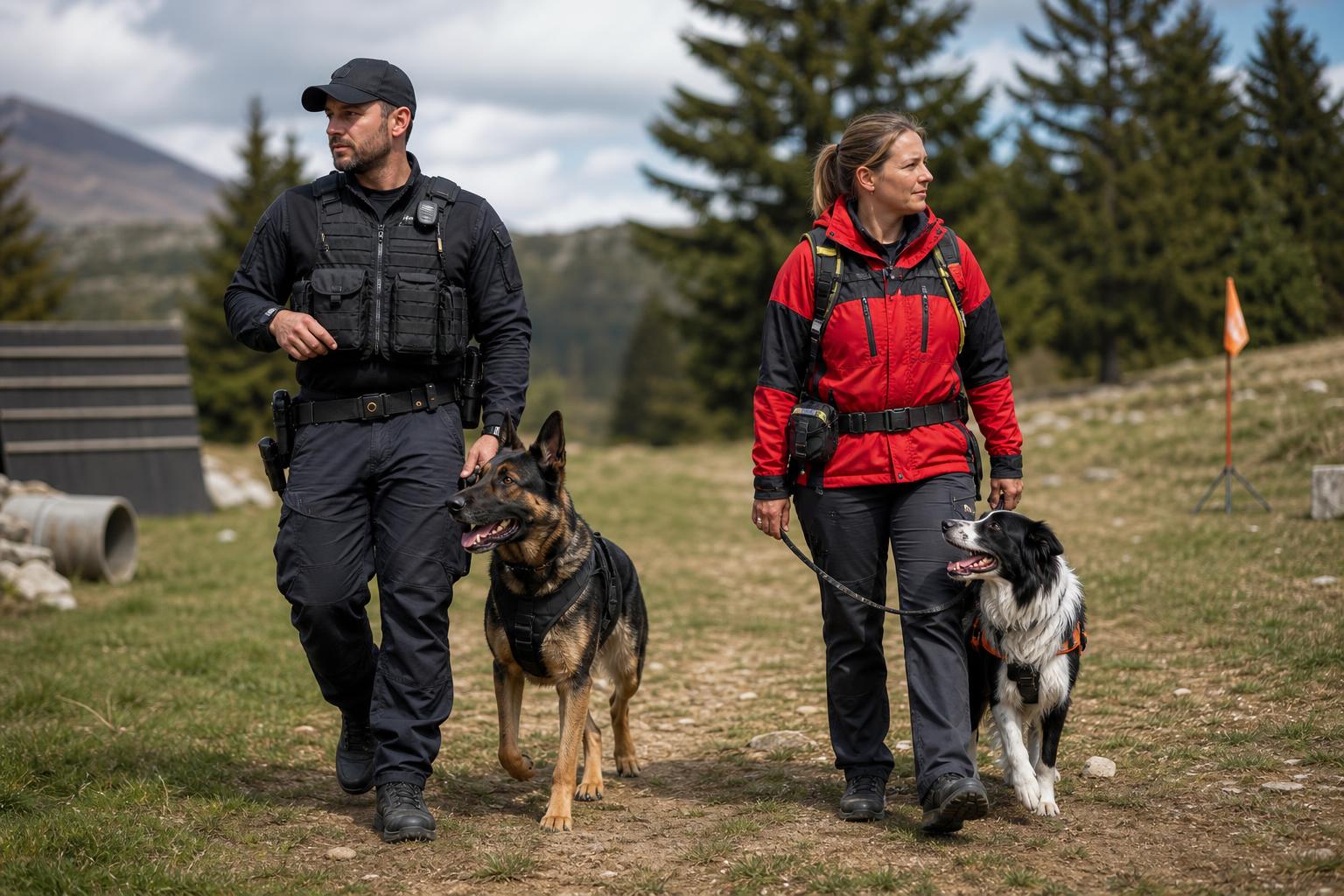
Careers working with dogs stretch far beyond kennels and obedience classes. Some are public-facing and well known, like the K9 officer stepping out of a patrol unit. Others are quieter and often volunteer-driven, like the search and rescue handler hiking ridge lines in bad weather while trusting a dog to find what people cannot. No matter the path, these careers are built on the same truth: a working dog is not a machine. It is a partner, and the job only works when the bond is real.
What Makes Working Dog Careers Different
Folks who are drawn to working dogs often imagine the action first. They picture apprehensions, missing person searches, detection work, and all the visible moments when dog and handler perform under pressure. That part is real, but it is only a slice of the life. Most of the work happens in repetition, maintenance, and trust-building. It lives in training fields, kennel runs, vehicle crates, early mornings, and long evenings when you are still cleaning gear after everybody else has gone home.
A career with working dogs asks more of a person than simply liking animals. You need patience that holds up under stress, enough humility to accept that the dog is constantly giving you feedback, and enough discipline to train when you are tired. Good handlers learn to read subtle changes in posture, breathing, tail carriage, and drive. In the field, those small signs can tell you whether the dog is in odor, uncertain, distracted, or absolutely certain of what comes next.
K9 Officer: Law Enforcement With a Canine Partner
The role most people think of first is the police K9 officer. It is easy to see why. A good patrol dog brings speed, control, deterrence, and detection power that no piece of equipment can replace. These teams may handle suspect apprehension, building searches, area searches, article recovery, and detection of narcotics, explosives, or firearms depending on the unit and agency.
But becoming a K9 officer usually starts with becoming a solid officer first. Agencies want people who are dependable under pressure, capable of report writing, tactically sound, and steady enough to make judgment calls with a dog beside them. Once selected, the handler enters a demanding training process where the real work begins. The dog has to learn tasks, but the handler has to learn timing. Timing on praise, correction, deployment, and reading the environment can make the difference between a polished team and a dangerous one.
What many outsiders miss is that the K9 officer job does not end with the shift. In many cases the dog rides home with the handler, lives in the handler’s care, and requires daily maintenance, conditioning, and training. It is a lifestyle, not just a duty assignment.
The Temperament Needed for K9 Work
Not every dog owner is suited for police dog handling, and not every strong dog is suited for patrol or detection. The person has to stay calm around intensity. The dog must be clear-headed, environmentally sound, and able to switch from drive to control without coming apart. In plain terms, this is not about owning a tough dog. It is about building a reliable dog that can perform in chaos and still listen.
Search and Rescue Handler: Trusting the Nose in Big Country
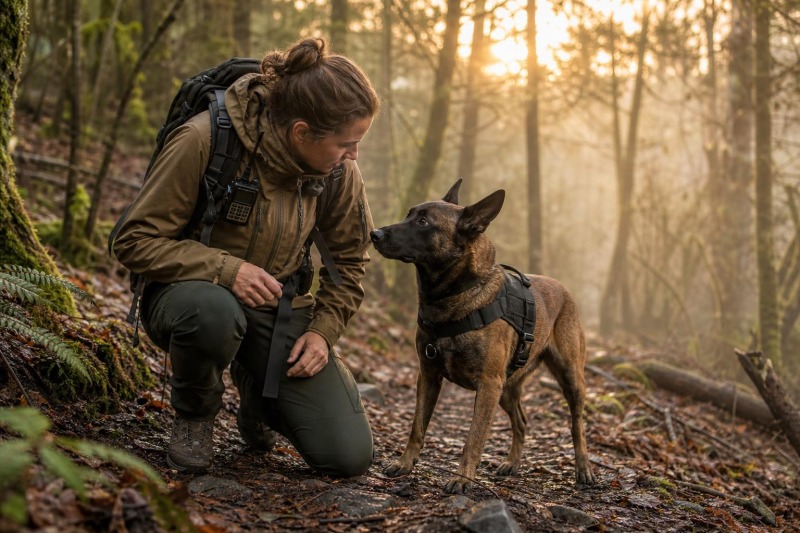
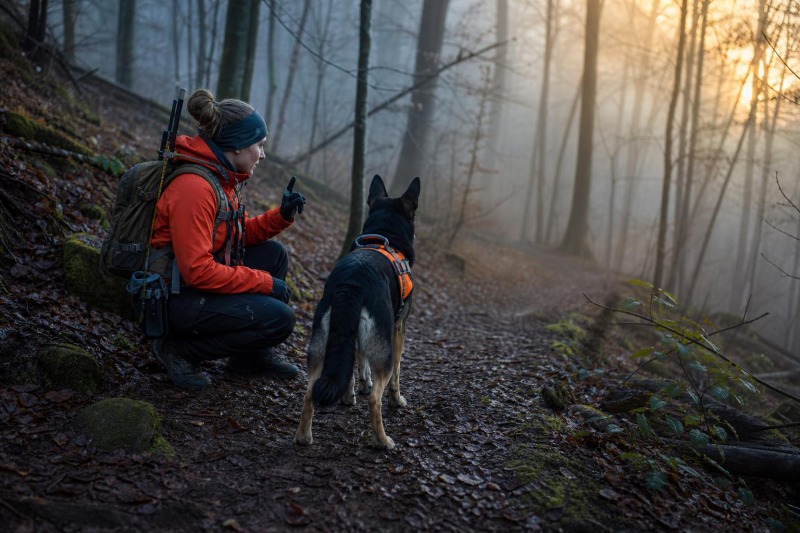
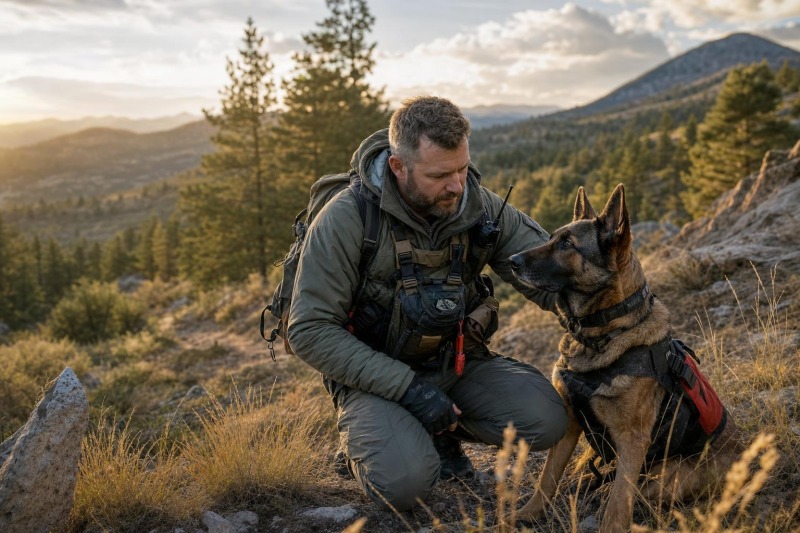
If law enforcement K9 work is often seen under flashing lights, search and rescue is more often done in the dark, in weather, and in country that strips away pride fast. SAR handlers and their dogs may search for lost hikers, children, dementia patients, disaster victims, or people buried in debris. Depending on the team, dogs may specialize in trailing, air scent, cadaver detection, avalanche work, or wilderness area search.
There is a raw honesty to search and rescue work that earns respect in a hurry. You can study maps, grid plans, weather shifts, and scent theory all day, but once boots hit the ground, the dog tells the truth. Then a dog lifts its head, takes one hard breath, and turns with conviction. That kind of moment reminds you why these dogs matter.
Many SAR handlers begin as volunteers, which surprises people. They train for years, invest in equipment, commit weekends and nights, and hold themselves to a professional standard because the stakes are too high for anything less. Even in volunteer settings, the expectation is serious. The dog must be mission-ready, the handler must understand search strategy, and both must be physically capable of operating in demanding conditions.
Why SAR Work Demands Humility
Search and rescue is not a place for ego. A handler who forces interpretation onto a dog can ruin a search. You have to let the dog work, trust the training, and stay honest about what you are seeing. That humility is part of what makes strong SAR teams so impressive. They know what they know, and they do not pretend to know what the dog has not shown them.
Other Careers Working with Dogs
Beyond K9 units and SAR teams, there are many paths for people who want a life around driven, capable dogs. Detection work in private security and conservation fields is growing, especially for explosives, accelerants, invasive species, and wildlife conservation projects. Military working dog programs remain a respected route for those called to service. There are also trainers who specialize in developing dogs for protection, detection, hunting, or sport, though that line of work takes years to build well.
Some people find their place in kennel management, breeding programs focused on performance traits, canine rehabilitation, or decoy work for training schools. Others move into instructional roles, helping shape new handlers and young dogs before they ever deploy. The common thread in all of it is competence. In this world, the dog exposes shortcuts quickly.
Skills You Need Before You Chase the Job
A love of dogs is a fine starting point, but it is not enough by itself. The people who last in working dog careers tend to share a few traits. They can handle repetition without losing standards. They stay curious and keep learning. They can separate emotion from evaluation without becoming cold. They understand that a dog can be talented and still need structure every day.
Physical fitness matters more than many beginners expect. So does communication. Handlers write reports, brief teammates, talk to the public, coordinate searches, and explain what their dog is doing with clarity. There is also the practical side of dog care. Nutrition, injury prevention, kennel sanitation, travel management, hydration, recovery, and conditioning all matter. A working dog is an athlete, and athletes need management as much as motivation.
How to Get Started in a Working Dog Career
The best way to begin is by getting close to real working dog people and seeing the job without the shine. Attend training days if organizations allow observers. Volunteer where you can. Talk less than you listen. Ask what a normal week looks like, not just what the biggest success looked like. A lot of folks are drawn to the dramatic moments, but the everyday routine is what determines whether you belong in the work.
If you are interested in law enforcement, focus first on becoming the kind of officer a department would trust with extra responsibility. If search and rescue pulls at you, look for reputable local teams and learn their standards. If training is your calling, spend time under people who produce reliable dogs, not flashy ones. Titles can be bought cheap in the dog world, but skill cannot.
And if you are a dog owner wondering whether your own dog might have the makings of a working partner, start with honest evaluation. Drive, nerve, sociability, environmental confidence, recoverability, and willingness to work all matter. Plenty of good dogs are wonderful companions without being suited for professional work. There is no shame in that. The point is to see the dog in front of you clearly.
The Reward of a Life Spent With Working Dogs
Careers working with dogs are not easy, clean, or predictable. They ask for sacrifice, steady nerves, and a willingness to be accountable for another living creature at a high level. Yet for the right person, there are few better ways to spend a life. A good working dog teaches lessons that carry beyond the field: patience, precision, grit, and the value of trust earned one session at a time.
Whether you are drawn to the patrol car, the search line, the training field, or the long road of learning how dogs solve problems, the work has a way of getting under your skin. Once you have watched a dog commit itself fully to a task, there is no forgetting it. For dog owners interested in working dogs, that may be the first sign that this is more than curiosity. It may be the start of a path worth following.