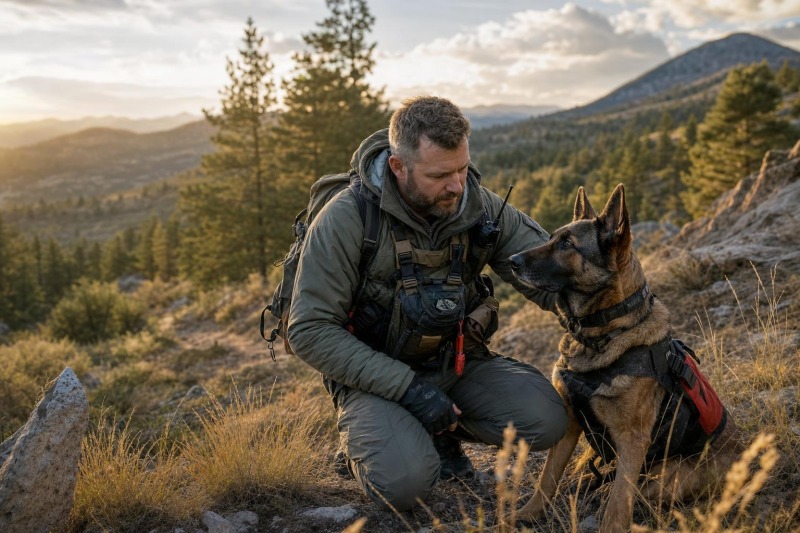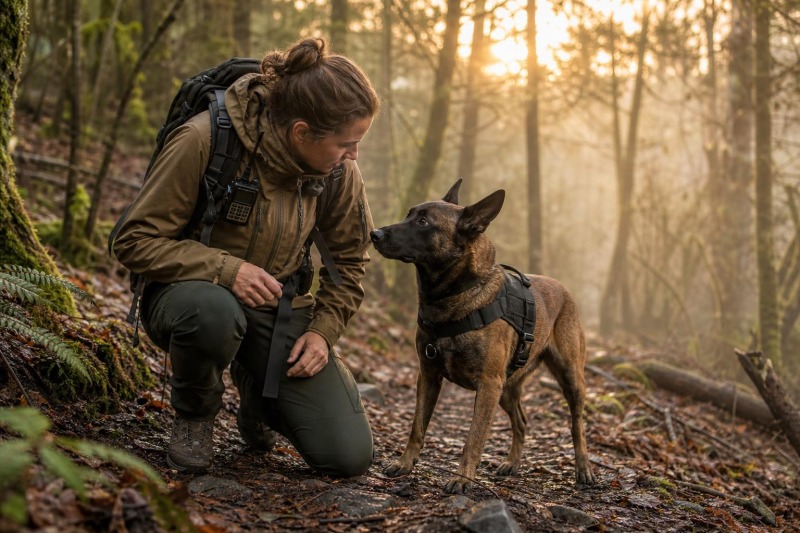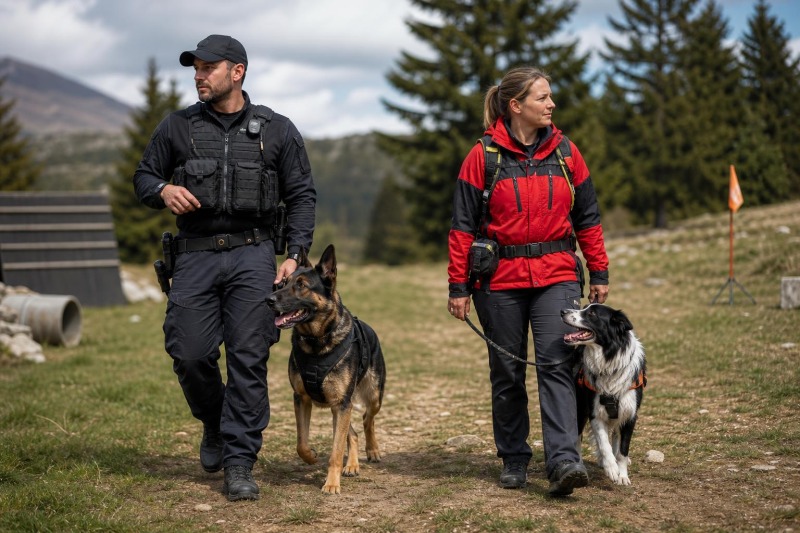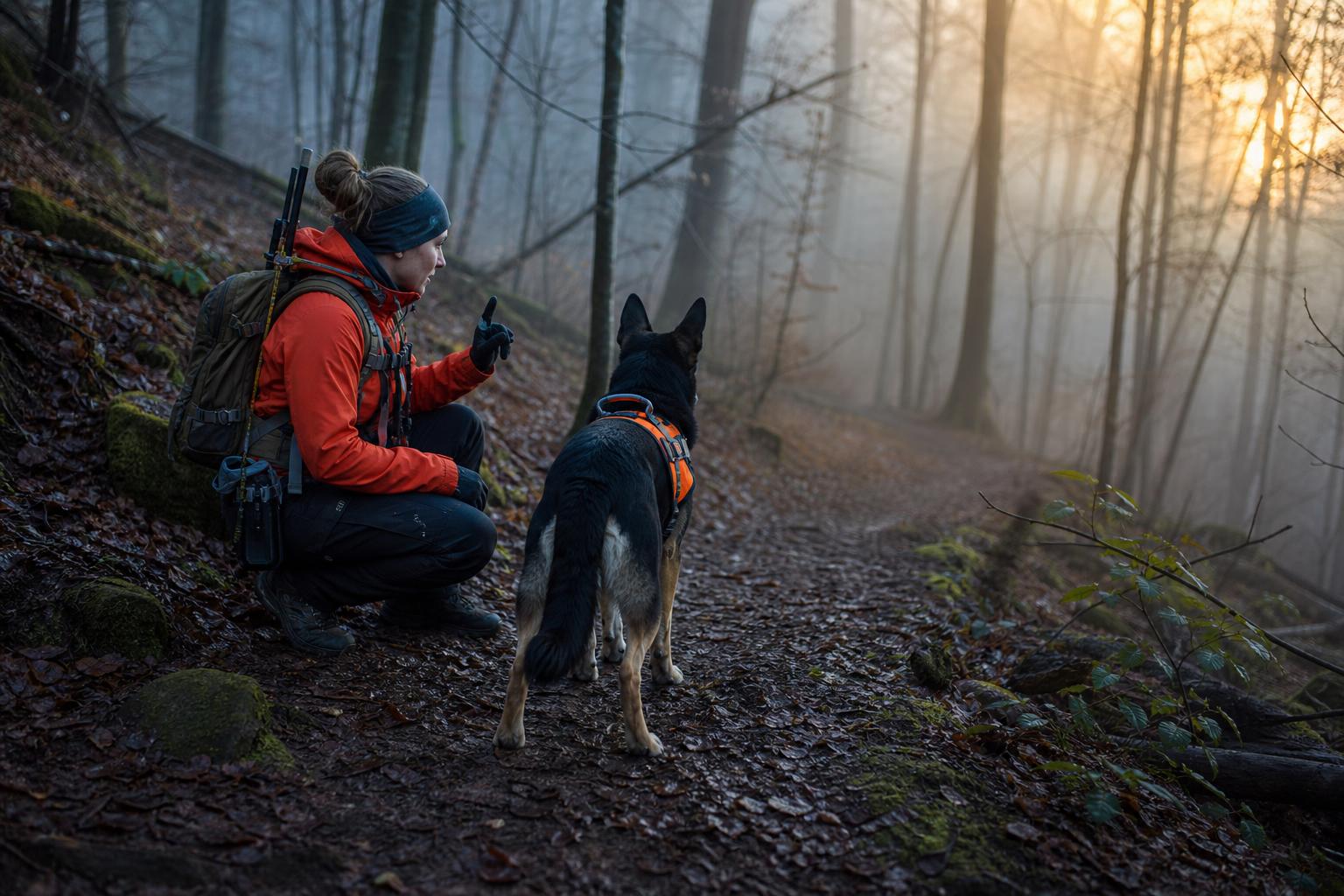
Most folks see the finished picture. They see the dog riding in a crate-ready truck, the handler in a clean uniform at a community event, maybe a polished demonstration where the dog races out, finds a hidden subject, and comes back wagging. What they do not see is the real life behind that moment. They do not see the wet boots lined by the back door, the training bags always half-packed, the maps spread across the kitchen table, or the way a phone call in the middle of supper can change the course of an entire weekend. The life of a volunteer SAR dog handler is not glamorous, but it is meaningful in a way few pursuits ever become.
Search and rescue dogs are not machines, and their handlers are not superheroes. They are ordinary people who choose an uncommon level of commitment. That is where this life begins.
More Than a Hobby, Less Than a Job, and Harder Than Both
A volunteer SAR dog handler often lives between worlds. You may have a regular job, a family, livestock to feed, kids to haul, bills to pay, and still be expected to train like a professional. That is the first truth many outsiders miss. Volunteer does not mean casual. It means unpaid. The standards do not soften because there is no paycheck attached.
On any given week, a handler may spend evenings running obedience drills, weekends in field problems, and off-hours studying scent theory, navigation, radio procedure, first aid, and search strategy. The dog has to learn to work through timber, tall grass, rubble, water edges, heat, cold, and human distraction. The handler has to learn to read the dog honestly, not hopefully. That difference matters. In the field, wishful thinking wastes time, and time is the one thing a missing person may not have.
There is also a financial side that deserves plain talk. Volunteer handlers often pay for fuel, equipment, crates, veterinary care, training supplies, certifications, and travel. Good boots wear out. GPS units age. Leashes disappear. Tires get eaten up on back roads and rough access points. The dog may need conditioning work, joint support, and careful nutrition. Nobody stays in this game long unless the calling runs deep.
The Dog at Home Is Still Part of the Job
A SAR dog does not stop being a SAR dog after training ends. At home, every walk, every trip, every exposure to new footing or noise can build confidence or chip away at it. A good handler pays attention to the whole dog. Nerves, recovery, motivation, appetite, hydration, and rest all matter. If you have ever owned a serious hunting dog, you know the type. These dogs are not ornaments. They need purpose, structure, and fair handling.
That means the household bends around the work. Rest days are planned with intention. Socialization is not left to chance. Play has a purpose. Even routine obedience carries over into mission performance. A dog that loads cleanly, waits at a door, settles in a crate, and responds under pressure is easier to deploy when stress is high and conditions are poor.
Training Days Are Where Teams Are Truly Made
If you want to understand the life of a volunteer search and rescue dog handler, watch a training day from daylight to dark. It starts early and usually with more logistics than romance. Water jugs, reward toys, long lines, harnesses, first aid kits, maps, radios, gloves, scent articles, weather gear, spare socks, kennel fans, cooling vests, blaze layers, and enough food for a full day in the field all get loaded before most people have finished breakfast.
Then comes the work. A young dog may start with simple confidence-building problems. A more advanced dog might run wilderness area searches, trailing exercises, article indication drills, or disaster scenarios. Hidden subjects are placed with care. Wind direction is studied. Terrain is chosen for a reason. The best training groups are part coaching session and part truth serum. They reveal exactly where a team is strong and where it is fooling itself.
Some days the dog shines. You watch it cast into a breeze, snap into odor, and drive with the kind of certainty that makes the hair rise on your neck. Other days the dog hunts too wide, checks out, misses a turn, or fights the environment. Handlers have bad days too. Maybe you miss a change of behavior. Maybe you overhandle. Maybe you ask for too much in poor conditions. Good teams learn from all of it. Pride is cheap in SAR. Honest evaluation is gold.
Reading the Dog Is an Earned Skill
One of the hardest parts of this work is learning your dog so well that a small shift means something to you. Head carriage, breathing, speed, tail set, body tension, commitment into cover, and the way the dog works a cone of scent can all tell a story. There is no shortcut for that. It comes from miles together.
A seasoned handler knows when the dog is in odor, when it is working old contamination, when it is distracted, and when fatigue is starting to dull the edge. That knowledge is not mystical. It is built by repetition under many conditions. It is the same kind of educated trust a bird hunter develops with a dog that has proven itself across seasons. You do not guess. You learn the language the dog uses in the field.
When the Call Comes In
A real deployment has a different feel from training. Even before the details are clear, the air changes. The phone rings, a message comes through, and suddenly the evening narrows to essentials. Who is missing. How long. Last known point. Age. Medical concerns. Weather. Terrain. Law enforcement contact. Staging location. The handler moves fast, but not sloppy. Gear is checked, dog is loaded, fuel is topped off if needed, and the mind starts turning over possibilities before the truck leaves the driveway.
At staging, the professionalism of volunteer SAR becomes plain. Briefings matter. Search managers assign resources. Handlers gather facts, ask questions, study maps, and consider containment, travel corridors, hazards, and likely behavior of the missing subject. Then the dog comes out and the real partnership begins. In that moment, all the repetition from training either holds or it does not.
Not every mission ends with cheers. Some are quick finds. Some run long into darkness and bad weather. Some resolve with relief. Others end in heartbreak. Volunteer handlers must learn to carry both outcomes without becoming numb. That is easier said than done. When your dog finds a live subject, the joy is pure and hard to describe. When the mission ends differently, you still have to care for your dog, debrief honestly, clean gear, and be ready to train again. The emotional weight is part of the life whether people talk about it or not.
The Handler Carries Responsibility Beyond the Search
The public often focuses on the dog, and fair enough, because a good SAR dog is an impressive animal. But the handler carries a broad burden. Safety decisions, navigation, communication, scene discipline, dog welfare, and documentation all fall in the handler’s lap. You are not just walking behind a talented nose. You are managing a working partner in an unpredictable environment.
That includes knowing when not to run the dog. Heat stress, unsafe footing, contaminated scenes, exhaustion, poor strategy, or overdeployment can do real harm. A wise handler protects the dog as fiercely as any result. Long-term soundness matters. So does credibility. A team that deploys recklessly may get one dramatic story, but it will not earn lasting trust.
Why People Stay in This Demanding Life
From the outside, this path can look punishing. The hours are irregular. The costs are real. Progress can be slow. Certification standards can be unforgiving. Yet good handlers stay with it because the work reaches something deep. There is pride in building a dog that can truly help. There is satisfaction in becoming part of a disciplined team. And there is a rare kind of gratitude that comes from using your time and your dog for something bigger than recreation.
For many handlers, the bond with the dog is at the center of it all. Not sentimental in a soft way, but hard-earned and practical. You trust that dog in the timber, on slopes, in thick brush, and in the dark. The dog trusts you to read the field, protect it, and send it with clarity. That kind of partnership is one of the finest things a person can know with a working dog.
There is also a quiet community around volunteer SAR. Good teams respect one another because they know the work behind the patch. They know the failed problems, the soaked clothes, the miles, the self-doubt, the rebuilding after setbacks, and the discipline it takes to keep going. That shared understanding forges strong company.
What Dog Owners Should Understand About SAR Dogs
Dog owners interested in working dogs often ask whether any dog can do search and rescue. The honest answer is no, but more dogs can enjoy some version of nose work and purposeful training than people realize. SAR demands stable nerves, physical durability, strong motivation, trainability, environmental confidence, and a handler willing to commit years rather than weeks. Breed matters some. Individual dog matters more.
Still, the larger lesson from the life of a volunteer SAR dog handler applies to nearly every working dog home. Dogs thrive when they are given meaningful work, clear expectations, and a fair partner at the other end of the lead. They do not need endless excitement. They need direction, consistency, and a reason to use what is in them.
That is why the volunteer SAR world earns respect. It is not built on image. It is built on service, discipline, and the old-fashioned belief that a good dog, trained well and handled honestly, can do extraordinary things when somebody out there needs finding.
If you ever meet a volunteer SAR dog handler, look past the badge and the truck decal. What you are really seeing is years of unseen labor and a partnership tested in the kind of country and conditions that reveal character.