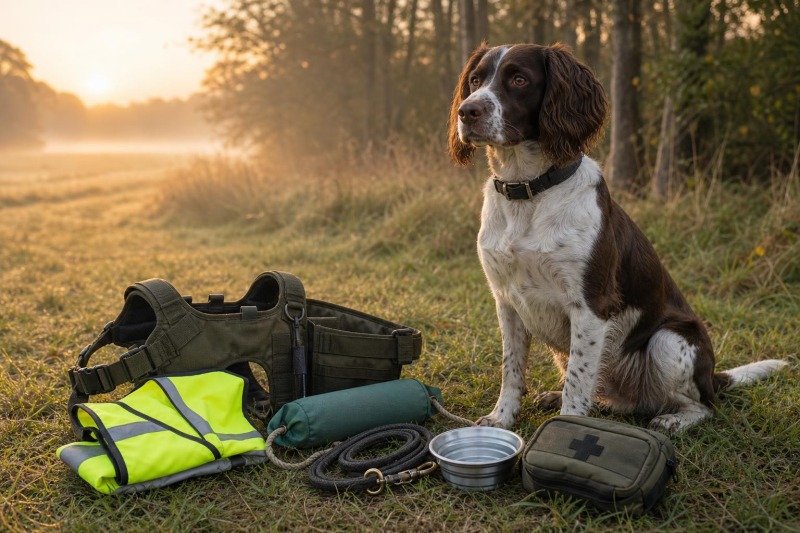
Durable working-dog gear is equipment that continues to perform its intended job under the conditions it faces. Materials, construction, repair options, and inspection all matter. Price and appearance alone are weak guides to how a product will hold up.
Durable gear is more than toughness alone. It needs to be reliable, comfortable, easy to maintain, and suited to the conditions your dog works in day after day.
Why Durability Matters in Working Dog Gear
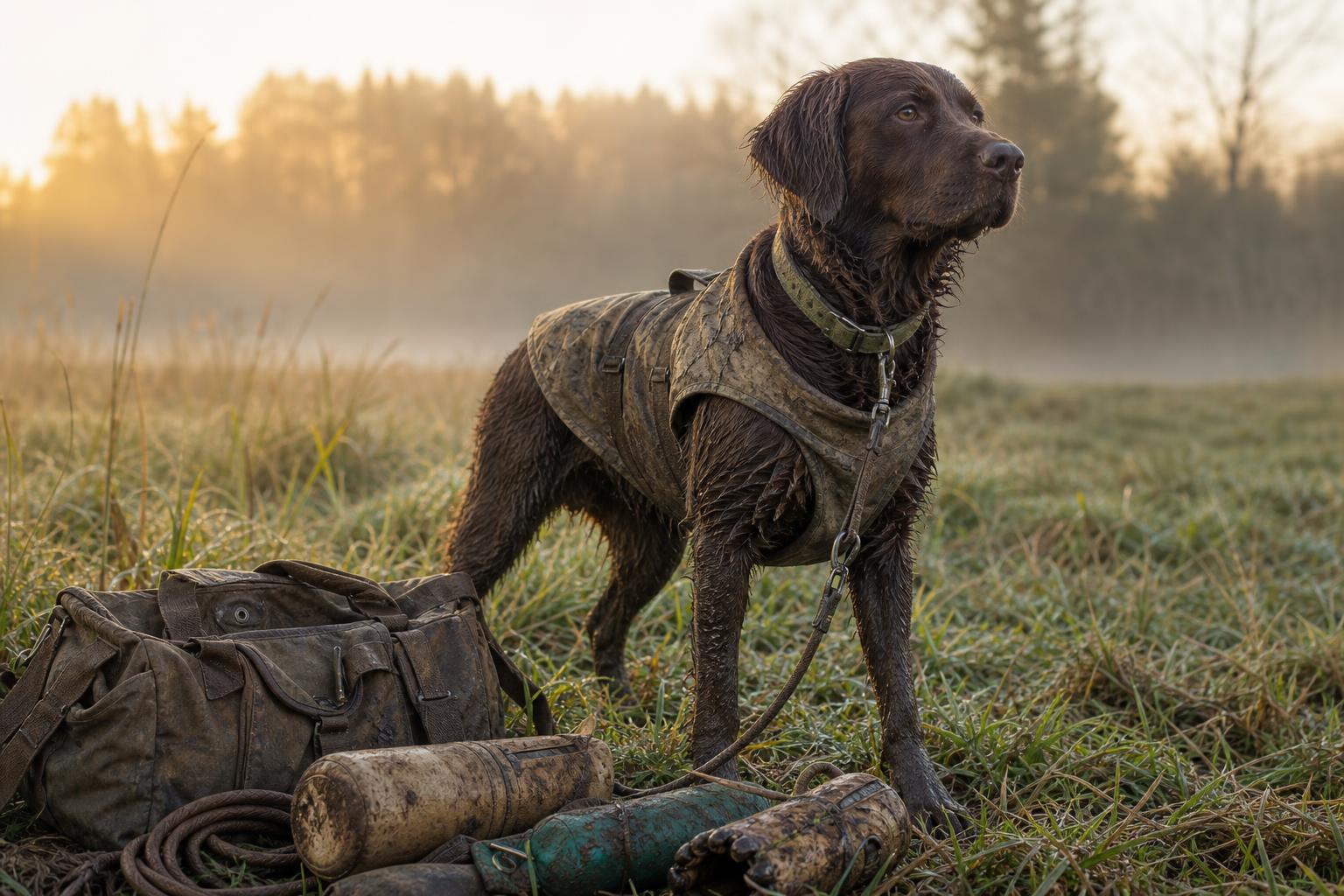
A working dog lives harder than the average house dog. Whether he is hunting upland birds, tracking wounded game, recovering waterfowl, helping on a ranch, or serving in another demanding role, his equipment takes abuse from mud, burrs, brush, water, sun, ice, and constant movement. Gear that wears out quickly does more than waste money. It can create safety issues, interrupt training, and distract a dog from the task he should be focused on.
The best gear fades into the background. A well-fitted collar does not chafe. A strong lead does not twist and burn your hand. A solid crate or kennel keeps a dog secure during travel and gives you peace of mind on the road. If your dog is thinking about discomfort, slipping hardware, or poor fit, then the gear is already working against you.
Start With the Dog’s Job
Before buying any piece of equipment, think first about what your dog actually does. A retriever busting through cattails and icy water needs different protection than a pointing dog covering dry ground in thorny cover. A stock dog working long hours around livestock has different equipment demands than a blood tracking dog moving carefully through thick woods. Too many people buy gear because it looks rugged online, not because it matches the dog’s daily work.
This is where honest evaluation matters. Consider terrain, temperature, moisture, distance covered, and the kind of wear your dog puts on gear. Some dogs are naturally hard on equipment. They pull harder, crash thicker cover, swim more aggressively, or ride more miles. Others need lighter, more flexible gear because excess bulk slows them down. Durability should never come at the expense of movement or comfort.
Fit Comes Before Toughness
Tough material is worthless if it rubs the shoulders, traps heat, or shifts every time the dog turns. Good gear should sit naturally on the dog and move with him. That means checking neck size, chest shape, coat type, and even the dog’s gait.
A collar that is too loose can catch on brush or slide around enough to wear the coat thin. One that is too tight creates pressure and irritation. The same goes for protective vests and harnesses. You want room for full stride and breathing without slop that invites rubbing.
Materials That Hold Up in the Field
When choosing durable gear for working dogs, materials matter as much as design. Leather still has a place, especially in leads and collars, because quality leather can last for years if cared for properly. It handles well in the hand, breaks in nicely, and often outlasts synthetic alternatives in dry conditions. But leather can suffer if constantly soaked and neglected.
Modern synthetics have earned their keep, especially for wet, dirty work. Biothane-style materials, coated webbing, reinforced nylon, and high-grade waterproof fabrics can be a blessing in marshes, rain, and muddy training grounds. They clean easily, resist odor, and often keep their strength better in repeated wet conditions. The catch is that not all synthetics are created equal. Cheap webbing frays. Weak coatings crack. Thin hardware rusts. You are not only buying material; you are buying the quality of construction.
Pay close attention to stitching, rivets, buckles, D-rings, closures, and edges. These are often the first failure points. In the field, appearance means very little. Reliability means everything.
Choosing Durable Collars, Leads, and Harnesses
The collar is usually the most used piece of gear a working dog owns, so it deserves careful thought. It should be easy to clean, visible enough to spot in cover, and strong enough to handle pressure if you need control quickly. Rust-resistant hardware is worth every penny, especially if your dog works around water.
Leads are another place where shortcuts cost you. A dependable lead should feel secure in your hand, not slick or flimsy. Good snap hardware matters. If you run a check cord for training, it needs to slide through grass and brush without tangling into a bird’s nest every ten yards.
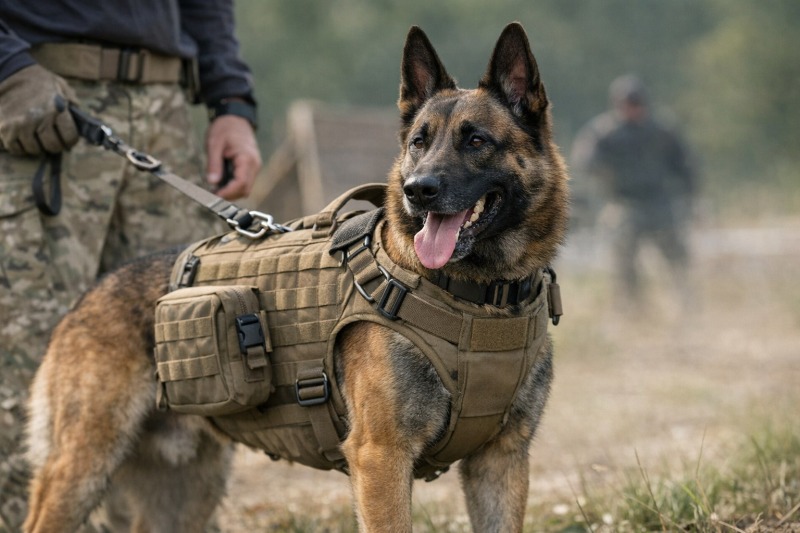
Harnesses can be excellent tools, especially for tracking dogs, dogs used in controlled pulling work, or dogs needing better chest distribution than a collar provides. But a harness has to be job-specific. A poorly designed harness can restrict shoulder movement and wear on the dog faster than any collar ever would.
Protective Gear: Vests, Boots, and Weather Readiness
Protective gear can extend a dog’s season and spare him unnecessary wear, but only if it is built well. In cold water and late-season hunts, a quality vest can help preserve body heat and shield the chest from cuts and pounding cover. In thorn country or rough upland conditions, chest protection may save your dog from shredded skin. The mistake many handlers make is choosing the thickest vest they can find without considering fit, buoyancy, flexibility, and the dog’s style of movement.
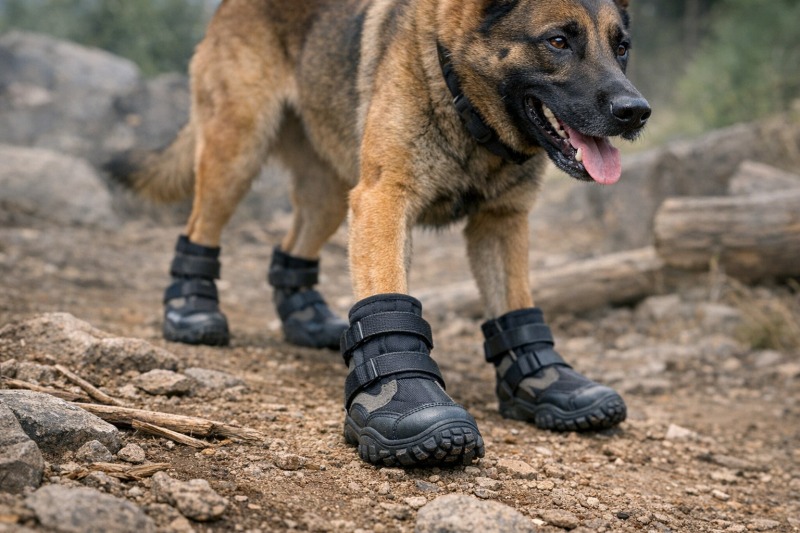
Boots are another divisive subject. Some dogs take to them, some despise them, and some only need them in certain terrain. On sharp rock, crusted snow, burned ground, or abrasive surfaces, good boots can prevent a hunt-ending injury. Still, a flimsy boot that twists sideways or flies off is more nuisance than help. Durable dog boots need secure closures, solid sole construction, and enough flexibility that the dog can still move naturally.
Cold and heat both test gear. In winter, brittle plastics and soaked fabrics reveal their flaws. In summer, poorly ventilated equipment traps heat and exhausts the dog faster. Durable gear is not just what survives the environment. It is what keeps helping your dog perform in it.
Travel and Kennel Equipment That Lasts
A working dog often spends plenty of time traveling, and durable transport gear matters as much as field equipment. A solid kennel or crate should protect the dog, hold up to vibration and rough roads, and be easy to clean after muddy days. Doors, latches, and tie-down points need to inspire confidence. If you haul dogs often, you quickly learn that weak latches and flimsy structure are not minor inconveniences.
Bedding, kennel mats, and water systems deserve the same scrutiny. Dogs that travel hard need a secure place to rest and recover. If a mat tears apart after a few weeks or a water container leaks every trip, that frustration adds up fast. Good transport gear reduces stress on the dog and the handler alike.
Maintenance Extends the Life of Good Gear
Even the best equipment fails early if you never clean or inspect it. Mud, salt, burrs, and moisture slowly chew away at stitching, metal, and fabric. Rinse off grime, dry things thoroughly, and look for frayed edges, cracked coatings, bent hardware, or worn attachment points. Small signs of wear are easier to address before they become failures.
A lot of durable gear earns its reputation because the owner respects it. Leather needs conditioning. Metal needs drying. Fabric needs cleaning. If you treat all gear like it is disposable, it will become disposable sooner than you think.
Buy for the Long Haul, Not the Hype
There is always a new product claiming to be indestructible, revolutionary, or built for the toughest dogs on earth. The truth is simpler. Durable gear usually comes from makers who understand dogs, understand the work, and pay attention to details that are easy to miss in a catalog photo. Look for proven construction, honest reviews from people who actually use their dogs, and designs that solve real problems instead of invented ones.
If possible, handle the gear before buying it. Flex it. Check the stitching. Work the buckle. Look at the hardware. Think about how it will function when wet, cold, muddy, or covered in dog hair. A piece of equipment can feel impressive on a store rack and still be wrong for a hard-charging dog in the field.
Choosing durable gear for working dogs comes down to respect. Respect for the dog’s job, respect for the conditions you hunt or work in, and respect for the fact that reliable equipment supports performance, safety, and comfort. A good working dog gives you everything he has. The least we can do is put dependable gear on him, gear that will not quit before he does.