Working-dog equipment has to support movement, communication, care, and safe transport. The right setup depends on the role and the conditions. Begin with the dog’s needs and the handler’s routines before adding specialized gear.
Working dogs ask a lot of themselves. Whether they are flushing birds, retrieving ducks, trailing game, running stock, or helping with everyday farm work, they operate in rough country, ugly weather, and long days that wear on muscle, skin, and focus. Good equipment is not about dressing a dog up. It is about safety, control, communication, and preserving the dog for the next day’s work.
For dog owners interested in working dogs, the trick is understanding that every piece of equipment should serve a real purpose. If it does not improve handling, protection, transport, conditioning, or recovery, it is probably not essential. The gear below has proven itself where it counts—out in the field, on cold mornings, in muddy kennels, and during the kind of long season that tells the truth about what works.
Collars, Leads, and the Basics of Daily Control
Every working dog starts with the fundamentals, and that means a dependable collar and lead. It sounds simple, but this is where many handlers make their first mistake. A flimsy collar might be fine for a house dog walking the neighborhood, but a working dog needs something built for strain, weather, and repeated use. Leather still has its place, especially when broken in and cared for, but many handlers now rely on durable synthetic materials that resist water, mud, and rot.
A proper fit matters more than brand names. Too loose, and the collar shifts, snags, or slips. Too tight, and you create discomfort that can affect a dog’s attitude and movement. The same goes for leads. A strong training lead, a check cord for distance work, and a shorter lead for close handling will cover most situations. When a young dog is learning steadiness or recall, a good lead is not just restraint—it is a line of communication.
GPS and E-Collars in Modern Working Dog Handling
Modern tracking collars and e-collar systems have changed the game for many working dog owners. Used properly, they can improve safety and help reinforce training at distance. Used poorly, they become a shortcut for weak handling. That is a hard truth, but an honest one. A GPS collar is worth its weight when a dog ranges wide in heavy cover, broken country, or low light. Being able to see direction, distance, and movement can save valuable time and prevent a bad situation from getting worse.
An e-collar should never replace foundation training, but in experienced hands it becomes a refined tool. For off-lead control, safety around roads or livestock, and reinforcing known commands, it has a legitimate role. The key is introducing it correctly and keeping the dog’s understanding ahead of the correction. Working dogs thrive on clarity. Good equipment should support that clarity, not confuse it.
Protective Gear for Harsh Conditions
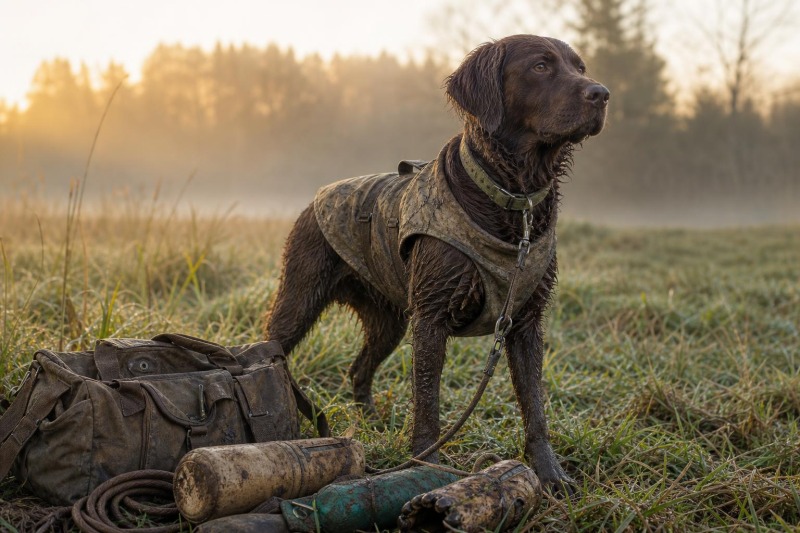
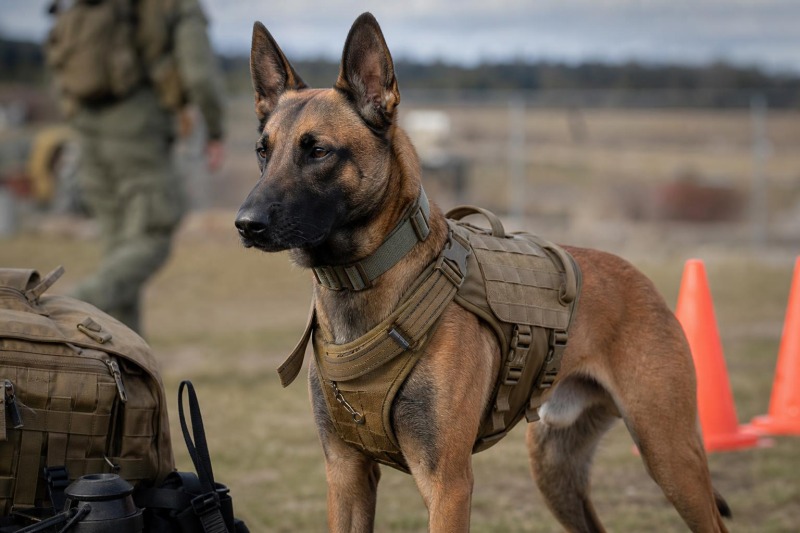
One of the fastest ways to shorten a dog’s usefulness is to ignore the country it works in. Sharp stubble, thorn thickets, ice-rimmed marshes, rocky cuts, and dense brush all punish exposed skin and joints. A quality protective vest can make a tremendous difference, especially for retrievers, hog dogs, and any dog expected to push into rough cover. The best vests balance toughness and freedom of movement. If a vest rubs the shoulders raw or binds the chest, it will create as many problems as it solves.
Cold-weather gear matters too, especially for dogs spending time in water or sitting still between retrieves. A hard-running dog can look invincible in the heat of the moment, then tighten up badly once the work slows and the cold settles in. Protection is not about pampering. It is about reducing wear and preventing avoidable injuries.
Boots, Eye Protection, and Small Gear That Saves Big Trouble
Some handlers scoff at dog boots until they hunt cut corn, frozen crust, lava rock, or burned ground. Then they become believers in a hurry. Not every dog tolerates boots, and not every job requires them, but when foot damage threatens to take a dog out of the field, they are worth serious consideration. Paw injuries are slow, frustrating, and costly in lost work.
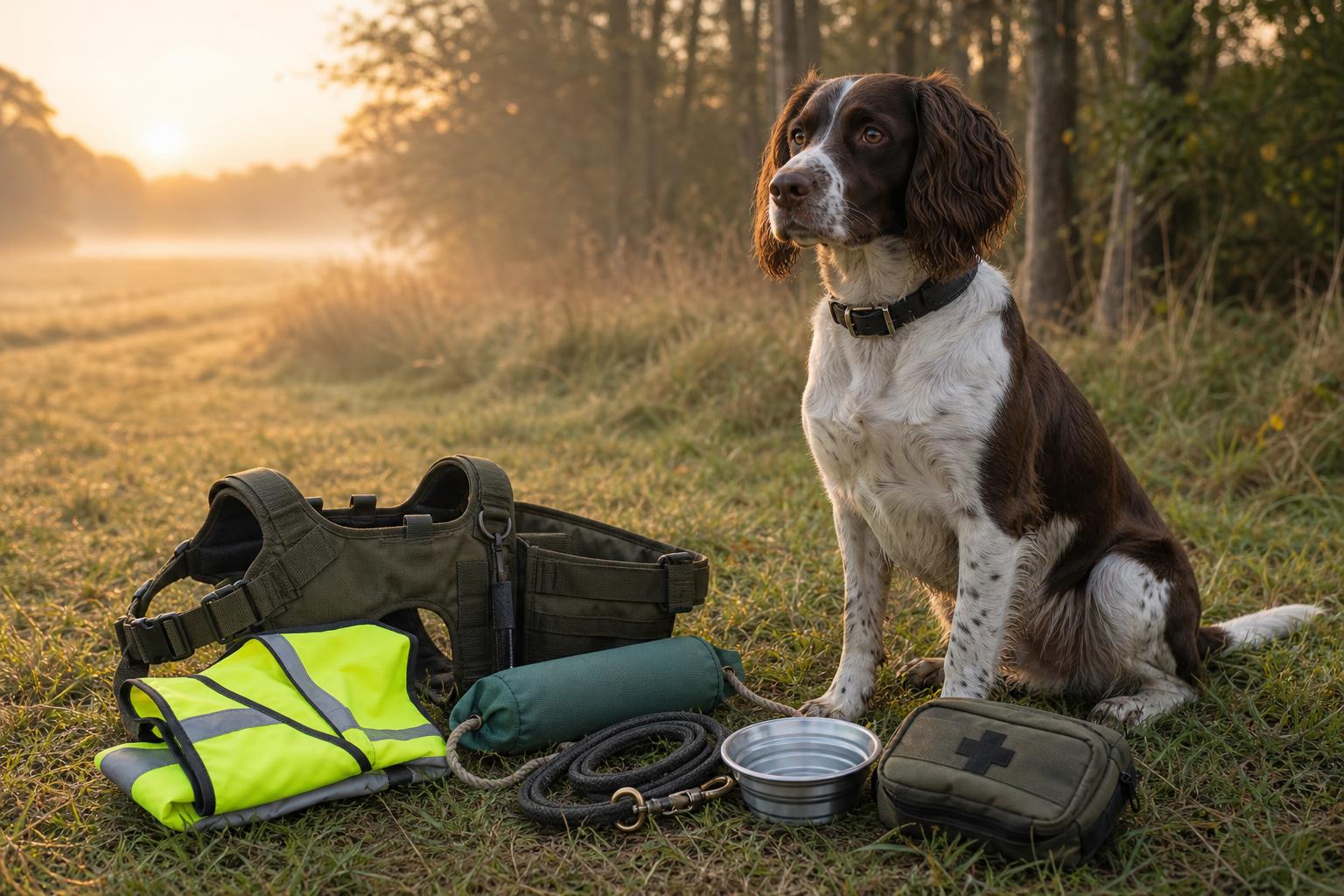
Eye protection is another piece of gear that sees mixed opinions, but in dusty environments or heavy brush it can be useful for select dogs. At the very least, every working dog owner should keep a field first-aid kit close at hand. Tweezers, wraps, antiseptic, hemostatic supplies, saline, and basic wound care items have saved many hunts and many long drives to the vet from becoming worse than they needed to be.
Training Equipment That Builds Reliable Performance
Reliable working dogs are not built on enthusiasm alone. They are shaped through repetition, timing, and consistency, and the right training equipment makes that process cleaner. Dummies, bumpers, scent articles, place boards, whistles, and long lines are not fancy extras. They help create habits that carry over when excitement runs high. A whistle, for example, is one of the simplest and most effective tools a handler can own. In wind, distance, and noise, a whistle command often cuts through where a voice cannot.
If a dog is learning marks, use equipment that encourages confidence and clear retrieves. If the dog is learning steadiness, set up situations where success is likely and correction is fair. Strong gear supports clean repetitions. Cheap gear tends to break at the exact moment a dog is testing boundaries, which is when you need reliability most.
Crates, Kennels, and Transportation Equipment
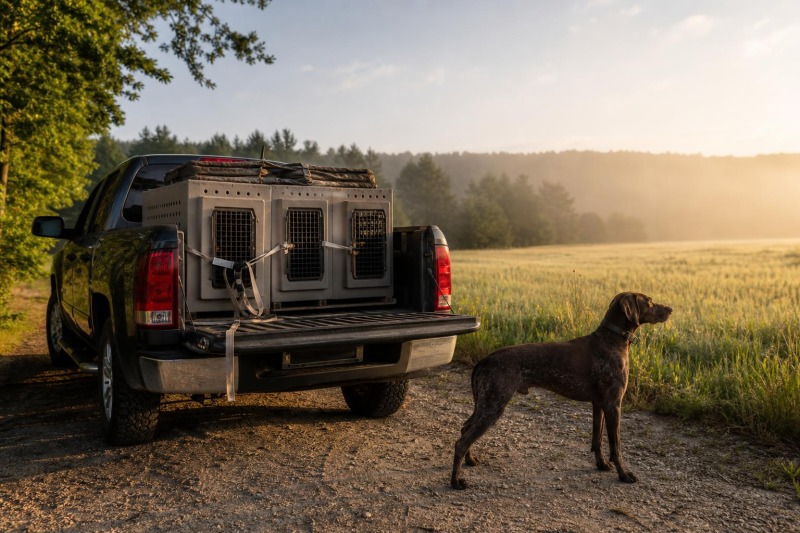
A working dog’s day does not begin and end in the field. Transport and housing are part of the job, and they deserve the same attention as training tools. A sturdy crate is essential equipment for working dogs because it provides safety in travel, structure at events, and a place to settle between sessions. In a truck, a quality crate protects the dog from shifting gear, sudden stops, and unnecessary stress. In camp or at home, it teaches patience and helps establish routine.
Kennel systems should be dry, easy to clean, well-ventilated, and secure. That may not sound glamorous, but poor housing wears dogs down over time. Damp bedding, poor airflow, and muddy footing create skin issues, stiffness, and stress. A dog that rests well works better. That is true for top-tier field dogs and for the farm dog that puts in steady hours every week.
Keeping Water and Temperature in Check
No piece of equipment gets overlooked more often than proper watering gear. A dedicated water container, portable bowl, and the discipline to use them consistently can prevent dehydration and overheating. In hot weather, shade systems, cooling mats, or fans in travel setups are more than conveniences. Heat can unravel a dog fast, and once a dog gets into trouble, recovery is not always simple.
On the other end of the scale, cold-weather transport requires bedding, wind protection, and an understanding that a wet dog in an open setup loses warmth quickly. Many hard dogs will never tell you when conditions are beating them up. It is the handler’s job to notice first.
Feeding, Recovery, and Maintenance Gear
Some of the most important equipment for working dogs never gets photographed beside a tailgate. Feed storage bins, quality bowls, grooming tools, nail maintenance gear, ear-cleaning supplies, and recovery items all matter because they support the dog between work periods. A dog with overgrown nails, neglected ears, poor coat condition, or inconsistent feeding is already behind before the job starts.
Recovery deserves special respect. After a hard hunt or a demanding day of stock work, even a tough dog benefits from simple routines: drying off properly, checking feet and pads, brushing out burrs, inspecting for cuts, and giving the dog a quiet place to settle. Over time, those habits preserve soundness. It is never one dramatic injury that ends most dogs early. More often, it is the pileup of little things no one bothered to manage.
Choosing Equipment That Fits the Dog and the Job
There is no universal gear setup that suits every working dog. A retriever in flooded timber needs different protection than a stock dog covering pasture, and a tracking dog has different demands than a versatile bird dog pushing hedgerows. That said, the principle remains the same: buy for function, fit, and durability. The best equipment disappears into the routine. It works without fuss, holds up under pressure, and helps the dog perform without distraction.
Experience teaches you to be selective. A dog does not need every gadget on the market. It needs the right few pieces, chosen with care. Start with control, safety, transport, and training. Add protection where the terrain or weather demands it. Maintain the dog with the same seriousness you bring to field work. If you do that, you are not just collecting gear—you are building a system that keeps a good dog healthy, manageable, and ready for the next job.
Essential equipment for working dogs is about respect. A working dog gives effort without complaint and loyalty without hesitation. The least a handler can do is provide gear worthy of that kind of partner. Good equipment will not replace training or grit, but when the cover is thick, the water is cold, and daylight is fading, it can make all the difference.