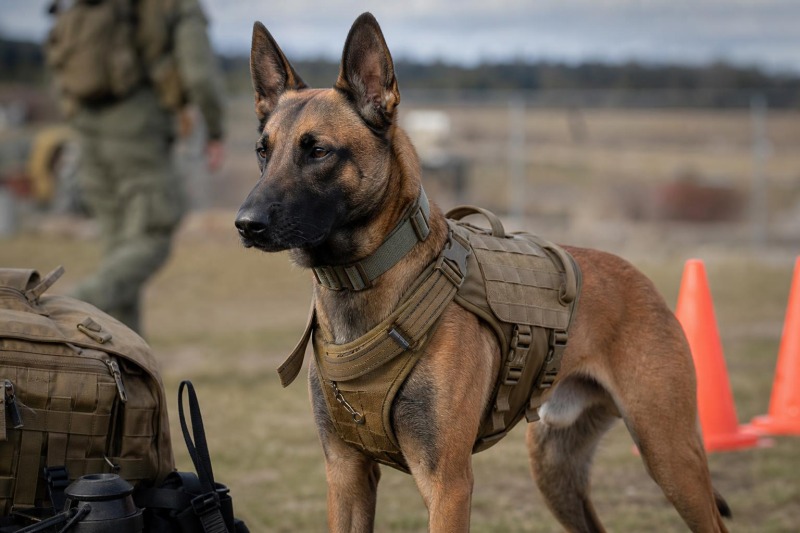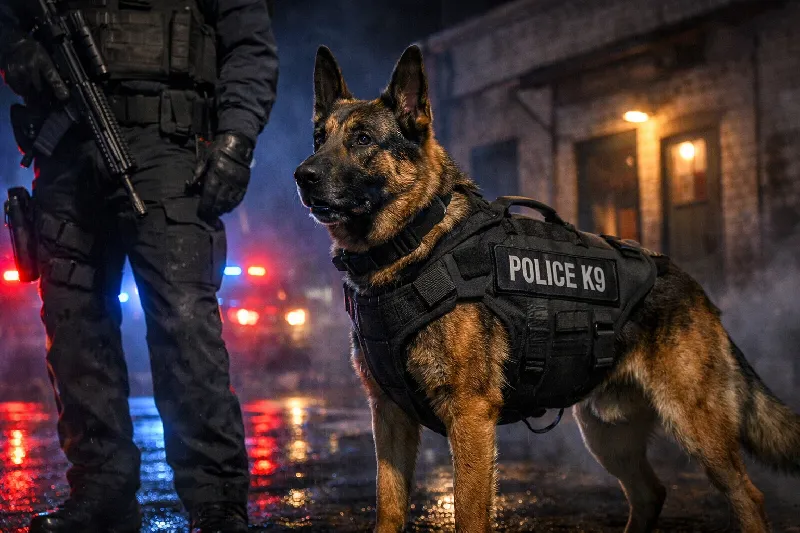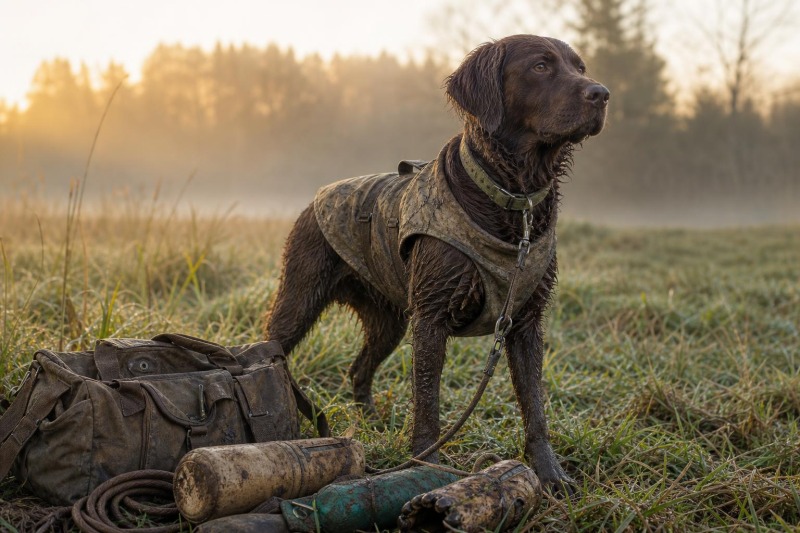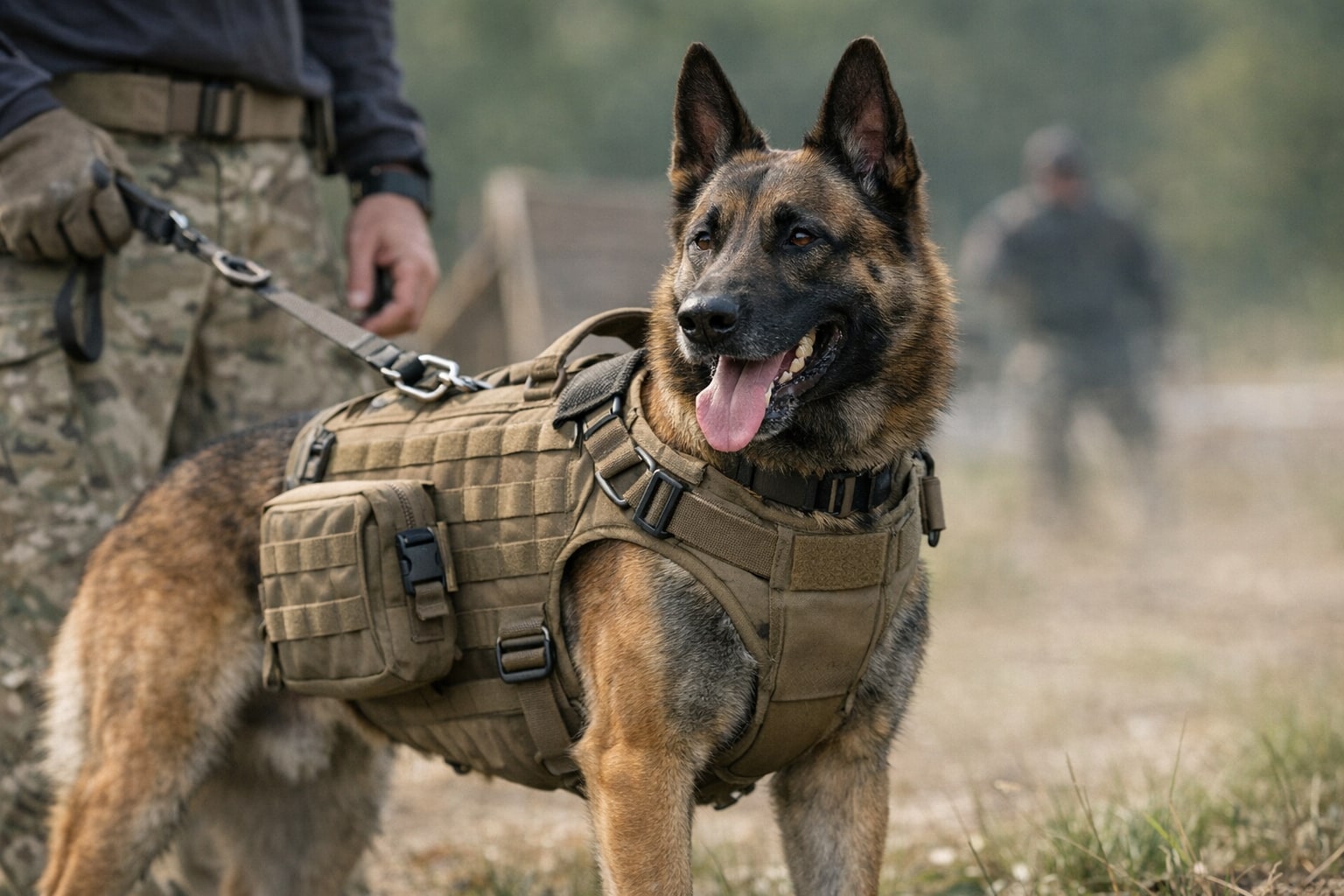
A working-dog vest should carry or protect what the job requires without unnecessarily limiting movement or cooling. Fit and load need to be evaluated on the moving dog. A tactical appearance is a poor substitute for a useful design.
A vest that rides too far forward will rub the shoulder. One with cheap stitching will loosen after a season of hard use. Another may carry too much weight and turn a free-moving dog into a tired one by midmorning. But a well-designed tactical vest, properly fitted and used for the right purpose, can be a real asset. For dog owners interested in working dogs, that difference matters.
What a Working Dog Tactical Vest Is Really Meant to Do
At its best, a working dog tactical vest gives you three things: function, control, and durability. It allows a dog to carry a manageable amount of gear, gives the handler dependable grab points and attachment options, and stands up to hard use in environments that would quickly ruin a flimsy harness. That may sound simple, but those benefits show their value in a hurry when you are covering ground in uneven country or handling a dog around distractions, livestock, vehicles, or other dogs.
For some handlers, the biggest advantage is controlled mobility. A strong top handle can help when loading into a truck, crossing obstacles, or briefly steadying a high-drive dog at a gate or trailhead. For others, the value is in carrying equipment. Water, a compact first-aid supply, waste bags, tracking items, or small training tools can be distributed across the vest so the dog carries part of the load. The trick is keeping that load light enough that it does not interfere with gait, breathing, or endurance.
There is also the matter of visibility and identification. In crowded public places, at events, on a training field, or during travel, patches and clear markings can communicate that a dog is working and should not be approached. In low light, reflective accents can make a dog easier to track visually. That might not seem like much from the porch, but in poor weather or broken country, being able to spot your dog instantly is worth more than most people realize.
Fit Comes Before Features
The single biggest mistake dog owners make with working dog tactical vests is buying based on appearance instead of fit. A vest can have every attachment point and accessory panel in the world, but if it shifts, pinches, rubs, or traps heat, it will become a liability. Good fit starts at the chest and ribcage. The vest should sit securely without restricting the natural movement of the shoulder. That front assembly is where many designs fail. If the cut is too high and tight, it shortens stride and creates rubbing where a working dog needs freedom the most.
A proper vest should stay balanced when the dog turns, climbs, and accelerates. It should not twist sideways when carrying gear. The straps should lie flat, and the buckles should land in places that do not create pressure points.
Why Movement Matters More Than Storage
It is tempting to buy a vest with oversized pouches and all sorts of modular features, especially if you like the idea of a dog carrying useful gear. But movement always comes first. A dog that can move cleanly and work comfortably is more valuable than a dog burdened with extra storage. In most cases, less is more. A few ounces of essential gear carried well beats a heavy load that saps energy and creates hot spots before the day is done.
That is particularly true for athletic breeds and high-drive working dogs. These dogs cover ground with purpose, and they generate heat fast. If the vest is bulky, poorly ventilated, or overloaded, it will show up in performance. Endurance drops. Focus drifts. Recovery takes longer. A handler who understands dogs in the field learns quickly that every piece of gear has a cost. The best tactical vests justify that cost by delivering enough practical benefit to outweigh the burden.
Materials That Hold Up in Real Conditions
Not all rugged-looking gear is actually rugged. A working dog tactical vest should be built from abrasion-resistant material with reinforced stitching in the stress points. Heavy-duty nylon is common for a reason. It dries reasonably well, resists wear, and holds its shape under repeated use. Hardware matters too. Weak buckles, thin webbing, and bargain zippers are often the first points of failure, especially if the dog is active, powerful, or working in thick cover.
Weather resistance is another factor worth attention. A vest does not have to be waterproof to be useful, but it should handle wet grass, rain, mud, and repeated cleaning without breaking down. If you spend time in hot climates, breathability becomes more important than outright toughness. In colder regions, a little extra structure and coverage may be welcome. Terrain should influence your choice. A dog moving through mesquite, briars, rock, and deadfall needs a different level of durability than one doing short urban training sessions.
One thing experienced handlers learn is that seams tell the truth. Fancy branding does not matter much if the stitching begins to open after a month of serious use. When evaluating a vest, look at where load-bearing straps connect, where pouches attach, and where the handle is anchored. That is where field use exposes weak design in a hurry.
When a Tactical Vest Helps and When It Does Not
There is a tendency in the dog world to think more gear means more capability. That is not always true. A working dog tactical vest is useful when it solves a problem. It helps when you need controlled handling, identification, moderate gear carry, or a durable harness system for demanding environments. It may also be useful for confidence in training, particularly with dogs that settle better when they understand they are in work mode.
But there are times when a vest is unnecessary or even counterproductive. In extreme heat, heavy cover, or long-distance work where speed and cooling matter most, a stripped-down setup may be the better choice. For dogs new to gear, introducing a vest too heavily loaded or too early can create resistance. Young dogs especially need time to learn that equipment is just another part of the job. The smartest handlers do not force a vest into every outing. They match the gear to the mission.
Training a Dog to Wear One Properly
A dog should never be thrown straight into a full workday with a brand-new vest and a load in the pouches. Start with the empty vest in a low-pressure setting. Let the dog wear it around the yard, during a short walk, or through a familiar obedience session. Watch for rubbing and any change in movement. Once the dog is comfortable, add a small amount of weight and keep the sessions short.
That means simple work, plenty of praise, and no unnecessary pressure. If the dog is properly introduced, most adjust quickly. They learn that vest on means work ahead, and many seem to settle into the routine with confidence. Still, it is the handler’s job to make sure acceptance is not mistaken for comfort. Dogs will often tolerate bad gear longer than they should.
Choosing the Right Tactical Vest for Your Dog
The right vest depends on the dog, the job, and the environment. A compact, athletic dog used for regular training and trail work may only need a lightweight tactical vest with a strong handle and a couple of slim storage compartments. A larger dog involved in ranch work, tracking, or regular outdoor activity may benefit from a more substantial setup with better support and adjustment points. The key is honest assessment. Do not buy for what looks impressive. Buy for what your dog can wear effectively over time.
Think about the dog’s build first. Deep-chested dogs, broad-shouldered dogs, and leaner working breeds all carry gear differently. Then consider duration. A vest that feels fine for twenty minutes may become a nuisance after two hours. Consider climate, terrain, and your own handling style. If you frequently need to steady, lift, or guide your dog, the handle design deserves close attention. If visibility matters, reflective trim or clear identification panels may matter more than extra pouch space.
And above all, keep your expectations practical. A working dog tactical vest is a support tool, not a shortcut. It does not make an untrained dog steady, and it will not compensate for poor conditioning or weak handling. What it can do is complement a well-prepared dog by adding utility where utility is needed.
Good dog gear disappears once the work begins. If a tactical vest fits right, carries what it should, and holds up under hard use, you stop thinking about the vest and focus on the dog. That is the goal. Whether you are training, traveling, working property, or spending long hours outdoors with a dependable partner, the right vest can make life easier without getting in the way of the dog’s natural ability.
For dog owners interested in working dogs, the best approach is a grounded one. Choose quality over gimmicks. Prioritize fit over storage. Keep the load light, the dog comfortable, and the purpose clear. Do that, and a working dog tactical vest becomes what it ought to be: another reliable piece of field equipment that earns its place every time you buckle it on.