Protective boots can change a dog’s contact with the ground as well as reduce exposure to particular hazards. Fit, traction, retention, and the dog’s movement need to be checked. Introduce them in manageable settings before expecting normal work in them.
Protective boots for working dogs are one of those pieces of gear that some people swear by and others dismiss until hard experience changes their mind. A dog’s feet are durable, but they are not indestructible. When conditions get sharp, hot, frozen, abrasive, or chemically treated, boots can be the difference between finishing the day strong and loading up early.
Why Protective Boots Matter for Working Dogs
The average pet owner may think of dog boots as winter accessories. For a real working dog, they are closer to insurance. Foot injuries are common because working dogs do not pace themselves the way a cautious human would. A driven retriever will launch over rock and ice to make a mark. A bird dog in heavy cover will slice through stalks and briars at full speed. A stock dog may spend long hours on hard-packed ground, broken stone, or frozen manure lots. The feet take every bit of that punishment.
Boots help in several specific ways. They reduce abrasion on rough terrain, protect pads from hot surfaces, shield against ice balls and frostbite, and add a layer between the foot and hidden hazards like barbed wire fragments, sharp shale, crusted snow, and field stubble. In some areas, road salt and de-icing chemicals are an even bigger problem than the cold itself. Those chemicals can burn and crack pads, and once a dog starts licking them off, you have a second issue to manage.
That said, boots are not magic. A poorly fitted boot can rub a dog raw faster than bare ground will. A cheap closure can sling off in the first hundred yards. The right boot has to match the dog, the terrain, and the work.
When a Working Dog Really Needs Boots
Some dogs need boots more often than others. Thin-padded dogs, older dogs, dogs recovering from foot injuries, and dogs working unfamiliar country often benefit the most. If your dog is hunting cactus flats one week and frozen marsh the next, foot protection deserves a place in the truck.
Late-season bird hunting is where boots often earn their keep. Snow crust can cut like a knife, especially when the top layer breaks under every stride. Add ice in the webbing and a long-running dog can go from hard charging to hobbling in an hour.
Boots are also useful after a minor injury. If a dog has a healing pad tear or a tender spot that does not justify full rest, a protective boot may help during light work or controlled exercise. That does not replace proper recovery, but it can keep dirt and abrasion off the area while you ease the dog back into shape.
Terrain and Weather Make the Decision
If you are wondering whether your dog needs boots, look first at the ground, then at the weather, then at the dog. Rocky ridges, frozen ruts, thorn country, and sharp crop residue all raise the risk. Extreme heat and deep cold do too. The dog’s level of drive matters because the hard-going ones are usually the least likely to protect themselves. They will run through pain until the damage is done.
Choosing the Right Protective Boots for Working Dogs
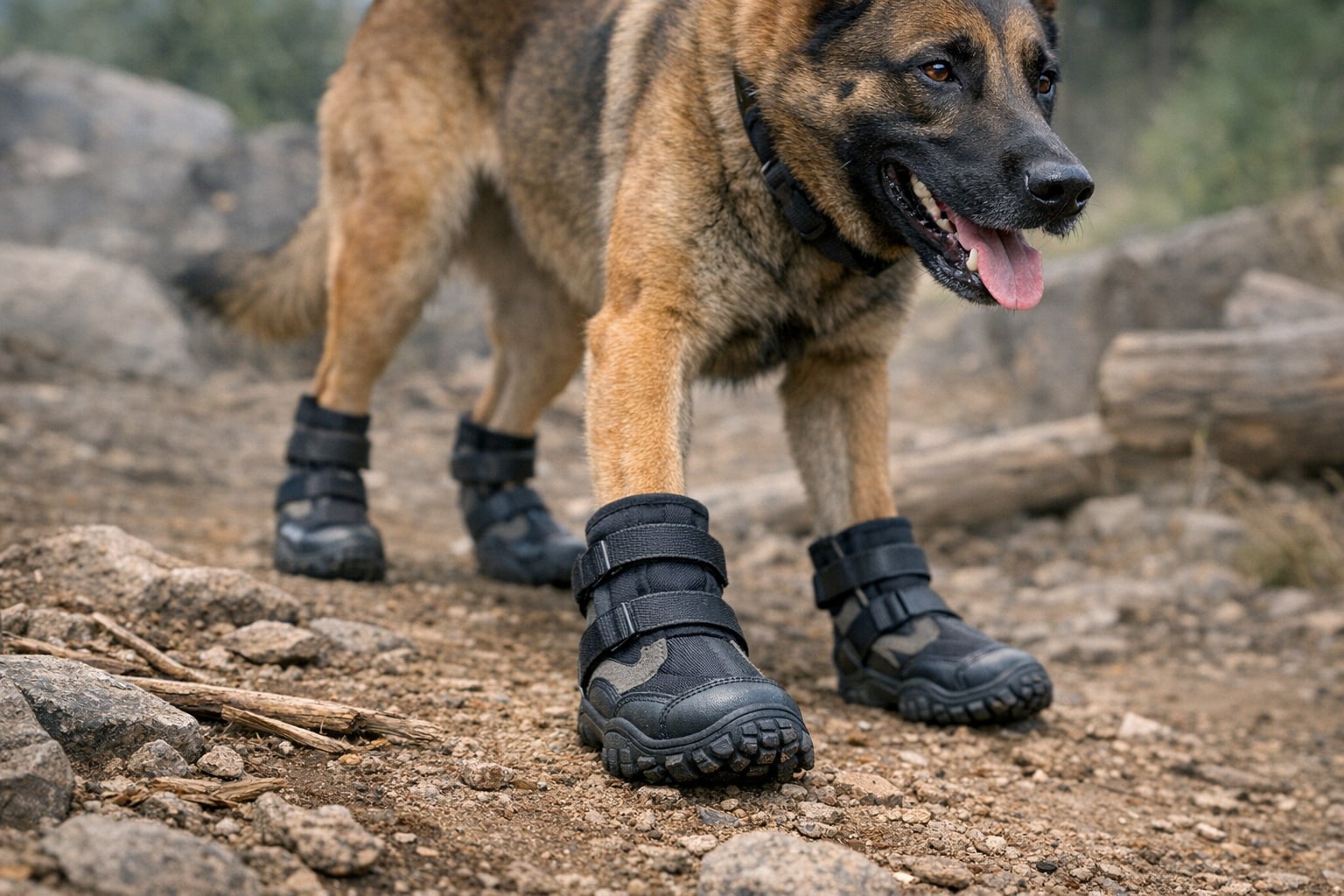
Fit comes first. More than color, brand, or marketing claims, fit determines whether a boot protects or causes problems. A boot should be snug enough to stay on through hard movement but not so tight that it restricts circulation or changes gait. Most good manufacturers size by paw width, and that measurement matters more than guesswork. Measure when the dog is standing, with weight on the foot, because the paw spreads under load.
Material matters next. For cold and wet conditions, many handlers prefer boots with water-resistant uppers and secure closures that hold even when soaked. For rough, dry ground, abrasion-resistant soles and breathable uppers are often better. Heavy boots offer more protection but can feel clumsy on a dog covering serious miles. Lightweight boots move better but may not last as long in rock or thorn country.
Pay close attention to the closure system. A boot that stays on in the yard can still disappear in cattails, mud, or deep snow. Wide hook-and-loop straps, well-placed cuffs, and a design that grips above the paw rather than just around it usually perform better. Some handlers add athletic tape over the top for difficult conditions, though that should be done carefully to avoid restricting blood flow.
Front Feet and Rear Feet Are Not Always the Same
Many people do not realize that front paws are often larger than rear paws. If you buy one size for all four feet without checking, you may get a poor fit on half the dog. On a hard-running working dog, that mismatch shows up quickly. The rear boots twist, the front boots pinch, or one comes off every time the dog hits heavy cover. Measure all four feet if the manufacturer allows mixed sizing.
How to Train a Working Dog to Wear Boots
The first time most dogs wear boots, they act like they’ve forgotten how legs work. That is normal. The mistake is waiting until opening day or the first snowstorm to introduce them. Put the boots on at home, let the dog walk around for a few minutes, and keep the session calm and short. Then repeat it. After that, move to the yard, then light exercise, and only then into real work.
Confident dogs usually adapt fast if the boots fit properly. If a dog is high stepping or kicking oddly after several sessions, something is wrong. Check fit, strap placement, and whether the boot is rubbing around the dewclaw area or pressing the toes too tightly together. Boots should protect the natural stride, not fight it.
If the gait looks free and even, you are close. If he shortens stride, paddles outward, or keeps stopping to bite at a boot, you need to adjust before you head afield.
Common Mistakes Dog Owners Make
The biggest mistake is using boots as a substitute for foot care. Even the best boot cannot fix nails left too long, pads already cracked, or burrs packed between the toes. Working dogs need regular paw inspection, nail trimming, pad conditioning when appropriate, and a quick look-over after every hard outing. A boot works best on a healthy foot.
The second mistake is leaving boots on too long without checking. Sand, seeds, moisture, and tiny debris can work inside over the course of a day. On a hunt break, pull the boots, inspect the feet, and put them back on if needed. That simple habit catches trouble early.
The third mistake is buying the cheapest pair available and expecting them to perform under real working conditions. Some budget boots are fine for sidewalks. That does not mean they belong on a duck dog breaking ice or a bird dog running four hours through cut milo.
Do All Working Dogs Need Protective Boots?
No, and pretending otherwise does not help anyone. Some dogs with tough feet, ideal conditioning, and the right terrain may rarely need them. A kennel full of experienced hunting dogs can still include one dog that goes barefoot almost all season and another that tears up pads every year. Good handling means paying attention to the individual rather than forcing one answer on every dog.
What matters is knowing when boots are a useful tool and when they are unnecessary. They are not a fashion accessory, and they are not a sign of softness. They are practical gear for practical people who want their dogs sound, comfortable, and able to keep doing the work they were bred to do.
A working dog will always give you more than he should. That is his nature. Ours is to notice the conditions, prepare for them, and protect the dog before grit turns into injury. Protective boots for working dogs are not needed every day, but on the right day they can save a hunt, preserve a season, and spare a good dog a lot of pain.
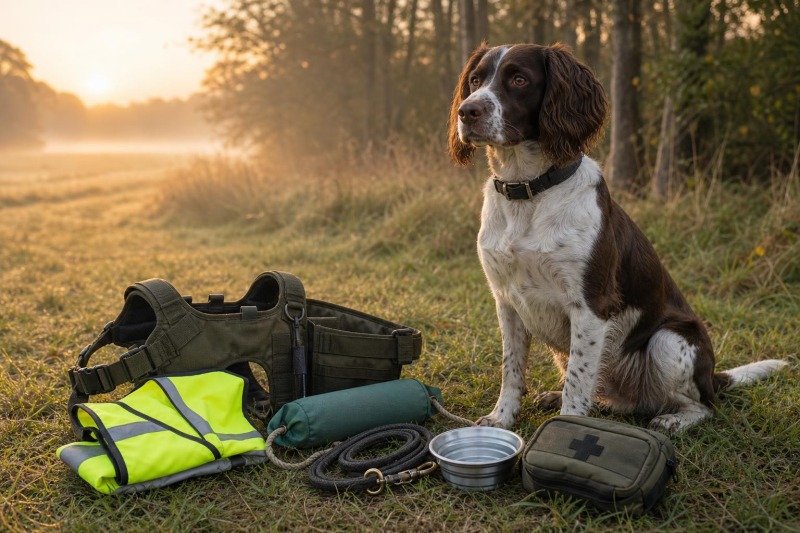
If you run dogs long enough, you learn that small gear decisions often carry the biggest consequences. A spare lead, clean water, a compact first-aid kit, and a solid pair of boots all belong in the same category. You hope you will not need them. Then one cold morning or one brutal stretch of ground reminds you exactly why they ride in the truck.