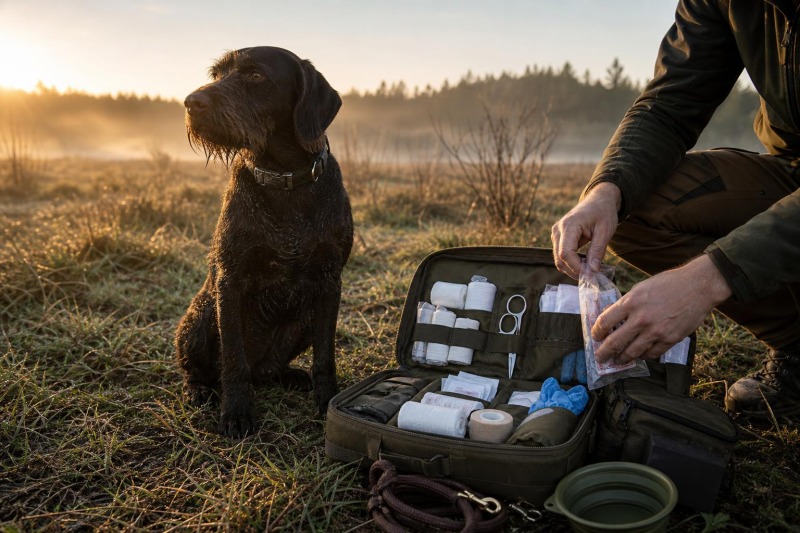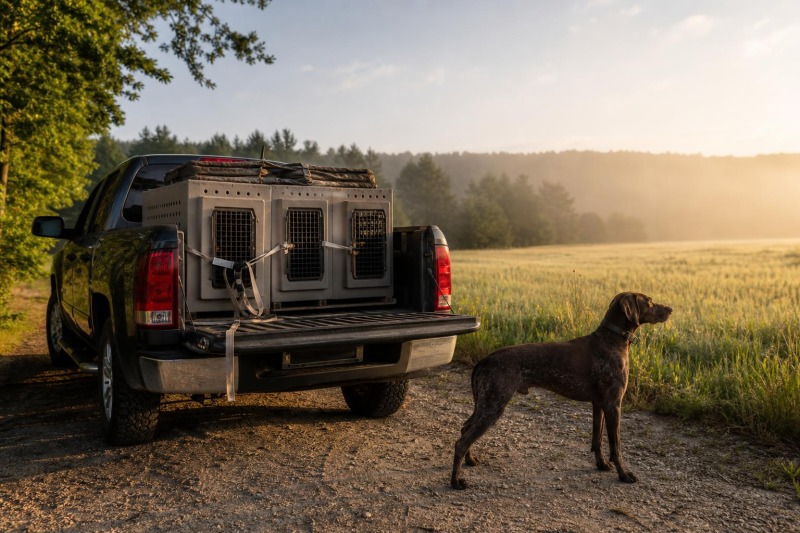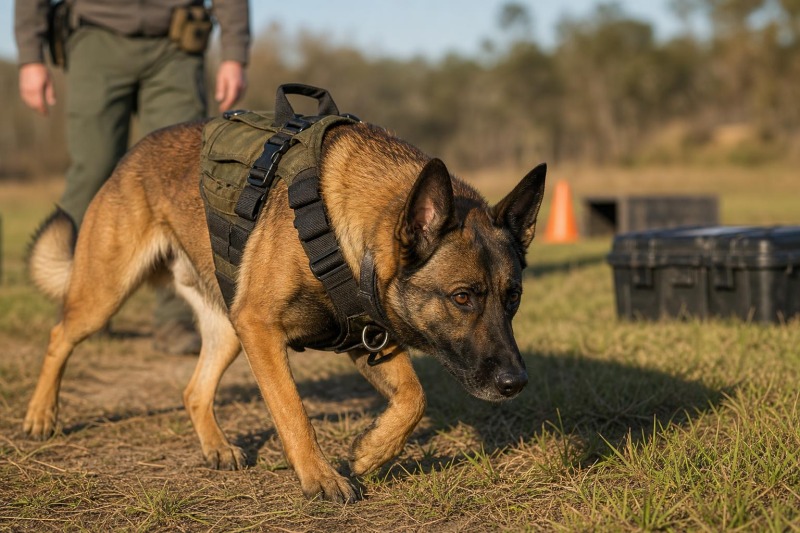
Hot-weather preparation starts with the workload, the conditions, and the dog’s ability to recover. Cooling equipment may have a role, but it needs to be understood within that wider plan. Training and operational decisions should not depend on a product’s claims alone.
Cooling gear for hot weather work has become more common in recent years, and some of it is genuinely useful. Some of it, though, gets sold like a miracle cure when it is really just one small tool in a larger heat-management plan. Good handlers know the difference. Gear can help a dog work safer, recover faster, and stay more comfortable, but it cannot erase poor judgment. If you push a dog too long in bad heat, no vest, mat, or fan will fix that mistake.
That second picture stays with you. The best approach is always prevention, and the right cooling equipment is part of that.
Why hot weather work is hard on working dogs
Dogs do not cool themselves the way we do. We sweat over most of our body. They rely mainly on panting, limited sweating through their paw pads, and heat exchange through areas with less insulation. Add drive, adrenaline, thick cover, high humidity, and repeated retrieves or searches, and body heat starts stacking up fast. The more excited the dog, the less likely it is to regulate itself well. A serious working dog often will not quit on its own, which is exactly why the handler has to think ahead.
Heavy-coated breeds, dark-colored dogs, brachycephalic dogs, older dogs, overweight dogs, and young dogs still building condition can all struggle sooner. Even fit dogs can get into trouble when heat and humidity combine. That is why cooling gear matters most as support for a broader routine that includes timing, hydration, conditioning, rest, shade, and close observation.
Signs your dog is overheating
Before getting into gear, it is worth saying plainly that no equipment matters if you miss the warning signs. Excessive panting, frantic breathing, glazed eyes, slowing down, stumbling, confusion, reluctance to continue, deep red or very pale gums, thick ropey saliva, and delayed recovery all deserve attention. If a dog starts looking mentally disconnected from the job, that is a bad sign. Do not wait for collapse before acting.
Cooling vests: useful when used right
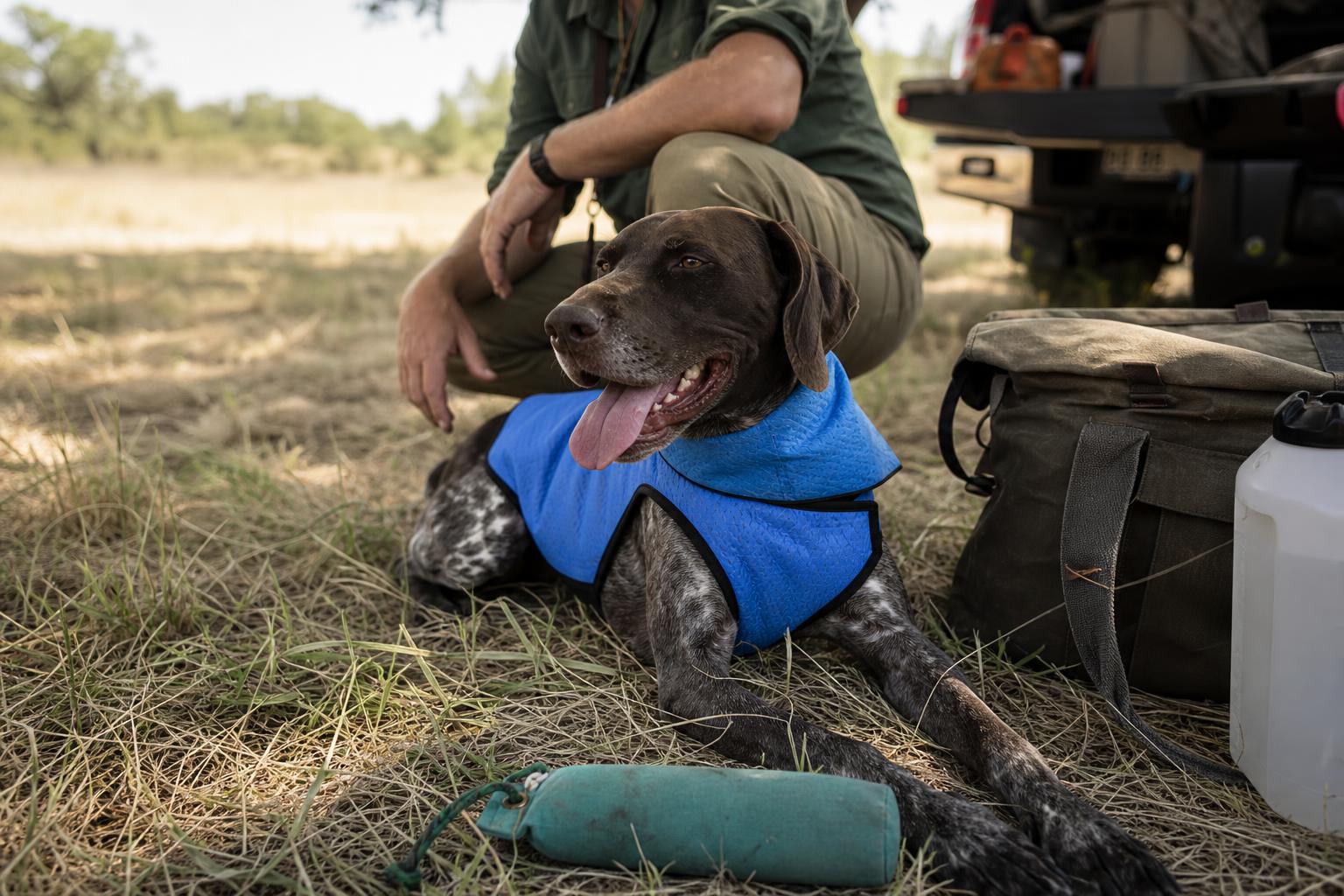
Cooling vests are probably the first thing most people think of, and a good one can absolutely help. The better models use evaporative cooling. You soak the vest, wring it out, and let air movement create a cooling effect around the dog’s core. In dry heat, these can work surprisingly well. In sticky humidity, they still offer some benefit, but not nearly as much. That is a point many advertisements gloss over.
A vest should fit snugly without restricting the shoulders or rubbing under the front legs. If it shifts, binds, or traps too much heat because the material is heavy and poorly ventilated, you are defeating the purpose. A dog ranging hard in cover does not need extra bulk hanging on it.
There is another side to vests, though. They help most before the dog reaches a dangerous temperature, not after. Think of them as a way to slow heat buildup during moderate work or while a dog is staged and waiting its turn. They are less effective as rescue equipment for a dog already overheating badly.
Cooling collars and targeted cooling gear
Cooling collars are a smaller piece of the puzzle, but they have their place. Since major blood vessels run through the neck, these products are designed to cool a high-exchange area without covering too much of the dog’s body. They are not magic, but for dogs doing shorter sessions, obedience work, tracking, or waiting between drills, they can be handy. They are also lighter and less intrusive than a full vest.
Some handlers like bandanas with cooling crystals or absorbent material. In real work, especially under a hard sun, the best targeted cooling still comes from water applied to the right places and enough downtime to let the dog recover.
Cooling mats, elevated cots, and shaded recovery setups
One of the most overlooked pieces of cooling gear is the recovery station. Folks spend money on a vest and then leave the dog standing on hot dirt beside a truck box. That makes no sense. If you are serious about hot weather work, give the dog a cool place to come down between efforts.
Cooling mats can help in kennels, garages, training grounds, and truck setups, especially when paired with shade and airflow. Gel-based mats stay cooler than the surrounding air for a while, and breathable elevated cots allow air movement underneath the dog’s body. Cots are often the better choice outdoors because they do not trap heat the way some surfaces do, and they keep the dog off sun-baked ground.
Context matters. Cooling gear works best when the whole setup supports it.
Fans and crate ventilation
Portable fans are worth their weight in gold during summer training days. Air movement helps panting do its job. For dogs resting in a crate, proper ventilation is essential, and battery-powered crate fans can make a noticeable difference. That said, never let a fan give you false confidence about leaving a dog too long in a hot vehicle or enclosed box. Ventilation helps; it does not make dangerous temperatures safe.
Cold water, cooling towels, and practical field methods
Some of the best cooling tools are simple. Clean water, a small tub, cooling towels, and access to shade beat gimmicks every time. When a dog comes in hot, wet the underside, groin, chest, armpits, and feet rather than just splashing the back. A lot of handlers dump water over the topline and think they have solved the issue. Sometimes that helps, but targeting heat-exchange areas is usually more effective.
Cooling towels are useful for this kind of quick field management. Keep a few in a cooler, not ice-cold enough to shock the dog, just cool enough to assist recovery. Ice water sounds appealing to people, but extreme cold is not always the best answer. Steady, controlled cooling works better than panic measures.
If your dog has access to a safe pond, creek, or stock tank and knows how to settle in it briefly, that can be one of the best natural cooling options available. Just be sure the water is clean and safe, especially in late summer when stagnant water can carry risks.
What gear is worth buying first
A durable water system, a shaded rest area, an elevated cot, and a portable fan will often do more for a working dog than trendy gear bought on impulse. After that, a well-fitted cooling vest is worth considering if your dog works in open country, training rotations, or staged events where there is enough downtime for evaporative cooling to matter.
The right choice depends on your dog, your climate, and the kind of work being done. A retriever running multiple marks in humid weather has different needs than a patrol dog waiting in a vehicle setup or a pointing dog quartering dry prairie. Match the gear to the job, not the marketing photos.
Cooling gear does not replace handling judgment
This is the part old hands come back to again and again. The best cooling strategy is still knowing when to stop. Start earlier in the day. Shorten sessions. Rotate dogs. Use water before the dog looks stressed. Give longer breaks than you think you need. Pay attention to ground temperature, humidity, and how quickly the dog recovers after each effort.
A lot of heat trouble starts because the dog’s desire outruns the handler’s common sense. Working dogs are built to give everything they have. That is what we admire in them. It is also what puts them at risk when the weather turns harsh. Good gear can buy you a margin of safety, but only good decisions keep that margin from disappearing.
Cooling gear for hot weather work is worth having when it supports a thoughtful routine. A cooling vest, fan, cot, crate setup, and water plan can help a dog stay sharper and safer through summer training and field work. But the real skill is learning to read the dog in front of you. If you do that well, the gear becomes more effective because it is used at the right time, in the right way, before the situation turns serious.
That is how experienced handlers keep good dogs going through the hot months. Not by trusting gadgets alone, but by combining solid equipment with timing, restraint, and a close eye on the animal that is giving you its all.