Detection Dog Harnesses: More Than Just Gear
A good detection dog harness is one of those pieces of equipment you do not fully appreciate until you have watched a dog work hard in a poor one. It does not take long before performance slips. A dog that should be driving into odor starts moving cautiously, and a dog that should be hunting with confidence begins carrying discomfort into every search.
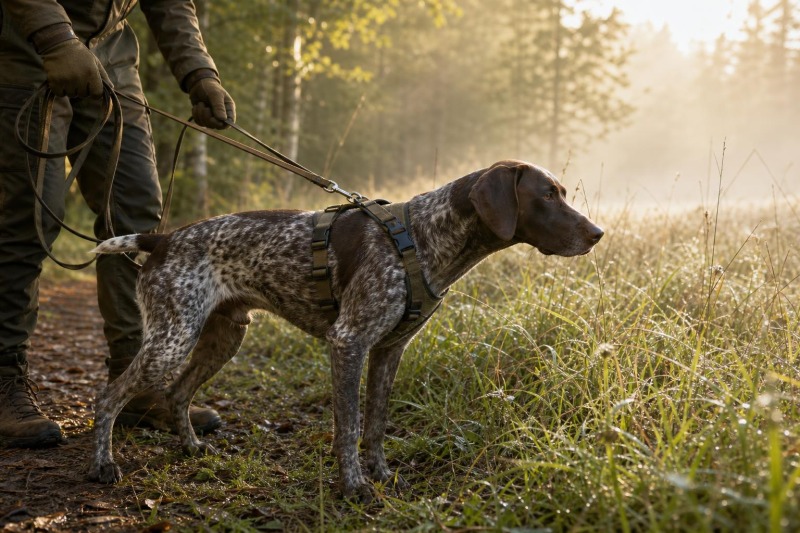
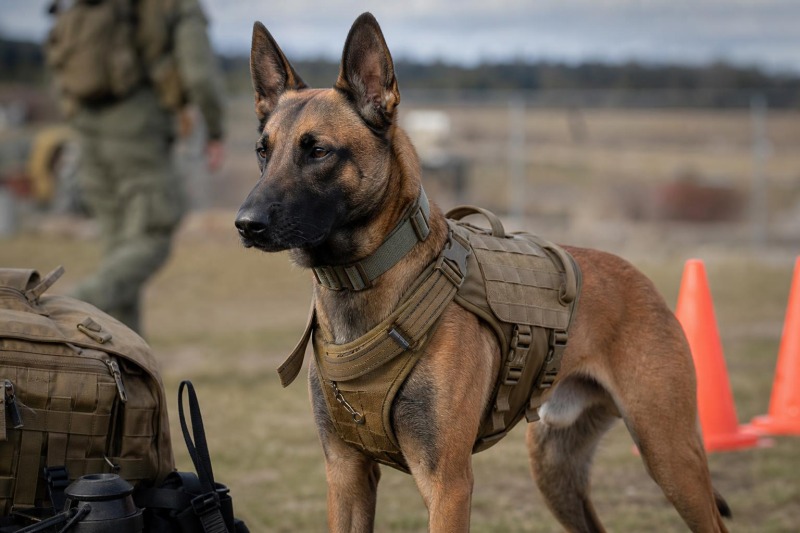
That is why choosing the right detection dog harness matters. For a working dog, harness fit is not a fashion decision and it is not a casual accessory. It is part of the dog’s working system. The best harness allows free movement, gives the handler practical control, and stays secure without causing pressure where it should not. Whether you own a working-line Labrador, a driven German Shepherd, a Dutch Shepherd, a Malinois, or any other dog involved in scent work, the harness should support the job rather than interfere with it.
What a Detection Dog Harness Needs to Do
At first glance, many harnesses look similar. Straps, buckles, a handle, and a place to clip a lead can make one model look close enough to another. In the field, though, the differences show up fast. A proper detection dog harness should let the dog move naturally through the shoulder and chest. Detection work often demands repeated turns, quick changes in pace, climbing over obstacles, and steady searching over long stretches of time. Restrict the dog’s front assembly and you choke off efficiency, stamina, and confidence.
The harness also needs to stay stable. A loose or badly balanced harness slides to one side, twists under the ribcage, or rides up into the throat. That is not just annoying. It creates friction, disrupts the dog’s rhythm, and can make lead communication messy. A handler should be able to guide and manage the dog without constantly stopping to readjust gear.
Durability matters too. Working dogs do not live easy lives. They hit doorways hard, push through cover, drag through debris, and work in heat, dust, rain, and cold. A detection harness should be built with stitching, hardware, and materials that hold up under real use, not just showroom handling.
Comfort Drives Performance
Folks sometimes separate comfort from performance like they are two different conversations. In truth, they are tied together. A comfortable dog works cleaner and longer. If the harness lays well on the body and avoids pressure points, the dog can focus on odor instead of equipment. You will often see better posture, smoother searching, and more committed movement in a dog that is not fighting its own gear.
A green dog already has plenty to think about. New environments, new search patterns, and building confidence are enough on their own. Add a stiff, rubbing, poorly fitted harness and you can sour a dog on parts of the work without meaning to. Good gear does not train the dog, but bad gear can surely complicate training.
How to Choose the Right Detection Dog Harness
When selecting a harness, start with fit before features. A detection dog harness should sit clear of the throat and not choke upward when tension is applied. The chest piece should rest in a way that avoids crowding the shoulder joint, and the straps behind the front legs should have enough room to prevent rubbing while still staying secure. If the harness leaves hair wear, red skin, or obvious movement marks after a search, that is a sign something is off.
The dog’s build plays a big role. A deep-chested shepherd and a broader Labrador will not carry the same harness the same way. Some dogs are narrow through the front, others are wide through the ribcage, and some have enough coat to hide a poor fit until irritation shows up later. Measure carefully and adjust with the dog standing naturally, not hunched or pulling.
Look at padding with a practical eye. Enough padding can improve comfort, especially over the chest and sternum, but too much bulk can trap heat and create unnecessary weight. A detection dog often works at a high level of concentration, and in warm conditions every bit of excess heat matters. Breathable materials and a design that does not smother the body are worth more than thick padding that only looks impressive on the rack.
Handle, Attachment Points, and Control
A well-placed handle can be useful, especially when helping a dog in and out of vehicles, over obstacles, or through tight spaces. Still, the handle should not be so large or loose that it snags easily. In detection work, clean movement is important. Anything flopping around can become a nuisance.
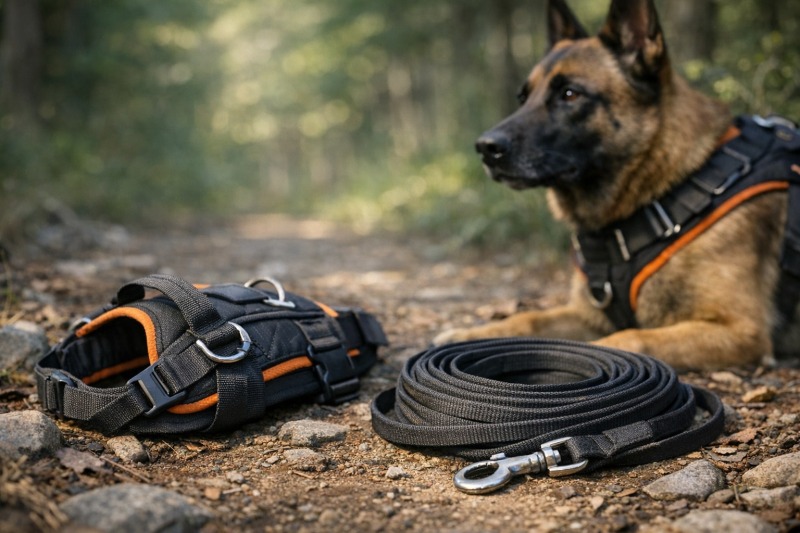
Lead attachment points deserve attention as well. Some handlers prefer a back clip for general searching, while others like additional options depending on the environment and training approach. The key is not having the most attachment points. The key is having secure hardware positioned where it supports the dog’s natural movement and the handler’s style of control.
If your dog works around crowds, slick floors, or cluttered sites, a harness that helps you manage the dog without overhandling can make a real difference. Good control should feel steady and quiet, not like steering a load that never balances.
Field Conditions Change What Works Best
A harness that feels fine during a short training session in a clean building may prove disappointing in rough ground or during a long day. Detection dogs are often asked to adapt quickly. One hour they are working around vehicles on warm asphalt, the next they are quartering the edge of a property with weeds catching every strap. Gear needs to match that reality.
In wet conditions, waterlogged materials get heavy and slow to dry. In dusty places, grit settles into seams and creates abrasion. In cold weather, stiff hardware and thick layers can change the fit enough to matter. A serious handler thinks beyond the first impression and asks how the harness performs after repeated use in mixed conditions.
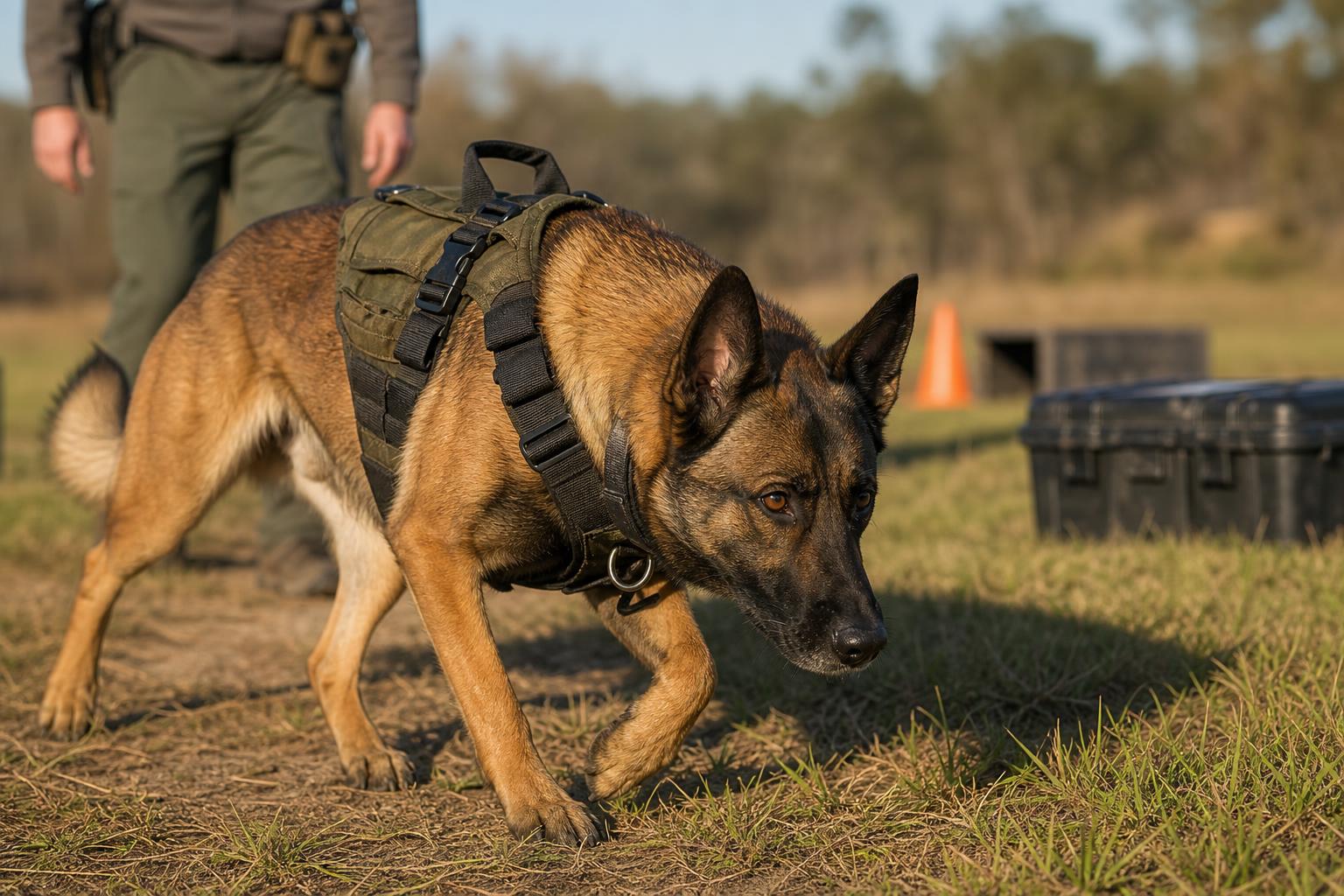
Walk a dog through a search pattern, send him around cover, load and unload him from the truck, and watch what shifts. Pay attention when he drops his head into odor, when he stretches to investigate source, and when he turns sharply at the end of the lead. The dog will tell you plenty if you know what to look for.
Signs a Harness Is Hurting the Work
Not every problem shows up as obvious soreness. Sometimes the first sign is a dog that forges less freely. Sometimes it is a hesitation entering tight areas, an unusual amount of scratching afterward, or a change in how the dog carries himself after twenty minutes of searching. Handlers sometimes blame training when the harness is the real culprit.
Watch for shifting, chafing behind the elbows, restricted reach in the front legs, coughing from throat pressure, or a dog that repeatedly checks back as if something feels wrong. Small issues become bigger ones if they are ignored. Working dogs give a lot, and it is our job to keep gear from becoming a needless burden.
Training, Transition, and Maintenance
Even the right detection dog harness should be introduced properly. Some dogs accept new equipment without a second thought, while others notice every little change. Let the dog wear the harness during easy, positive sessions before expecting full work. Build familiarity so the harness becomes part of the routine instead of a distraction.
Maintenance is simple but important. Dirt, hair, and moisture break down materials over time. Buckles should be checked, stitching inspected, and contact areas kept clean. A harness used day after day in hard conditions can fail quietly if nobody looks it over. That is not just inconvenient. It can be unsafe.
It also pays to reassess fit over time. Young dogs mature, conditioned dogs change shape through a season, and coat length can alter how a harness sits. A harness that fit well six months ago may need adjustment now. Good handlers stay ahead of that instead of waiting for rubbing or poor performance to announce the issue.
Choosing for the Dog in Front of You
There is no single harness that is perfect for every detection dog. That is the plain truth. The best choice depends on the dog’s build, the kind of searches you run, the climate you work in, and how you handle on lead. Marketing tends to promise one answer for all dogs, but experience says otherwise.
If you keep your focus on movement, comfort, security, and real-world function, you will narrow the field quickly. Choose a detection dog harness that allows the dog to hunt hard, breathe freely, and work without irritation. The gear should disappear into the job. When it does, the dog can give you what you actually want: honest effort, clear behavior, and dependable work when it counts.
Good equipment respects the dog. Any dog owner interested in working dogs should remember that. A detection dog is an athlete with a nose for a purpose, and the harness on his body ought to help him perform like one. If you get that part right, you are not just buying gear. You are removing one more obstacle between the dog and the work he was bred and trained to do.