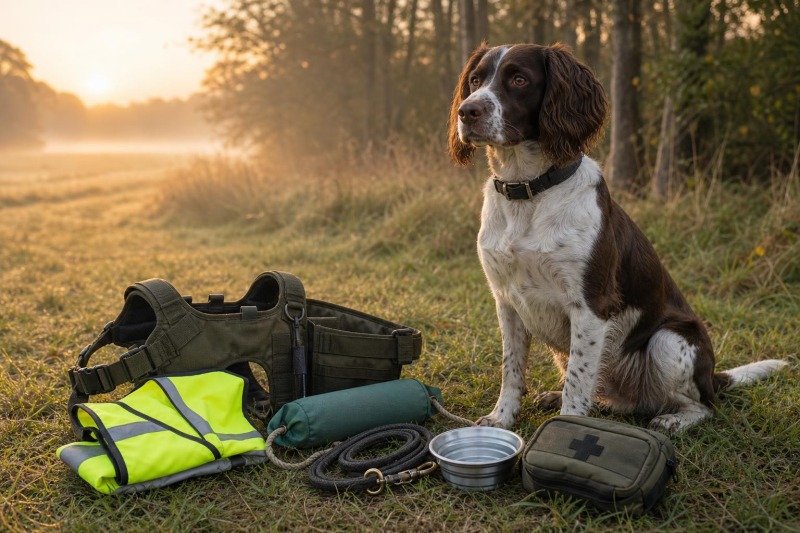
A first aid kit should support immediate protection and safe transport while appropriate veterinary help is arranged. Pack supplies the handler understands, keep them accessible, and check them regularly. The kit needs to fit the likely hazards and distance from help.
Working dogs give us everything they have. They crash through cattails, push into thorn cover, swim cold water, cross rock, brush, ice, and stubble without hesitation. Because of that, handlers owe them preparation. A well-built first aid kit for working dogs does two things. First, it helps you manage minor injuries before they become major ones. Second, it buys you time in a true emergency until you can reach a veterinarian. That distinction matters. A field kit is not a replacement for professional care, but it can be the difference between a manageable problem and a dangerous one.
Why a Working Dog Needs a Dedicated First Aid Kit
Plenty of people toss a few gauze pads and some tape in a side pocket and call it good. That might be enough for a short walk near town, but a serious working dog deserves a kit built for the country he hunts or works in. A retriever running flooded timber faces different risks than a pointing dog pounding dry cactus ground, and both face different hazards than a stock dog spending long days around wire, hooves, and machinery.
Dogs are tough, often too tough for their own good. They do not always tell you when something is wrong. That is one reason a first aid kit matters so much. It forces a handler to stop, look closely, and take care of the dog before pride or excitement pushes the day too far.
What to Keep in First Aid Kits for Working Dogs
A useful kit starts with the basics, but the best ones are built with the field in mind. You want wound care supplies, tools for removing hazards, items for protecting the dog on the way out, and a few practical things that make treatment easier when conditions are poor and your hands are cold.
Wound Care Essentials
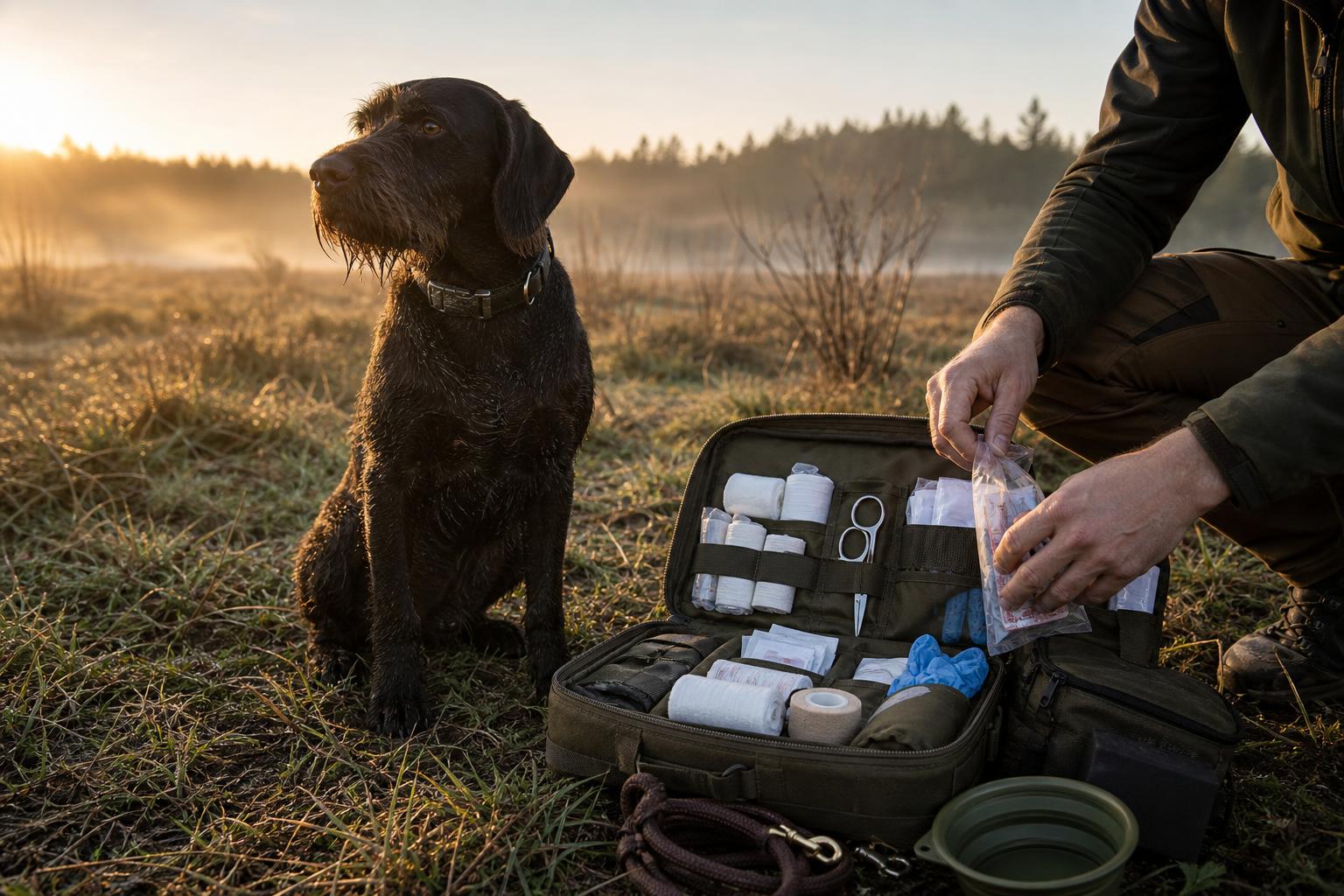
The heart of the kit is for cleaning and covering injuries. Sterile gauze pads, non-stick wound dressings, rolled gauze, self-adhering bandage wrap, and medical tape all earn their keep. Saline solution is worth packing because it allows you to flush dirt, seeds, and debris from a wound without doing more damage. An antiseptic made for pet-safe wound cleaning is another good piece of insurance. In the field, your first goal is not perfection. It is reducing contamination, controlling bleeding, and protecting the injury until proper treatment is available.
For cuts on ears, legs, or the chest, pressure and a clean dressing go a long way. Working dogs can reopen a wound quickly, so secure bandaging matters. It helps dry a dog before treatment, gives you something to press against a bleeding wound, and can serve as padding if you need to improvise.
Paw and Pad Protection
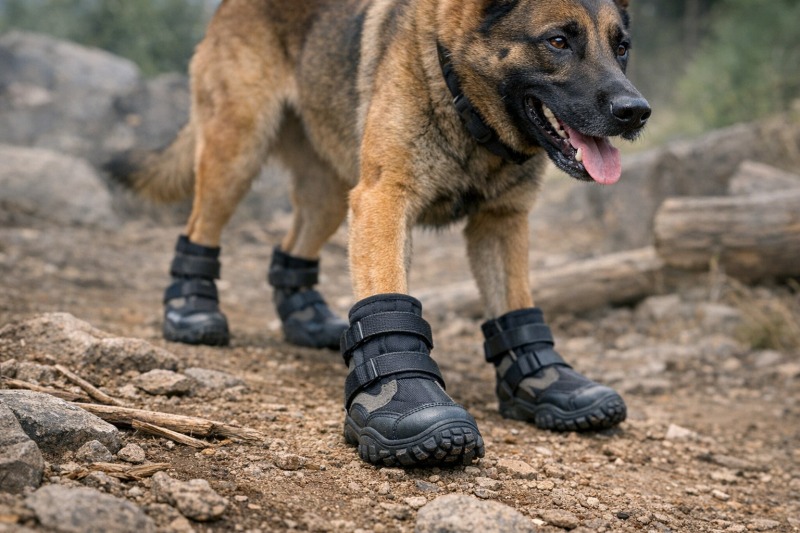
Hard-running dogs often break down at the feet first. Torn pads, split webbing, and worn nails can end a day in a hurry. Booties belong in every working dog first aid kit, even if your dog has never needed them before. One rocky draw, one frozen crust, or one patch of hidden glass can change that. Add vet wrap, a little padding, and blunt-tip scissors, and you can usually stabilize a paw well enough to get the dog out safely.
If you hunt big country, inspect feet often instead of waiting until the dog is obviously lame. Many pad injuries start small. Catching them early keeps a tough dog from grinding a minor problem into a serious one.
Tools for the Unexpected
Tweezers, hemostats, a tick remover, and a small flashlight belong in the kit. So do disposable gloves. If you spend time in porcupine country, this is where experience matters: know your plan before the dog gets full of quills. The old campfire stories about quick fixes are not always wise. Quills in the mouth, eyes, throat, or deep in the face deserve serious caution and often a fast trip to the vet. A muzzle is another item many handlers skip, but even the steadiest dog can bite when frightened or in pain.
A digital thermometer can also be useful, especially in hot weather or after hard work. Heat stress can creep up on a dog faster than many handlers realize, particularly in humid conditions or when a driven dog refuses to slow himself down.
Preparing for Heat, Cold, and Exhaustion
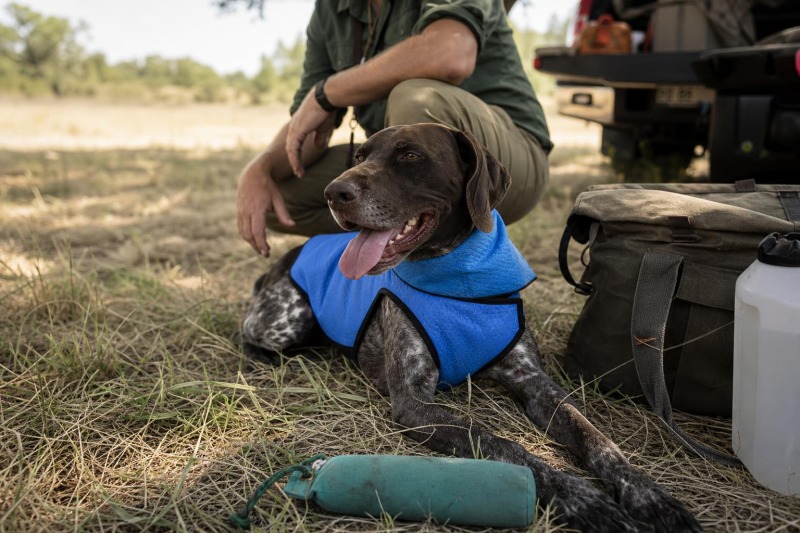
Not every emergency bleeds. Some of the most dangerous ones build quietly. Heat exhaustion and dehydration can hit hard during early season hunts, training days, and long retrieves in warm water. Your kit should include water, an extra collapsible bowl, and a cooling towel or other simple means of helping bring the dog down gradually. Shade and rest matter as much as anything in those moments.
Cold creates a different set of problems. Late-season dogs may fight through ice cuts, stiff muscles, and dropping body temperature with almost no complaint. A compact emergency blanket, dry towel, and a plan to warm the dog slowly can make a real difference. Preparation beats regret every time.
Medications and Veterinary Guidance
This is where handlers need discipline. Do not load your kit with random human medications and hope for the best. Some drugs that seem harmless can be dangerous for dogs. If your veterinarian recommends certain medications for your dog’s work, allergies, or known conditions, keep them organized in clearly labeled containers and note the dosage. Include emergency contact numbers for your regular vet, the nearest emergency clinic in the areas you travel, and any relevant medical information for your dog.
That little bit of planning matters more than people think. In an emergency, clear information saves time, and time matters when a dog is in distress.
How to Store and Maintain the Kit
A first aid kit does not help much if half the supplies are wet, expired, or buried under old shells and tow straps. Keep the kit in a durable, water-resistant case with compartments you can open quickly. The truck kit handles bigger needs, while the portable one covers what you can reach fast.
Check it before the season, then check it again during the season. Replace anything used, dried out, or expired. Make sure bandage material is still clean, saline is sealed, and your scissors actually cut. It sounds simple, but the men who rely on gear are the men who maintain it.
Knowing When the Kit Is Not Enough
Experience in the field teaches you calm, but it should also teach humility. Some situations are bigger than a field fix. Deep punctures, eye injuries, severe bleeding, suspected broken bones, snakebite, bloat, breathing trouble, collapse, and anything involving the chest or abdomen should push you toward veterinary care without delay. Your first aid kit is there to stabilize, support, and protect while you move with purpose.
There is no shame in cutting a hunt short for the dog. In fact, that is often the mark of a seasoned handler. A hard dog will try to go on. It is your job to decide when he should not.
Build the Kit Around the Dog and the Country
No two handlers work the same ground, and no two dogs move through it the same way. A young, reckless dog may need more paw protection and wound supplies. An older veteran may need support for strain, stiffness, and recovery. Dogs in snake country, cactus country, heavy water, ice, or dense wire all ask for slightly different preparation. The best first aid kits for working dogs are not built from theory alone. They are shaped by the ground under your boots and the lessons earned there.
Not the talk at the tailgate, but whether he notices a limp early, whether he carries water when the day turns hot, whether he checks ears, eyes, and feet after the run, and whether he is ready when the dog needs him. A first aid kit is part of that ethic. It says the dog’s welfare was considered before the day ever began.
A good working dog is too valuable, and too honest in his effort, to leave his safety to chance. Build a kit that fits your dog, your terrain, and your season. Learn how to use what is inside it. Refresh it often. Then carry it every time, even on the days when nothing is supposed to happen. Those are the days that test you most.
If you spend enough years in the field, you will eventually need that kit. When the moment comes, you will not care what it cost or how much space it took in the truck. You will only care that it is there, your hands know where everything is, and your dog has the best help you can give him until you get him home.