Customs and Border Detection Dog Jobs: Real Work for Serious Dogs
Customs and border detection teams work within procedures designed for their assignment and setting. Handlers must combine dog care and observation with accurate searching, records, and communication. The entry requirements depend on the employer and role.
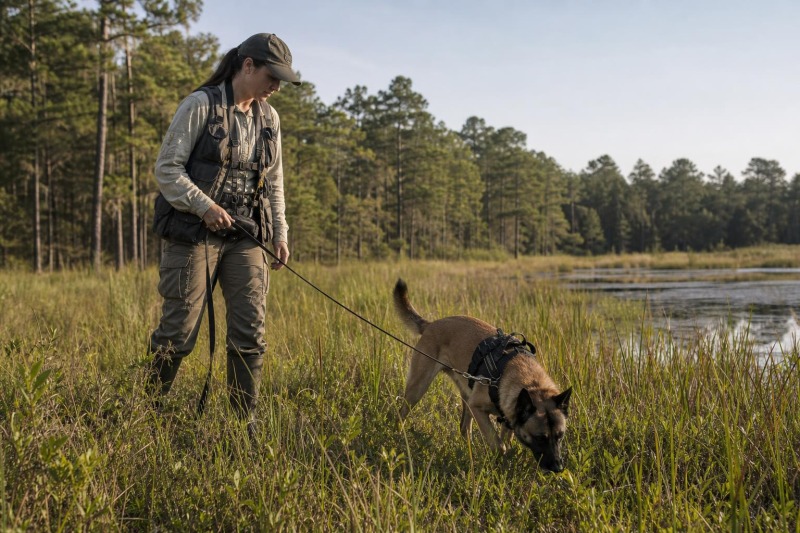
Folks who love working dogs often picture patrol work, protection work, or bird dogs in heavy cover, but detection work deserves just as much respect. In many ways, a customs detection dog is doing what good hunting dogs have always done: using nose, brains, and grit to find what a person cannot see. The setting is different, and the target odor is different, but the core talent is the same. A quality detection dog works with intent, hunts independently while staying connected to the handler, and keeps pushing until the source is found.
What Customs and Border Detection Dogs Actually Do
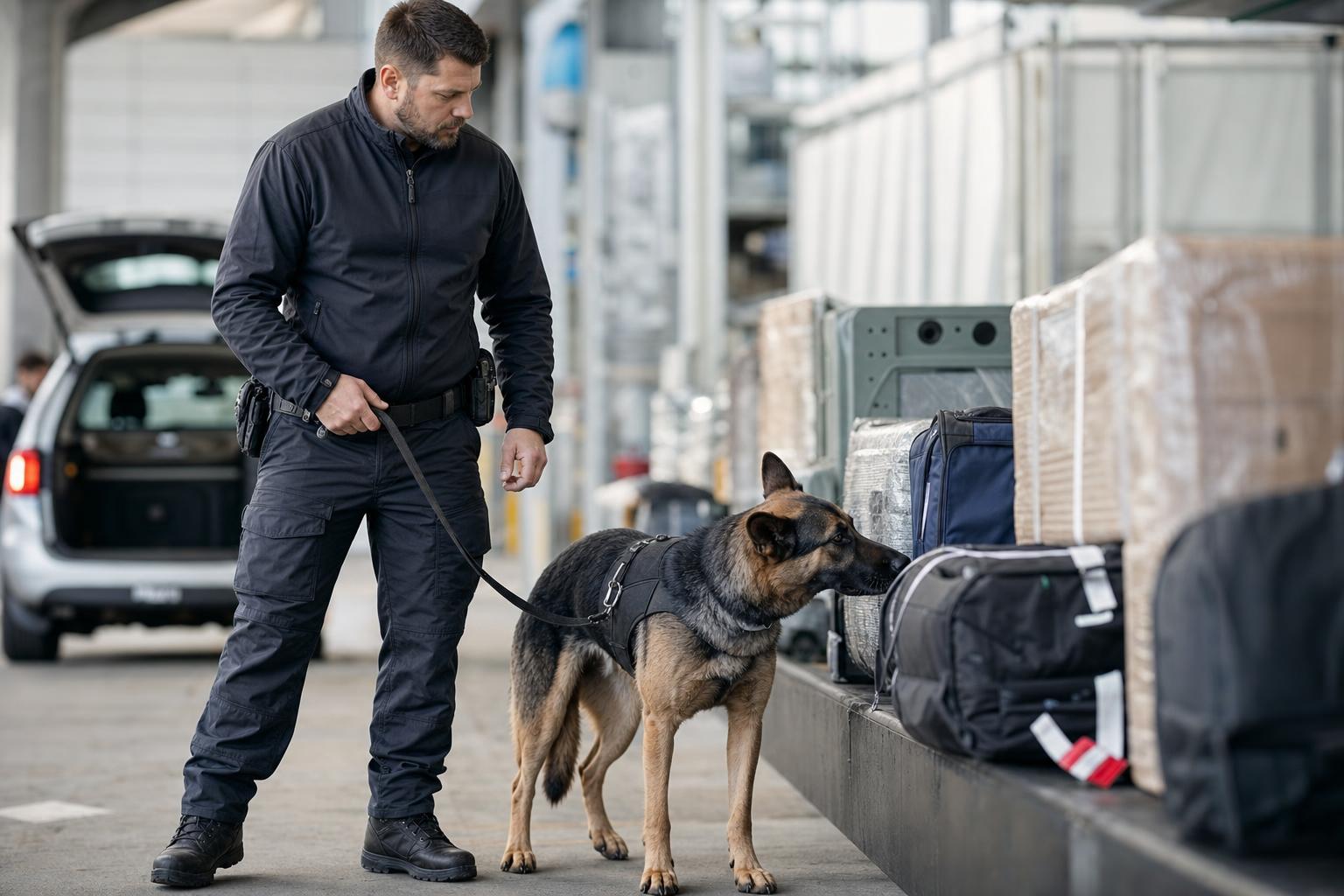
Customs and border detection dog jobs center on scent discrimination and efficient searching. These dogs may be trained to locate narcotics, explosives, currency, firearms components, agricultural products, or other restricted materials depending on the agency and assignment. A team might work an airport baggage area one day and inspect vehicles at a border crossing the next. In maritime settings, they may search cargo containers, warehouses, or dockside shipments. The work can be fast, repetitive, noisy, and full of distraction, which is exactly why only the right dogs make it through.
A lot of civilians assume the dog simply sniffs around until something suspicious turns up. In truth, the work is more disciplined than that. Search patterns, handler timing, leash management, reward delivery, and environmental reading all matter. The dog is not wandering. The dog is hunting within a structured system, and a seasoned handler learns to read every change in breathing, tail carriage, head snap, and body tension. Sometimes the clearest indication is dramatic. Other times it is a subtle hesitation at a seam of luggage or the corner of a crate.
The Importance of Controlled Drive
The best working dogs are not just hard chargers. They are dogs whose drive can be directed and sustained. Customs and border detection dogs often work in crowded public spaces, around machinery, vehicles, food odors, and all manner of human commotion. A dog that is too soft may shut down. A dog that is frantic may become sloppy. The sweet spot is a dog with intensity under control, one that hunts hard but can stay clear-headed enough to communicate odor source accurately.
Breeds Commonly Used in Detection Work
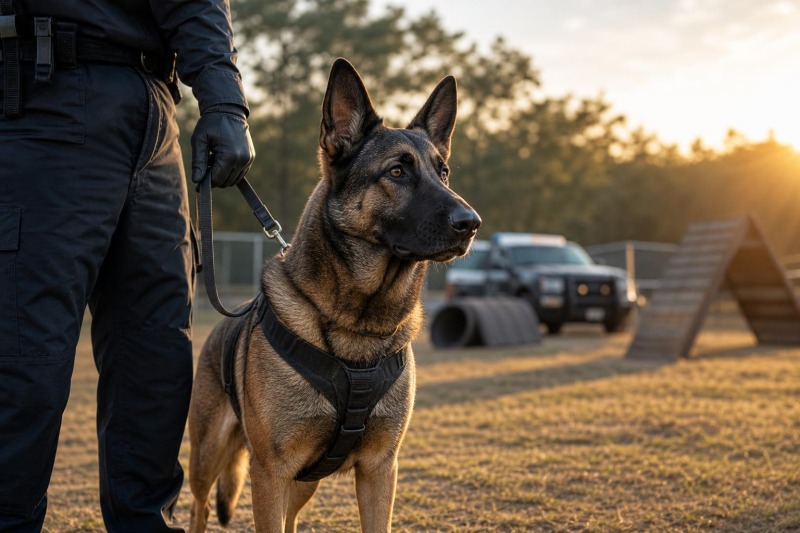
Several breeds show up often in customs and border detection dog jobs, though individual temperament matters more than pedigree alone. Labrador Retrievers are highly valued because they combine hunt drive, sociability, trainability, and a practical public image. German Shepherds and Belgian Malinois are also common, especially in programs where versatility matters and the dog may need to perform more than one type of duty. Springer Spaniels, pointers, and other high-energy sporting breeds have also proven themselves in detection because of their nose, enthusiasm, and willingness to search relentlessly.
What agencies are really looking for is a dog with strong hunt instinct, confidence on strange surfaces, resilience in loud environments, and a powerful reward response. A customs dog might need to jump into a truck, work slick tile floors, move through narrow corridors, or search among hundreds of competing odors. That takes more than talent. It takes nerve.
Why Sporting Dog Traits Matter
Anyone who has watched a good retriever work a cattail edge or a driven spaniel tear through heavy brush understands why so many detection programs favor sporting blood. Those dogs are built to use their nose all day and keep hunting through fatigue, weather, and distraction. Border detection work may not look like a hunt in the traditional sense, but to the dog it absolutely is. The dog is quartering odor, solving scent puzzles, and pursuing a reward with the same kind of focus a bird dog brings to game.
How Detection Dogs Are Selected
Selection starts with drives and nerve, not finished obedience. Agencies and trainers often test for toy drive, food motivation, environmental stability, recovery from stress, and willingness to engage in a search. A dog that lights up for a ball and will hunt for it with genuine obsession can be an excellent detection prospect. The reward becomes the engine that powers the search.
Dogs are exposed to slick floors, stairs, dark rooms, unstable surfaces, loud sounds, and crowded spaces. Trainers want to see curiosity and recovery rather than avoidance. One weak nerve can become a major liability at a busy terminal or checkpoint. If the dog cannot handle pressure, the dog cannot work effectively when the stakes are high.
Training for Customs and Border Detection Dog Jobs
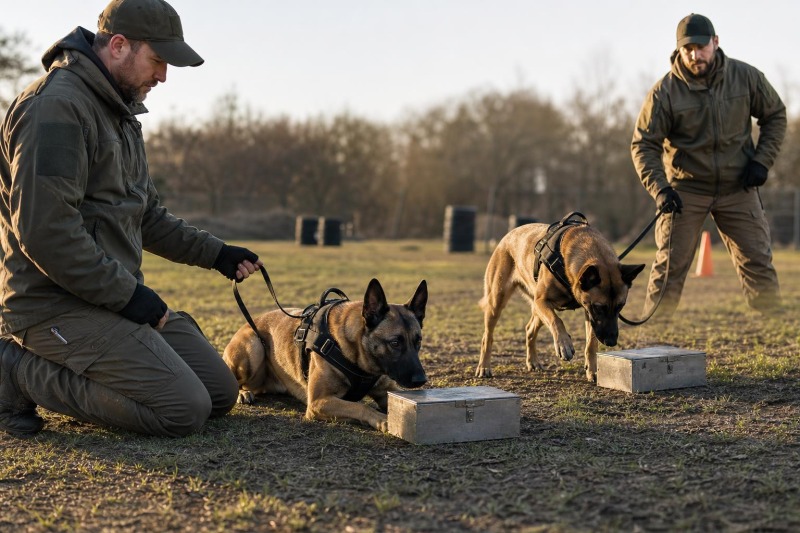
Good detection training builds from simple games into complex operational searches. Early work often ties target odor to a high-value reward. The dog learns that finding a particular scent leads to something it desperately wants, whether that is a tug, ball, or food reward. Over time, the game becomes more demanding. Odors are hidden in vehicles, luggage, cargo, rooms, pallets, and containers. Distracting scents are added. Search areas get larger. Access gets trickier. The dog learns not only to find odor, but to stay in odor, trace it to source, and give a clear final response.
Handlers train just as hard as the dogs. A green handler can ruin a promising dog with poor timing, too much pressure, or constant interference. The best handlers learn when to guide, when to stay quiet, and when to trust the dog. That relationship is the heart of the job. In the field, success often depends on a handler recognizing the moment the dog shifts from casual searching to committed odor work.
Passive and Active Alerts
Many customs and border detection dogs are trained for a passive alert, such as a sit, stare, or freeze at source. That is especially useful in public settings and around luggage, vehicles, or sensitive cargo where scratching or biting would create problems. In some contexts, active alerts may be used, but the goal is always the same: clear communication without contamination of the scene. Reliable alert behavior is what turns a talented nose into a usable law enforcement tool.
The Daily Reality of the Job
There is a lot of romance attached to elite working dogs, but the daily grind is what makes them effective. Customs and border detection dog jobs involve long shifts, repetitive searches, changing schedules, travel, weather exposure, and strict maintenance training. A dog may search stacks of luggage, rows of vehicles, freight loads, mail parcels, and warehouse corners in a single day. Some finds are dramatic. Most work is routine, and that routine is where discipline earns its keep.
The dog must stay healthy, fit, and mentally fresh. Burnout is a real concern in any hard-driving worker. Smart programs manage reward, rest, conditioning, hydration, and variety in training. The strongest teams understand that the dog is an athlete first and a detection tool only because it is cared for like one.
Why These Jobs Matter
Customs and border detection dogs play a direct role in public safety and national security. They intercept illegal narcotics, detect explosive materials, identify smuggled goods, and help enforce agricultural rules meant to prevent invasive pests and disease. One good dog team can search faster and more accurately than any machine in the right scenario, especially when odor is hidden in layered, moving, or cluttered environments.
What impresses me most is how these dogs cut through deception. People can alter packaging, disguise appearance, and hide items deep in cargo, but odor has a way of telling the truth. A trained dog can work past the noise and put its nose on the source. That kind of honest, practical capability is why detection dogs remain indispensable even in a world full of advanced technology.
Is This Kind of Work Right for Every Dog Owner to Admire or Pursue?
For dog owners interested in working dogs, customs and border detection dog jobs are a reminder that serious canine work is built on genetics, training, and partnership. Not every pet dog is suited for this life, and not every owner wants the demands that come with developing a high-drive worker. Still, there is a lot to learn from these teams. They show what happens when natural ability is shaped with patience, structure, and purpose.
If you are the kind of owner who appreciates a dog with brains and grit, detection work is worth studying. It highlights the same qualities many hunters and trainers prize: hunt drive, biddability, stamina, courage in strange cover, and the willingness to keep searching when the easy answer is not there. Whether the dog is finding hidden contraband at a checkpoint or pinning down a crippled bird in ugly marsh grass, the principle is familiar. A good dog hunts until the job is done.
Customs and border detection dog jobs are not about flashy tricks. They are about dependable performance in hard conditions. The dogs that succeed are honest workers with strong noses, stable minds, and enough desire to hunt through fatigue and distraction. The handlers who succeed are patient, observant, and humble enough to trust what the dog is telling them.
That is probably why so many seasoned dog people admire this field. It strips things down to what matters. Can the dog search? Can the dog think? Can the team function under pressure? When the answer is yes, you are watching one of the finest examples of practical canine work there is.