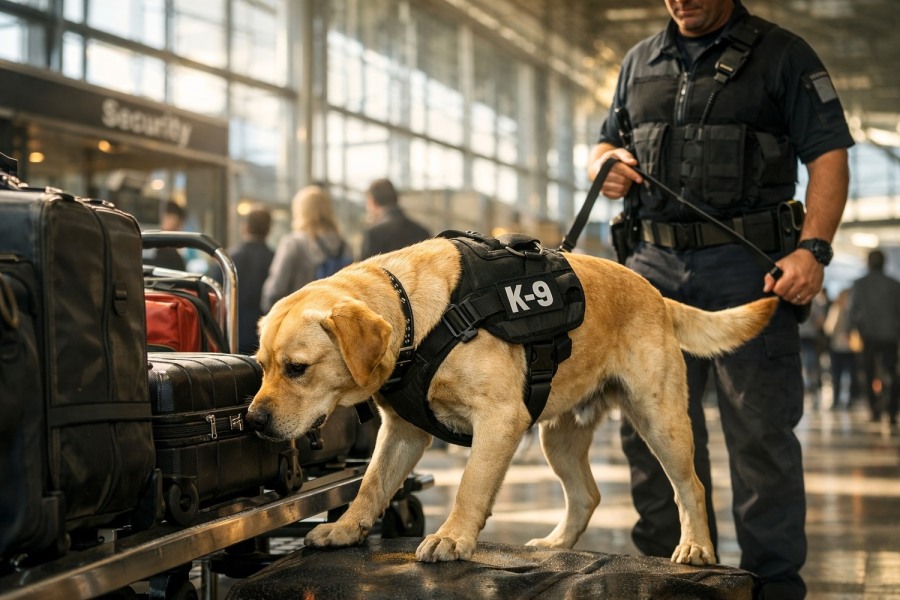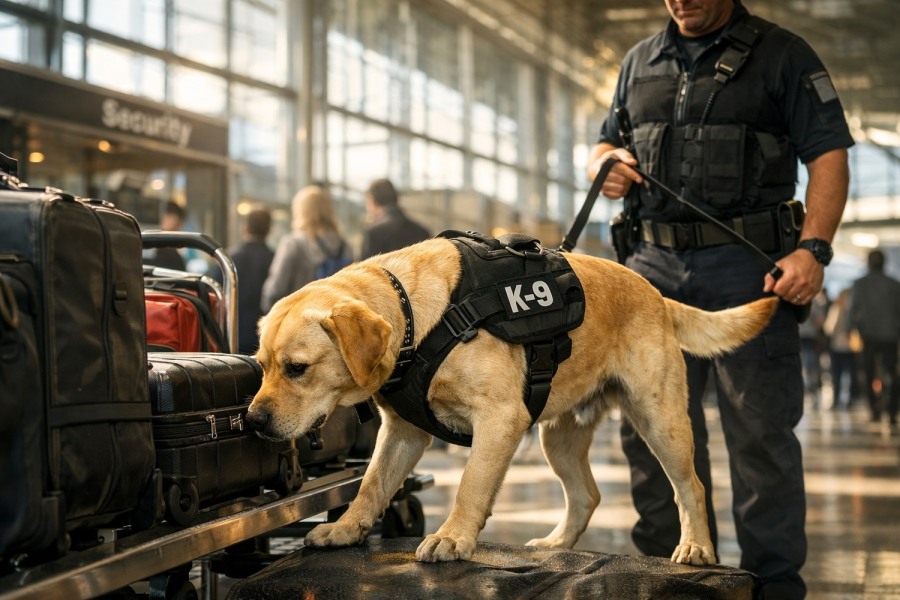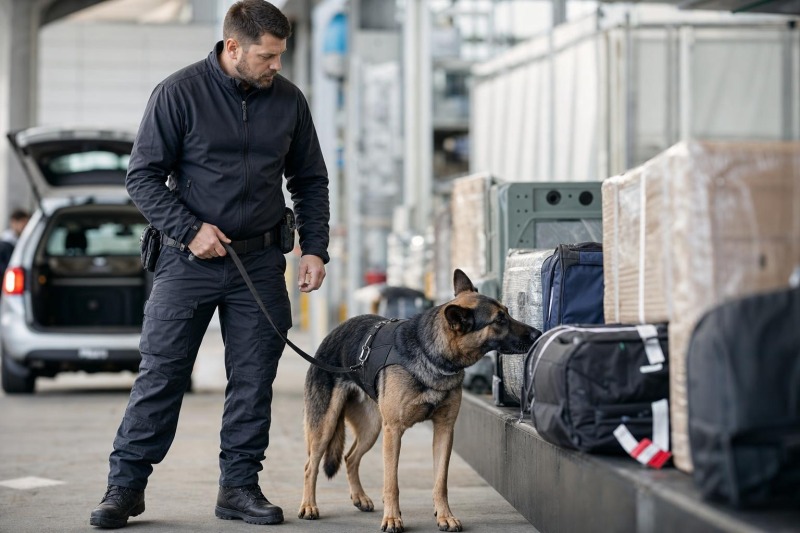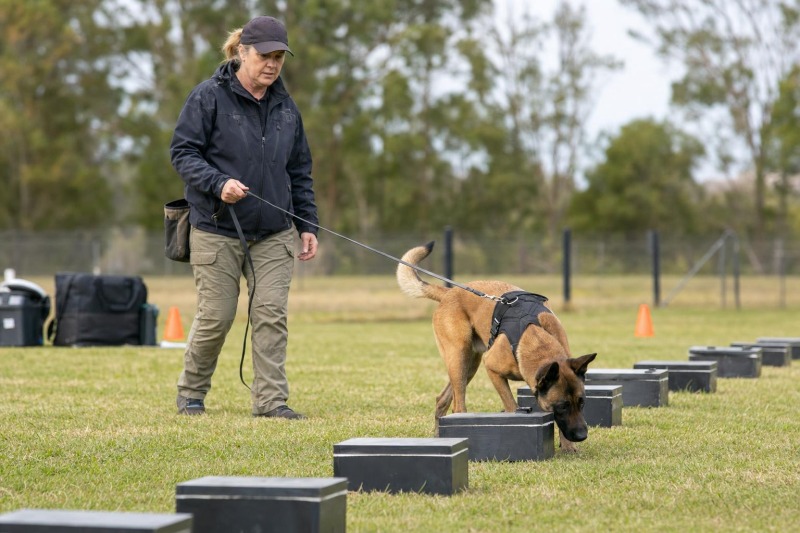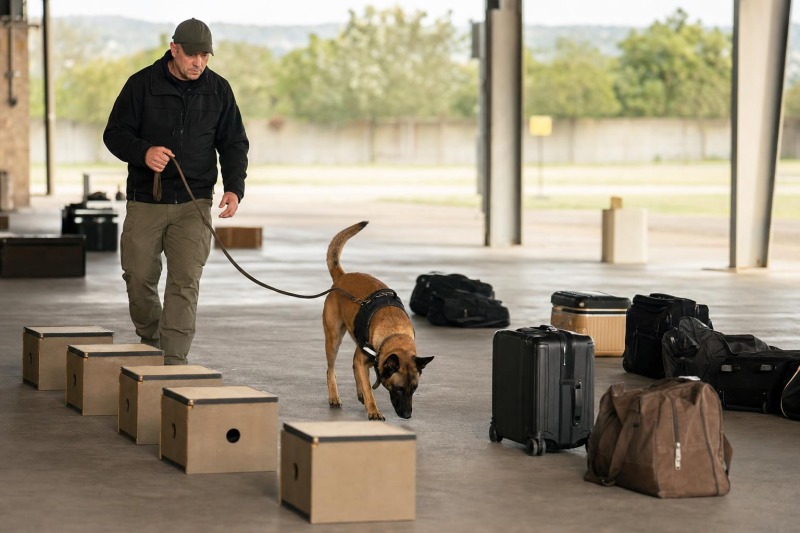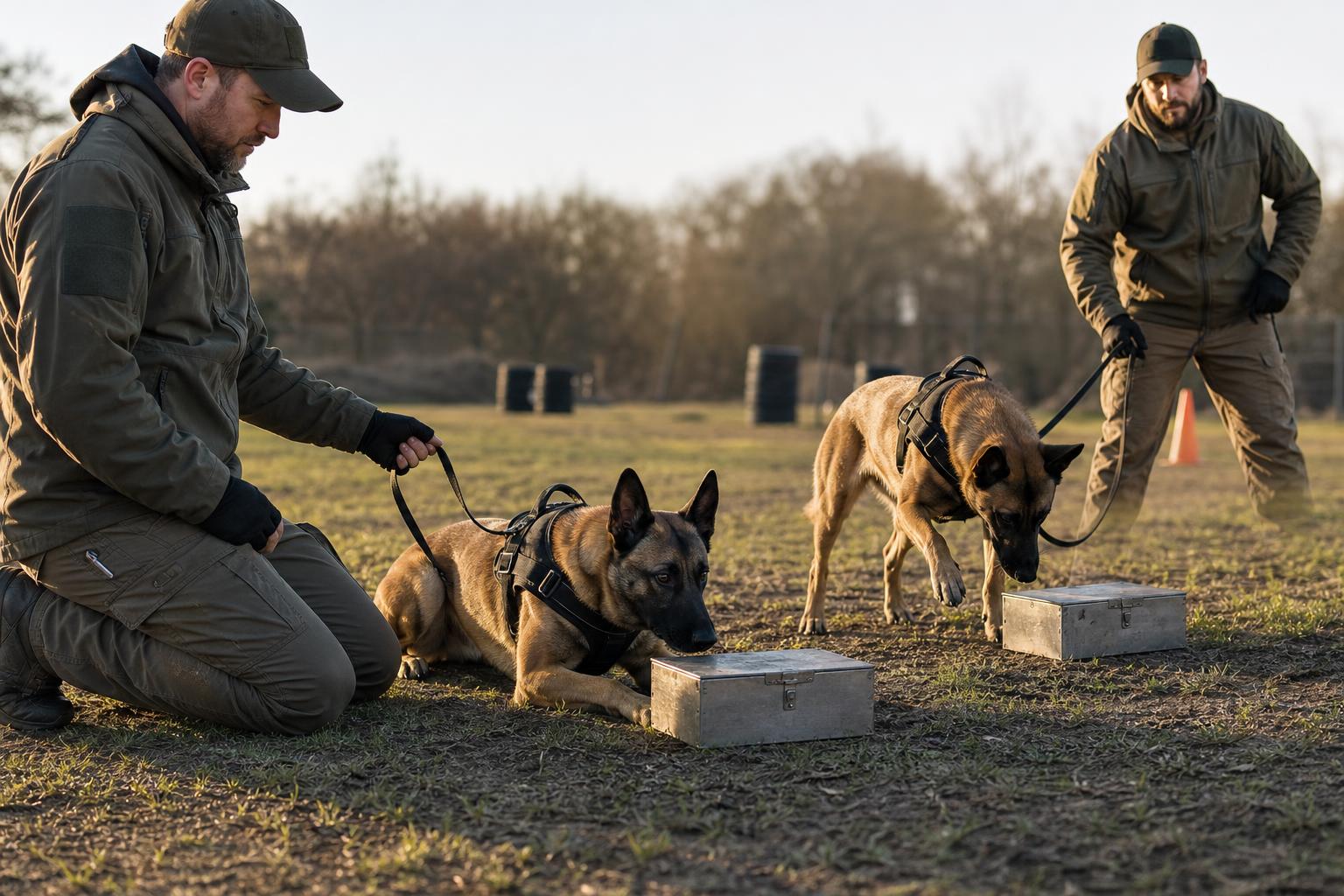
A detection dog’s final indication tells the handler where the target odor is located. Whether that indication is passive or active affects how a search is trained, conducted, and interpreted. The choice needs to fit the job and the search environment.
Folks new to working dogs sometimes think an alert is just the dog “telling you” it found odor. That is true in the broad sense, but the style of that communication changes everything. A polished alert gives the handler a readable, repeatable behavior at source. A poor one leaves room for guessing, and guessing has no place in serious detection work.
What Is a Passive Alert in Detection Dogs?
A passive alert is a non-destructive final response. Most often, that means the dog sits, downs, stands still, or freezes at the source of odor without scratching, biting, or pawing at it. In practical terms, the dog locates the odor and then says, in its own trained way, “Here it is,” while keeping its body under control.
This is the alert style most people picture in modern narcotics, explosives, bed bug, and specialty detection programs. There is good reason for that. A passive alert is usually preferred when the target may be dangerous, delicate, or hidden in places where scratching and chewing could create a serious problem. If a dog locates explosive odor in luggage or a vehicle, nobody wants an excited paw rake across the source. The same logic applies in schools, airports, public buildings, and private homes where professionalism matters as much as performance.
A well-trained passive dog can still be intense. Passive does not mean lazy, soft, or unsure. They may lock up in a sit or freeze with eyes bright and chest tight, but there is no doubt in the picture. That kind of passive alert is a beautiful thing because it combines control with absolute commitment.
Why Handlers Often Prefer Passive Alerts
The biggest advantage is safety. When a dog is trained to hold itself at source instead of physically engaging with it, there is less risk of damaging property, contaminating a scene, or escalating a dangerous situation. Passive alerts also tend to be easier to present in court, easier to explain to clients, and easier to manage in crowded public settings.
Another strength is precision. A dog that freezes or sits at the strongest point of odor can give the handler a cleaner read, especially in tight interior searches. In houses, offices, and vehicles, that matters. The cleaner the final response, the easier it is to separate true source from general interest or fringe odor behavior.
What Is an Aggressive Alert in Detection Dogs?
An aggressive alert, sometimes called an active alert, is a final response where the dog physically engages the source. That can include scratching, barking, digging, biting, pawing, or otherwise trying to access the odor. This style grew out of older detection traditions and remains useful in certain programs, especially where the dog is expected to show high intensity and persistence on concealed odor.
There is no denying that an aggressive alert can be dramatic and easy to notice. A dog that starts digging at a wheel well or clawing at a wall panel leaves little doubt that it wants in. For some handlers, especially in environments where property damage is less of a concern or where the target is deeply concealed, that style can help pinpoint the source. It can also suit dogs with naturally high possession, frustration, and hunt drive.
But aggressive alerts come with tradeoffs. In the wrong dog, or under sloppy training, active responses can bleed into false indications, handler conflict, or damage to non-target areas. A dog that learns scratching gets a reward may start offering that behavior too broadly if odor picture and final response are not carefully built. That is where training discipline matters.
Where Aggressive Alerts Still Make Sense
There are working environments where an active indication can still be practical. Some handlers like the visible intensity on exterior vehicle searches or warehouse work where a dog must show determination on difficult hides. In rugged settings, a bit of pawing or digging may not create the same concern it would in a hotel hallway or family home.
That said, the trend across many professional detection programs has moved toward passive alerts for good reason. The more sensitive the environment, the more value there is in a controlled final response.
Passive vs Aggressive Alerts in Detection Dogs: The Real Differences
The difference is not just whether the dog sits or scratches. It is a matter of control, application, and how the dog handles pressure at source. Passive alerts ask the dog to channel drive inward and hold position. Aggressive alerts allow the dog to express drive outward against the source. Both can be trained cleanly, and both can be ruined by poor timing, weak odor imprinting, or reward patterns that create conflict.
The best alert style is the one that fits the mission and the dog. That is the honest answer. Not every high-drive dog is automatically better with an aggressive alert, and not every thoughtful, methodical dog is naturally suited to passive work. You have to watch what the dog brings to the table. Does it hunt with clear head pressure? Does it get frantic at source? Does it offer stillness naturally, or does motion help it communicate conviction? Good trainers shape the dog in front of them, but smart trainers also know when not to fight the dog’s nature too hard.
There is another layer here that handlers sometimes overlook. A passive alert often demands stronger obedience under odor without letting obedience suppress hunt. That is a fine line. Push too much control too early and you can dull the dog’s search independence. On the other hand, aggressive alerts require careful management so the dog does not learn to perform the action before it has truly solved the odor problem. In both cases, timing is everything.
Training Considerations for Each Alert Style
When building a passive alert, most good trainers focus on making odor the doorway to reward while shaping a calm, unmistakable final response at source. The challenge is preserving speed and desire in the search while adding control at the end. The dog must understand that stillness, not grabbing, earns the payoff. When done right, the alert becomes crisp and confident, not hesitant.
Training an aggressive alert often leans into the dog’s natural frustration and desire to access the odor. The reward system has to be tight, or the dog may begin showing the alert behavior on residual odor, inaccessible odor, or even on handler pressure. The more animated the final response, the more careful the trainer must be about clarity. Excitement can look impressive, but clarity is what holds up over time.
A trainer gets eager, the dog starts anticipating, and soon the behavior matters more than the nose. That is backward. The nose must always drive the picture. The alert only has value if it comes from true odor commitment.
Which Alert Is Better for Most Working Dog Owners?
For most modern detection applications, passive alerts are the safer and more versatile option. They fit better in public spaces, reduce liability, and present a cleaner image of control. For dog owners interested in working dogs, especially those learning about detection from the outside looking in, passive alerts also tend to be easier to understand and evaluate. You can see the dog hunt, locate, and hold without the noise of destructive behavior muddying the read.
That does not make aggressive alerts wrong. It just means they require a very good reason and very good training. If the environment, target odor, and operational demands support that style, an active alert can still work well. But in many real-world settings, passive indication gives handlers more options and fewer headaches.
The dog moved with purpose, checked one seam, drifted, circled back, and then settled into a hard, motionless sit by the rear quarter panel. No theatrics. No scratching. Just certainty. That handler stepped in calm as church, and the whole search told a story of trust built over time. That is what a finished alert should look like, whether passive or aggressive. It should remove doubt, not add to it.
The debate over passive vs aggressive alerts in detection dogs is really a debate about function. What serves the job? What keeps the dog clear-headed? What gives the handler the cleanest information under pressure? Those are the questions that matter.
If you are choosing between the two, start with the work itself. Consider the odor, the search environment, the dog’s temperament, and the level of precision required. Then build an alert that is honest, repeatable, and easy to read. Flashy does not beat reliable. It never has.
The best detection dogs are not just talented noses. They are communicators. Their final response is the moment they hand the puzzle back to the handler. Whether that comes as a silent freeze or an intense active indication, it needs to be trained with care and respected for what it is: the clearest voice a working dog has in the field.