Protection equipment has to suit the dog, the handler, and the exercise. Fit, secure construction, and predictable handling matter more than an imposing appearance. Gear should support a clear training plan and be checked before each session.
A good protection dog is built through genetics, careful training, and consistency. Equipment helps communicate, manage drive, and protect both dog and trainer, but it never replaces foundation. If you start there, you will make far better decisions about what belongs in your truck, in your kennel room, and on your dog.
Why the Right Protection Dog Equipment Matters
Protection work demands more from equipment than ordinary obedience or neighborhood walks. The dog may be moving fast, pulling hard, targeting with intensity, and working through conflict. Weak stitching, poor fit, cheap clips, or the wrong tool for the exercise can turn into a dangerous problem in a hurry.
Quality gear matters for another reason too. Dogs learn through clarity. When a collar rides wrong, a harness restricts movement, or a sleeve is inconsistent, the dog receives muddy information. Strong dogs thrive on clean, predictable handling. Good equipment makes training more precise, and precise training builds confidence.
Flat collars, agitation collars, and everyday control
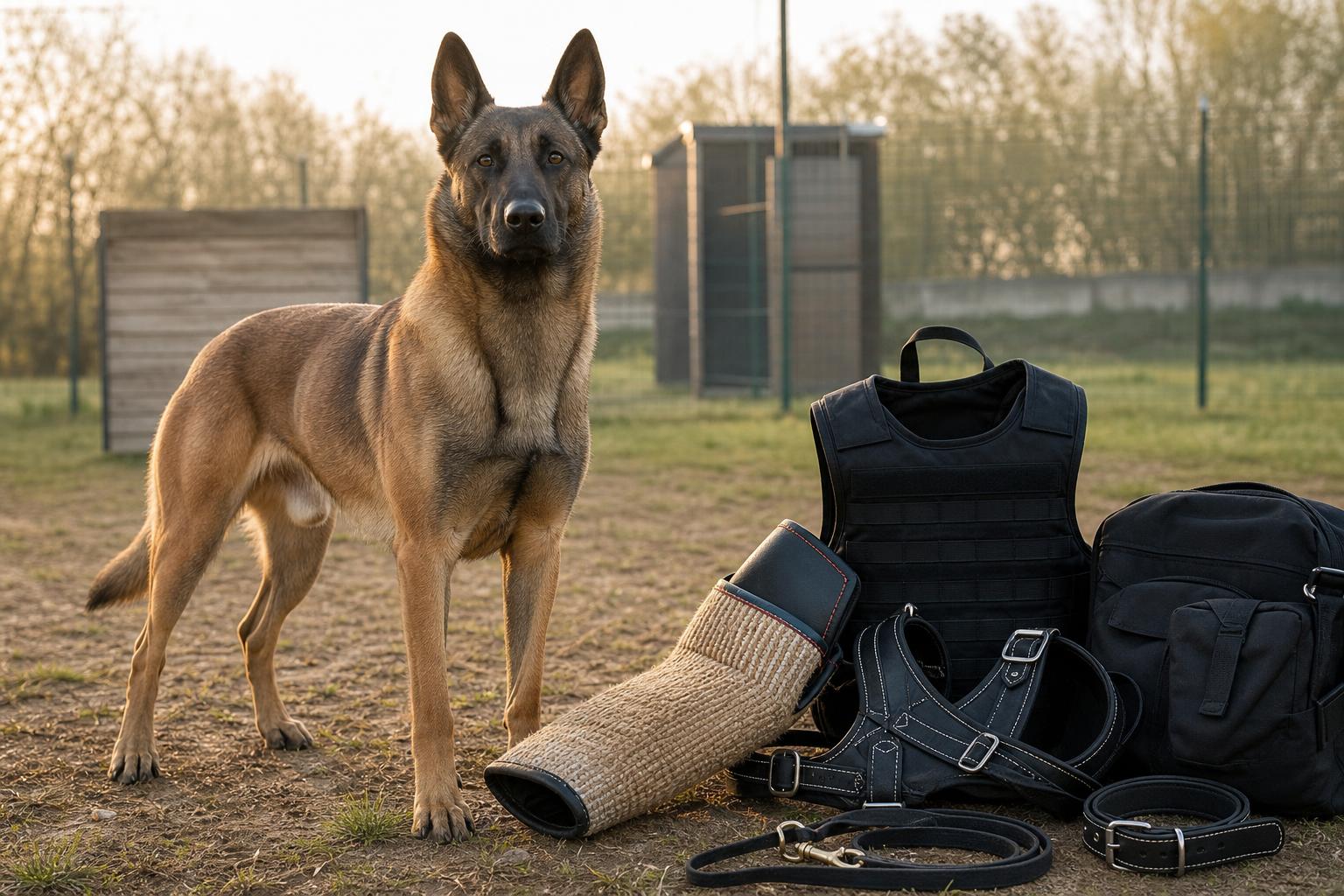
A sturdy flat collar is still one of the most useful pieces of gear you can own. For everyday handling, transport, and basic obedience, it is hard to beat a well-made leather or heavy nylon collar with dependable hardware. For protection training, many handlers also keep a wider agitation collar on hand. These collars spread pressure more evenly across the neck and tend to hold up better when a powerful dog drives forward with commitment.
The key is fit. Too loose and the collar rotates and slips. Too tight and you create discomfort that distracts from the work. Leather remains a favorite among experienced handlers because it breaks in nicely, stays comfortable, and often lasts for years if cared for. Nylon has its place too, especially in wet conditions, but cheap nylon gear can fray faster than people expect.
Harnesses for tracking, conditioning, and controlled work
Harnesses are useful, but they are often misunderstood in protection circles. A proper working harness can be excellent for tracking, roadwork, and certain controlled exercises where you want free shoulder movement and even pressure distribution. It should not chafe, pinch behind the elbows, or restrict the dog’s stride. If it does, it is the wrong harness no matter how rugged it looks.
Not every protection drill calls for a harness, and not every dog works best in one. Still, for conditioning sessions and selected training setups, a good harness gives you options while protecting the dog’s body. That alone makes it worth keeping in the rotation.
Leashes, Long Lines, and Tie-Out Equipment
If there is one category where cutting corners makes no sense, it is leads and lines. A protection dog can put a tremendous load on a leash in a split second. You want solid stitching, quality leather or premium webbing, and hardware that will not fail under stress.
A short traffic lead is valuable for close handling and transport. A standard leash works for obedience and controlled movement. Long lines are essential for recall work, boundary drills, and building control at distance. Many handlers also keep a back-tie setup for bite development and drive channeling, but that equipment must be chosen and anchored carefully. A poor anchor point can be every bit as dangerous as poor hardware.
Think through where and how each line will be used. Mud, rain, heat, frozen ground, and kennel wear all affect gear differently. Protection dog equipment should stand up to real conditions, not just a clean training field on a sunny day.
Bite sleeves, wedges, and tugs
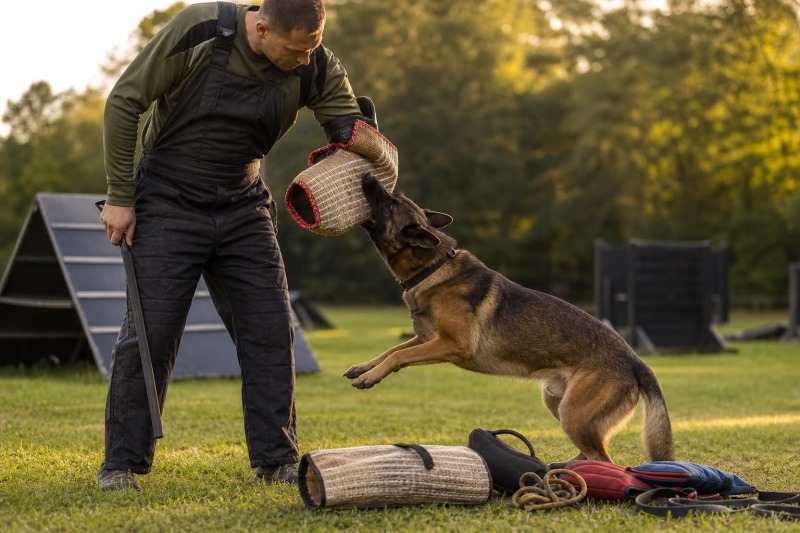
Bite equipment is where experience really matters, because too many owners buy advanced gear before they understand the purpose behind it. Young dogs and green dogs are often started on softer, more developmental equipment like tugs and wedges. These tools build grip, confidence, possession, and targeting. They also let the helper shape the dog without overwhelming him.
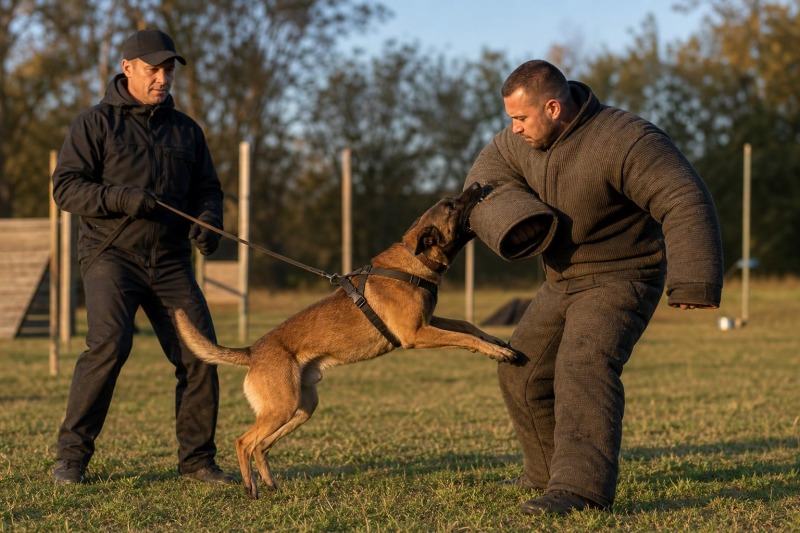
Bite sleeves come in different styles, stiffness levels, and training purposes. A beginner sleeve is not the same as a trial sleeve, and neither should be used carelessly. The sleeve must fit the decoy correctly, present clearly to the dog, and match the dog’s stage of training. A dog that is pushed onto unsuitable equipment can become hectic, shallow in the grip, or uncertain in the fight.
The best bite work gear is not the hardest gear. It is the right gear for the moment. That lesson saves dogs from unnecessary confusion and keeps progress moving in the right direction.
Bite suits and hidden sleeves
Full bite suits belong in the hands of skilled trainers and decoys. They are specialized tools, not backyard toys. A proper suit protects the decoy while allowing realistic movement and presentation. Hidden sleeves and concealed equipment have their place as dogs advance, but they should never be used to fake progress. Protection work built on shortcuts tends to crack when pressure becomes real.
Good training is honest. Gear should help reveal the dog, not disguise weak foundation. If a trainer is worth his salt, he knows when to simplify, when to increase challenge, and when to put the fancy equipment away.
Muzzles, Crates, and Safety Gear
Every serious handler should own a quality basket muzzle. A muzzle is not a sign of a bad dog. It is a sign of responsible handling. Muzzle conditioning allows for safe transport, veterinary visits, scenario training, and public management when needed. The dog should be able to pant, breathe freely, and remain functional while wearing it. Poorly fitted muzzles create stress and defeat the purpose.
A solid crate is another non-negotiable piece of protection dog gear. Travel crates, kennel crates, and vehicle setups should be secure, well ventilated, and appropriate for the dog’s size and temperament. When a hard-working dog comes off the field amped up, a crate gives him structure and a place to settle. That matters more than people realize.
It is also wise to keep a basic canine first aid kit, extra water, paw care supplies, and cooling tools on hand. You do not need to turn your truck into a rolling clinic, but you do need to be prepared. Heat, rough ground, torn pads, and minor strains are part of the real world.
Choosing Gear for the Dog in Front of You
No piece of equipment is universal. A hard, mature shepherd in full work may need something entirely different from a young Malinois just learning to channel drive. Size, coat, neck structure, training stage, and temperament all influence gear choice. That is one reason seasoned handlers tend to own several collars, multiple leads, and more than one kind of tug or sleeve. They are not collecting gadgets. They are building a tool kit.
The dog always tells the truth if you are willing to watch. If movement becomes restricted, grips get weaker, focus drops, or conflict rises, it is worth examining whether the gear is helping or getting in the way.
Durability, Maintenance, and Long-Term Value
Protection dog equipment is an investment, and good gear deserves care. Leather should be cleaned and conditioned. Hardware should be checked for wear, rust, or bending. Stitching should be inspected often, especially on high-load items. Bite equipment needs to be stored dry and clean so it keeps its shape and does not break down prematurely.
There is a plain truth learned by anyone who has spent years around hard dogs: buying quality once is often cheaper than buying inferior gear three times. You do not need the most expensive item in every category, but you do need reliability. In this kind of work, reliability is not a luxury. It is part of safety.
The best protection dog equipment and gear does not shout. It works. It fits the dog, suits the training, and holds up when pressure arrives. More than that, it supports clear communication between dog and handler. That is what all of us should be after, whether we are preparing a young prospect, maintaining a finished dog, or simply learning how to handle serious canine power with respect.
Protection work is still about the dog. The gear matters, but not as much as judgment, timing, and experience. Choose equipment with a practical eye, train with purpose, and never let marketing outrun common sense. A well-made collar, a dependable line, a correctly fitted muzzle, and honest training tools will take you farther than a pile of gimmicks ever will.