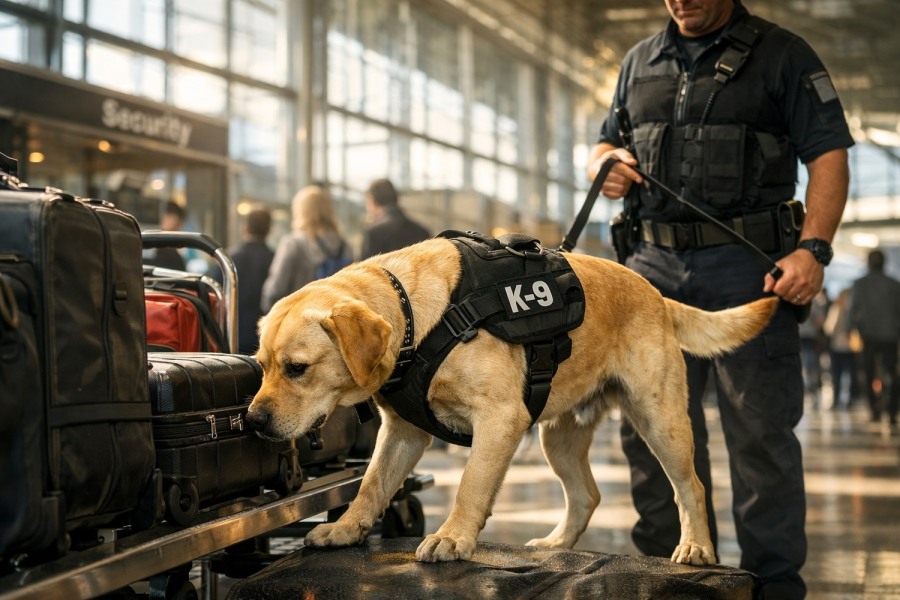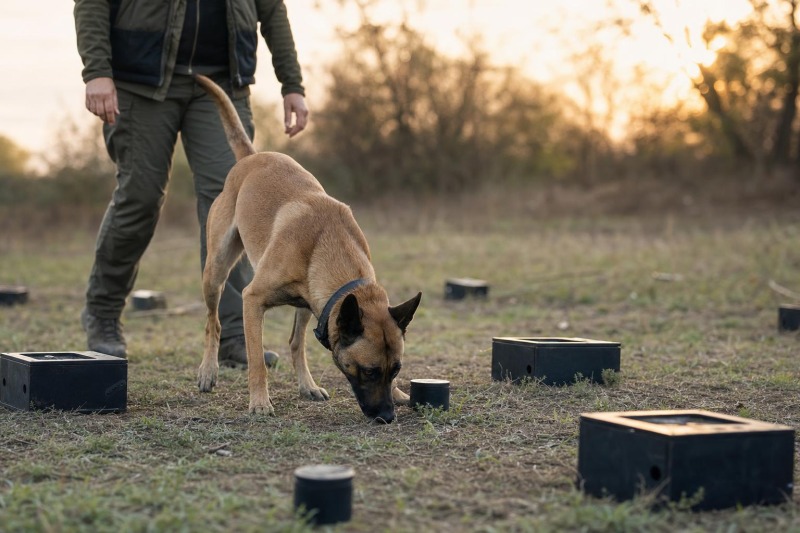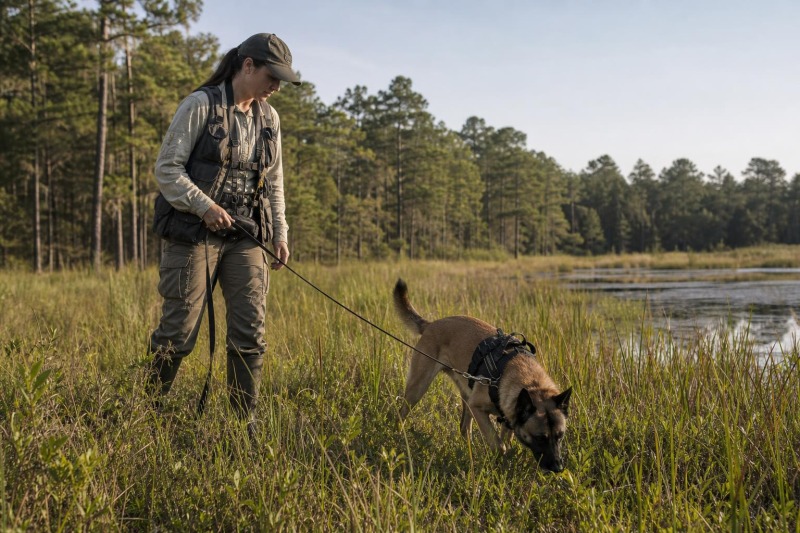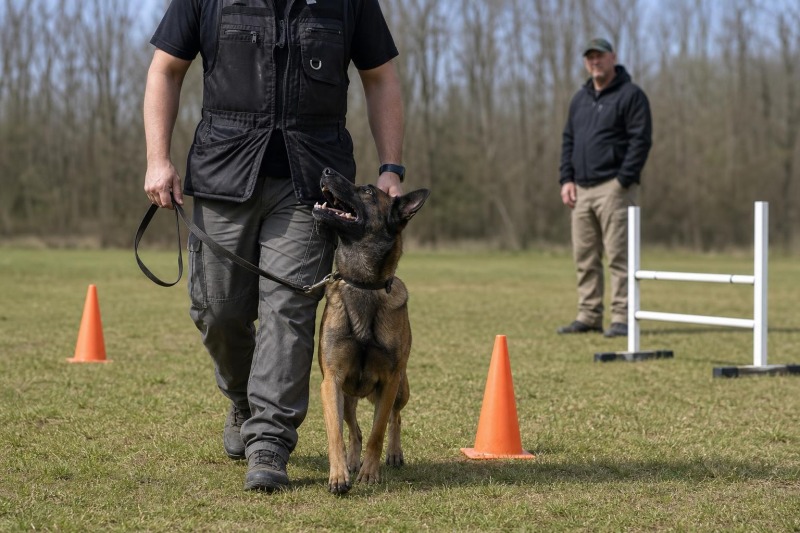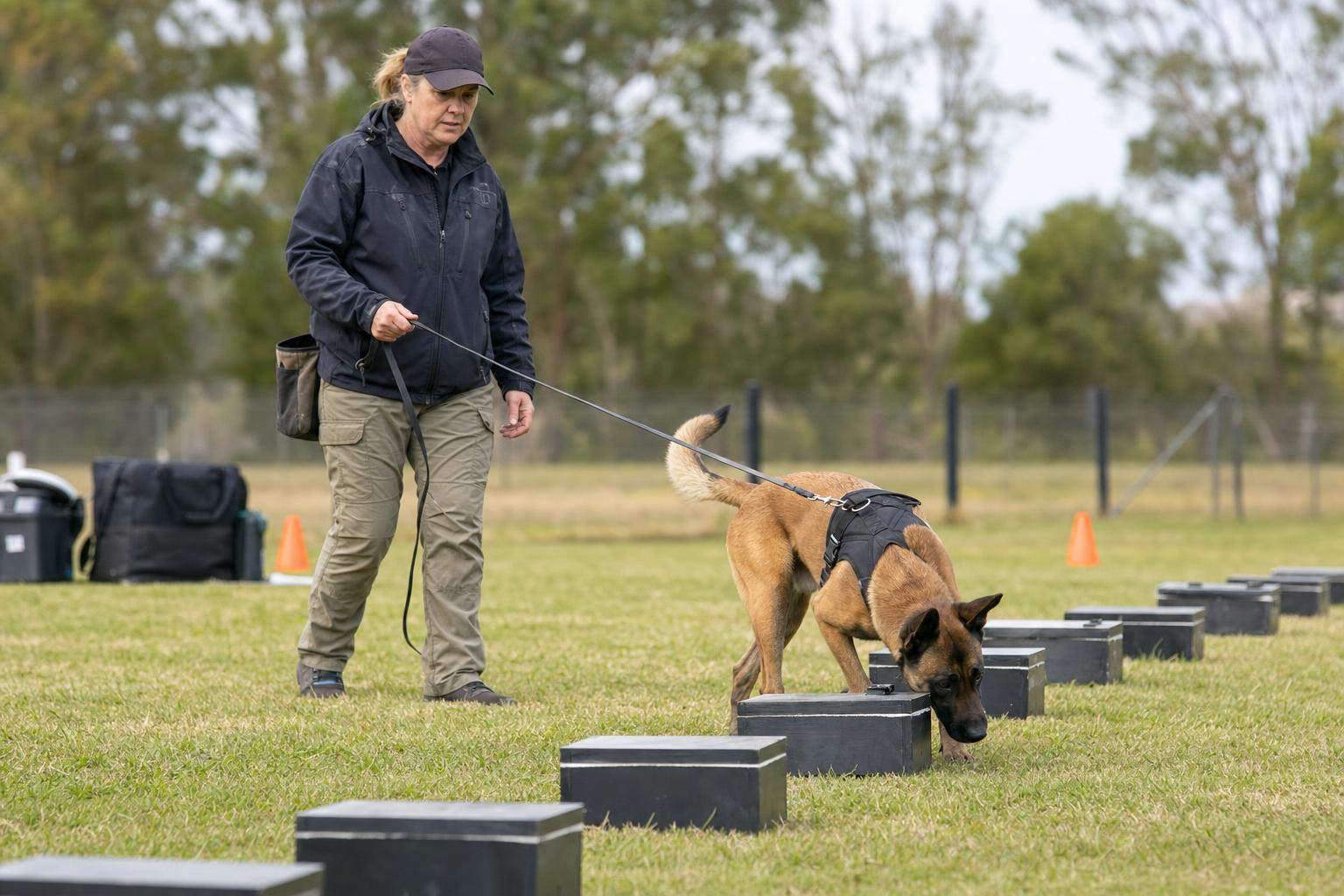
Detection work depends on both ends of the lead. A handler has to plan the search, observe changes in the dog, manage rewards, and recognize when a result is uncertain. Training those skills takes the same deliberate practice as training the dog.
Folks new to working dogs often assume the dog does the hard part and the handler simply tags along. That idea fades fast once you step into real training. A handler has to learn how wind, terrain, contamination, fatigue, and their own body language can change the outcome of a search. One bad cue, one rushed leash movement, or one moment of impatience can pull a dog off odor and muddy the lesson. The best handler training teaches a person to become quiet, observant, and consistent so the dog can do what it was bred and trained to do.
What Detection Dog Handler Training Really Means
At its core, detection dog handler training is the process of shaping a human into a reliable partner for scent work. That means learning search theory, reward timing, leash handling, odor recognition, environmental awareness, and dog behavior. It also means learning what not to do. A lot of handlers hurt their progress by talking too much, moving too fast, or trying to solve the search with their own eyes instead of trusting the dog’s nose.
The dog catches a thread of scent, changes posture just a hair, and the green handler misses it. A seasoned handler sees that little shift in breathing, the tightening of the tail set, the slower footfall, or the sudden commitment into source. That kind of awareness does not come from reading a manual alone. It comes from repetitions, honest feedback, and spending enough time with dogs to recognize the difference between interest, distraction, and true odor commitment.
The Handler Must Learn to Read the Dog
Every reliable detection team is built on observation. Some dogs snap hard into odor and make their intention plain. Others work more subtly, especially thoughtful dogs that process scent with less dramatic motion. Handler training should teach a person how their individual dog behaves when it first catches odor, when it loses it, and when it reaches source. Those details matter because reward timing depends on them.
When a handler learns to read those changes early, training becomes cleaner and more productive. The dog gets paid at the right moment, confidence rises, and the search picture stays clear. If the handler cannot recognize the dog’s language, the dog may get corrected unfairly or rewarded late, and that creates confusion that can linger for a long time.
Foundations of a Strong Detection Team
Strong teams are not rushed. The best handler training starts with fundamentals that seem simple from the outside but take discipline to master. The handler has to understand how to approach a search area, how to keep the dog in the hunt, and how to avoid crowding the dog at source. Search patterns matter, but they should support the dog rather than trap it in a rigid routine. Good handlers learn structure without becoming mechanical.
Reward matters just as much. A detection dog that loves the game will stay in it through heat, fatigue, and difficult scent puzzles. The handler has to know how to build that desire and protect it. That means delivering reward with energy and precision, not turning the final response into a stale ritual. In the same way a seasoned bird dog man protects a young dog’s drive in the field, a detection handler must guard enthusiasm while demanding clarity.
Leash Handling and Movement Control
Leash handling is one of the most overlooked parts of detection dog handler training. Too much tension can steer a dog off odor. Too little awareness can leave a dog unsupported in a complex search. The leash should be a line of communication, not a tow rope and not a dead drag. A handler needs to move with the dog, not against it, giving enough freedom for problem solving while maintaining control of the search area.
Dogs notice pressure better than most people realize. If you lean away from a corner, crowd a vehicle seam, or tighten up when the dog starts to commit, the dog can read that and second-guess itself. Training the handler to manage body position is every bit as important as teaching the dog the target odor.
Environmental Exposure and Real-World Proofing
A dog that works beautifully in a clean training room may come apart in a parking lot, warehouse, school hallway, or hunting camp with wind rolling scent in odd directions. That is why handler training has to include varied environments. The handler must learn how odor behaves in heat, cold, humidity, dust, and moving air. Scent does not sit politely where people think it should. It drifts, pools, lifts, and clings, and a trained handler needs to account for that without overhandling the dog.
One of the most valuable things a handler can learn is patience when the scent picture gets ugly. The odor had drifted well away from source, and the dog kept looping back through the cone trying to solve it. An inexperienced handler would have dragged the dog onward or called it a false alert. The smart handler slowed down, gave the dog room, and let the nose work the puzzle. The find came clean a moment later. That sort of confidence is built through training under honest conditions, not staged perfection.
Distraction Control and Neutrality
Detection work asks a dog to ignore food, people, animal odor, traffic, noise, and every other temptation in the environment. Handler training should prepare a person to recognize distraction before it grows. Sometimes the answer is redirecting the dog back into the search. Sometimes it is adjusting the approach. Sometimes it is ending the session before fatigue causes sloppy behavior. Good handlers do not pretend their dogs are machines. They learn to manage arousal, maintain focus, and preserve the quality of the work.
Common Handler Mistakes That Slow Progress
The most common mistake is trying to control too much. Handlers often want to help, but help can become interference in a hurry. Constant chatter, repeated commands, and nervous leash pressure usually tell the dog that the handler is uncertain. Another common problem is rewarding too late. If the dog has already moved off source by the time the reward comes, the picture gets muddy.
There is also the temptation to read a search with human logic instead of canine reality. People think the hide should be in one place because it makes sense to them, while the dog is honestly working odor that has traveled elsewhere. Detection dog handler training must teach humility. The nose has information the eyes do not, and a wise handler respects that. Not every head snap is an alert, and not every looping pattern is confusion. Sometimes the dog is solving a problem exactly as it should.
Building Trust Between Dog and Handler
Trust is the heart of the whole thing. A handler must trust the dog to hunt, and the dog must trust the handler to make the game fair. That trust is earned in training. If the handler is inconsistent, emotional, or hard on the dog during problem solving, the partnership weakens. If the handler is clear, timely, and steady, the dog grows bolder and more accurate.
This part reminds me of any honest work done with good dogs, whether you are running a retriever in flooded timber or asking a detection dog to clear a cluttered room. The dog feels your steadiness. If you bring noise into the work, the dog carries that noise. If you bring calm purpose, the dog settles into the task. Good handler training shapes that calm until it becomes habit.
Training the Human Under Pressure
Search work is one thing in practice and another when eyes are on you, the environment is chaotic, or the stakes feel high. That is why handlers need pressure training too. Timed problems, blind hides, unknown search areas, and scenario-based work all help reveal weak spots. Under pressure, bad habits surface fast. A handler might rush the dog, skip part of a pattern, miss a behavior change, or call an alert too early.
Those moments are valuable if they are handled honestly. The point is not to embarrass the handler. The point is to sharpen judgment and build consistency. A dependable detection team is not one that never struggles. It is one that has worked through enough struggles to stay composed when conditions are less than ideal.
Why Ongoing Education Matters
No serious handler should think training ends after a course or certification. Dogs change with age, confidence, and experience. Handlers change too. Skills dull when they are not maintained. The strongest teams keep learning, keep logging training, and keep exposing themselves to new problems. Video review, decoy work, scenario training, and outside evaluations all help keep a team honest.
For dog owners interested in working dogs, this is the main takeaway. Detection dog handler training is a craft. It rewards patience, repetition, and humility. There is satisfaction in watching a dog solve scent the way a good hound sorts out a cold line or a finished retriever marks a hard fall through cover. But that satisfaction comes from work, and most of that work is not flashy. It is built in the quiet details of timing, movement, trust, and observation.
When handler training is done right, the result is a team that moves as one. The dog hunts with confidence. The handler reads, supports, and rewards with precision. In real detection work, that kind of partnership is what people depend on. And out in the field, whether the ground is dusty, the wind is wrong, or the search is harder than expected, that partnership is what carries the day.