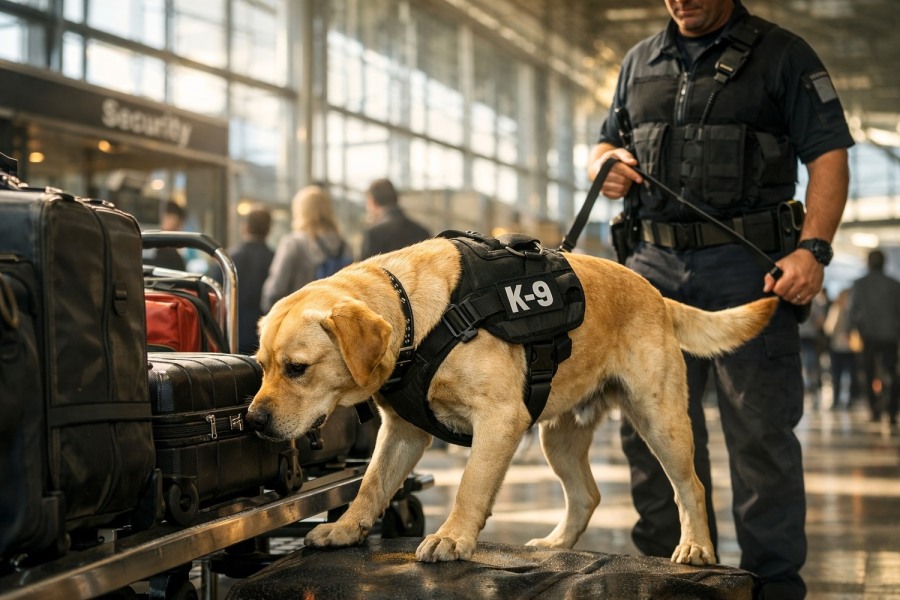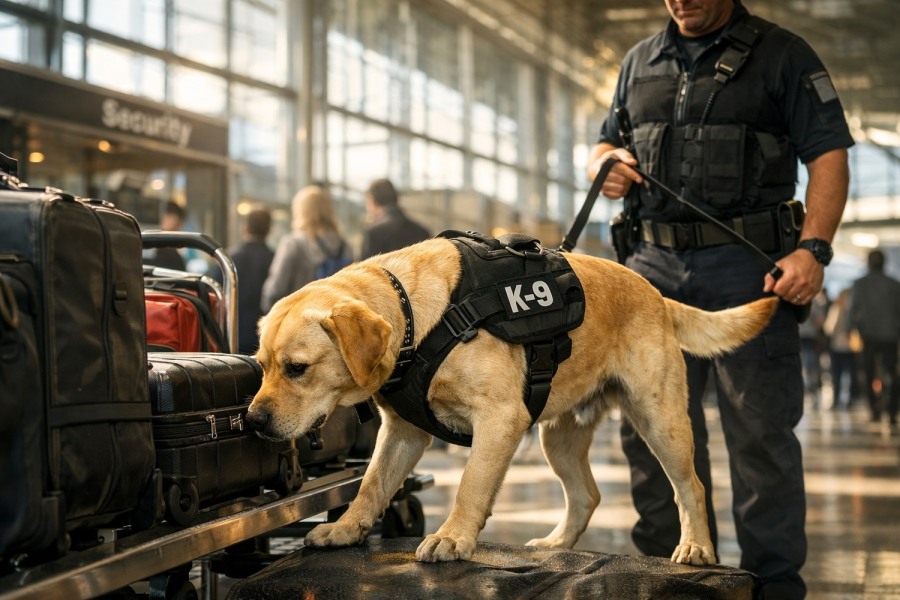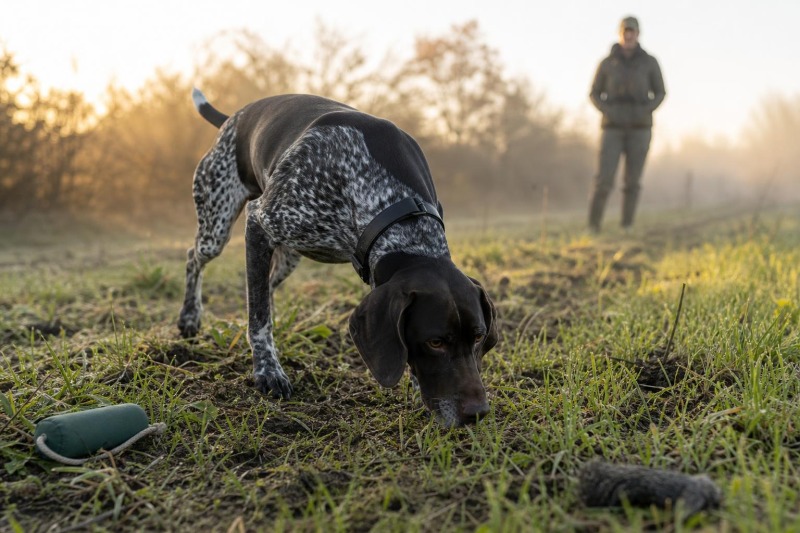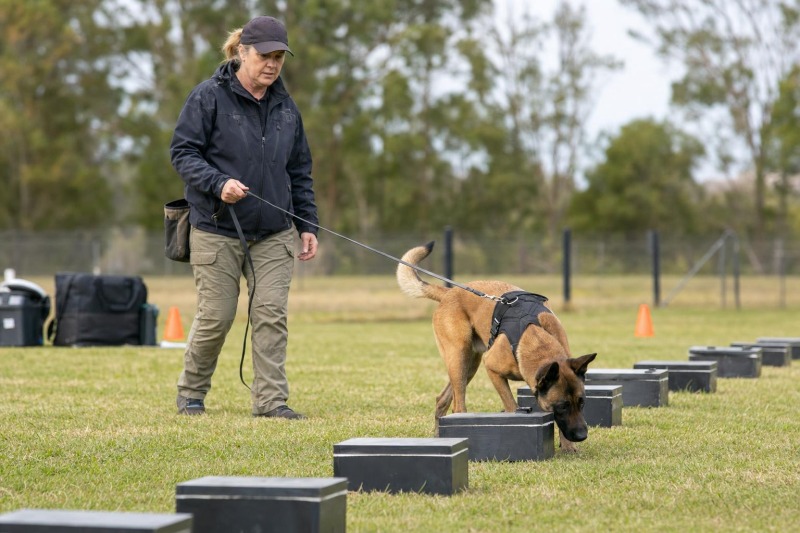
Detection training links a target odor with a clear search task and an identifiable response. Reward timing and well-designed exercises help the dog understand that task. Handlers also need ways to check performance without unintentionally cueing the answer.
For dog owners interested in working dogs, detection work offers one of the clearest ways to channel a dog’s natural hunting instinct into a disciplined job. Whether your goals are sport, service, hunting applications, or professional working roles, the early foundation determines how dependable that dog will be when the pressure rises. A reliable detector is not built by rushing to complex searches. It is built by layering motivation, odor value, clear indication, and handling skills until the dog understands the game and loves to play it.
What Detection Training Really Begins With
Most folks think detection training starts with odor. It starts with desire. A dog that does not want to hunt, possess, solve, and engage will always be harder to train than a dog with natural drive. That does not mean every detection dog has to be wild or high strung. It means the dog must care deeply about the reward and be willing to work to find it.
That kind of dog gives you something to build on. If the reward is weak, the hunt will be weak. If the dog lacks confidence, the search can get sticky in unfamiliar spaces. Detection fundamentals are not only about scent discrimination. They are about building a dog that believes searching is the best part of the day.
This is where handlers often make their first mistake. They focus on obedience before engagement. Obedience matters, of course, but a detection dog must first learn that using its nose creates success. A clean heel does not find odor. A committed search does.
Scent Imprinting and Reward Association
Once the dog has strong hunt and reward drive, scent imprinting becomes the next major step. In plain terms, imprinting means teaching the dog that a specific target odor predicts something valuable. You are creating a direct line in the dog’s mind between that odor and the reward it craves.
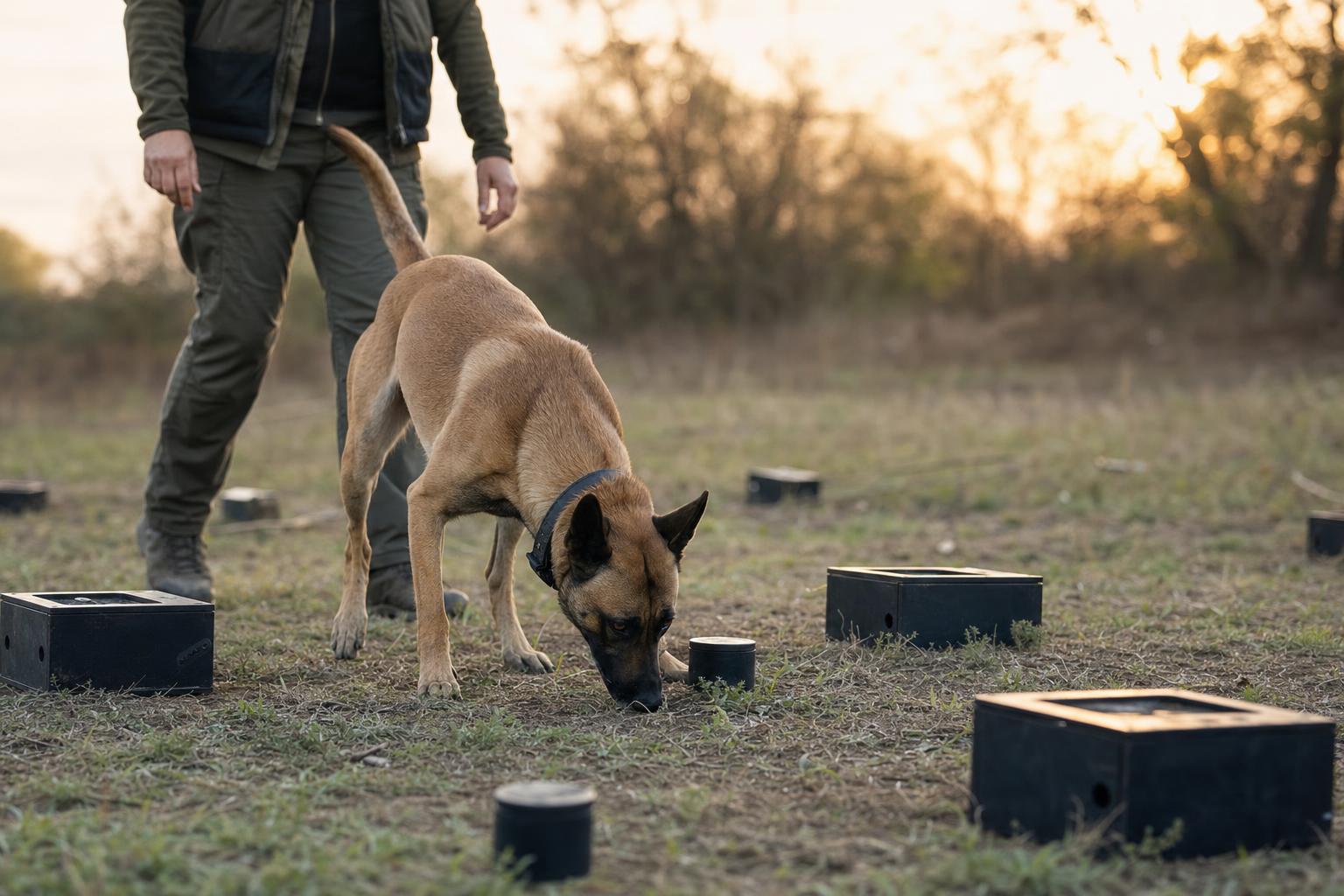
The cleanest way to start is simple and controlled. Present target odor in a way that lets the dog encounter it without confusion, then immediately pay with the reward. Over time, the dog stops searching for the toy alone and starts searching for the odor that leads to the toy. That shift is everything. It is the moment the dog begins to understand the rules of detection work.
A young dog does not need a maze of hides, scent contamination, and handler chatter. It needs successful encounters that make sense. When the odor consistently leads to the payoff, value builds fast. When sessions are muddy and inconsistent, dogs start guessing, and guessing is poison in detection work.
Why Timing Matters
Reward timing can tighten or weaken the whole picture. If the dog locates odor and you hesitate, fumble, or reward in the wrong place, you can blur the lesson. The dog should learn that commitment to source is what wins. That means the handler must pay attention to exactly where the dog finds the odor and exactly what behavior appears at the moment of success.
Good timing also protects confidence. Young dogs need to feel right. If they repeatedly work hard and cannot understand why the reward comes late or not at all, enthusiasm fades. A detection dog should leave training wanting one more search.
Teaching the Search
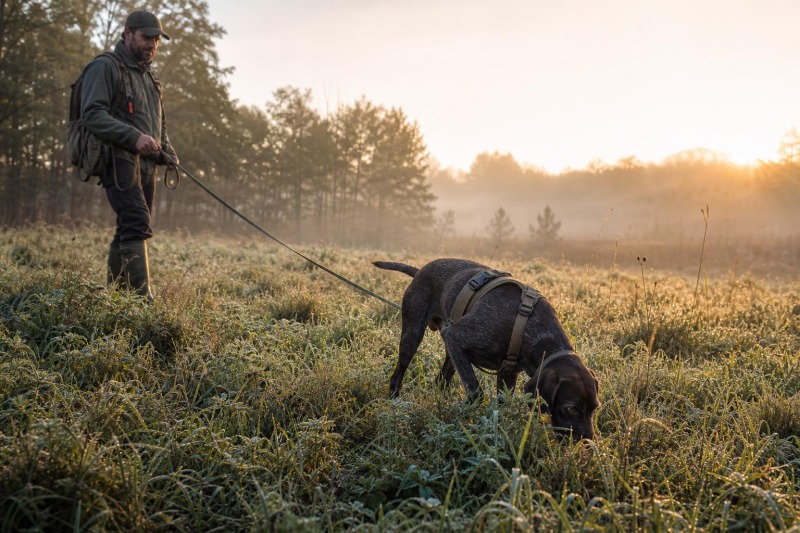
Searching is more than running around with the nose down. A proper search is an organized hunt shaped by the environment, odor movement, and the dog’s experience. Early on, the goal is not perfection. The goal is teaching the dog to stay in odor, problem-solve, and work independently without quitting.
That education comes in small stages. Start with straightforward hides that let the dog win. Then gradually add new rooms, new containers, outdoor areas, vehicles, and distractions. If you jump too far too fast, the dog may still find odor now and then, but the understanding underneath will be thin.
A good handler also learns to stay out of the dog’s way. That can be harder than it sounds. Many dogs fail searches because the handler crowds them, redirects them too soon, or unknowingly leads them away from odor. Silence, patience, and observation often do more than constant commands.
Reading Body Language at Source
Every strong detection team depends on the handler’s ability to read change of behavior. Before a dog offers a final indication, there is usually a story unfolding in the body. The head snaps, the breathing shortens, the tail carriage shifts, the dog brackets back into an odor cone, and the hunt gets tighter. Those details are not decoration. They are information.
The more time you spend watching your dog honestly, the sooner you will recognize the difference between true odor interest and random curiosity. A dog sniffing food residue on a wall does not look quite the same as a dog locking onto trained odor. Experience teaches that, but only if the handler watches more than he talks.
Building a Clear Final Indication
At some point the dog must communicate, in a consistent way, that it has located target odor. That final indication might be a sit, a down, a stand-stare, or another trained behavior depending on the type of work. What matters most is clarity, consistency, and safety for the environment being searched.
The indication should never fight the dog’s natural hunt. If you force too much obedience too early, the dog can become mechanical or hesitant at source. The dog learns that finding odor and holding position brings success.
Dogs that understand source tend to indicate with conviction. Dogs that have been rushed into formal response without enough odor understanding often show handler-dependent behavior. They look back, ask for help, or offer an indication where they think the reward should appear rather than where odor truly lives. That is a foundation problem, not a stubborn dog problem.
Common Mistakes That Slow Progress
Most detection issues trace back to simple handler errors repeated over time. One is advancing too quickly. Another is overhandling. Another still is poor hide placement that teaches the wrong lesson. If the dog can access reward without really solving odor, it learns to shortcut the process. If every search looks the same, the dog learns a pattern instead of learning scent.
Another common problem is training too long. Detection work is mentally demanding. A short, sharp session with good rewards often produces better progress than a drawn-out lesson where the dog starts to tire and guess. End with success while the dog still burns to continue.
Contamination is another issue that beginners underestimate. Dirty training aids, careless scent handling, and sloppy reward placement can muddy odor picture and create false associations. In detection work, details count. Dogs can sort out far more than we can smell, but that does not excuse poor training hygiene.
Proofing the Dog for Real-World Reliability
Once the basics are solid, proofing turns a promising dog into a dependable worker. This is where you test the dog against distraction, inaccessible hides, weather, novel locations, blank searches, and changing odor conditions. A finished dog is not one that can find odor in one familiar room. A finished dog can hunt in the real world without losing its head.
An empty barn one day, a breezy lot the next, then vehicles, equipment, clutter, and strange footing after that. Confidence grows when the dog learns that the same rules apply everywhere. Odor has value. Hunting finds odor. Source brings reward.
Blank searches are especially important. Dogs must learn that not every search contains target odor. If a dog expects reward every time, false alerts can creep in. A dog should search thoroughly, stay engaged, and accept that sometimes the answer is simply that nothing is there. That kind of honesty is part of real reliability.
The Handler’s Role in a Detection Team
Good detection dogs are memorable, but good handlers are steady. They bring consistency to training, protect the dog’s confidence, and know when to challenge and when to simplify. They do not blame the dog for every failure. They look first at setup, timing, pressure, and clarity.
They respected conditions. They watched the wind. They read terrain and structure. They understood that the dog was doing the smelling, but they still had a responsibility to set the dog up for success and interpret what the dog was telling them.
That partnership is what makes detection work so rewarding. It is not just training a command. It is building trust in a dog’s nose and developing your own eye for honest work.
Detection training fundamentals are not glamorous, but they are where reliable dogs come from. Build desire before complexity. Make target odor valuable. Teach clean searches. Reward at source. Shape a clear indication. Proof with patience. Above all, let the dog learn to love the hunt.
If you do that, you will not just have a dog that can perform in training. You will have a working partner that searches with confidence, communicates clearly, and carries that deep satisfaction every good hunting dog seems to know when it has done honest work.