Training Schools for K9 Handlers: What Separates the Good from the Gimmicks
A handler-training school needs to prepare people for the work they intend to do. Examine instruction, assessment, practical time, dog welfare, and support after the course. A certificate is more useful when its standards and scope are clear.
For dog owners interested in working dogs, whether the goal is detection, protection, patrol work, tracking, or another demanding job, choosing the right school is one of the biggest decisions you will make. The best programs teach the handler as hard as they teach the dog. That balance is what turns raw potential into dependable performance.
Why the Handler Matters as Much as the Dog
Folks new to the working dog world sometimes assume success is mostly about bloodlines, nerve, drive, and natural talent. Those things matter, no question. But a good K9 team is built in the space between dog and handler. The dog brings instinct and desire. The handler brings clarity, consistency, and judgment. A strong training school understands that and never treats the dog as a machine that can be programmed the same way every time.
Usually it was not because the dog was stubborn or hardheaded. More often the handler was late with correction, muddy with praise, or asking for more than the dog truly understood. A quality school teaches handlers how to avoid those holes before they become habits.
That is one of the first signs of a worthwhile K9 handler training program: it sharpens the human half of the team. If the curriculum is all flash and no education for the handler, keep looking.
Communication Comes Before Control
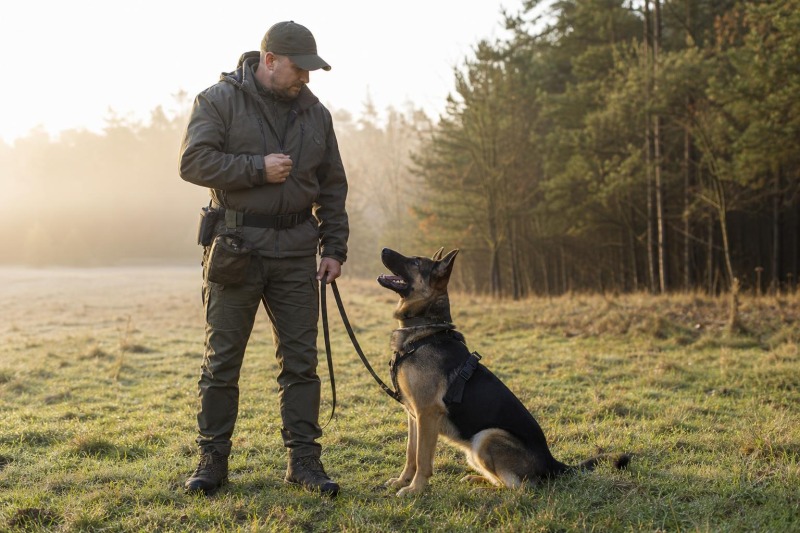
Everybody likes to talk about control, especially in the working dog world. But real control is born from communication. A reliable dog is not simply one that fears making a mistake. A reliable dog understands the assignment, trusts the handler, and has been shown the right path often enough that the correct behavior becomes natural under stress.
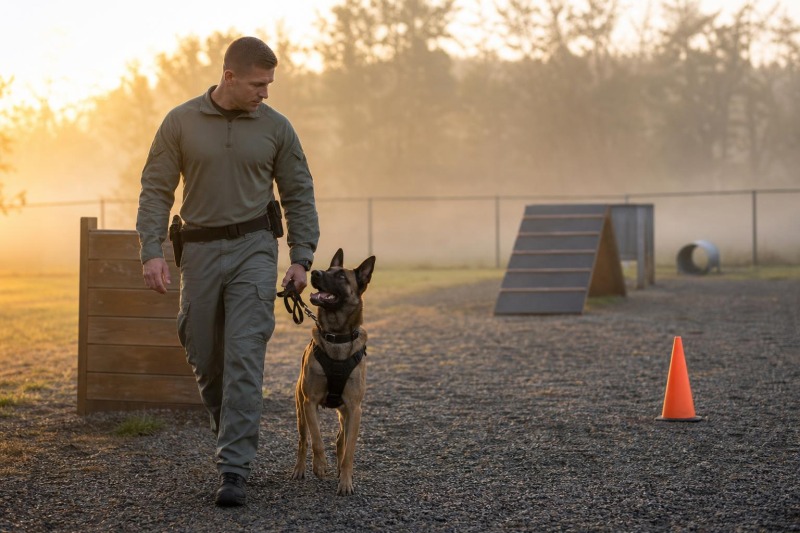
Good schools teach leash handling, body language, timing, marker work, environmental exposure, and problem solving in a way that makes sense to both ends of the lead. That kind of training does not just clean up behavior on a field. It carries over to deployment, testing, and daily life.
What to Look for in Training Schools for K9 Handlers
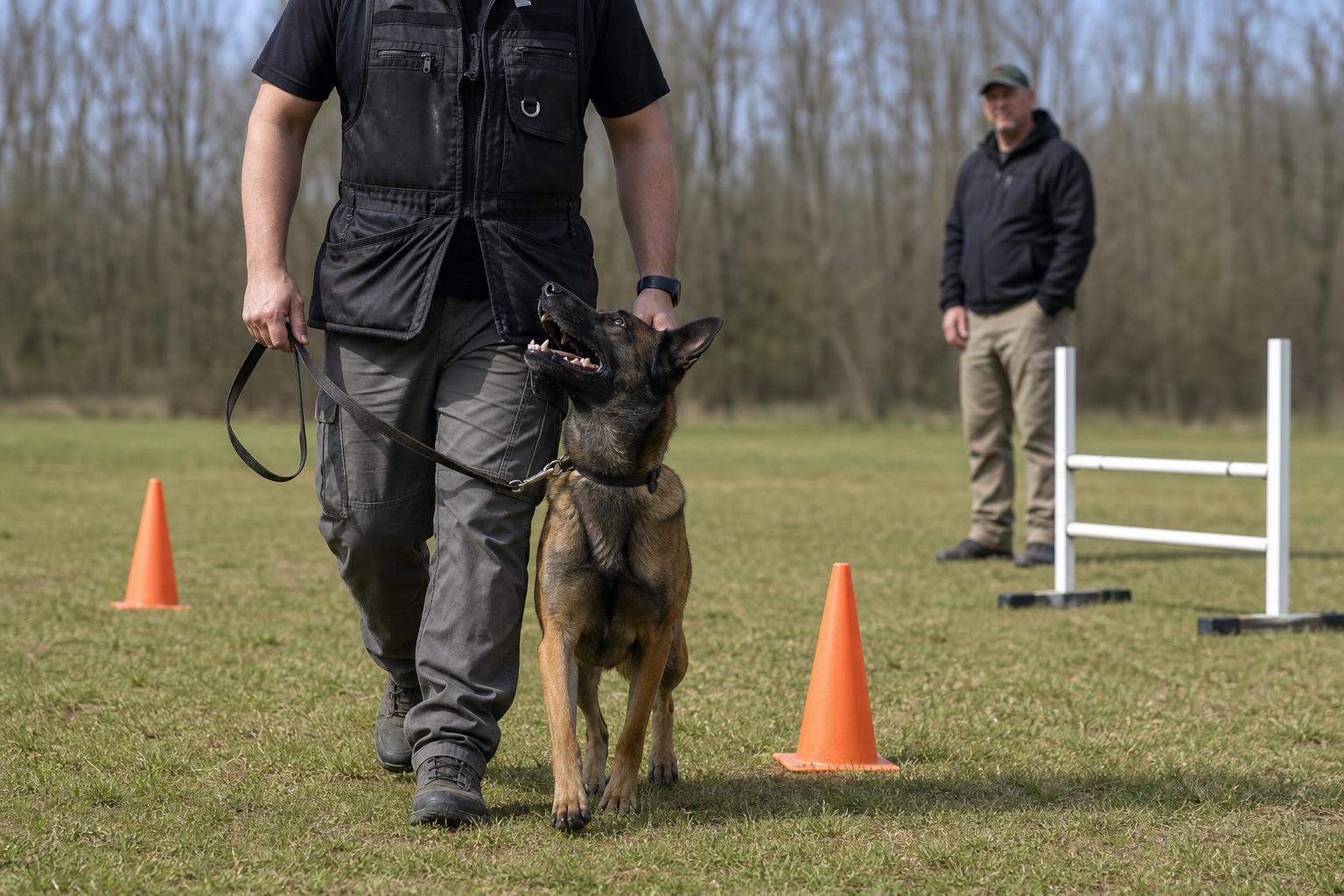
Watch how instructors move, how they speak, and how the dogs respond. You can learn more in one honest observation than from a dozen polished sales pitches. A reputable school should be able to explain why it trains the way it does, what standards it expects, and how it adapts to different dogs without losing consistency.
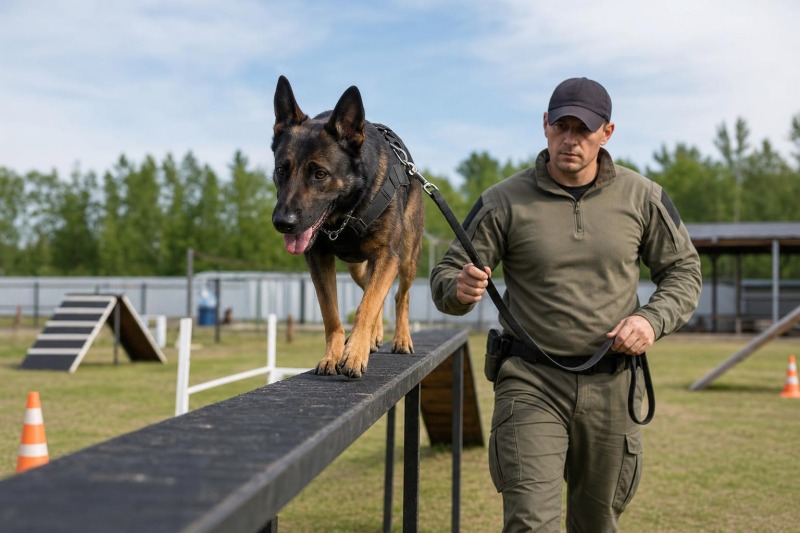
Look for a program that works dogs in realistic settings, not just on neat grass with no distractions. Real working dogs have to perform on slick floors, in loud environments, around strange people, through scent contamination, and under physical and mental pressure. Training schools for K9 handlers should prepare teams for that reality. If every session looks clean, scripted, and comfortable, the team may be in for a rude surprise later.
Another important factor is whether the instructors can teach different kinds of handlers. Some people arrive with a strong background and good feel. Others are green but eager. A good school can bring both along. The mark of a true instructor is not how well he works his own dog. It is how clearly he can help someone else improve theirs.
Decoy Work, Detection, Tracking, and Scenario Training
If the school focuses on protection or patrol, pay close attention to decoy work. Poor decoy work can create bad habits fast, including targeting issues, equipment fixation, weak grips, and conflict that should never have been introduced in the first place. Skilled decoys understand how to build the dog, challenge the dog, and read the dog in real time. That skill is worth its weight in gold.
For detection dogs, the school should demonstrate a structured progression. Handlers need to understand odor theory, search patterns, reward systems, contamination issues, and false indication prevention. Good detection training is not about frantic searching until the dog stumbles onto scent. It is about building a methodical dog and an observant handler who can trust what he is seeing.
Tracking schools should teach handlers how terrain, weather, age of track, and contamination affect the dog. There is a world of difference between following a clean practice track and handling a dog through tough ground where scent shifts and confidence gets tested. A sound program prepares you for both.
The Value of Pressure, Fairness, and Timing
One of the hardest things for a new handler to learn is how to apply pressure without turning training into a fight. The good schools teach this with patience. They show when to support the dog, when to challenge the dog, and when to back off before confusion takes root. That kind of judgment cannot be copied from a video clip or weekend seminar alone. It comes from careful instruction and hours on the ground.
The handler kept trying to clamp down harder each session, and the dog got louder, messier, and more frantic. An experienced instructor stepped in and changed the whole picture with cleaner communication, calmer repetition, and better reward placement. Within days the dog was still intense, but now that intensity had shape. That is what real instruction does. It does not crush drive. It channels it.
Fairness matters just as much. Dogs can handle a lot when they understand the game and trust the hand guiding them. They fall apart when they are corrected for things they do not fully understand. The best K9 training schools never lose sight of that line.
How the Best Schools Build Reliable Working Dog Teams
A serious school is not trying to produce a flashy dog for a social media clip. It is trying to build reliability. Reliability is the dog that outs when told, hunts when asked, stays clear in the head under pressure, and returns to work the next day with confidence intact. Reliability is also the handler who can make sound decisions when conditions are ugly and adrenaline is high.
That means the training has to include problem solving. Dogs should be worked through distractions, environmental challenges, hidden variables, and realistic scenarios. Handlers should be taught how to recognize stress signals, how to prevent training scars, and how to maintain standards after formal instruction ends. A school that gives you a dog that performs only on its home field has not done enough.
Handler Education Should Continue After the Course
The strongest programs understand that a K9 handler course is a beginning, not an ending. Teams need maintenance, tune-ups, and continued exposure if they are going to stay sharp. Good schools often encourage follow-up sessions, advanced classes, certification preparation, and honest evaluations long after the first block of training is complete.
That kind of support matters. Working dogs change as they mature. Handlers grow too. The issues you face at six months may not be the issues you face at two years. A school that remains a resource instead of just a vendor has real value.
Questions Worth Asking Before You Enroll
Before committing to any K9 handler training school, ask how dogs are evaluated, how handlers are coached, what training methods are used, and what outcomes are realistic for your dog and goals. Ask to see dogs at different stages, not just the polished finished ones. Ask how problem cases are handled. Ask what kind of maintenance the work requires once you leave.
Most of all, trust your eyes. Dogs should look engaged, not shut down. Handlers should look coached, not intimidated. Instructors should be confident enough to explain their process without hiding behind jargon. Good training has a certain honesty to it. You can feel it on the field.
Choosing the Right Path for You and Your Dog
There is no single school that fits every dog, every handler, or every job. A patrol team has different needs than a civilian protection handler. A detection prospect requires a different eye than a tracking dog. Still, the fundamentals stay the same. You want a school that builds communication, teaches practical handling skills, exposes teams to real-world conditions, and values clarity over theatrics.
For dog owners interested in working dogs, the right school can save time, money, and frustration while setting the stage for years of solid work. More than that, it can help you build the kind of bond that makes a working dog special in the first place. There is nothing quite like stepping into the field with a dog that understands his job, trusts your lead, and gives you everything he has. That kind of team does not happen by accident. It is built through good training, good handling, and the right school behind both.
Take your time, watch closely, and choose substance over show. In this line of work, that decision will follow you for a long while.