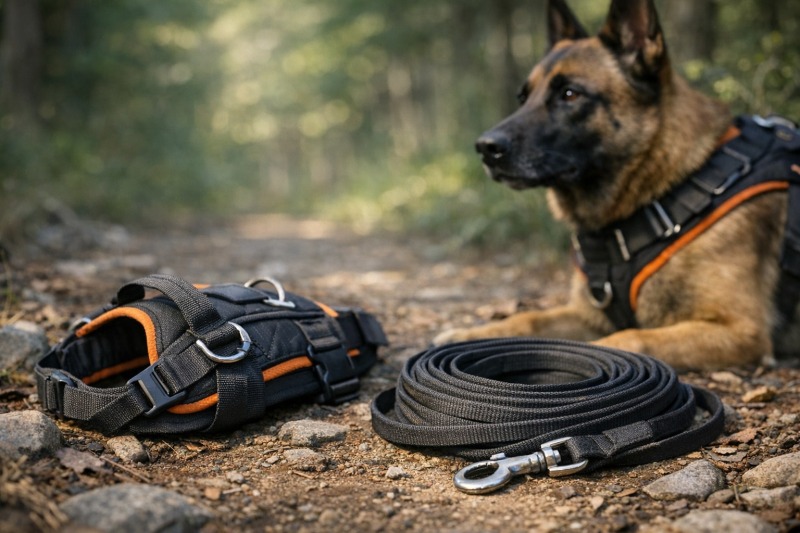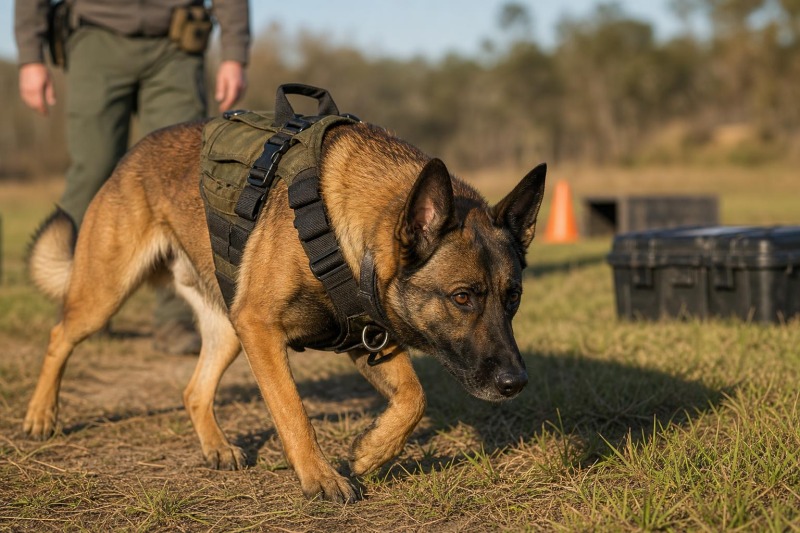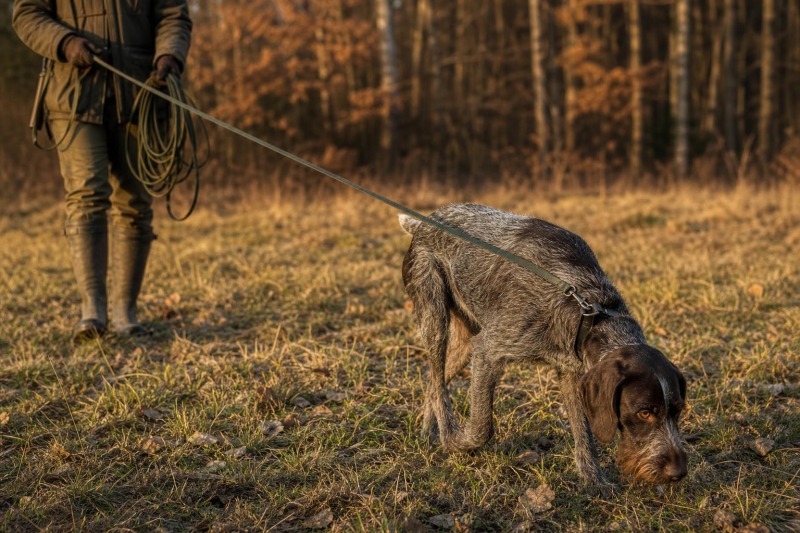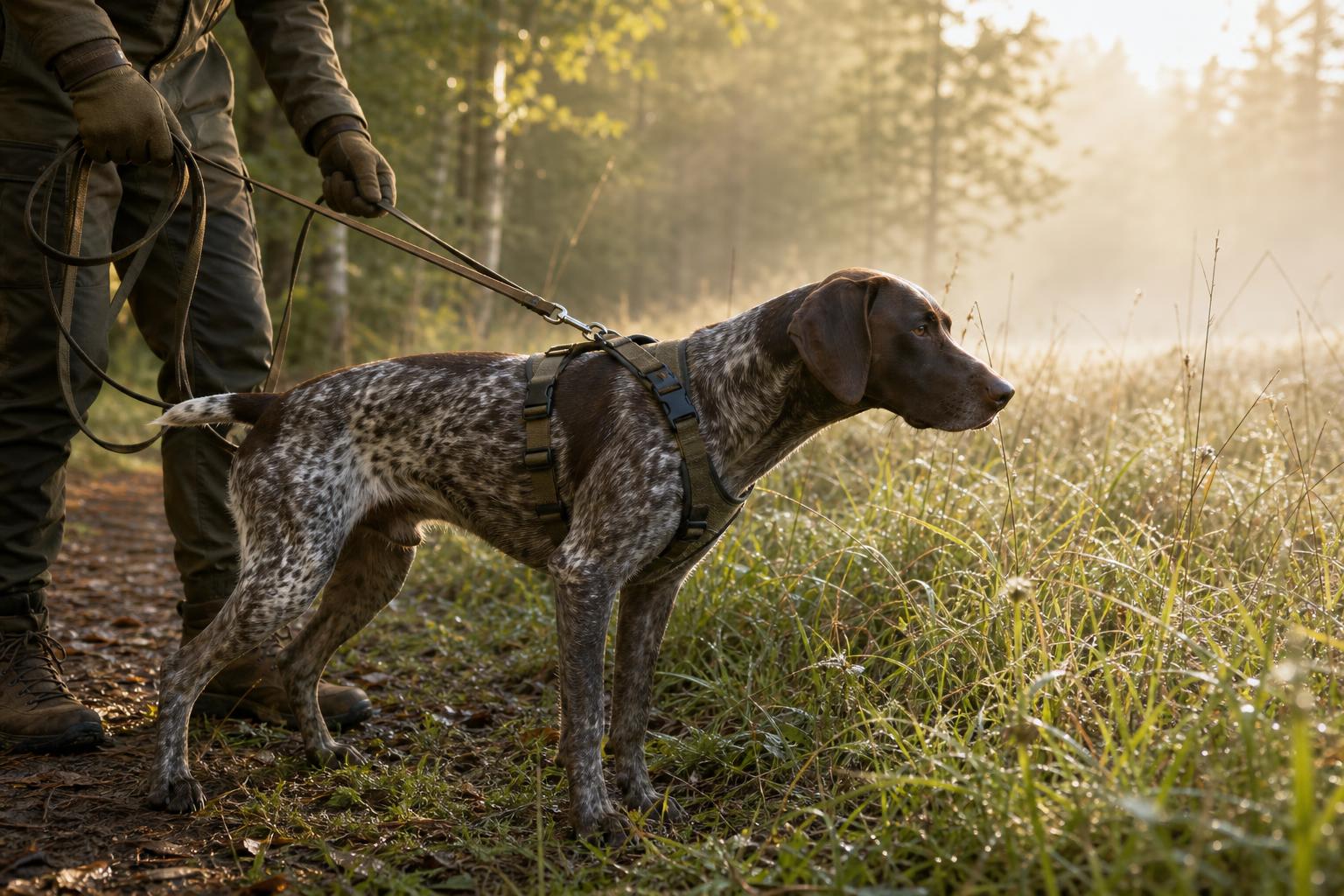
A tracking harness needs to fit comfortably while the dog moves and works against the line. Pressure distribution, secure adjustment, and the lead attachment affect its usefulness. Fit should be checked during the intended work, not only while the dog stands still.
In every kind of country, the same truth holds up: when a dog is asked to pull into scent and work with intention, the harness needs to support that effort without choking, pinching, or altering natural movement. That is the real job of a tracking harness.
What a Tracking Harness Is Designed to Do
A tracking harness is built to let a dog pull forward into a line while keeping pressure off the throat and distributing force across the chest and body. That matters because tracking is forward work. The dog lowers its head, leans into scent, and moves with purpose. A flat collar can interfere with breathing and comfort when the dog pulls steadily. A poorly designed harness can be just as bad if it rides up into the shoulders or rubs under the arms.
The best tracking harnesses give the dog freedom through the front assembly. That means the shoulder blades can extend naturally, the chest can take pressure where it is strongest, and the dog can work for a long time without hot spots or strain. You are not just buying restraint. You are buying freedom of motion under control.
That is an important distinction for anyone training a working dog. A harness should not feel like a punishment or a correction tool. For tracking, it becomes part of the dog’s work uniform. Many dogs learn to associate that harness with a very specific task. Once it goes on, they know they are expected to put their nose down and go to work.
How Tracking Harnesses Differ From Regular Harnesses
Not every harness is suited for tracking. A pet walking harness may be fine for neighborhood exercise, but that does not mean it belongs on a dog expected to follow a scent line through brush, fields, and uneven ground. Many everyday harnesses are built around convenience, visibility, or no-pull handling. Those goals are different from what a tracking dog needs.
A true tracking harness usually has a longer body and a line attachment set well back on the dog. That rearward attachment allows the line to pull from behind in a way that stays balanced and stable. It helps the harness remain aligned when the dog drives forward. A shorter harness or one with a high attachment point near the shoulders can shift too much, especially on a dog that works with enthusiasm.
There is also a practical difference in how the dog feels pressure. In a tracking harness, pressure should invite forward movement, not create confusion. Front-clip no-pull harnesses, for example, are made to redirect motion. That is useful in manners training, but it works against the purpose of scent work. When a dog needs to commit to a track, the last thing you want is equipment that discourages forward drive.
Why Shoulder Freedom Matters
If you watch a good dog move in profile, you can see how much reach comes from the shoulder. A harness that cuts across that motion can shorten stride and fatigue the dog faster. In thick cover or long tracks, that inefficiency adds up. Some dogs will keep grinding anyway because they are honest workers, but they should not have to compensate for bad gear.
A well-made tracking harness sits clear of the neck, lies flat on the body, and leaves room for full extension. That does not just improve comfort. It helps the dog perform naturally, and in working dogs, natural movement is never a small detail.
Getting the Right Fit
Fit is where many owners make mistakes. They buy by breed, assume all medium dogs wear roughly the same size, and head afield with straps either hanging loose or drawn too tight. Tracking harnesses need a secure fit, but not a restrictive one. The harness should be snug enough that it does not twist badly when the dog turns, yet open enough to allow breathing, shoulder action, and rib expansion.
The chest plate or front section should sit where pressure can be spread across the front of the dog rather than concentrated on soft tissue. The girth should be firm without digging in. You should be able to inspect for rubbing points around the elbows and under the chest. On a deep-chested dog, shape matters even more, because some harnesses fit broad, square dogs well but ride poorly on narrower frames.
One of the best habits a handler can develop is checking fit under actual working conditions. A harness that seems fine in the yard may shift differently when the line comes tight and the dog starts pulling into scent. Watch how it settles after ten or fifteen minutes of work. If it rolls, chafes, or creeps forward, it is telling you something.
Materials and Durability in the Field
Field gear lives a harder life than store-bought pet accessories. Mud, briars, wet grass, frozen ground, and repeated washing all take their toll. Good tracking harnesses are usually made from sturdy nylon, leather, or a combination of durable webbing and padded support. The right choice often comes down to the kind of country you hunt or train in and how much maintenance you are willing to do.
Nylon is practical, dries relatively fast, and holds up well to repeated use. Leather can be exceptionally durable and handsome, but it asks for care, especially in wet conditions. Hardware matters too. Weak buckles, cheap stitching, and flimsy rings tend to fail at the worst moment, usually when the dog is committed and you are a long way from the truck.
Flashy colors and extra attachments do not make a harness better. Strong stitching, thoughtful shape, smooth edges, and dependable line attachment points do.
Choosing a Tracking Harness for Your Dog’s Job
The kind of work your dog does should guide your choice. A dog doing recreational scent games in short sessions may do well in a lighter harness. A dog running long tracking lines, trailing wounded game, or training regularly for serious working performance needs something more substantial. You want enough structure to stay stable, but not so much bulk that the dog feels wrapped up.
Temperament also matters. Some dogs hit the end of the line like they are late for something important. Others are methodical and steady. A harder-driving dog often benefits from a harness with excellent balance and chest support because every weakness in design will show up under pressure. Softer, more deliberate dogs still deserve good fit, but they may not stress the harness in the same way.
If your dog is young, remember that fit can change as muscle and body condition change. What works at one stage of training may need adjustment later. Working dogs develop through use, and gear needs to keep up with them.
Common Mistakes Handlers Make
One mistake is assuming any harness is better than a collar. That is not always true. A poor harness can create friction, restrict gait, or send mixed signals. Another mistake is using the same harness for every task. Dogs benefit from clear context. When one harness means tracking and another setup means casual walking, training often becomes cleaner because the dog understands the assignment before the line even tightens.
Handlers also tend to overlook wear. A harness may still look serviceable hanging on a peg, but stress points weaken over time. Dirt trapped in padding can cause rubbing. Stiffened straps can stop lying flat. Good gear should be inspected regularly, especially if the dog works in rough cover or foul weather.
And then there is the old habit of overtightening. Folks worry that loose gear will fail, so they crank everything down. A tracking harness is not supposed to immobilize the dog. It is supposed to move with the dog while staying in position. There is a difference.
Why the Right Harness Builds Better Work
Good tracking is part instinct, part training, and part trust between dog and handler. The harness touches all three. It allows instinct to express itself through natural movement. It supports training by creating a clear work cue. And it strengthens trust because the dog learns that pressure on the line will not bring discomfort or confusion.
Their back levels out, the line goes steady, and every step says they believe what their nose is telling them. In those moments, gear fades into the background, and that is exactly how it should be. The right tracking harness does not call attention to itself. It simply lets a working dog work.
For owners stepping into the world of working dogs, that is the best way to think about this piece of equipment. Do not chase gimmicks. Look for sound design, proper fit, and honest durability. Put the harness on, clip into a quality line, and pay attention to what your dog tells you. A dog working comfortably and confidently will teach you more about harness selection than any package label ever could.