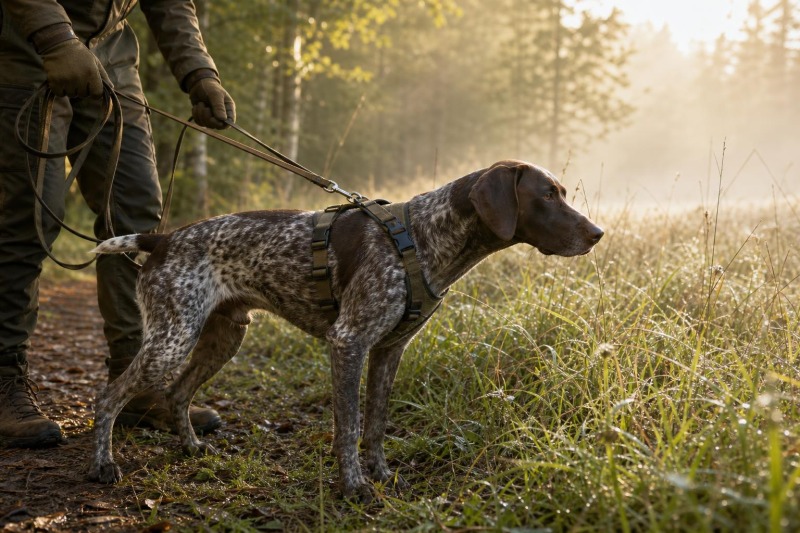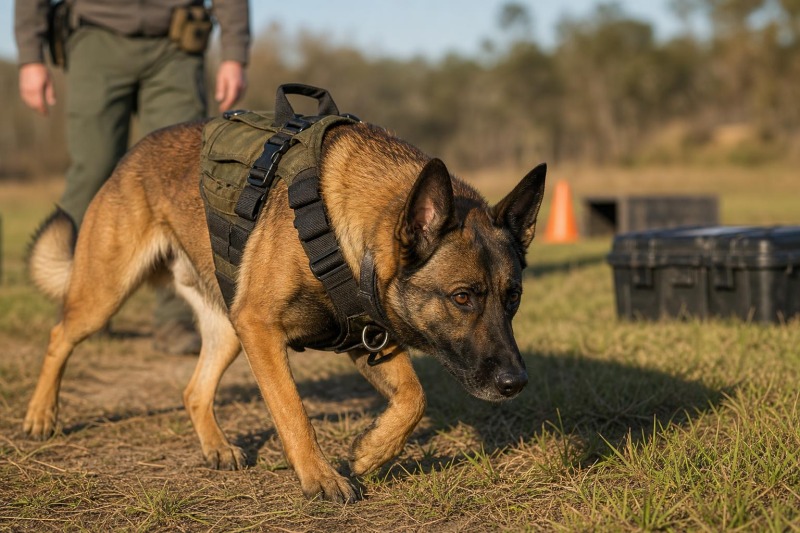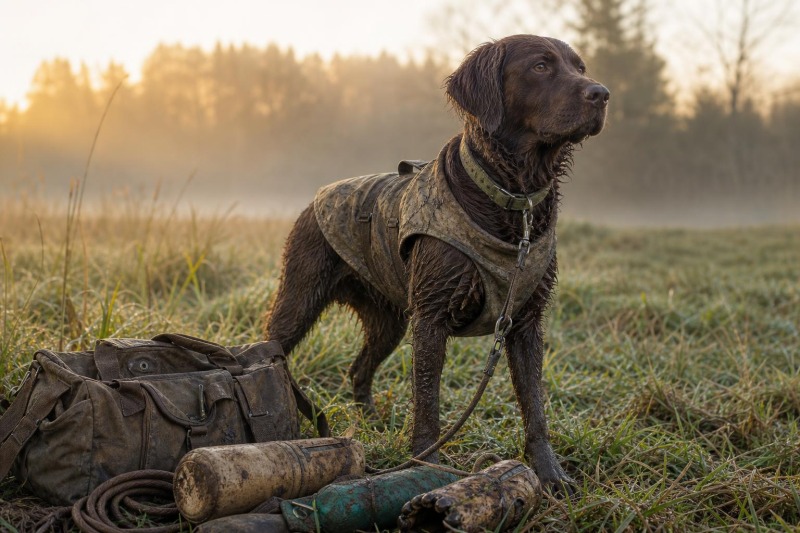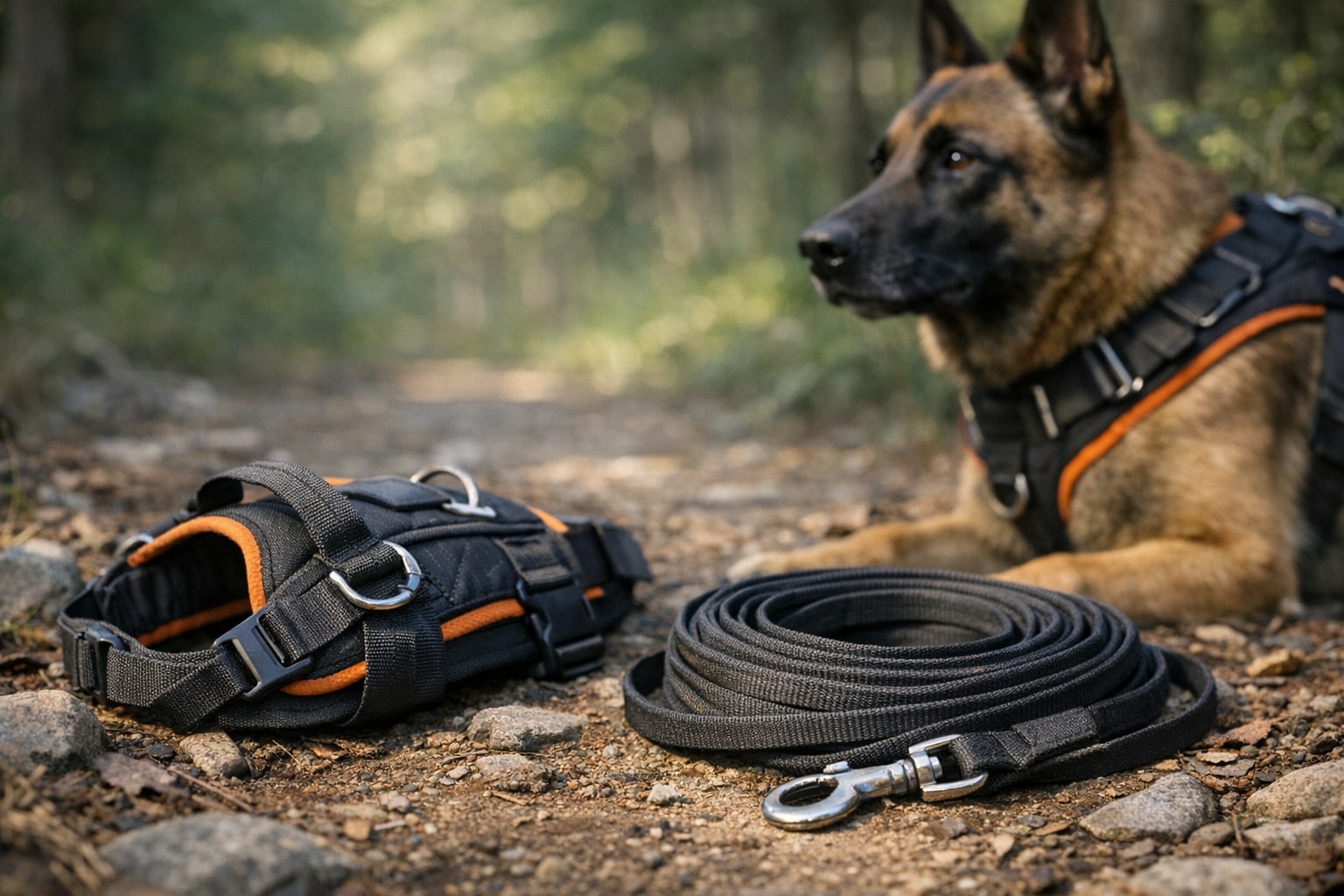
A tracking harness should allow useful movement while giving the handler a secure, comfortable connection to the dog. Fit under tension matters as much as fit at rest. Leads, attachment points, and clothing need to be considered as one working setup.
Tracking harnesses and equipment ought to be simple, durable, and suited to the kind of work you are asking the dog to do. Whether you are laying beginner tracks in a hay field, preparing a dog for sport work, or using a tracking dog in practical recovery situations, your gear needs to match the task. Fancy features do not impress me much in the field. Comfort, freedom of movement, line control, and reliability matter more than brand hype every single time.
Why a Tracking Harness Matters
A proper tracking harness does more than give you a place to attach a line. It tells the dog, both physically and mentally, that this is a different kind of work. A collar concentrates pressure around the neck, and while there are times a collar has its place, true tracking work usually benefits from a harness that allows forward drive through the chest and shoulders. When the dog lowers its head, leans into scent, and begins to pull with intent, the harness should distribute that pressure evenly and let the dog move naturally.
The best tracking harnesses do not ride up into the throat or bind the front assembly. That is where a lot of handlers go wrong. They buy something that fits like a pet-store walking harness, then wonder why the dog is crabby on the line or reluctant to commit. A tracking dog needs room to stretch, bend, and work with rhythm. If the harness interferes with stride or breathing, you are building frustration into every footstep of the track.
Fit Comes Before Everything Else
Chest depth, shoulder angle, rib shape, and coat all affect how a harness sits. A deep-chested shepherd, a compact retriever, and a rangy hound will not carry the same harness the same way, even if the tape measure says they should.
You want a harness that sits clear of the throat, stays stable under tension, and does not saw at the dog’s armpits. Watch the dog move in it before you ever run a track. Let the dog walk, turn, trot, and lower its head. If the straps shift badly or the back slides off center, you have a problem. Good fit in the yard saves confusion in the field.
The Main Types of Tracking Harnesses
There is no single perfect harness for every dog and every job, but there are a few broad styles worth understanding. Traditional tracking harnesses with a chest plate or Y-front design are common for serious line work because they encourage clean forward pressure without choking the dog down.
Agitation-style or heavier working harnesses sometimes get used because they are rugged and easy to find, but some of them are too bulky for precise scent work. If the harness is overbuilt, it can trap heat, restrict motion, or simply feel clumsy on a dog that needs to work delicately through corners and changes in surface.
Lightweight search-style harnesses can be useful in certain conditions, especially when the dog is covering ground and not expected to maintain the same kind of deliberate line pressure you see in footstep tracking.
Material and Hardware in Real Field Conditions
Leather feels good in the hand and can last a long time if cared for, but wet weather, mud, and neglect will show on it fast. Modern synthetic materials often make more sense for handlers who train often and train hard. Biothane-style lines and weather-resistant harness materials have earned a place in a lot of trucks for good reason. They shed water, clean up easily, and stay consistent in ugly conditions.
Hardware matters too. Cheap snaps, light stitching, and flimsy rings have no place in tracking equipment. Out in the field, gear failure is more than inconvenient. It can sour a dog, interrupt training at the worst possible moment, or create a safety problem if a dog breaks free near roads, livestock, or rough country. Strong buckles and solid attachment points are worth paying for.
The Tracking Line: Where Handlers Win or Lose
A lot of attention goes to harnesses, but the tracking line is where the handler’s mistakes often show up. A good line should run smoothly through your hands, resist tangling, and give you enough length to let the dog work independently while still staying connected to the picture. For many setups, a line in the 20- to 33-foot range is a practical place to start, though exact length depends on your style of work and training goals.
Too light and it floats, tangles, and catches. Too heavy and it interferes with the dog. Good line handling is an art that only gets better with practice, but the right equipment helps. A slick, well-made line that feeds cleanly can make a handler look calmer and more experienced than he feels, and that calmness carries straight down to the dog.
The attachment between harness and line should also be checked often. Twists, worn clips, and rough edges create problems over time. Field grit has a way of finding weak spots before you do.
Other Essential Tracking Equipment
Beyond the harness and line, a few pieces of tracking equipment round out a sensible kit. Flags or markers are useful in training, especially for young dogs and newer handlers learning to read behavior honestly. Scent articles, whether gloves, leather, or cloth depending on the work, need to be stored clean and handled with some thought.
Footwear and clothing for the handler matter more than many people admit. If you cannot move safely, watch the dog, and manage the line without fighting your own gear, you will not help the dog much. A field notebook is another old habit that pays off. Track length, age, weather, wind, ground cover, and the dog’s behavior all become valuable when you are trying to understand progress over weeks and months rather than one exciting morning.
Weather, Terrain, and Practical Adjustments
The right tracking setup can change with conditions. Wet grass, cut corn, pine duff, creek edges, and hard sun-baked ground all ask different questions of a dog. In thick cover, a line that is too long can be a nuisance. In open country, the same line may be just right. In summer heat, heavy harnesses can wear a dog down faster than you realize. In cold weather, stiff materials and frozen mud can turn comfortable gear into abrasive gear.
He was suddenly short and irritable on the line, drifting and checking back more than usual. The track was not the issue. Ice had built up along part of the harness where old moisture had frozen overnight, and every pull was rubbing him wrong. We fixed the gear and got the dog back. It was a good reminder that equipment should be checked with the same seriousness as scent conditions.
How to Choose the Right Tracking Gear for Your Dog
Start with your dog’s build, your training goals, and the country you work in most often. A young dog learning foundation tracking needs comfort and clarity above all else. A dog doing longer, more demanding tracks needs gear built for endurance. If you are handling a strong, driven dog, line quality and harness stability become even more important because small weaknesses get magnified fast under pressure.
Buy the best gear you can reasonably afford, but do not confuse expensive with appropriate. The right harness is the one that fits your dog, allows free movement, and holds up under honest use. The right line is the one you can manage smoothly and trust in rough conditions. If possible, test gear before fully committing to it. Watch how the dog works in it, not just how it looks hanging on a hook.
Good tracking work is built on nose, patience, repetition, and trust. Equipment will never replace training, but it can either support the work or quietly sabotage it. The best setups disappear in use. The dog settles into the harness, drops its head, and you feel that steady pull that tells you the animal is in the scent and committed. That is what you want. No fuss, no fight, just a dog doing the job it was bred and trained to do.
For dog owners interested in working dogs, choosing tracking harnesses and equipment is really about respecting the work. Fit the dog correctly. Keep the hardware simple and strong. Match the line to the terrain and the dog’s style. Pay attention to the little things before they become big ones. Do that, and you give your dog a fair chance to succeed every time you step onto a track.