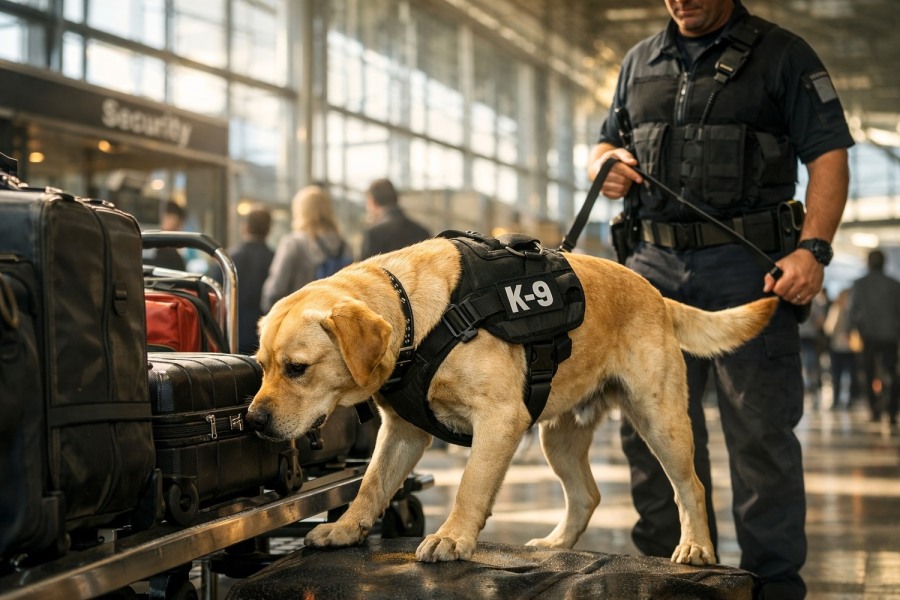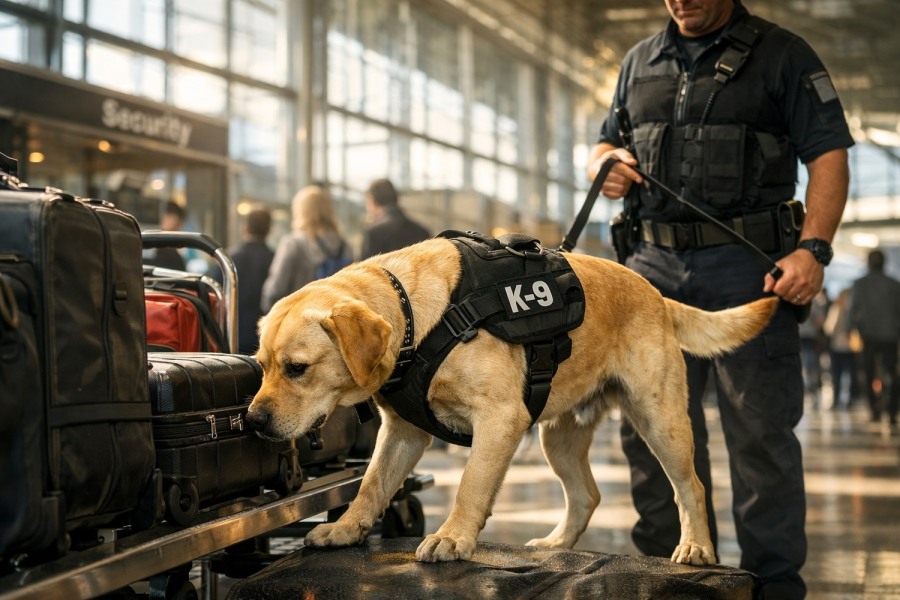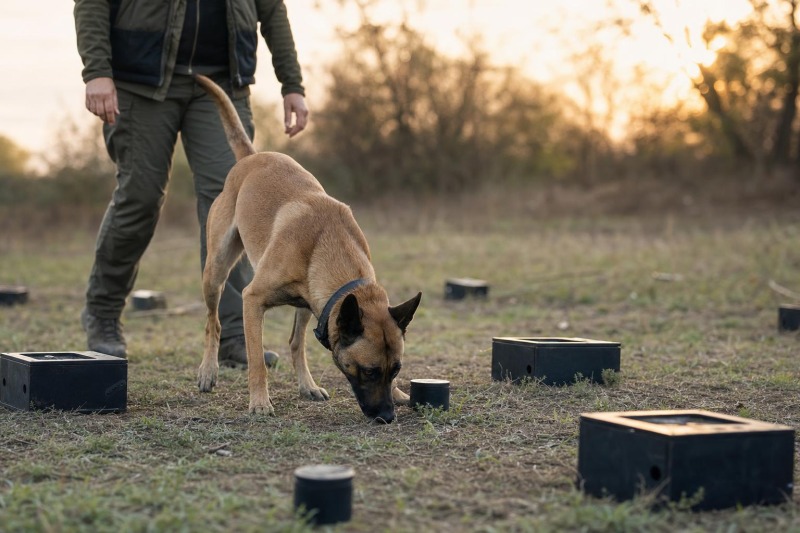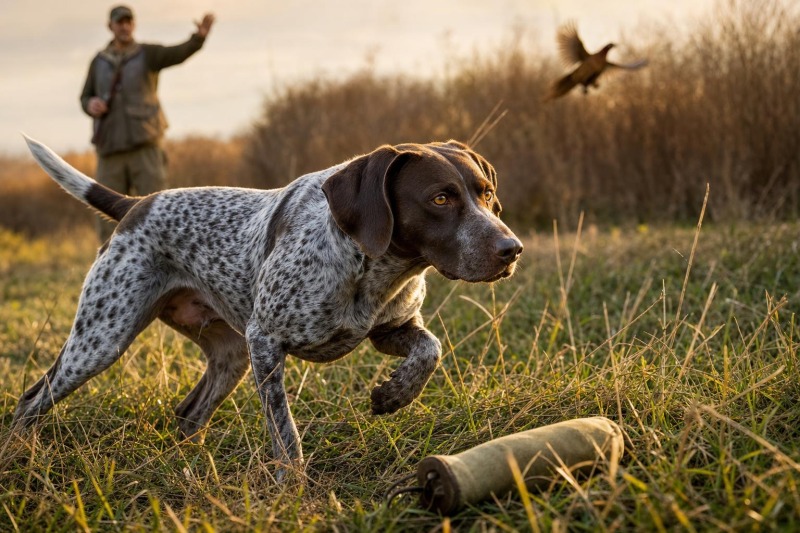
Scent training starts by making the target and the reward clear to the dog. Early exercises need to be simple enough for useful choices and careful enough for the handler to evaluate honestly. Complexity can be added once the foundation is reliable.
They get sloppy at source, quit too easily when scent gets difficult, or start looking back to the handler for answers instead of solving the problem on their own. Good scent training does the opposite. It builds confidence, independence, desire, and clarity. It teaches the dog that odor has meaning and that hunting for it is one of the best games in the world.
Whether your goal is detection work, tracking, trailing, shed hunting, or simply building stronger nose work habits in a working dog, the foundation remains the same. You are teaching the dog what to search for, how to stay in the hunt, and why it is worth the effort.
Start With Drive Before Precision
Precision has its place, but drive comes first. A dog that loves to search can be shaped into cleaner work. A dog that sees scent work as a chore is much harder to bring along.
In the beginning, your job is to make searching rewarding and clear. Let the dog win. Let the dog believe there is always something worth finding. Short sessions tend to beat long ones, especially with younger dogs. End while the dog is still eager, not after the wheels start to come off. That old principle from bird dog training still holds true here: leave them wanting more.
The reward should fit the dog. For some, that means a rolled towel, a ball, or a favorite bumper. For others, food works well, especially in early imprinting. What matters is intensity and consistency. The dog needs to learn that finding the target odor leads to something valuable every single time during foundation work. That strong association is what fuels commitment when conditions get tougher later on.
Why Hunt Drive Matters in Scent Work
A dog with healthy hunt drive will stay engaged when scent is faint, when wind shifts, or when the search area is unfamiliar. That kind of persistence does not come from correction-heavy training. It comes from repeated success, clear communication, and a history of rewards that made the dog believe the puzzle is worth solving. In practical terms, drive is what keeps the nose down and the brain working when things stop being easy.
Imprinting the Target Odor the Right Way
Once the dog is eager to search, the next step is odor recognition. This is where you teach the dog that a specific scent has value. Keep it simple in the beginning. One odor, one clear objective, one straightforward path to reward. The biggest favor you can do for a green dog is remove confusion.
However you set it up, the dog should leave that first stage convinced that this smell matters. Not sort of matters. Not maybe matters. It matters enough to trigger excitement the moment the dog catches it. That is the beginning of a reliable indication later on.
Clean handling is important here. Dogs read body language faster than most people realize. If you lean, stare, hover, or unconsciously point the dog into the hide, you may think the dog is learning odor when it is really learning you. That kind of shortcut comes back to bite handlers in a hurry. The dog needs to trust its nose, not your shoulders, your feet, or your breathing pattern.
Keep Early Problems Small
At the foundation stage, difficulty should be introduced in inches, not miles. Do not stack hard hides, contaminated areas, heavy distractions, and long durations all at once. Increase one piece at a time. Maybe the hide is a touch harder. Maybe the search area is a little larger. Maybe the reward is delayed for a moment longer. That steady progression builds understanding without draining confidence.
Teaching Search Behavior, Not Just Finding
A lot of handlers focus so much on the final find that they neglect the search itself. But searching is a behavior, and it needs development. The dog should learn to work systematically, stay engaged in the area, and continue hunting until the problem is solved. This is where patience on the handler’s part pays off.
Some dogs burst into a search area like they are shot out of a cannon. That enthusiasm is valuable, but it still needs direction. Other dogs start cautiously and need encouragement to range out and trust themselves. Either way, your role is not to solve the hide for the dog. Your role is to present the problem fairly and let the dog work through it.
When a dog begins to understand the game, you will see the body language change. The tail rhythm shifts. Breathing changes. Head snaps into scent. The dog starts making decisions instead of wandering. Those are the moments experienced handlers learn to read. A good nose dog speaks constantly through posture and movement long before any formal indication appears.
Building a Clear Indication
At some point, the dog has to tell you it has found source. How that looks depends on the work. Some handlers want a passive final response such as a sit or down. Others use an active indication. Whatever you choose, make it clear, consistent, and practical for the dog’s job.
The main thing is not to rush the indication before the dog understands odor. If you force a final response too early, the dog may start offering the behavior without real commitment to scent. That is how false alerts begin.
When the dog is confidently driving to source, then you can shape a cleaner finish. Reward at source. Reward the right picture. Make it easy for the dog to understand exactly what earns success. Over time, clarity creates speed, and speed paired with accuracy is what most handlers are after.
Handler Timing and Trust
Good scent training is not just about the dog. It is also about the person on the other end of the line, leash, or search setup. Timing matters. If you reward too early, you may mark interest instead of commitment. If you wait too long, you may muddy the lesson. If you help too much, the dog becomes dependent. If you correct too much, the dog may quit taking initiative.
They did not panic in silence. They did not crowd the dog the moment things got difficult. They watched, learned, and let the dog work. In the field, that kind of trust is priceless. A dog that knows it is allowed to solve the problem will often dig deeper than one that has been micromanaged from day one.
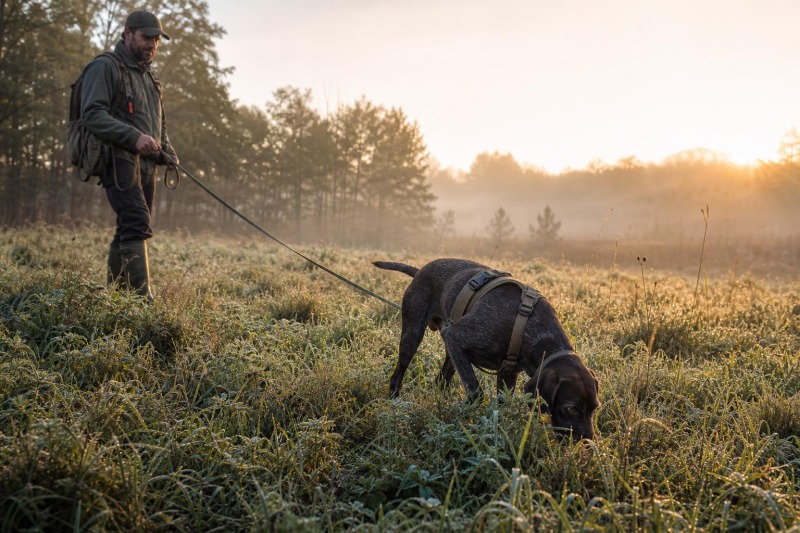
Frost on the grass, light breeze moving just enough to spread the picture, and the dog kept overshooting the source by a few yards. A nervous handler might have reeled him in or talked too much. He looped back, dropped his head, tightened his pattern, and pinned it on his own. That lesson was bigger than the hide. It taught him that when scent gets hard, stay in the hunt.
Proofing Without Damaging Confidence
Proofing is where many promising dogs get either sharpened or soured. Once your dog understands the target odor and will search with enthusiasm, you can begin adding realistic challenges. New locations, weather changes, surface changes, distractions, inaccessible hides, and longer search times all help turn a training dog into a dependable one.
But proofing should not become a string of gotcha moments. The idea is to strengthen the dog’s understanding, not trick it into failure. If the dog struggles, lower the difficulty and reestablish success. Strong working dogs are not built by constant frustration. They are built by learning how to work through manageable problems and come out right on the other side.
This is especially important for young dogs with plenty of talent but not much experience. Talent can make a dog look farther along than it really is. Resist the urge to show off advanced work before the foundation is settled. The field has a way of exposing shortcuts.
Consistency Turns Talent Into Reliability
Some were steady, plain, and almost quiet in their progress. But session after session, they learned the same lessons well. Hunt hard. Trust odor. Stay at source. Ignore noise. Solve the problem. That consistency is what eventually made them dependable.
If you are training your own working dog, remember that foundations are not glamorous, but they are where real performance comes from. Keep sessions purposeful. Reward honestly. Progress gradually. Let the dog use its nose more than you use your mouth. In time, the search becomes less of a game and more of a language between you and the dog.
That is when scent work gets good. You stop guessing so much. The dog stops asking for help every few seconds. You begin to see a partner emerge, one that can enter a new area, sort through conditions, and tell you something useful with confidence. Whether your dog is headed toward serious working roles or simply becoming a more capable hunting companion, that all starts with the same old truth: the foundation sets the ceiling.