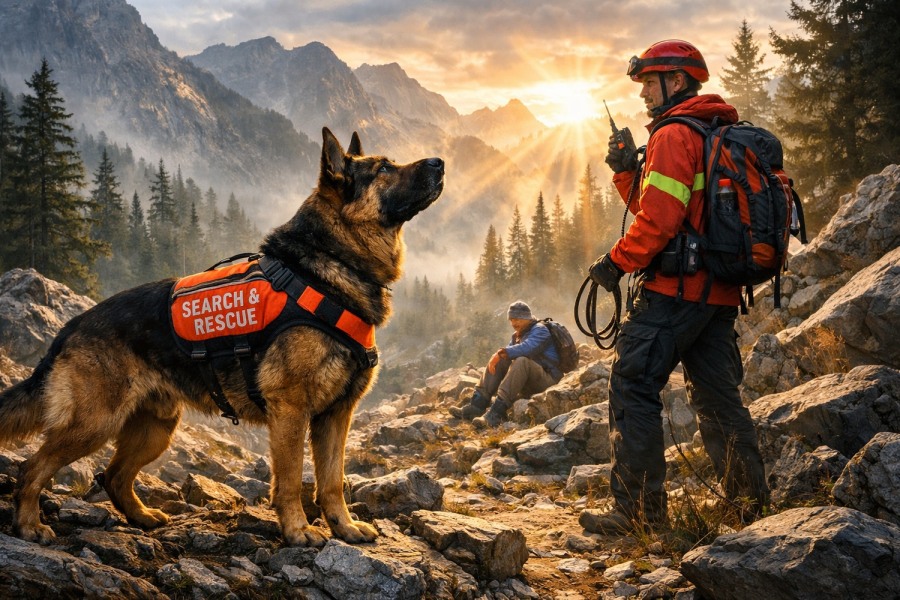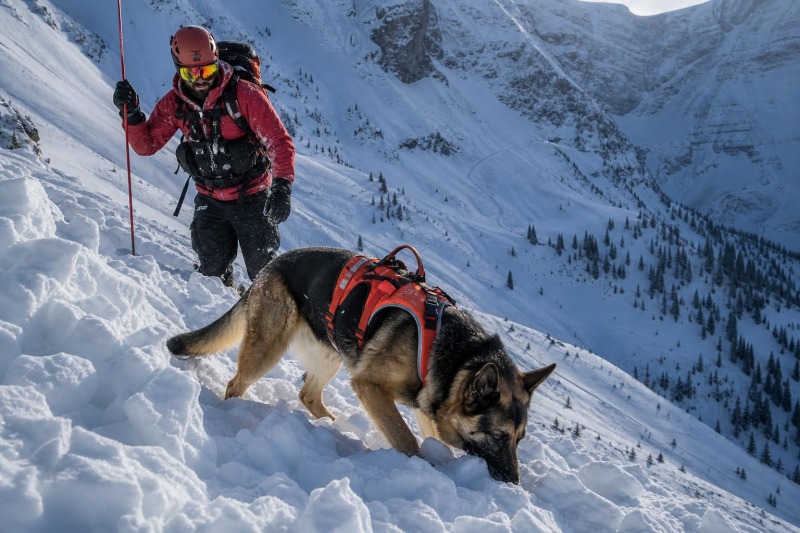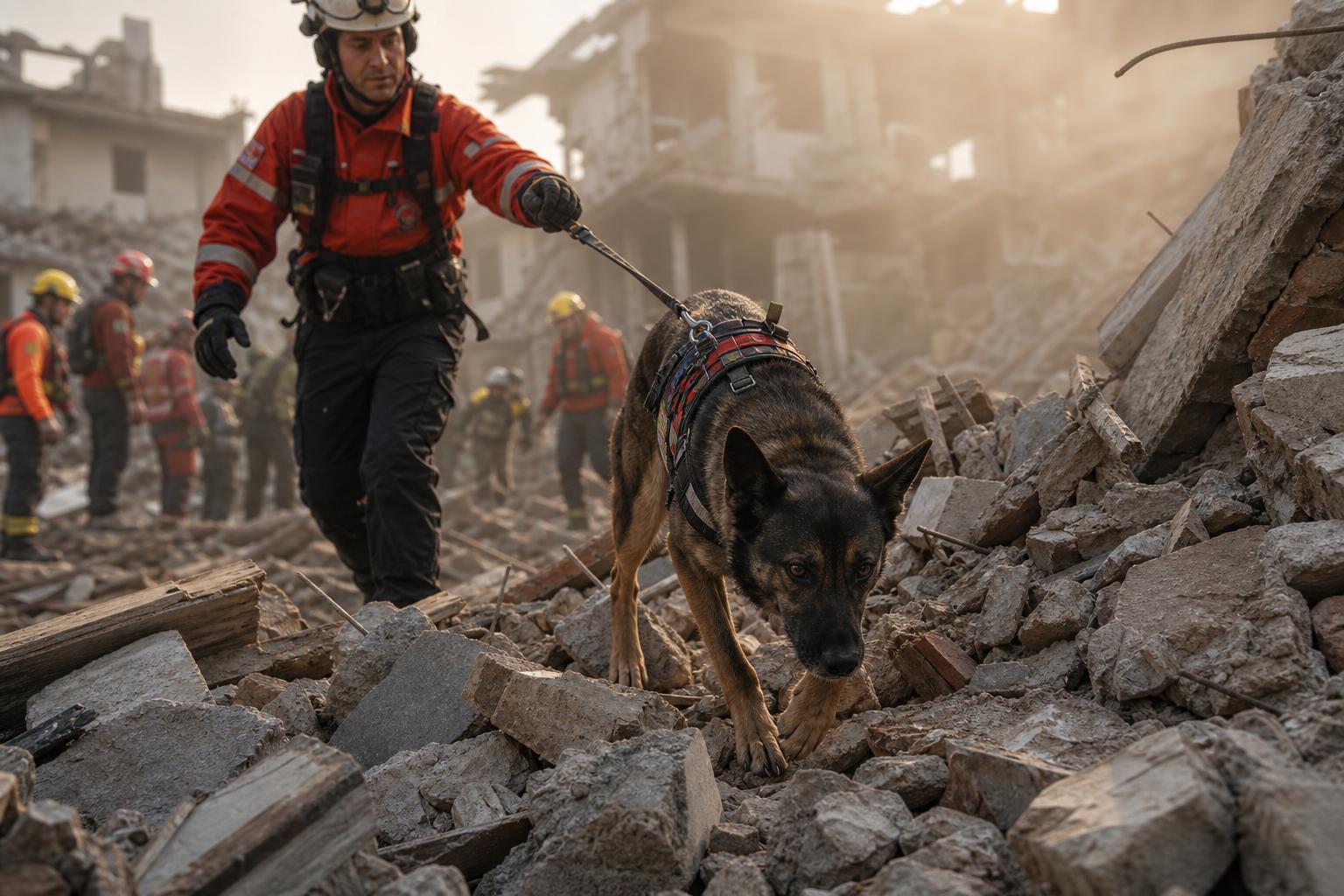
There are few jobs in the dog world that demand more grit, steadiness, and trust than disaster search work after an earthquake. When the ground has shifted, buildings have pancaked, and every second matters, nobody cares about pretty. They care about a dog that can climb unstable debris, work through smoke and dust, ignore noise and confusion, and use its nose to find the faintest trace of human scent where no machine can reach.
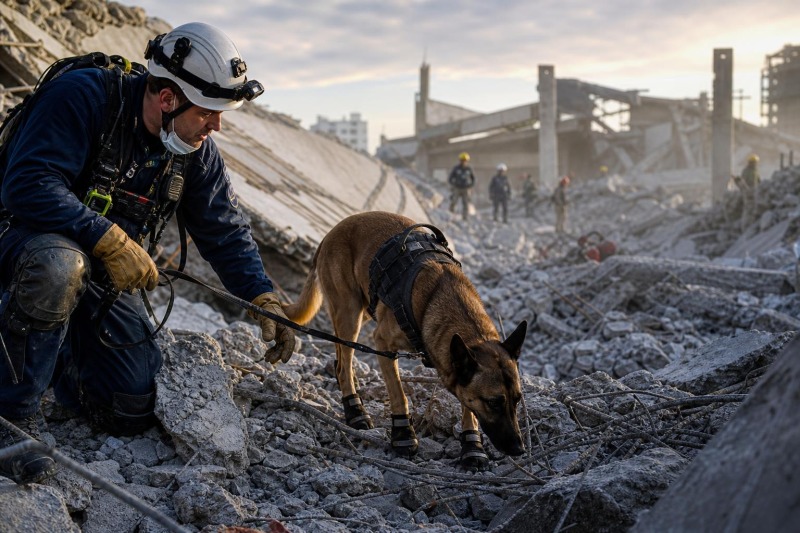
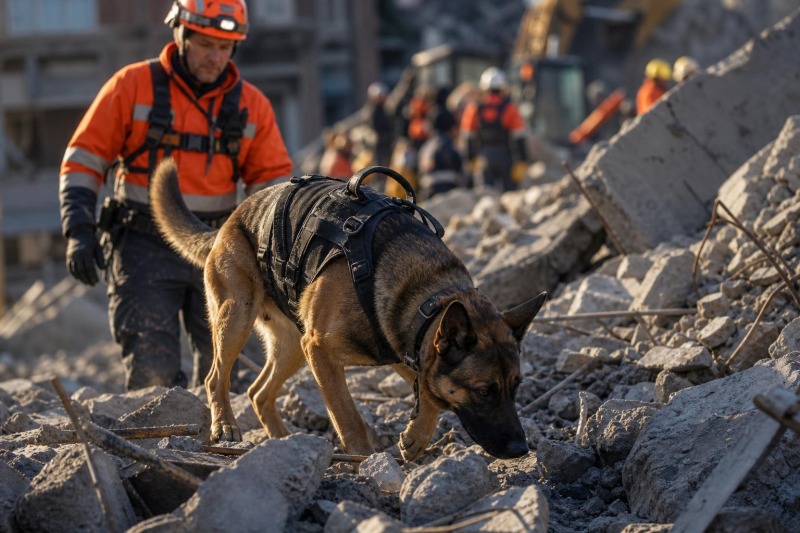
That is where disaster search dogs earn their reputation. After earthquakes, these dogs and their handlers move into scenes that feel more like battlefields than neighborhoods. Concrete hangs at odd angles, metal twists out of the rubble, and the air carries gas, dust, and fear. In that chaos, a trained search dog does what generations of good working dogs have always done. It hunts with purpose. Only now, instead of tracking game through timber or locating birds in heavy cover, it is searching for survivors buried beneath layers of wreckage.
What Disaster Search Dogs Do After Earthquakes
Disaster search dogs are trained to locate human scent in collapsed structures and debris fields after events like earthquakes, explosions, and major building failures. Their work is not guesswork and it is not random. A skilled dog moves into the wind, samples scent, and follows airborne odor where it pools, drifts, and escapes through cracks in the rubble. That may sound simple from the outside, but anyone who has watched scent behave in rough country or changing weather knows better. Odor is alive. It shifts with temperature, pressure, airflow, moisture, and terrain. In a collapsed urban environment, those variables become even more complex.
After an earthquake, rescue teams often deploy dogs early because they can cover ground fast and indicate likely live finds in places where equipment and people would take far longer. A dog can climb, weave, and probe the edges of a debris pile with remarkable speed. When it catches human scent and works to source, it gives rescuers a starting point. That single alert can change the direction of an entire operation.
Most live-find disaster dogs are trained to bark when they locate a scent source strongly enough to indicate a trapped person. The bark must be committed, clear, and sustained. In the middle of machinery, shouting, radios, and shifting debris, there is no room for a vague response. The dog has to tell the handler, and the handler has to trust what that dog is saying.
The Nose That Makes the Difference
People admire these dogs for their courage, and rightly so, but the true marvel is the nose paired with the brain behind it. A dog can separate human scent from dust, fuel, concrete, food, and the thousand distractions that come with a disaster zone. It can detect scent moving through tiny voids where a living person may be trapped. Time and again, rescue teams have found survivors because a dog worked odor no person could see and no machine had yet confirmed.
You can tell when a dog understands the task and when it is just performing around the edges of it. Disaster search dogs that succeed after earthquakes are not just energetic. They are problem solvers. They stay in the hunt when footing gets treacherous, when scent thins out, and when the reward is not immediate. That kind of persistence cannot be faked for long.
Why Air Scenting Matters in Rubble
Unlike tracking dogs that follow footstep disturbance or ground scent, earthquake search dogs often work primarily on airborne human odor. Scent rises, falls, and slips through broken slabs and crushed interiors in unpredictable ways. A dog may catch odor at one point, overshoot, circle back, and then drive toward a spot that seems wrong to an untrained eye. Experienced handlers learn to read that pattern. They know when the dog is in odor, when it is sorting, and when it has locked onto source.
This is one reason handlers and dogs must be built as a team. The dog brings the nose. The handler brings judgment, timing, and safety awareness. Together, they make the search effective.
How Earthquake Search Dogs Are Trained
No dog wakes up ready for collapsed structure work. Training starts with drives most good working dog people already respect: hunt drive, toy drive, confidence, resilience, and the desire to stay engaged with a job. The best prospects usually love to search, love to be rewarded, and recover quickly from stress. They also need a sound body. Weak nerves and poor structure have no place on the rubble pile.
Training usually begins as a game. The dog learns that finding a hidden person leads to a favorite reward, often a toy. That reward matters more than many folks realize. In hard work, motivation is the engine. The dog must believe that hunting for human scent is the best game in the world. From there, the training grows more difficult. Hides become deeper, scent problems get more complicated, and surfaces become louder, sharper, and less predictable underfoot.
Handlers gradually expose dogs to unstable footing, dark voids, ladders, narrow passages, loud equipment, and the distractions common at disaster scenes. The idea is not to make the dog reckless. It is to make the dog steady. There is a difference. A useful dog does not panic, and it does not need to be bullied forward. It understands that rough terrain and confusion are simply part of the job.
The Temperament Needed for the Work
Some are too soft. Some are too independent. Some have plenty of prey drive but not enough clarity under pressure. Earthquake search demands a dog that can switch on hard, work with intensity, and still remain controllable and clear-headed. It must be social enough to work around strangers, disciplined enough to handle direction, and tough enough to keep going when the environment feels unnatural.
Good handlers are just as rare. They need patience, mechanical understanding of scent, physical stamina, and the humility to keep learning. A handler who cannot read a dog is a liability. A handler who cannot protect a dog in hazardous conditions is worse.
The Real Challenges on an Earthquake Deployment
Folks who picture search dogs bounding heroically over rubble are seeing only part of the truth. The work is dangerous and draining. Earthquake sites can hold sharp rebar, shattered glass, toxic dust, broken utilities, extreme heat, aftershocks, and unstable void spaces. Dogs may work in boots depending on conditions, but boots come with tradeoffs in traction and feel. Hydration, paw care, rest cycles, and heat management become serious concerns.
Then there is the emotional load. A deployment after a major earthquake is not a training day where everybody goes home smiling. There may be live finds, and there may be none. Teams can work long hours in heartbreaking conditions. Dogs read pressure. Handlers do too. The best teams maintain routine and clarity even when the scene is heavy. The dog still needs a clean task, clean communication, and fair reward.
Noise, sirens, crying, generators, crowds, and the smell of fear can shake an animal that looked sharp in a calm training environment. That is why realistic exposure matters. You cannot prepare a dog for earthquake rescue by keeping training tidy and predictable.
Why These Working Dogs Matter So Much
Technology has come a long way, and modern rescue teams use cameras, acoustic devices, drones, and heavy equipment. Still, the dog remains one of the fastest and most flexible tools for locating human scent in a debris field. A good disaster search dog can clear sections efficiently, direct attention to likely scent sources, and help rescuers prioritize where to dig. In the first critical window after an earthquake, that speed can save lives.
There is also something deeply practical about the dog’s role. Machines are limited by access, battery life, line of sight, and terrain. A dog does not need a clear opening to tell you scent is venting from below. It only needs room to work and a handler who knows how to listen.
That does not make these dogs magical, and it is important to stay honest about that. They are trained partners, not myths. They are subject to fatigue, environment, and the realities of scent. But in the hands of skilled handlers, they remain among the most valuable assets a rescue team can bring to an earthquake zone.
The Bond Between Handler and Search Dog
If you spend enough years around working dogs, you learn that trust is the whole game. In earthquake search, that trust runs both ways. The handler must trust the dog’s nose when the scene is confusing. The dog must trust the handler’s direction when the footing is uncertain and the pressure is high. That kind of partnership is not built with shortcuts. It comes from repetition, fair training, shared hardship, and a lot of miles together.
There is a plainspoken beauty to that bond. In the middle of wreckage and dust, with worried families watching from behind the tape, a dog works because it has been taught that finding a person matters and that its handler will meet that effort every step of the way. For all our tools and all our planning, rescue still comes down to living beings doing difficult work for one another.
For dog owners interested in working dogs, disaster search after earthquakes stands as one of the clearest examples of canine purpose. These dogs are not ornaments. They are not social media props. They are athletes, scent specialists, and partners in life-saving missions. Watching a truly capable search dog work a rubble pile will leave a mark on you. It reminds you what the domestic dog can still be when instinct, training, and human partnership come together in the right way.
And maybe that is the lasting lesson. Whether a dog is hunting birds, trailing game, guarding stock, or searching collapsed buildings after an earthquake, the old truths still hold. Breed for function. Train for reality. Respect the nose. And never mistake style for substance when lives are on the line.