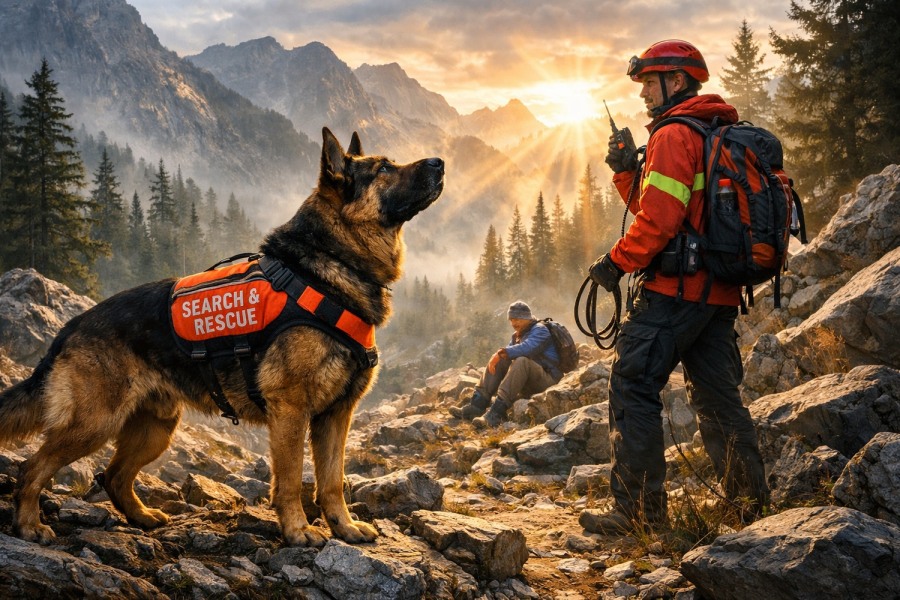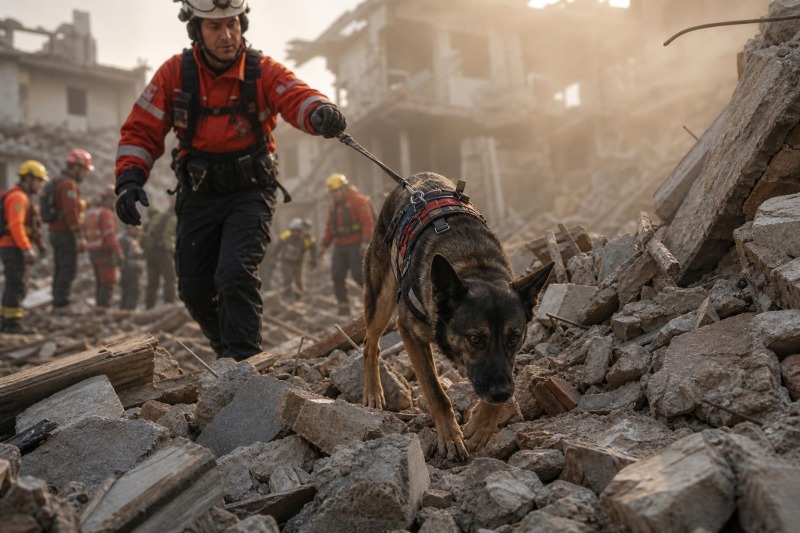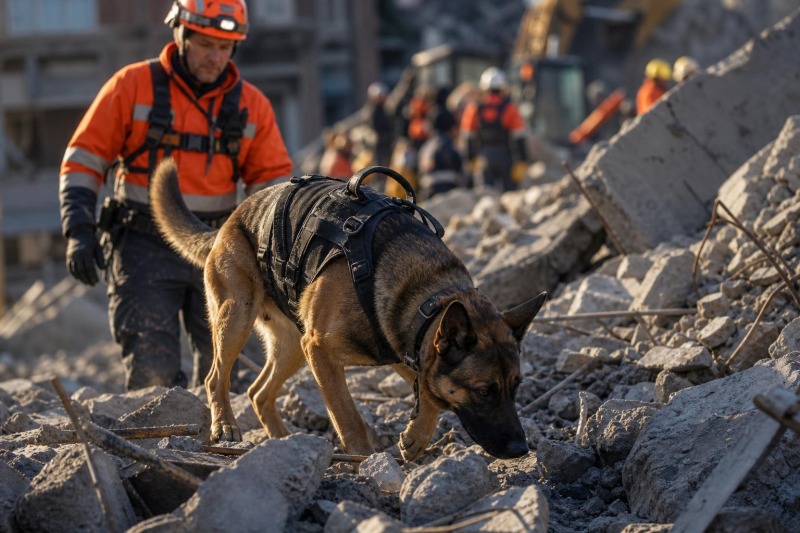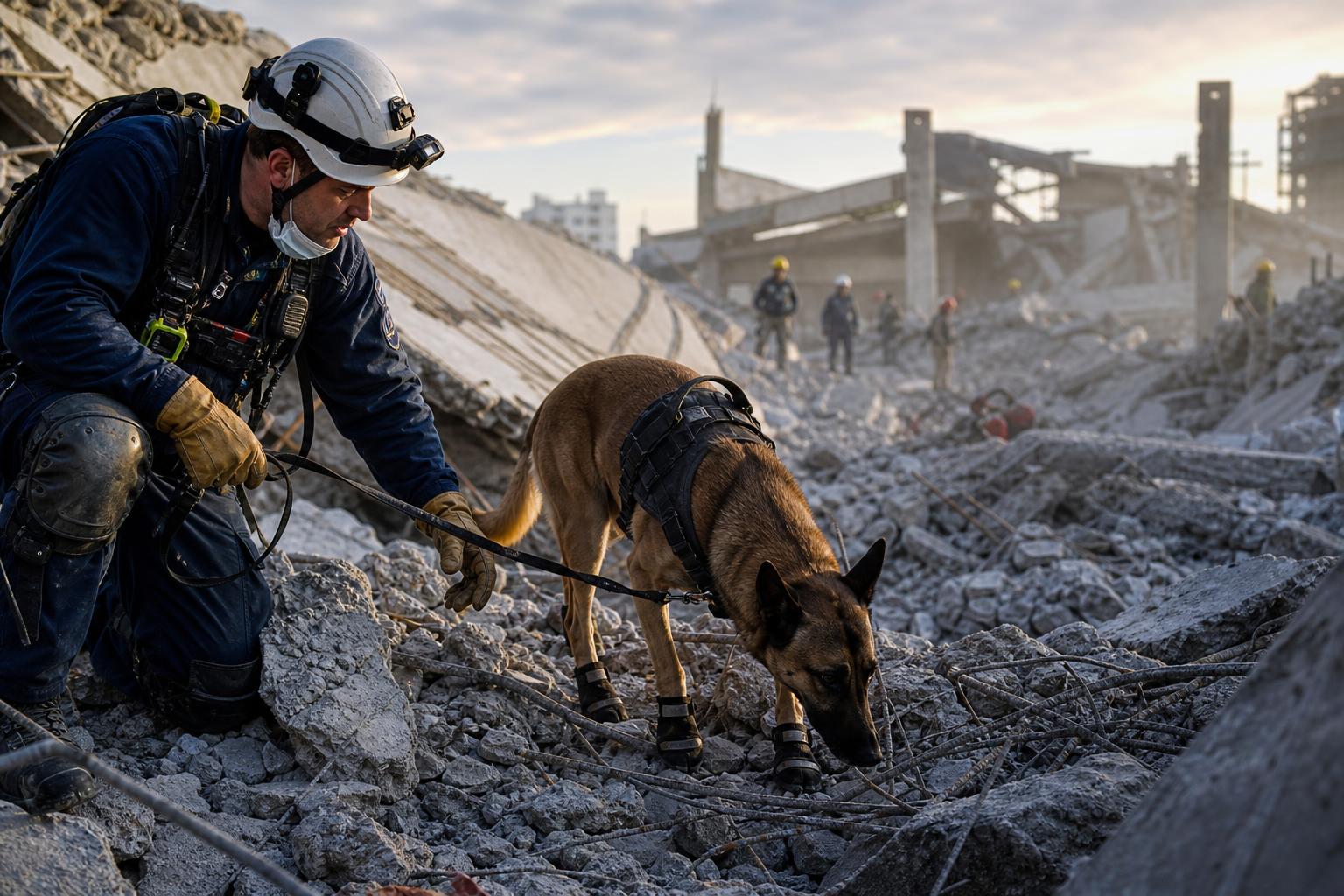
There are few sights more sobering than a dog standing on broken concrete, nose high in the dust, searching where no man could safely or quickly go alone. After a major disaster, when buildings have folded in on themselves and the air smells like fuel, insulation, mud, and fear, search dog teams step into a world that demands both courage and precision. Folks who have spent time around working dogs understand something the public often misses. These dogs are not simply brave. They are highly trained specialists, and in the first critical hours after catastrophe, they can make the difference between delay and discovery.
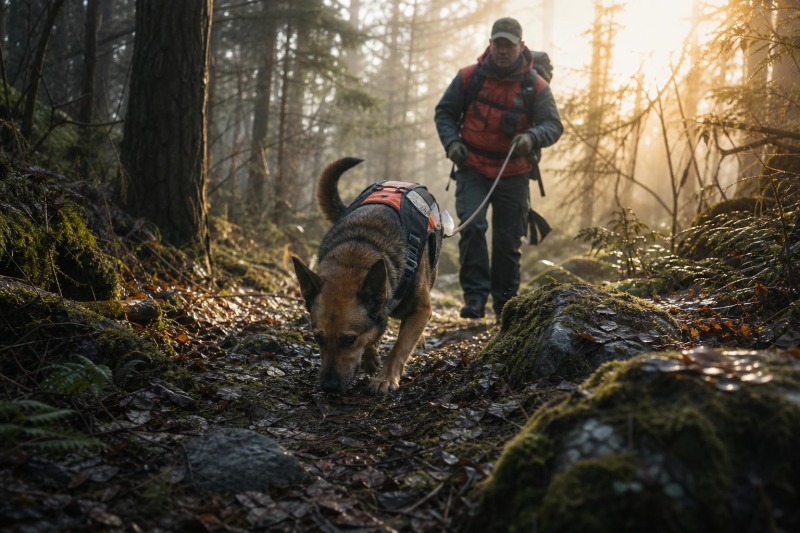
For dog owners interested in working dogs, disaster search teams offer one of the clearest examples of what a purpose-bred, purpose-trained dog can do with a skilled handler beside it. Whether the disaster is a tornado, hurricane, earthquake, flood, wildfire aftermath, or structural collapse, these teams are built around trust, conditioning, scent work, and steady nerves. In the same way a seasoned hunting dog learns to read wind, cover, and handler pressure, a search dog learns to work scent in unstable terrain where every second and every decision carries weight.
What Search Dog Teams Do After Major Disasters
When a major disaster hits, confusion comes fast. Roads are blocked, communications break down, and the scale of destruction can overwhelm local responders in a matter of minutes. Search dog teams are often called in because dogs can cover ground quickly and use airborne human scent to detect survivors or locate human remains in places equipment alone cannot immediately sort out. In practical terms, that means dogs help narrow the search, identify priority areas, and save precious time for rescue crews.
There are different types of disaster search dogs, and each serves a different purpose. Some dogs are trained for live-find work, locating scent from living victims trapped under debris or hidden by terrain and wreckage. Others are trained in human remains detection, a difficult but necessary role once rescue shifts toward recovery. The public sometimes lumps all these dogs together, but handlers know the distinction matters. Training, deployment strategy, and the dog’s alert behavior all need to be reliable under pressure.
After large-scale events, these teams may work alongside fire departments, urban search and rescue task forces, law enforcement, emergency management crews, and medical personnel. Their job is not glamorous. It is dirty, physically punishing work, often carried out in heat, rain, smoke, unstable rubble, and around the sound of heavy equipment. The dog may need to climb over rebar, broken wood, shattered brick, and concrete slabs while staying focused on odor. The handler, meanwhile, reads the dog’s body language the way a bird hunter reads a dog tightening on scent in thick cover. That kind of observation is not guesswork. It is the product of repetition, experience, and hard-earned trust.
Why Dogs Remain Critical in Disaster Response
People sometimes assume technology has replaced the need for dogs. It has not. Cameras, drones, listening devices, and thermal tools all have value, but a trained search dog brings mobility, speed, and scenting ability that remains hard to duplicate. In a collapsed structure, scent may move through voids, cracks, and hidden pathways no machine can easily interpret. A dog can work that scent cone, shift with changing wind and pressure, and indicate where human odor is strongest.
That does not mean dogs work alone or that they are somehow magical. Good handlers will tell you disaster search is a team effort from start to finish. The dog detects. The handler interprets. Rescue personnel verify and act. Still, in the early stages, a dog’s ability to search broad areas quickly can be priceless. In rough country, flood debris, neighborhood wreckage, or pancaked buildings, that speed can help responders focus manpower where it matters most.
The same trait you admire in a hunting dog pushing through cold water or heavy brush shows up here in another form. A disaster dog has to handle noise, unstable footing, strange odors, unfamiliar people, and long waits followed by intense work. That level of steadiness is not common, and it does not happen by accident.
Building drive, confidence, and independence
The foundation usually starts with a dog that loves to hunt for reward. Strong toy drive, good nerve, athletic ability, and confidence on uneven surfaces all matter. Trainers shape that natural desire into focused search behavior. The dog learns that finding human scent leads to a payoff, whether that reward is a toy, praise, or a game it values above everything else. In the beginning, it may look simple, but that simplicity is deceptive. Trainers are building a system the dog can rely on even when the environment becomes chaotic.
Confidence work is just as important as scent work. A dog that hesitates on unstable footing, slick surfaces, ladders, tunnels, dark spaces, or elevated obstacles will struggle in real deployment. So training often includes exposure to odd textures, moving surfaces, confined areas, and loud distractions. The goal is not recklessness. It is controlled confidence, the kind that lets a dog move efficiently without shutting down when the scene gets rough.
Alert behavior and handler communication
One of the most important pieces of training is a clear final alert. Some dogs bark when they locate source scent. Others may perform a trained indication that tells the handler exactly when the dog has found what it was sent to find. In disaster conditions, clarity matters. A vague response wastes time. A reliable alert gives the team something they can trust enough to act on.
Handlers also spend years learning to read subtle changes in their dogs. A head snap into the wind, a sudden loop back, a change in tail action, a quicker breathing pattern, a moment of commitment at a particular void in the rubble—those details matter. Good handlers do not just watch the dog. They study the dog in motion, compare behavior to conditions, and understand when interest becomes certainty.
The Real Challenges Search Dog Teams Face
Major disasters are not clean search environments. Scent pools in strange ways. Wind shifts between broken walls. Rain can suppress odor in one moment and release it in another. Heat, fuel, smoke, standing water, and decomposition all complicate the picture. Add in crowds, machinery, sirens, exhausted responders, and unstable surfaces, and you begin to understand the mental and physical load these teams carry.
The dogs themselves need careful management. Handlers monitor hydration, paw condition, fatigue, body temperature, and stress. Nobody who respects working dogs wants one pushed beyond its limits. In long operations, rest cycles and medical checks matter just as much as search intensity. The best handlers know when to send the dog hard and when to pull back.
There is also the emotional side. Live-find work carries hope. Recovery work carries a different burden. Handlers have to stay steady for the dog, for the team, and often for families waiting nearby. That kind of composure is not easy to fake. It comes from preparation, professionalism, and a deep sense of responsibility.
The Bond Between Handler and Dog
If you spend enough time around serious working dogs, one truth keeps showing up: the partnership is everything. After a major disaster, the dog is operating in danger because it trusts the handler. The handler is making operational decisions because they trust the dog’s training and instincts. That relationship is built over months and years of repetition, travel, drills, setbacks, certifications, and real-world problem solving.
They do not waste words, and they do not brag much. They know what their dog can do because they have seen it in foul weather, in fatigue, and under stress. Disaster handlers are often cut from that same cloth. They understand that the dog is both partner and responsibility. They ask for a lot, so they train hard, condition carefully, and advocate for the dog every step of the way.
Why This Work Matters to Dog Owners
For everyday dog owners, it is worth understanding that disaster search dogs represent the high end of what thoughtful breeding, structured training, and human commitment can produce. These dogs are not superheroes from a movie script. They are working animals developed through discipline and purpose. Watching them work should remind us that dogs thrive when they are given clear jobs, fair handling, and the chance to use their natural abilities.
Even if your own dog will never set paw on a disaster site, there is a lesson here. Nose work, obedience, confidence building, fitness, and handler awareness all strengthen the dog in front of you. Working dogs do best when we respect what they are built to do rather than expecting them to drift through life without direction.
After major disasters, search dog teams bring more than skill. They bring momentum to rescue efforts and dignity to recovery work. In places where destruction has stripped away certainty, a dog working scent through dust and ruin offers something hard to measure but easy to recognize. It is hope paired with discipline. It is instinct refined by training. And when the world looks broken beyond easy repair, that partnership between dog and handler still moves forward, one careful search at a time.