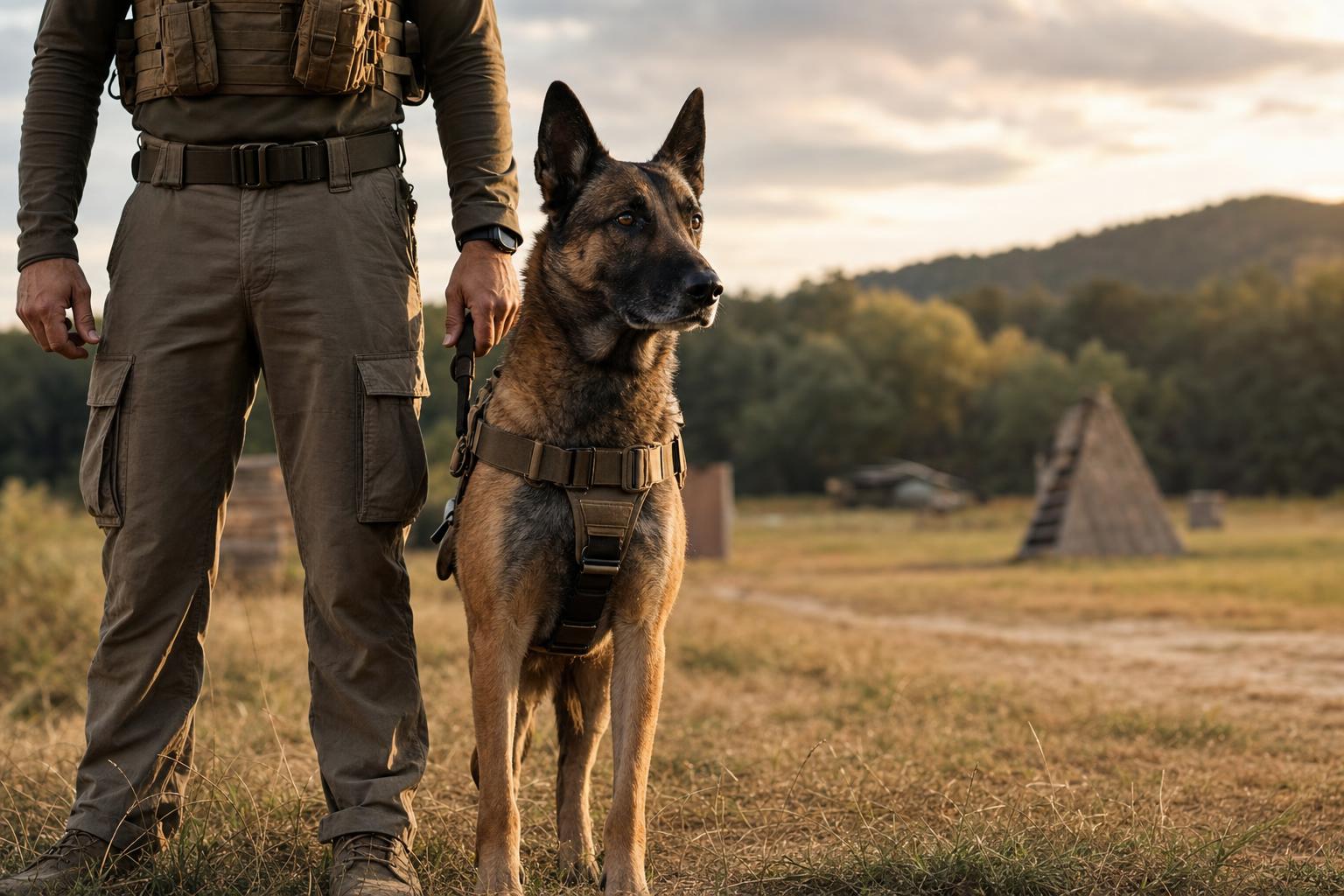
Famous military dogs are often remembered through a handful of striking events. Their documented duties and the people who handled them give a fuller picture. Careful sourcing helps distinguish the recorded work from later embellishment.
For dog owners interested in working dogs, military K9s represent the highest level of purpose-driven breeding, training, and partnership. These are not pets playing at a task. These are dogs selected for clear heads, strong drive, and the ability to keep functioning where most living creatures would shut down. Their stories are worth knowing not just because they are dramatic, but because they show what a dog can become when instinct and training are shaped with skill.
Why Military Working Dogs Matter
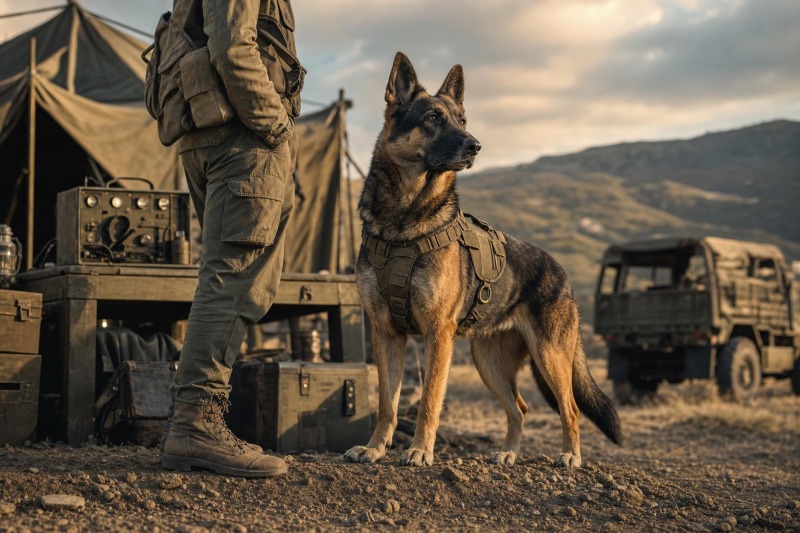
Long before modern gear and advanced surveillance, armies learned that a sharp dog could hear, smell, and sense what men often missed. A military working dog might detect an ambush, locate explosives, track a fleeing enemy, guard a position, or search out wounded troops. In rough country, dense brush, broken cities, or dark compounds, a well-trained dog can move with a speed and certainty no machine can quite duplicate.
That is part of why famous military working dogs still hold such a strong place in public memory. They did not just serve beside soldiers. In many cases, they changed the outcome of patrols, prevented casualties, and gave men confidence when every step carried risk. If you have ever watched a good working dog take scent and lock into the job, you understand the feeling. It is hard not to be humbled by it.
Chips: The World War II Dog Who Refused to Back Down
One of the most well-known military dogs in American history was Chips, a German Shepherd-Collie-Husky mix who served during World War II. Chips started as a family dog before being donated to the war effort. Like many dogs pressed into service in that era, he had to adapt fast to noise, movement, confusion, and pressure that would test any animal.
His most famous action came during the invasion of Sicily in 1943. As the story has been told for decades, Chips broke from his handler during an attack and charged a pillbox containing enemy soldiers. Moments later, the gunfire from that position stopped. When troops arrived, Chips emerged with scorched fur, and the enemy inside surrendered. It is the kind of story that sounds almost too wild to be true, but it captures exactly why military dog legends endure. A determined dog with courage and bite can alter a deadly situation in seconds.
Chips was reportedly awarded decorations, though military policy around such honors for dogs shifted afterward. Medal or no medal, his reputation stuck because he embodied the boldness people associate with a true combat dog.
Smoky: The Tiny Dog With an Outsized Legacy
Not every famous military working dog was a large patrol dog. Smoky, a Yorkshire Terrier found in a foxhole in New Guinea during World War II, became one of the most celebrated dogs of the war. She was small enough to fit in a helmet, but there was nothing small about her usefulness.
Smoky accompanied Corporal William Wynne through dangerous duty in the Pacific. She reportedly survived air raids, rode in military aircraft, and most famously helped run a telegraph wire through a narrow culvert, sparing troops from digging a trench under enemy threat. That single task saved time, labor, and likely lives.
Her story matters because it reminds us that military usefulness is not always about raw size or intimidation. Sometimes it is steadiness, adaptability, and a willingness to work in strange conditions that make the difference. Hunters and dog men know this well. Heart counts.
Sergeant Stubby: America’s Most Famous War Dog
When the subject turns to famous military working dogs, Sergeant Stubby nearly always enters the conversation. Stubby served during World War I and became a symbol of canine bravery. A stray with a short tail and a bulldog-type build, he was adopted by soldiers and eventually made his way to the front lines in France.
Stubby earned his reputation by warning troops of incoming gas attacks and artillery, using his keen senses before many men realized danger was close. He also reportedly located wounded soldiers on the battlefield and boosted morale in miserable trench conditions. One story often repeated is that he helped identify a German infiltrator, holding the man until American soldiers arrived.
Now, history around wartime mascots and dogs can get polished with time, but even allowing for that, Stubby’s service was real and meaningful. More than anything, he came to represent the bond between soldiers and dogs in war. That bond is no sentimental side note. In hard conditions, a dog’s presence steadies nerves and sharpens focus in a way hard to explain to folks who have never leaned on one.
From Battlefield Legend to Special Operations Icon
Jump ahead to the modern era and one of the most recognized military working dogs is Cairo, the Belgian Malinois associated with the Navy SEAL operation that killed Osama bin Laden in 2011. While many mission details remain classified or debated in the public eye, Cairo became an unmistakable symbol of the modern special operations dog.
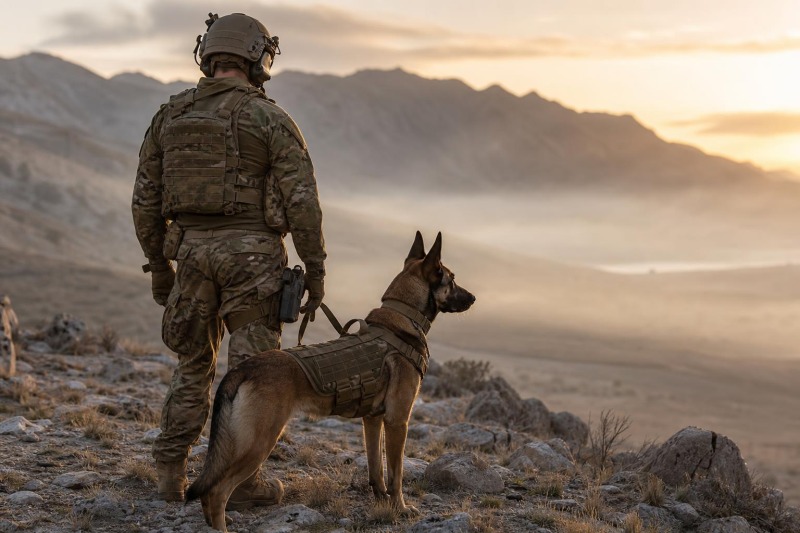
The Belgian Malinois has become closely tied to elite military and police work for good reason. These dogs are athletic, driven, agile, and mentally sharp. They can be inserted into environments that are tight, fast-moving, and unforgiving. A dog like Cairo would have been valued for detection, pursuit, security, and the ability to clear spaces where hidden threats could cost human lives.
For today’s dog owners, Cairo’s fame also helped widen public understanding of what a military working dog really is. He was not just a dog wearing tactical gear for a photo. He represented generations of breeding and training aimed at producing an animal capable of operating under extreme pressure while remaining under control.
Lucca: A Dog Who Saved Lives Over Hundreds of Missions
Another modern military hero worth knowing is Lucca, a U.S. Marine Corps dog trained for explosive detection. She served in Iraq and Afghanistan and completed hundreds of patrols. What stands out about Lucca is not just one cinematic moment, but the long grind of dependable performance over time.
That kind of service is often what separates a good working dog from a truly great one. Day after day, patrol after patrol, the dog must search carefully, remain focused, and show no carelessness. Lucca reportedly took part in more than 400 missions without a single human casualty on her patrols due to explosive detection failure. Late in her career, she was injured by an improvised explosive device and lost a leg, but she survived and retired with the respect owed to a veteran.
There is something deeply honest about a dog like Lucca. No myth needed. Just hard service, consistent work, and lives protected. In the working dog world, that is the standard that matters most.
The Traits Behind the Heroes
People sometimes assume military dogs are made fearless through training alone. That is not how it works. Training shapes behavior, sharpens reliability, and channels instinct, but the raw material has to be there from the start. Good military working dogs are selected for nerve strength, hunt drive, environmental stability, sociability with the handler, and the ability to recover fast from stress.
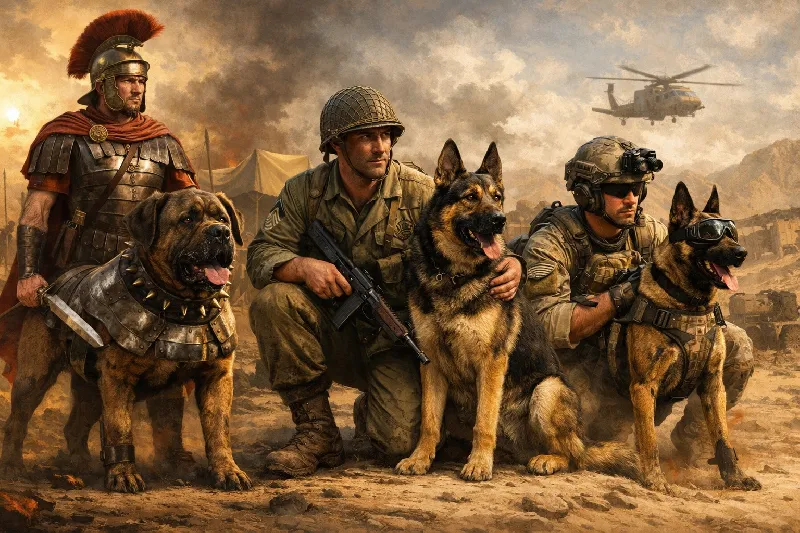
That is why breeds like the German Shepherd, Belgian Malinois, Dutch Shepherd, and Labrador Retriever have become staples in military work. Each brings different strengths. Shepherds and Malinois are often favored for patrol and assault roles, while Labradors frequently excel in detection because of their nose, food drive, and steady temperament.
Training then layers obedience, scent work, aggression control where needed, conditioning, and trust. And trust matters more than outsiders realize. A military dog has to believe in the handler enough to move into uncertainty, search dark spaces, and stay engaged amid noise, gunfire, or blasts. That kind of partnership is built, not wished into existence.
The Lasting Legacy of Famous Military Working Dogs
The reason these dogs continue to fascinate people is simple. They reveal the highest expression of canine purpose. A good military dog is not working for applause. He is working because the bond, the training, and the instinct all line up in one clear direction. Find the threat. Protect the team. Finish the job.
For those of us who admire working dogs, these famous military working dogs are more than historical footnotes. They are proof of what dogs can do when they are bred well, handled right, and respected for what they are. From Stubby in the trenches to Chips in Sicily, from Smoky in the Pacific to Cairo and Lucca in modern war zones, each one showed a different kind of usefulness. Some were bold chargers. Some were careful detectors. Some were morale lifters in the worst places on earth.
But they all shared the same essential quality: they mattered when it counted. And in the end, that is the truest measure of any working dog worth remembering.