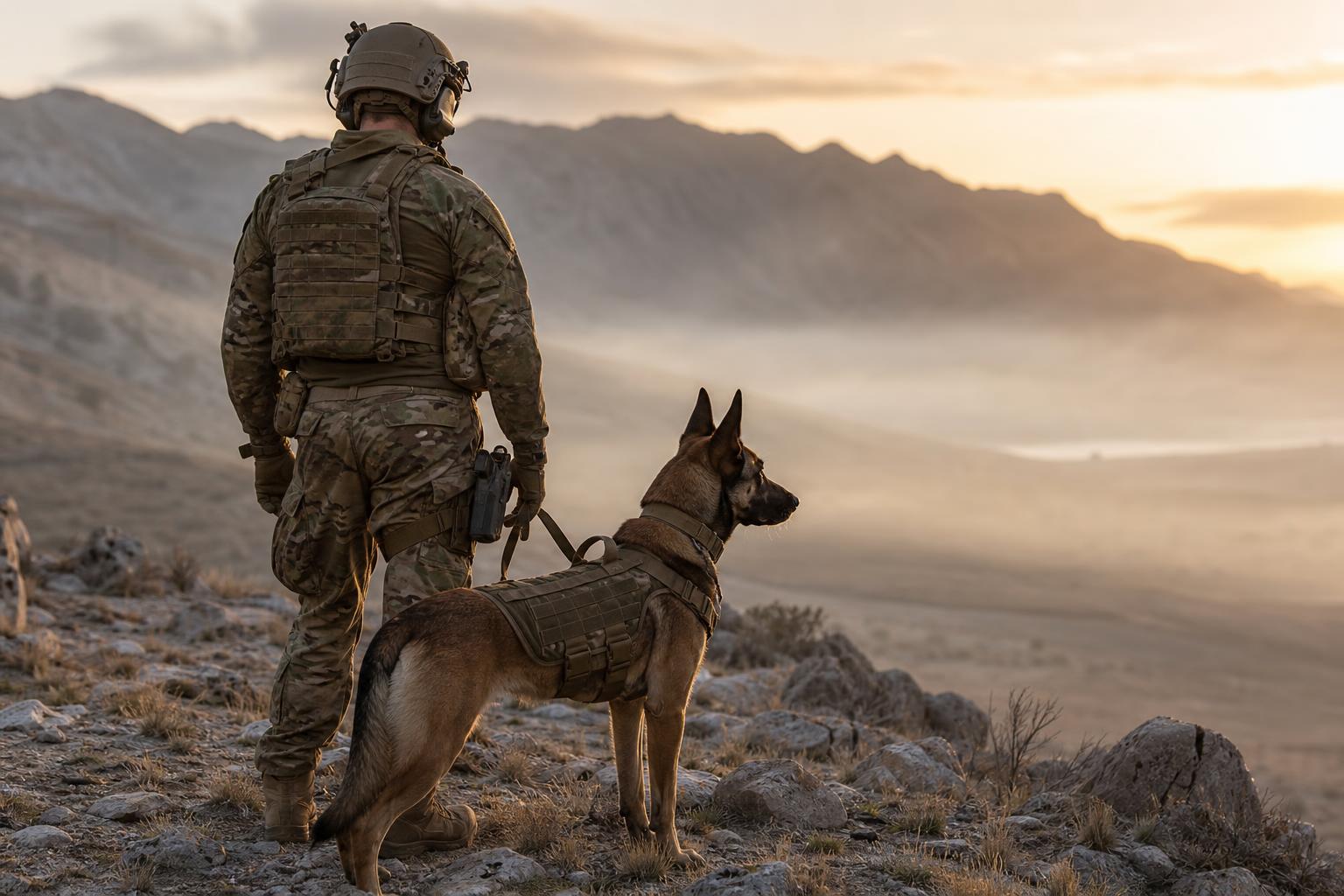
Modern military dog work covers several assignments, with training and equipment selected for the task. The dog’s performance depends on its handler and the operational support around the team. Documented examples are more informative than a general image of combat work.
For all the talk about drones, satellite surveillance, and digital intelligence, working dogs continue to hold a place that technology has not replaced. A machine can scan, map, and calculate, but a trained military dog brings mobility, instinct, and decision-making that works in the cluttered, chaotic spaces where war is often fought now. Whether moving through urban rubble, checking vehicles at a checkpoint, patrolling a base at night, or tracking a hidden enemy across rough ground, these dogs remain a practical and proven force.
The Enduring Role of Working Dogs on the Battlefield
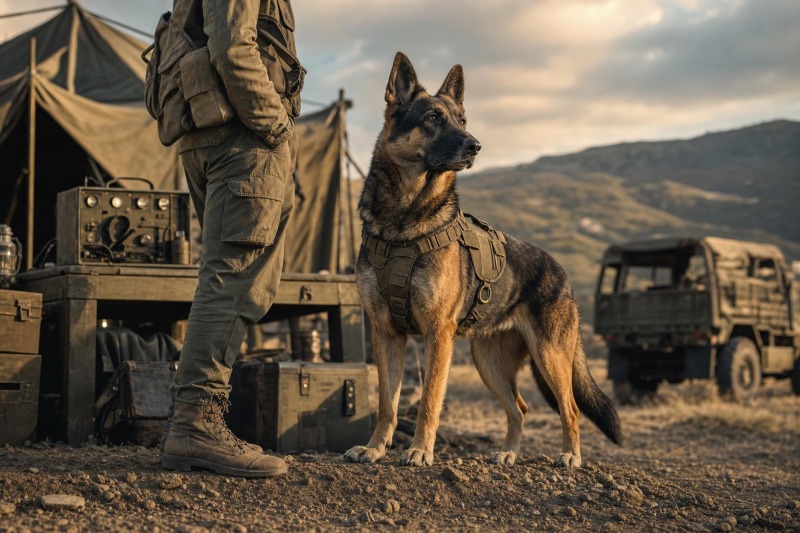
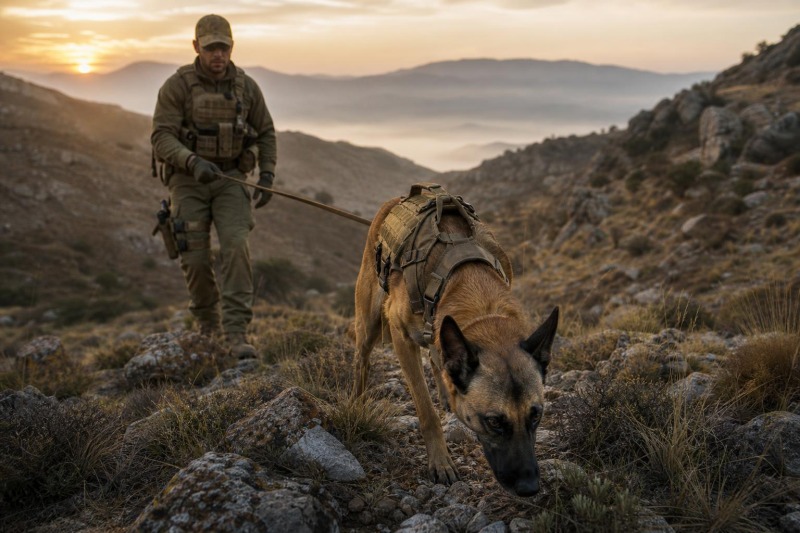
People sometimes picture war dogs through an old lens, imagining messengers or sentries from another era. The truth is more sophisticated. Today’s military working dogs operate as specialized partners in missions that demand precision. They are used to detect explosives, locate narcotics, patrol secure areas, track suspects, and support elite military units in high-risk operations. Their jobs have evolved, but the foundation remains the same: use the dog’s unmatched senses and disciplined training to do what humans alone cannot do safely or quickly enough.
That is the part worth understanding. In modern warfare, danger rarely stands in the open. It is buried under a road, tucked into a bag, hidden inside a vehicle, or waiting in the shadows of a half-cleared building. A properly trained dog can process scent in a way that feels almost unfair to the enemy. He works through wind shifts, dust, noise, and confusion, sorting out what matters with startling accuracy. It is breeding, preparation, repetition, and trust sharpened to a fine edge.
Why Dogs Still Outperform Technology in Certain Missions
Modern militaries have access to advanced sensors and detection systems, and those tools are valuable. Still, battlefield conditions are messy. Electronics fail. Batteries die. Terrain blocks signals. Human operators get overloaded. A dog, on the other hand, can move quickly over uneven ground, adapt to changing conditions, and communicate interest or concern through trained behaviors that handlers learn to read almost instinctively. In the real world, especially under stress, that flexibility can save lives.
Explosive detection is probably the best-known example. Military working dogs are trained to recognize specific odor profiles and alert handlers without triggering a device. In convoy routes, crowded compounds, airports, and combat outposts, that talent is not a convenience. It is often the difference between a mission continuing and a mission ending in catastrophe. There is a reason commanders continue to trust canine teams when the stakes are highest.
The Breeds Behind Modern Military Service
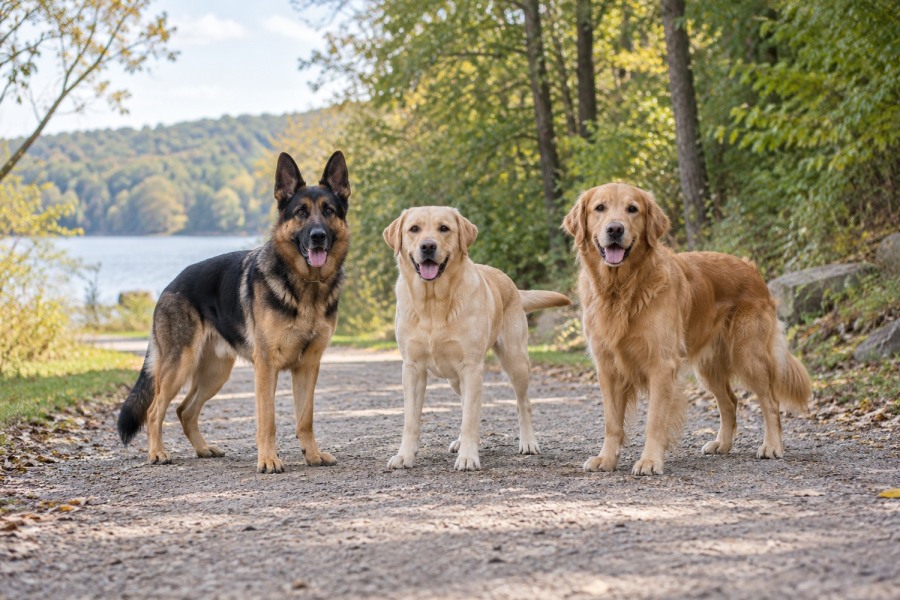
Not every strong dog is suited for combat work. The breeds most often selected for modern military roles tend to combine athleticism, nerve, trainability, and a strong desire to work with people. Belgian Malinois have become especially prominent because they are agile, intensely driven, and physically capable of handling demanding operations. German Shepherds still have an honored place as well, bringing versatility, size, and steady working character. Labrador Retrievers are often used in detection roles where social neutrality and scenting focus are prized.
Breed alone, though, does not make a war dog. Temperament matters more than pedigree on paper. The right dog must be environmentally stable, able to handle gunfire, aircraft noise, unfamiliar surfaces, strange people, and rapid transitions from calm to chaos. He must be bold but controllable, eager but not reckless. Folks who know real working dogs understand how rare that balance can be. It is one thing to have a dog that bites hard or hunts hard. It is another thing entirely to have one that can think clearly under pressure.
Training for the Realities of Modern Combat
A military working dog is not simply taught commands. He is conditioned for a career in environments that would rattle most animals and plenty of people too. Training starts with foundational obedience and control, but it quickly expands into detection, tracking, apprehension, environmental exposure, and mission-specific exercises. The dog learns to function around helicopters, gunfire, confined spaces, moving vehicles, and heavy gear. He is asked to remain obedient while excited and remain confident while challenged.
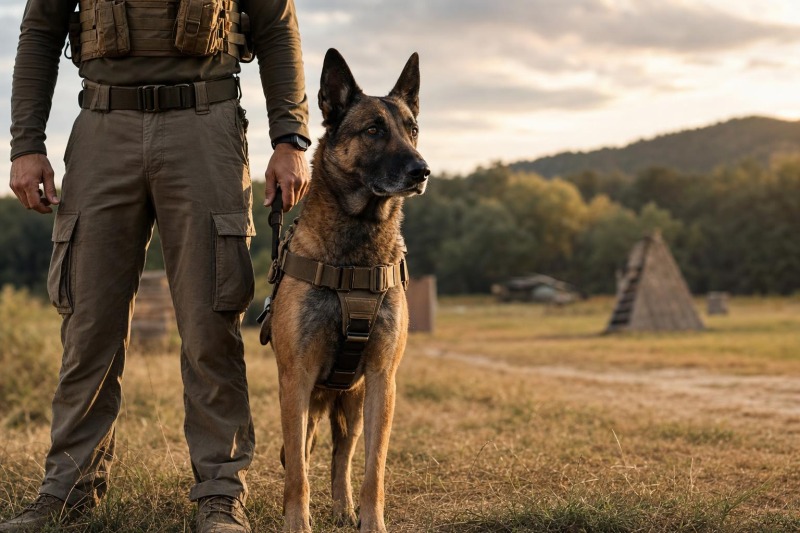
Handler training is just as important. A dog team is only effective when communication runs both ways. A good handler learns the dog’s breathing, posture, speed changes, and subtle shifts in focus. That matters because dogs often tell you something is wrong before they give a formal trained alert. A seasoned handler notices the head snap, the change in tail carriage, the hesitation at a doorway, or the sudden commitment to a scent cone. Those details are easy to miss if someone sees the dog as equipment instead of a living partner.
The Bond Between Dog and Handler
This bond is not sentimental fluff. It is operational reality. In war, trust has to be earned and proven daily. Dogs trust handlers to guide them into danger and bring them back out. Handlers trust dogs to notice what no one else can. When that relationship is strong, the team moves with a kind of quiet efficiency that is hard to describe unless you have witnessed it firsthand. The leash, the hand signal, the glance, the pause before entering a structure—none of it feels forced. It feels practiced, honest, and alive.
That bond also carries a heavy emotional weight. These dogs are not abstract assets. They absorb stress, fatigue, and risk alongside the people who deploy with them. When a dog finds an explosive or identifies a hidden threat, he may save not just one handler but an entire patrol. Men and women who have served beside military dogs rarely forget it. They should not.
Special Operations and High-Risk Deployment
One reason working dogs remain so respected in modern warfare is their usefulness in special operations. In high-risk raids and rapid-entry missions, dogs can clear space quickly, locate hidden personnel, and create options for military teams moving in uncertain conditions. Their speed and agility make them especially valuable in compounds, alleyways, stairwells, and other tight terrain where every second matters.
Some dogs are equipped with cameras or specialized gear that allows handlers to assess an area before a human enters. Even here, though, the gear is secondary. What matters is the dog’s willingness to push forward into confusion, use his senses, and keep working while the world around him is loud and dangerous. You can admire the equipment all day long, but the heart of the mission still belongs to the dog and the person trusting him.
The Welfare Question: What We Owe These Dogs
Any honest article about working dogs in warfare ought to say this plainly: if a nation asks dogs to serve in dangerous conditions, it carries a real responsibility to train them properly, care for them well, and provide meaningful support after service. These animals give everything they have. They deserve skilled veterinary care, thoughtful handling, and retirement plans that recognize what they have done.
There has been growing public awareness around military dog adoption and retirement, and that is a good thing. Many retired war dogs transition into homes with former handlers or experienced adopters, though not all are suited for casual pet life right away. They often require structure, patience, and people who understand the habits of a highly trained working animal. A retired military dog may no longer deploy, but he still carries the imprint of a serious job.
What Civilian Dog Owners Can Learn from Military Working Dogs
Even if your own dog will never do more dangerous work than chasing a bumper through a hay field or patrolling your back fence, there is plenty to learn from military canine programs. First, purpose matters. Dogs thrive when they are given clear expectations and consistent work. Second, relationship matters more than force. The strongest teams are built on repetition, fairness, and trust, not noise and intimidation. Third, good dogs are developed, not wished into existence. Their confidence, steadiness, and reliability come from careful exposure and consistent standards.
That lesson carries over whether you own a hunting retriever, a protection prospect, or just an energetic dog that needs direction. Working ability is not only about intensity. It is about control, resilience, and a willingness to partner with a human. Military dogs show that truth in the clearest way possible.
The Future of Working Dogs in Modern Warfare
As warfare changes, the role of dogs will keep changing with it. They may work alongside more advanced sensors, wearable cameras, and data systems. Training methods will continue to improve. Breeding programs will likely become more selective and specialized. But the core reason dogs remain relevant is unlikely to fade. They bring a blend of nose, nerve, mobility, and partnership that still solves problems no machine can fully answer.
That is why working dogs in modern warfare continue to command such respect. They are not relics from an older military tradition. They are active, highly trained, and deeply valuable members of modern defense operations. In a world full of complicated tools and shifting threats, there is still room for a dog that can move into the dark, sort scent from chaos, and tell his handler exactly where danger lies.
And maybe that should not surprise us at all. For as long as humans have faced uncertainty, the best dogs have helped us meet it head-on. On the battlefield, just like in the field behind the house or the timber before dawn, the qualities that matter most have not changed much: courage, discipline, instinct, and the kind of loyalty that holds fast when things get hard.